
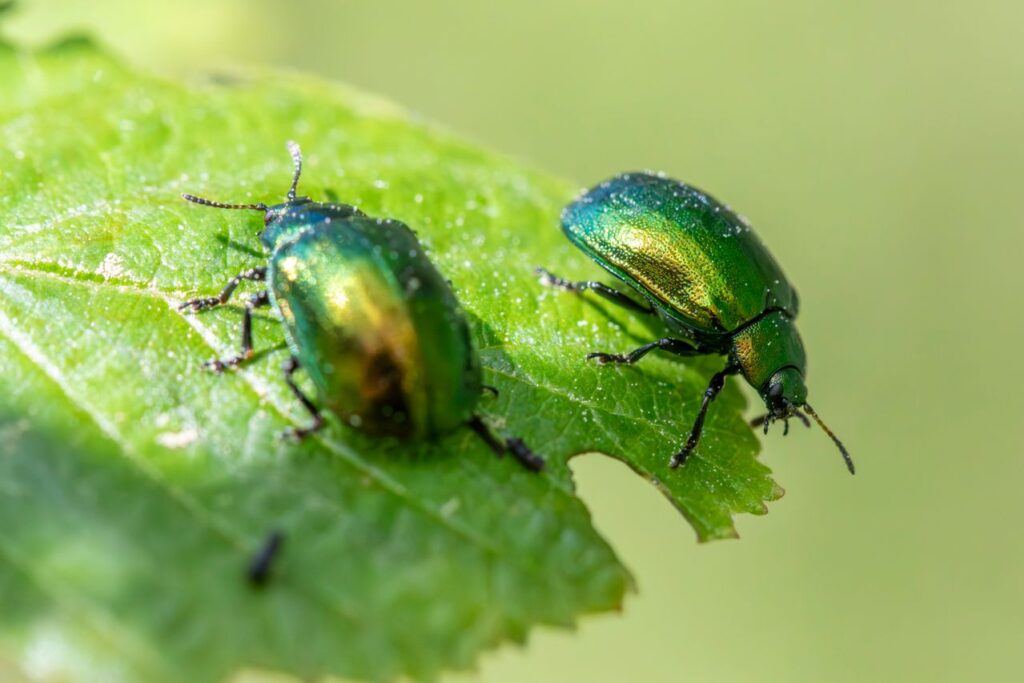
Holes in plant leaves are one of the most obvious signs that something has happened in the garden. Sometimes the damage is caused by insects feeding on the plant, while other holes develop from disease, harsh weather, or physical injury. Looking at the shape, location, and timing of the damage can help you identify the most likely cause.
Caterpillars are among the most common causes of large or irregular holes. They may chew through the centre of a leaf, eat around the edges, or remove most of the leaf entirely. Check beneath damaged leaves, around rolled foliage, and along stems for caterpillars, eggs, or dark droppings. Some caterpillars blend into the plant extremely well, so inspect carefully.
Snails and slugs also create uneven holes, especially on tender vegetables, herbs, and young seedlings. They usually feed during the night or after rain. Shiny slime trails on pots, soil, or leaves are a strong clue. Check damp hiding places beneath containers, boards, fallen leaves, and dense ground cover.
Small, scattered holes may be caused by beetles or other chewing insects. Flea beetles, for example, can leave many tiny holes that make the leaf look as though it has been peppered with a needle. Grasshoppers and larger beetles may remove bigger sections from leaf edges.
Not every hole is caused by a pest. Some fungal or bacterial leaf spots begin as brown or yellow patches. The damaged tissue may eventually dry out and fall away, leaving holes with discoloured borders. This is sometimes called a shot-hole appearance. If the marks continue spreading or appear on several plants, inspect for signs of disease rather than assuming an insect is responsible.
Strong rain, wind, rough handling, pets, or leaves rubbing against sharp surfaces can also tear foliage. These holes usually appear suddenly and do not continue spreading. Older damage may become more noticeable as the leaf grows larger.
At the end of the day, leaf holes are clues. Inspect both sides of the leaf, look for pests, droppings, slime trails, discoloured edges, and fresh damage. A few holes are often only cosmetic, but repeated feeding on new growth or seedlings may need quick action.
If you notice mysterious holes appearing on leaves in your home garden, we would love to see what you discover. Tag @projectharvest.my on Instagram and share your damaged leaves, pest investigations, and gardening journey with us — your experience might help another Malaysian beginner identify what is eating their plants too.