
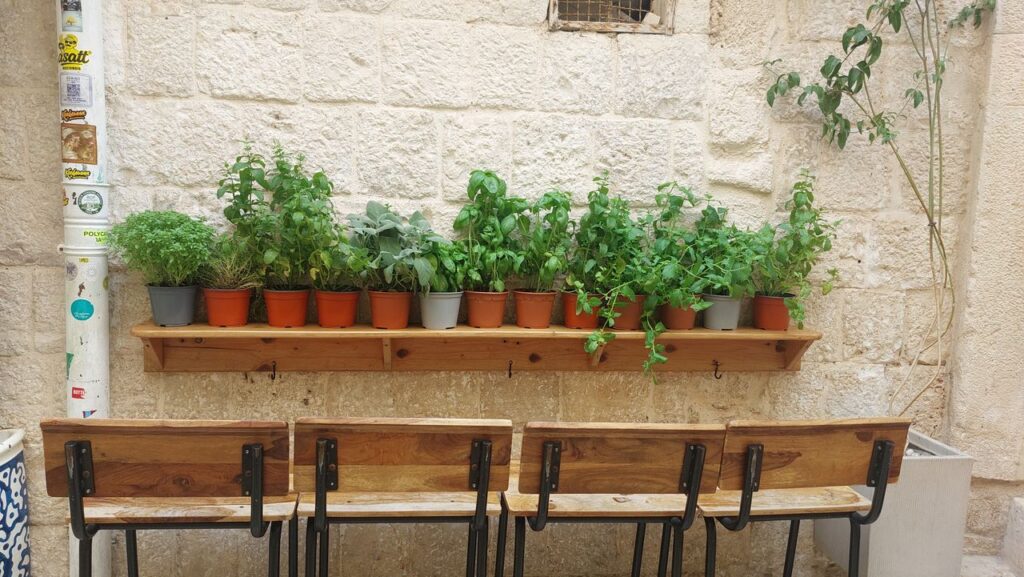
A balcony herb garden sounds simple, but many beginners struggle because they buy herbs first and only think about sunlight, watering, and space later. The easiest way to build a balcony herb garden that actually works is to understand the conditions of your balcony before deciding what to grow.
Start by checking how much sunlight your balcony receives. Observe it in the morning, around midday, and later in the afternoon. Herbs such as basil, curry leaf, lemongrass, and rosemary generally prefer brighter conditions, while mint, daun kesum, and some leafy herbs can cope with slightly less direct sun. A bright balcony is useful, but harsh afternoon heat can also dry pots very quickly.
Choose containers with proper drainage holes. Herbs do not like sitting in waterlogged soil, especially during Malaysia’s rainy periods. Use a suitable potting mix instead of heavy garden soil, and make sure excess water can escape freely. Avoid leaving pots permanently sitting in saucers filled with water.
Do not overcrowd the space. A balcony packed with dozens of small pots may look impressive at first, but it quickly becomes difficult to water, prune, and inspect for pests. Start with a few herbs you actually use in the kitchen. Basil, mint, daun kesum, pandan, spring onions, and curry leaf are practical choices for many Malaysian homes.
Group herbs with similar needs together. Moisture-loving plants such as mint and daun kesum should not necessarily be treated the same way as rosemary or other herbs that prefer drier conditions. Keeping similar plants together makes watering much easier and reduces mistakes.
Water according to the soil condition, not a fixed daily schedule. Small balcony pots dry faster than garden beds, especially when exposed to wind and sun. Check the soil regularly and water thoroughly when needed. During rainy weeks, reduce watering and make sure no water is trapped around the roots.
Regular harvesting also keeps many herbs productive. Pinch basil and mint above leaf nodes to encourage bushier growth, remove dead leaves, and trim overcrowded stems when necessary. Check beneath leaves for aphids, mealybugs, or other pests before they become serious.
Use vertical space carefully if your balcony is small. Shelves, hanging planters, or simple wall-mounted systems can create more growing space, but make sure every plant still receives enough light and airflow.
At the end of the day, a successful balcony herb garden is about good conditions, not the number of pots. Start small, choose herbs you will actually use, provide enough light and drainage, and build a simple care routine that fits your lifestyle.
If you are building a balcony herb garden at home, we would love to see how you make the space work. Tag @projectharvest.my on Instagram and share your herb setup, favourite plants, harvests, and gardening journey with us — your balcony might inspire another Malaysian beginner to start growing too.