
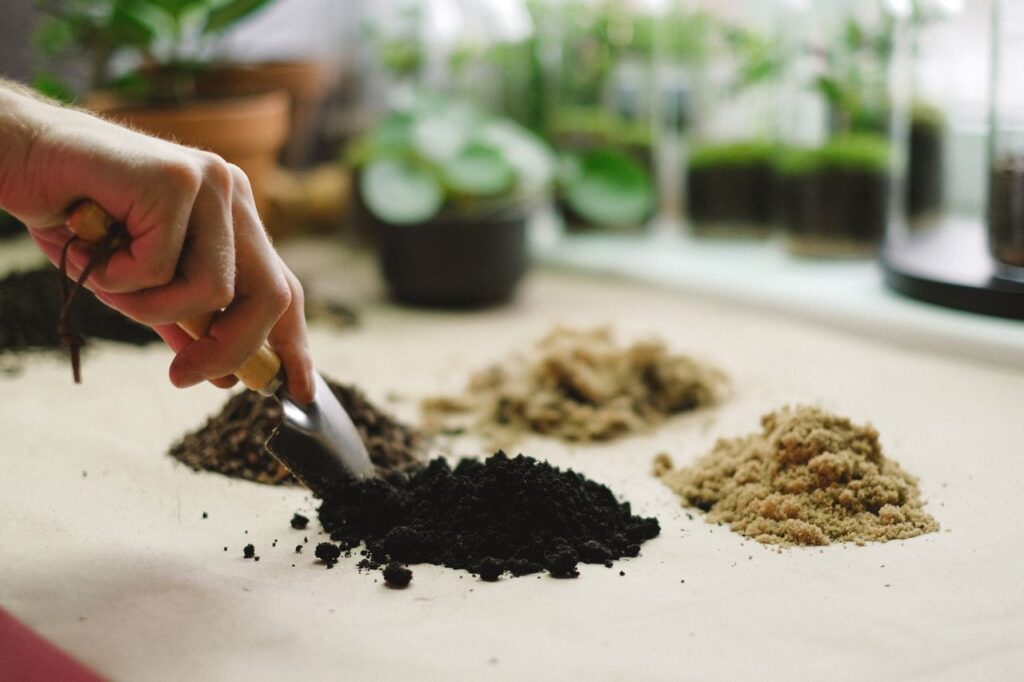
Two gardens can contain similar amounts of sand, silt, and clay yet behave completely differently. One may drain well, crumble easily in your hand, and grow strong roots. The other may become waterlogged after rain, harden when dry, and make plants struggle.
The difference may come down to soil structure.
Soil structure describes how individual soil particles are arranged into larger clusters called aggregates and how much open space exists between them. Those spaces allow water, oxygen, roots, and soil organisms to move through the ground.
Good soil structure does not simply make soil easier to dig. It influences almost everything happening around a plant’s roots.
Soil Texture and Soil Structure Are Not the Same Thing
These two terms are often confused.
Soil texture describes the proportion of sand, silt, and clay in the soil. That basic texture is difficult to change significantly because it depends on the mineral particles already present.
Soil structure, on the other hand, describes how those particles are arranged.
Imagine a pile of flour compared with a bowl of breadcrumbs. Both may contain similar material, but the way the particles are grouped creates completely different spaces between them.
Healthy garden soil often contains small crumbs or aggregates rather than behaving like one solid block.
This means you may not be able to turn heavy clay into sandy soil, but you can often improve its structure dramatically.
Why Air Spaces Matter
Plant roots need more than water and nutrients. They also need oxygen.
When soil has good structure, there are pores of different sizes between the aggregates.
Larger pores allow excess water to drain and bring fresh air into the soil. Smaller pores hold moisture that roots can access later.
When soil becomes badly compacted, many of these spaces disappear.
Water then moves slowly, roots struggle to penetrate the soil, and oxygen levels can drop after heavy rain.
This is especially relevant in Malaysia, where an intense tropical downpour can saturate soil very quickly.
If the soil structure is poor, plants may remain surrounded by water long after the rain has stopped.
Good Structure Helps Roots Explore
Healthy roots do not simply grow downward in a straight line. They branch through the soil searching for water and nutrients.
Loose, well-structured soil gives them pathways to follow.
Compacted soil creates resistance. Roots may become shallow, distorted, or concentrated near cracks and softer areas instead of exploring the full root zone.
This can make plants more vulnerable during hot weather because shallow roots dry out faster.
Vegetables such as chillies, tomatoes, brinjal, okra, cucumbers, and leafy greens all benefit from a root zone that allows healthy expansion.
Strong growth above the soil often begins with freedom of movement below it.
Soil Structure Changes How Water Behaves
One of the biggest benefits of good soil structure is better water management.
In heavy clay soil, improved aggregation creates larger spaces that allow excess water to drain more effectively.
In sandy soil, organic matter and better aggregation help create smaller pores that retain useful moisture for longer.
So improving soil structure does not mean making every soil behave the same way.
It means helping each soil type manage the balance between holding enough water and draining the excess.
That balance is particularly useful in Malaysian gardens because we often move between intense sunshine and sudden heavy rainfall.
It Also Affects Nutrient Availability
Plants absorb many nutrients from water held around soil particles and organic matter.
A well-structured soil allows roots to explore more of the growing area, which gives them access to more nutrients.
Good structure also supports soil organisms involved in decomposition and nutrient cycling.
When soil is badly compacted or waterlogged, those biological processes can change because oxygen becomes limited.
This is one reason healthy soil cannot be created simply by adding more fertiliser.
You can have nutrients in the soil and still have poor plant performance if the root environment is physically unhealthy.
What Does Healthy Soil Structure Look Like?
Healthy garden soil often feels crumbly rather than powdery or rock-hard.
When slightly moist soil is held in your hand, it may form a loose clump but break apart fairly easily when pressed.
You may see small aggregates, fine roots, organic material, insects, and channels through the soil.
Water should soak in rather than sitting on the surface for long periods, although drainage speed naturally varies depending on soil texture.
Poorly structured soil may show very different signs.
It might form a hard crust after rain.
Water may puddle on top.
A spade may struggle to enter the ground.
Roots may remain shallow.
The soil may become extremely sticky when wet and solid when dry.
Container soil can also lose structure over time, eventually shrinking, compacting, or becoming difficult to rehydrate.
What Damages Soil Structure?
One of the biggest causes is compaction.
Walking repeatedly across garden beds, placing heavy objects on the soil, or working clay soil while it is very wet can squeeze out pore spaces.
Heavy rain can also damage exposed soil surfaces, particularly when drops strike bare ground directly.
Excessive cultivation is another issue.
Constantly digging and breaking soil into tiny particles may temporarily make it look loose, but repeated disturbance can damage aggregates and disrupt soil organisms.
Low organic matter can also leave soil less able to maintain stable structure.
In container gardens, old potting mix may gradually collapse as organic components decompose, reducing air spaces around roots.
Compost Is One of Your Best Tools
Finished compost is one of the most useful materials for improving soil structure.
Organic matter helps bind particles into stable aggregates while also supporting microorganisms, increasing water-holding capacity, and improving nutrient retention.
In heavy soil, compost can help create more pore space.
In sandy soil, it helps hold moisture and nutrients that might otherwise move through too quickly.
For Malaysian gardeners, regular moderate additions often work better than one enormous application because organic matter decomposes relatively quickly in our warm climate.
Mulch Protects the Structure You Build
Improving the soil and then leaving it completely exposed can undo some of your work.
A suitable layer of organic mulch protects the surface from intense sunlight and heavy rain.
Instead of raindrops striking bare soil and breaking aggregates apart, the mulch absorbs much of the impact.
It also reduces moisture loss and gradually contributes organic material as it decomposes.
Keep mulch slightly away from plant stems and trunks rather than piling it directly against them.
Avoid Walking Through Growing Beds
A simple design decision can protect soil structure surprisingly well.
Create pathways so you can reach plants without repeatedly stepping into the growing area.
In raised beds, keep the bed narrow enough that you can reach the centre from the sides.
Once soil has been improved, avoiding unnecessary foot traffic helps preserve the pore spaces you worked to create.
Roots Can Help Build Structure Too
Plants are not just using the soil. They are actively changing it.
Living roots create channels through the ground and release compounds that interact with soil organisms.
When fine roots eventually die and decompose, they leave behind organic material and pathways for future roots, air, and water.
This is one reason keeping soil planted whenever practical can be beneficial.
A diverse garden with herbs, vegetables, flowers, and different root systems can gradually contribute to a healthier underground environment.
Do You Need to Dig to Improve Structure?
Not necessarily.
If soil is badly compacted when establishing a new garden bed, some initial loosening may be helpful.
After that, constant deep digging is often unnecessary.
Surface applications of compost, mulch, plant roots, worms, and other soil organisms can gradually improve the upper soil layers without repeatedly turning everything over.
The goal is not to create soil that looks perfectly fluffy immediately after digging.
The goal is to build soil that remains well structured even when you are not constantly disturbing it.
Soil Structure Is Something You Manage, Not Fix Once
Healthy structure can improve, but it can also deteriorate.
Heavy foot traffic, exposed soil, repeated waterlogging, excessive cultivation, and loss of organic matter can gradually undo previous improvements.
That means soil care should be viewed as an ongoing part of gardening.
Add organic matter.
Protect the surface.
Avoid unnecessary compaction.
Keep roots growing.
Manage drainage.
Then allow biological processes time to do much of the work.
At the end of the day, soil structure is the physical foundation that determines whether roots can breathe, water can move, nutrients can be accessed, and plants can establish themselves properly. You may never completely change whether your soil is naturally sandy or clay-heavy, but you can greatly improve how that soil functions. Build organic matter, protect the surface with mulch, reduce compaction, and give roots and soil organisms room to work. When the structure beneath the garden improves, healthier growth above ground often follows.
Take a handful of soil from your garden and have a closer look at it. Is it crumbly, sticky, compacted, sandy, full of roots, or difficult to break apart? Tag @projectharvest.my on Instagram and share your soil photos, improvements, experiments, or questions with us. Seeing how soils differ across Malaysian homes could help other gardeners understand that sometimes the most important part of the garden is the part we rarely stop to look at.