
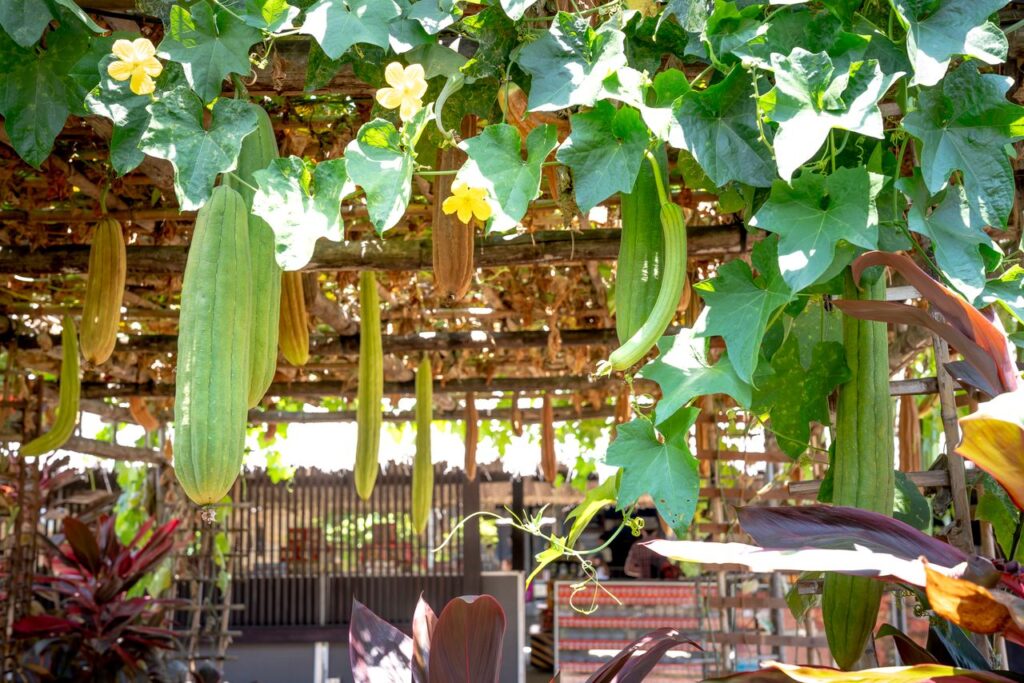
When vegetable flowers appear but fall off before producing fruit, it usually means the plant has aborted the flower before successful fruit development.
Sometimes this is completely normal.
A plant may produce more flowers than it can support, or a male flower may naturally fall after releasing pollen.
But repeated flower drop across chillies, tomatoes, brinjal, cucumbers, pumpkins, beans, and other fruiting vegetables can also point to problems with pollination, weather, watering, nutrition, pests, or plant stress.
The important thing is not to immediately add fertiliser or start spraying something.
First work out why the flowers are falling.
Some Flower Drop Is Completely Normal
Seeing a few flowers underneath a vegetable plant does not automatically mean something is wrong.
Plants regularly shed flowers that:
were not successfully pollinated,
were damaged,
developed during stressful conditions,
or simply exceeded what the plant could support.
If your chilli plant has plenty of flowers, some are falling, but small chillies are also developing elsewhere, the plant may be behaving normally.
Look at the overall pattern.
A few dropped blossoms are very different from almost every flower falling without fruit formation.
Pollination Failure Is a Common Reason
For fruit to develop, flowers usually need successful pollination.
How that happens depends on the crop.
Tomatoes, chillies, and brinjal have flowers capable of self-pollination, although movement from wind or insects can help release pollen.
Cucumber, pumpkin, bitter gourd, and many other cucurbits usually produce separate male and female flowers, with pollen needing to move from the male flower to the female flower.
If pollination does not occur successfully, the flower may eventually drop.
On female cucurbit flowers, the tiny immature fruit behind the flower may begin yellowing or shrivelling before falling.
High Humidity Can Interfere with Pollination
Malaysia’s humid climate can sometimes make pollination more difficult for certain vegetables.
Tomato pollen, for example, performs best within suitable temperature and humidity conditions.
When humidity remains very high, pollen can become sticky and may not release effectively from the flower.
Extremely dry conditions can create the opposite problem, with pollen becoming less able to stick where needed.
This is one reason tomato fruit set can sometimes become unreliable during certain Malaysian weather periods even when the plant appears otherwise healthy.
Good airflow around plants can help improve the flower environment.
Excessive Heat Can Cause Flowers to Abort
Very high temperatures can interfere with pollen viability, fertilisation, and flower retention in several vegetable crops.
The exact temperature at which problems appear varies by crop and variety.
Plants exposed to strong afternoon heat reflected from:
concrete,
walls,
rooftops,
or paved balconies
may experience more heat than the general weather temperature suggests.
Chillies and brinjal tolerate tropical conditions relatively well, but even heat-tolerant crops can drop flowers during severe heat stress.
Tomatoes can be particularly sensitive to high temperatures during flowering.
Warm Nights Matter Too
Gardeners often focus only on afternoon temperature, but warm nights can also affect flowering and fruit set in some crops.
Plants use night-time conditions for important physiological processes.
When temperatures remain unusually high for extended periods, the plant may struggle to set fruit even if flowers continue appearing.
There may not be an immediate solution beyond maintaining good plant health and waiting for conditions to improve.
This is another reason not to assume every dropped flower represents a nutrient deficiency.
Heavy Rain Can Damage Flowers
Malaysia’s intense rain can physically damage delicate flowers.
Repeated rain may:
knock flowers from plants,
damage petals,
reduce insect activity,
wash pollen,
and keep flowers wet for long periods.
This can reduce successful pollination.
A few days of heavy thunderstorms during peak flowering can therefore result in noticeably lower fruit set.
Once better weather returns, the next round of flowers may perform normally.
Water Stress Can Trigger Flower Drop
Flowering and fruit formation require substantial resources.
If a plant becomes severely dry, it may reduce water loss and conserve energy by shedding flowers.
This is particularly common in containers.
A chilli or tomato growing in a small pot may look fine in the morning but become severely dry by late afternoon during a hot Malaysian day.
Repeated cycles of extreme drying and watering can stress the plant.
Try to keep root-zone moisture reasonably consistent during flowering.
Too Much Water Can Cause Problems Too
The solution is not permanently wet soil.
Waterlogged roots receive less oxygen and may function poorly.
A stressed root system cannot support flowers and developing fruits efficiently.
If flower drop occurs together with:
yellowing leaves,
constantly wet soil,
poor growth,
or root problems,
check drainage.
During prolonged Malaysian rainy periods, plants may experience excessive moisture even if you have not watered them yourself.
Sudden Changes Can Be Stressful
Plants often respond poorly to sudden extremes.
For example:
severe drying followed by heavy watering,
several hot days followed by prolonged rain,
or moving a plant abruptly from shade into intense sunlight.
A flower represents an investment of energy.
When conditions become stressful, plants may abort flowers rather than continue supporting potential fruit.
Stable conditions generally encourage better fruit set.
Too Much Nitrogen Can Produce Leaves Instead of Fruit
Gardeners sometimes respond to flower drop by adding more fertiliser.
That can make matters worse if the plant already has excessive nitrogen.
Too much nitrogen can encourage strong leafy growth at the expense of flowering and fruit production.
Signs may include:
very lush dark-green foliage,
rapid soft growth,
large plants,
but disappointing flowering or fruit set.
This does not mean nitrogen is bad.
Plants need nitrogen.
The problem is imbalance.
Use appropriate fertilisers at labelled rates rather than repeatedly feeding because fruit has not appeared.
More Fertiliser Does Not Automatically Fix Flower Drop
Flower drop is frequently blamed on a missing nutrient.
Sometimes nutrition is involved.
But if the actual problem is heat, failed pollination, water stress, or heavy rain, adding extra fertiliser will not solve it.
Excessive fertiliser can also create salt stress around roots.
Before feeding, look at the entire plant.
Is growth healthy?
Are leaves showing actual deficiency symptoms?
When was the last fertiliser application?
Diagnose first.
Poor Light Can Reduce Fruit Production
Fruiting vegetables generally need good light to generate enough energy for flowering and fruit development.
A plant may survive in partial shade and still produce flowers, but fruit set and productivity can suffer when light is insufficient.
This is common in:
narrow terrace-house side areas,
balconies shaded by neighbouring buildings,
and gardens where larger plants have grown over smaller ones.
If flower drop is persistent, check whether the crop is receiving enough direct light for that particular species.
Overcrowding Can Make Conditions Worse
Crowded plants compete for:
sunlight,
water,
nutrients,
and airflow.
In Malaysia’s humid conditions, dense canopies can also create a warm, stagnant environment around flowers.
If several mature chilli or tomato plants are pressed tightly together, thinning unnecessary growth or improving plant spacing may help future flower cycles.
The better solution is usually correct spacing from the beginning rather than aggressive pruning later.
Young Plants May Flower Before They Are Ready
Sometimes a young transplant begins producing flowers before it has developed a strong root system and canopy.
The plant may naturally drop these early flowers.
This is not necessarily a problem.
Its first priority is establishing roots and vegetative growth.
Once the plant becomes larger and stronger, later flowers may set fruit more successfully.
Avoid forcing a very young plant into heavy fruit production with excessive fertiliser.
Transplant Stress Can Cause Flowers to Drop
If you transplant a vegetable while it is flowering, some blossoms may fall afterwards.
The roots have been disturbed.
Water uptake may temporarily change.
The plant has to adapt to a new environment.
This is one reason it is preferable to establish plants properly before expecting heavy production.
If the transplant remains healthy and resumes new growth, fresh flowers should eventually appear.
Cucumbers and Pumpkins Need Special Interpretation
Cucumbers, pumpkins, gourds, and many related crops produce separate male and female flowers.
Male flowers often appear first.
These flowers naturally open, release pollen, and later fall.
That does not mean the plant has failed to produce fruit.
Female flowers can be recognised by the small immature fruit behind the petals.
Only the female flower develops into fruit after successful pollination.
So if your pumpkin plant is dropping many male flowers but has not yet produced female flowers, the plant may simply still be in an early flowering stage.
Even Female Flowers Can Drop
A female cucumber or pumpkin flower may open with what looks like a tiny fruit already attached.
If pollination fails, that immature fruit may:
stop growing,
yellow,
shrivel,
and fall.
This is often mistaken for a disease or nutrient problem.
Before fertilising heavily, check whether there are enough male flowers and pollinating insects active at the same time.
Hand pollination can sometimes help in small home gardens.
Pollinator Activity Can Change with Weather
Bees and other pollinating insects may be less active during:
heavy rain,
strong winds,
or certain periods of the day.
Urban gardens with very little flowering diversity may also receive fewer pollinator visits.
If you grow crops dependent on insect pollination, having suitable flowers and a pesticide-conscious garden can support pollinator activity.
Avoid spraying insecticides onto open flowers unless the product specifically permits it and application is genuinely necessary.
Always follow the label.
Pests Can Attack the Flowers
Small pests such as thrips can damage flowers.
They may feed inside blossoms, making the problem easy to miss.
Possible signs include:
distorted flowers,
scarring,
damaged young growth,
or flowers dropping repeatedly.
Do not assume thrips are responsible simply because flowers are falling.
Inspect flowers and nearby young leaves carefully.
If pests are present, identify them properly before choosing a treatment.
Disease Can Also Affect Flowering
Some plant diseases can weaken flowers, stems, or the overall plant enough to cause flower loss.
Look for additional symptoms such as:
leaf spots,
stem lesions,
wilting,
dieback,
or unusual discolouration.
Flower drop combined with widespread plant decline deserves more attention than flower drop on an otherwise healthy plant.
Pruning Too Heavily Can Stress the Plant
Removing excessive foliage reduces the plant’s photosynthetic capacity.
If a heavily pruned plant is also flowering, it may not have enough resources to support all of those flowers.
Prune fruiting vegetables only where appropriate for the crop and growing system.
More pruning does not automatically mean more fruit.
Healthy leaves are the plant’s energy-producing system.
How to Diagnose Flower Drop Step by Step
Start by asking:
Is the plant otherwise healthy?
Then check:
Are some fruits still developing?
Has the weather been extremely hot or wet?
Is the soil becoming too dry or staying saturated?
Does the plant receive enough sunlight?
Has it been heavily fertilised?
Are pests visible inside the flowers or on young growth?
Is the crop dependent on separate male and female flowers?
Has the plant recently been transplanted?
These questions usually reveal more than immediately reaching for a fertiliser bottle.
What Should You Do When Flowers Keep Dropping?
Focus on creating stable growing conditions.
Provide:
appropriate sunlight,
consistent but not excessive water,
good drainage,
reasonable plant spacing,
balanced fertilisation,
and healthy pollinator access where needed.
Protect young or container plants from extreme stress.
Then observe the next round of flowers.
If later flowers begin setting fruit, the earlier drop may have been temporary.
Do Not Expect Every Flower to Become Fruit
Even perfectly healthy vegetable plants may produce more flowers than they ultimately carry as fruit.
Supporting fruit requires energy, water, and nutrients.
Plants naturally regulate how much they can carry.
The goal should therefore not be 100 percent fruit set.
Instead, look for healthy flowering followed by a reasonable, consistent number of developing fruits.
Keep Notes on When Flower Drop Happens
A garden journal can help reveal patterns.
Record:
when flowering began,
weather conditions,
watering changes,
fertiliser applications,
and when fruit set improved or worsened.
You may discover that one tomato variety repeatedly struggles during your hottest months while another continues producing.
Or perhaps your cucumbers set poorly during weeks of constant rain.
Those observations can influence future planting times and variety selection.
At the end of the day, vegetable flowers can drop before producing fruit for many reasons, and the correct solution depends on the cause. A few dropped blossoms are normal, while widespread flower abortion may point to failed pollination, extreme heat, heavy rain, inconsistent moisture, poor light, excess nitrogen, pests, disease, or general plant stress. In Malaysian gardens, where heat, humidity, and sudden tropical rainfall can change quickly, the best approach is to look at the whole plant and its recent growing conditions before reaching for fertiliser or treatment.
Are your chilli, tomato, brinjal, cucumber, pumpkin, or other vegetable flowers falling before fruit develops? Tag @projectharvest.my on Instagram and show us the flowers, the whole plant, and what happens over the next few weeks. Tell us what conditions your garden has been experiencing too — comparing real Malaysian gardens can help all of us get better at recognising when flower drop is normal and when the plant is telling us something needs to change.