
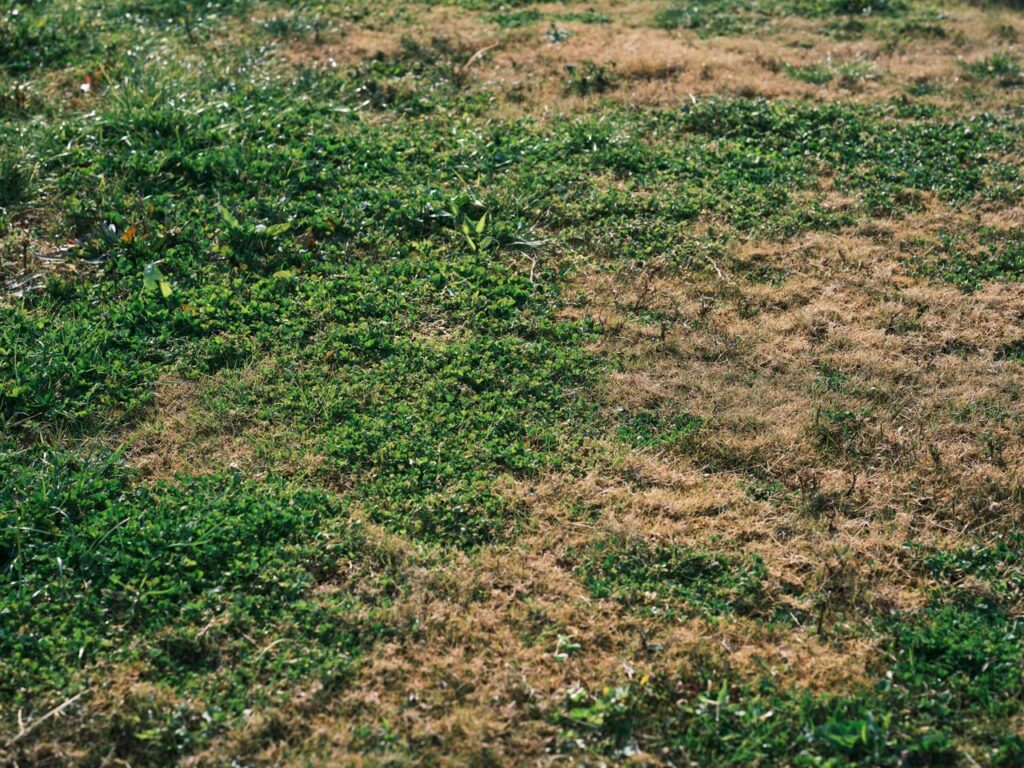
Fertiliser burn is plant damage caused by too much soluble fertiliser or an overly concentrated fertiliser solution around the roots or foliage.
Typical symptoms can include:
brown leaf tips,
scorched leaf edges,
wilting even when the soil is moist,
yellowing,
stunted growth,
and in severe cases, root damage or plant death.
Despite the name, the fertiliser is not usually “burning” the plant through heat.
The main problem is excessive salts.
When the concentration of dissolved salts around the roots becomes too high, the plant has more difficulty taking up water.
In severe cases, water can even move out of root cells instead of into them.
The plant begins behaving as though it is suffering from drought — even when the soil looks wet.
Why Does Fertiliser Contain Salts?
Most mineral fertilisers supply nutrients in forms that dissolve into charged particles, or ions, in water.
For example, fertilisers may provide forms of:
nitrogen,
potassium,
calcium,
magnesium,
and other nutrients.
Plants need these dissolved nutrients.
The problem occurs when their concentration becomes too high.
Fertiliser is useful at the right dose.
Too much can change the chemistry around the roots enough to damage them.
What Does Fertiliser Burn Look Like?
One of the earliest signs may be damage at the leaf tips or margins.
You may notice:
brown tips,
crispy edges,
yellow tissue beside brown areas,
or leaves that look dry despite moist soil.
If damage becomes more severe, the plant may:
wilt,
drop leaves,
stop growing,
or develop damaged roots.
Symptoms can appear quickly after a major overapplication or develop gradually when fertiliser salts accumulate over time.
Why Do Leaf Tips Often Burn First?
Leaf tips and margins are common places for salt-related damage to become visible.
As water moves through the plant and evaporates from leaves, salts and nutrient imbalances can contribute to injury at these sensitive areas.
However, brown edges are not exclusive to fertiliser burn.
They can also be caused by:
drought,
heat,
potassium deficiency,
salinity,
or root problems.
That is why the plant’s recent history matters.
Timing Is a Major Diagnostic Clue
Ask yourself:
Did the symptoms begin shortly after fertilising?
If you:
applied a much stronger solution than usual,
used several fertilisers together,
added an extra handful of granular fertiliser,
or fertilised a very dry plant,
and symptoms appeared soon afterwards, fertiliser burn becomes more likely.
Diagnosis is easier when you connect symptoms with what happened immediately before them.
Containers Are Particularly Vulnerable
Potted plants have a limited volume of growing medium.
That means fertiliser salts are concentrated within a relatively small root zone.
In the ground, roots may explore a much larger area.
In a pot, they cannot escape.
This makes container-grown:
chillies,
tomatoes,
brinjal,
herbs,
and other vegetables
more vulnerable to over-fertilisation.
Salt Can Build Up Gradually
Fertiliser burn does not always happen because of one huge mistake.
Repeated applications can gradually leave soluble salts behind.
This is especially possible when:
fertiliser is applied frequently,
little water drains through the pot,
several products are used together,
or the same container has been fertilised for many months.
You may eventually notice a white or crusty deposit on:
the soil surface,
pot rim,
or drainage area.
That can be a sign of mineral accumulation.
Too Many Different Fertilisers Can Cause Problems
A gardener may use:
slow-release fertiliser,
liquid NPK,
fruiting fertiliser,
calcium,
magnesium,
seaweed,
and micronutrients
without realising that several products are supplying overlapping nutrients.
Each dose may seem small on its own.
Together, they may create excessive concentration.
This is why keeping a simple fertiliser programme is often safer than collecting many products.
Higher NPK Numbers Require More Care
A fertiliser labelled 20-20-20 is more concentrated than one labelled 5-5-5.
That does not make it better.
It means a smaller amount of product may deliver the same amount of nutrients.
Always use the label rate for the specific product.
Do not transfer the dosage from one fertiliser to another just because they are both described as “vegetable fertiliser.”
Liquid Fertiliser Can Burn Plants Too
Liquid fertilisers are convenient because they can be diluted in water.
But that also makes concentration errors easy.
If a label says:
10 ml per 5 litres,
using 10 ml in 1 litre does not give a plant a “stronger feed.”
It gives the plant a much more concentrated fertiliser solution.
Measure properly.
More concentrated does not mean more effective.
Granular Fertiliser Can Damage Roots
Granular fertiliser applied too heavily can create concentrated areas of salts.
Problems are especially likely if granules are placed:
directly against the stem,
in one large pile,
or very close to shallow roots.
Spread granular products according to label instructions.
Avoid dumping fertiliser in one spot.
Fertiliser on Dry Soil Can Be Riskier
A severely dry plant is already struggling to take up water.
Adding concentrated fertiliser immediately can increase salt stress around the roots.
If a plant has become badly dehydrated, restore normal moisture first unless the product label specifically instructs otherwise.
Do not try to solve wilting by combining heavy watering and heavy feeding at the same time.
Foliar Fertiliser Can Burn Leaves
Some fertilisers are designed for application directly to foliage.
But concentrated sprays can damage leaves.
Risk can increase when:
the solution is too strong,
the product is not meant for foliar use,
or leaves remain coated with concentrated salts.
Follow the foliar dilution rate exactly.
Do not assume a root fertiliser can also be sprayed onto leaves.
Hot Weather Can Increase Risk
Malaysia’s heat can make container plants more vulnerable to water stress.
A plant already struggling during a hot afternoon may respond poorly to excessive fertiliser.
Avoid aggressive feeding when the plant is severely stressed.
Good water management should come first.
Heavy Rain Does Not Mean You Should Immediately Re-Fertilise
Malaysian rain can leach nutrients from containers and raised beds.
But gardeners sometimes respond by applying fertiliser after every major storm.
That can become excessive.
Not every rainfall event removes all nutrients.
Consider:
the product used,
how recently it was applied,
whether it is slow-release,
and how the plant is growing
before adding more.
Slow-Release Fertiliser Can Still Be Overapplied
Slow- or controlled-release fertilisers are often easier to manage because nutrients are released gradually.
But they are not impossible to overuse.
Applying double or triple the recommended quantity can still create excessive nutrient availability.
Follow the rate.
“Slow-release” does not mean “use as much as you want.”
Fertiliser Burn vs Potassium Deficiency
Both can produce brown leaf margins.
The difference often becomes clearer from the overall pattern and recent history.
Potassium deficiency generally begins progressively on older leaves and is associated with marginal yellowing followed by scorching.
Fertiliser burn may appear after heavy feeding and can affect leaf tips and margins more suddenly.
If the plant was recently over-fertilised, do not assume the brown edges mean it needs more potassium.
That could make the problem worse.
Fertiliser Burn vs Drought
Both can cause:
brown leaves,
wilting,
and crispy edges.
Check the soil.
If the root zone is extremely dry, drought may be responsible.
If the soil is moist but the plant began wilting soon after heavy fertilisation, salt stress becomes more suspicious.
Remember that salt-damaged roots can struggle to take up water even when moisture is present.
What Should You Do If You Suspect Fertiliser Burn?
First:
stop fertilising.
Do not try to correct an excess with another nutrient product.
Then assess:
how much fertiliser was used,
whether the pot drains properly,
how wet the soil is,
and how severe the symptoms are.
Can You Flush Excess Fertiliser from a Pot?
For container plants with good drainage, flushing the growing medium with clean water can sometimes help remove excess soluble salts.
Water thoroughly enough that excess water drains freely from the bottom.
The objective is to move accumulated soluble salts out of the root zone.
However, do not turn a salt problem into a waterlogging problem.
If the container drains poorly, fix drainage rather than repeatedly saturating it.
Do Not Flush Continuously for Days
One thorough flushing event may be useful in an appropriate container.
Repeatedly soaking the pot can damage roots through lack of oxygen.
After flushing, allow the growing medium to return to an appropriate moisture level.
Observe the plant before taking further action.
What About Raised Beds or Ground Soil?
Heavy flushing is less practical in garden beds.
If excessive fertiliser has been applied, your options depend on:
the fertiliser type,
amount,
soil,
drainage,
and area affected.
Stop additional feeding and water appropriately.
Avoid adding more amendments in an attempt to “neutralise” the fertiliser unless there is a clear agronomic reason.
For severe accidental overapplication, removing visible excess granular fertiliser from the soil surface may help if it can be done without damaging roots.
Damaged Leaves May Not Recover
Brown, dead leaf tissue will not become green again.
Do not judge recovery by the old damaged leaves.
Instead, watch:
new growth,
new leaves,
and overall plant vigour.
If the root system recovers, future leaves may develop normally.
Severely Damaged Roots Take Time
A plant may continue looking stressed for some time after excess salts have been reduced.
Roots need time to recover.
Do not restart fertilising simply because the plant has not turned lush and green after two days.
Give it time.
When Should You Start Feeding Again?
Resume fertilisation only when:
the plant has stabilised,
new growth is appearing,
and the root zone is functioning normally.
Start according to the product’s normal labelled rate.
Do not attempt to “make up” for the feeding you skipped during recovery.
Prevention Is Much Easier Than Recovery
The best strategy is simple:
measure your fertiliser.
Do not guess.
Use:
a measuring spoon,
digital scale,
measuring cup,
or dosing cap
depending on the product.
This is especially important for concentrated fertilisers.
Keep a Fertiliser Record
A basic record can prevent accidental double feeding.
Write down:
date,
product,
NPK,
application rate,
and which plants were fed.
For example:
25 October — chilli pots — 12-12-17 — label rate
When you manage many containers, it is surprisingly easy to forget which ones were fertilised recently.
Avoid “A Little Extra for Good Luck”
Plants do not understand generosity.
If the recommended amount is 10 g, adding 20 g does not provide twice the benefit.
The plant has physiological limits on how quickly it can use nutrients.
Anything beyond those needs may remain in the soil, wash away, or damage roots.
A Simple Fertiliser-Burn Prevention Checklist
To reduce the risk:
1. Read the fertiliser label.
2. Measure the correct dose.
3. Never assume higher concentration means better growth.
4. Avoid combining several fertilisers without checking what each contains.
5. Keep granular fertiliser away from direct stem contact.
6. Use foliar products only at the correct foliar dilution.
7. Avoid aggressively fertilising severely dry or stressed plants.
8. Make sure containers drain properly.
9. Watch for salt buildup in long-term pots.
10. Keep simple feeding records.
These habits prevent most home-garden fertiliser mistakes.
Feed the Plant — Do Not Force It
Fertiliser should support growth.
It should not be used to force growth faster than the plant’s environment can support.
A plant also needs:
light,
water,
oxygen around its roots,
healthy soil,
appropriate temperature,
and enough physical root space.
Extra fertiliser cannot compensate for poor conditions.
At the end of the day, fertiliser burn is usually caused by excessive fertiliser salts creating stress around plant roots or by overly concentrated fertiliser contacting plant tissue. Brown tips, scorched margins, wilting, poor growth and damaged roots can all occur, but these symptoms can resemble drought or nutrient deficiency. Malaysian home gardeners should pay particular attention to container plants, overlapping fertiliser products, hot weather, frequent feeding and long-term salt buildup. Measure what you apply, follow the label, and remember that the safest fertiliser dose is not the biggest one — it is the amount the plant can actually use.
Have you ever given a plant “a little extra fertiliser” only to see the leaf tips turn brown a few days later? Share what fertiliser you used, the amount, your container setup and what happened afterwards, and tag @projectharvest.my on Instagram. Seeing real fertiliser-burn cases can help Malaysian gardeners learn why careful measurement beats feeding by guesswork.