
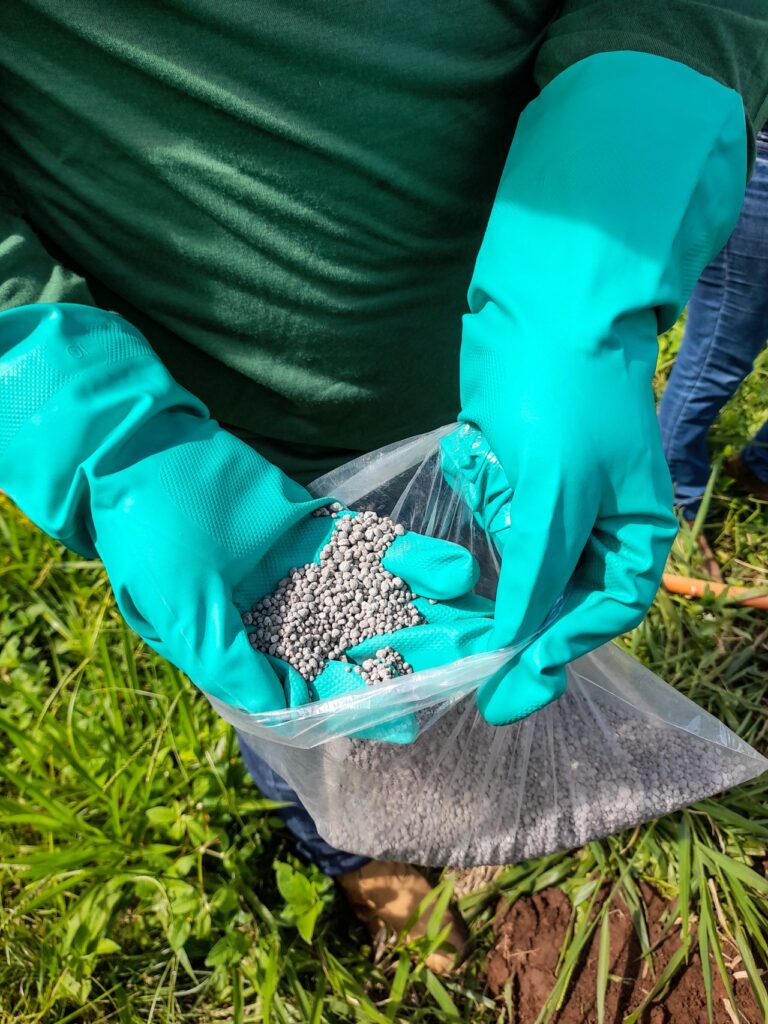
You should usually stop or temporarily pause fertilising when a plant is severely stressed, its roots are not functioning properly, it has already received enough fertiliser, or it is approaching the end of its productive life.
You should not, however, stop fertilising simply because a plant has started flowering or fruiting.
Plants continue to need nutrients throughout active growth.
The better question is often not:
“When do I stop fertilising completely?”
but:
“Does this plant still need additional nutrients right now?”
For Malaysian home gardeners, that distinction matters because our tropical climate allows many plants to keep growing for much longer than they would in countries with a cold winter dormancy.
Stop Fertilising When the Plant Is Severely Stressed
Fertiliser is not medicine for every struggling plant.
If a plant is badly stressed by:
extreme heat,
severe drought,
waterlogging,
root damage,
disease,
or major pest infestation,
temporarily stop fertilising while you correct the main problem.
A stressed root system may not be able to use additional nutrients effectively.
Adding fertiliser can increase salt concentration around already vulnerable roots and make the situation worse.
A Wilted Plant Does Not Automatically Need Food
If a chilli plant is drooping during a hot Malaysian afternoon, your first thought should not be fertiliser.
Check:
soil moisture,
root-zone temperature,
drainage,
and recent weather.
Fertiliser cannot compensate for a plant that simply needs water.
Likewise, a plant sitting in waterlogged soil after several days of heavy rain does not need another feeding just because the leaves have turned yellow.
It needs healthier roots.
Pause Fertiliser During Waterlogging
Malaysia’s prolonged rainfall can leave:
pots,
raised beds,
and poorly drained ground soil
saturated for extended periods.
Roots require oxygen.
When soil remains waterlogged, root activity declines and nutrient uptake becomes less efficient.
Adding fertiliser at this point may leave more soluble nutrients in the root zone without solving the real problem.
Allow drainage to improve first.
Resume feeding only when the plant is actively growing again.
Stop If You Have Over-Fertilised
If you suspect fertiliser burn, stop all feeding immediately.
Possible warning signs include:
brown leaf tips,
scorched margins,
wilting despite moist soil,
salt crusting,
and symptoms appearing soon after a heavy fertiliser application.
Do not try to correct over-fertilisation with a different fertiliser.
The solution to too much fertiliser is not more fertiliser.
Reduce the excess where appropriate, protect the roots, and wait for healthy new growth before restarting.
You May Need to Pause After Repotting
Whether a newly repotted plant needs fertiliser depends on the growing medium.
Many commercial potting mixes already contain:
compost,
nutrients,
or controlled-release fertiliser.
If you repot a plant into a fresh nutrient-rich mix and immediately add another full fertiliser dose, you may be feeding it unnecessarily.
Check the bag.
If fertiliser is already included, follow the manufacturer’s guidance before adding more.
Do Not Automatically Fertilise a Plant with Damaged Roots
Repotting, transplanting, root pruning, or root disease can temporarily reduce the plant’s ability to absorb nutrients.
Immediately applying a strong fertiliser is not always helpful.
Let the plant establish functioning roots first.
Once you see healthy new growth, normal feeding can usually resume if the crop requires it.
Stop When a Short-Lived Crop Is Nearly Finished
Some vegetables naturally reach the end of their productive cycle.
An old chilli, cucumber, tomato, leafy vegetable, or other crop may eventually show:
declining yield,
weak new growth,
poor-quality harvests,
increasing pest or disease pressure,
or general ageing.
If you already plan to remove the plant soon, continuing to fertilise heavily makes little sense.
You are investing nutrients into a crop that has little productive life remaining.
It may be more useful to prepare the next planting.
But Do Not Confuse Temporary Stress with the End of the Crop
A plant can slow down after:
extreme heat,
heavy rain,
temporary drought,
or a pest attack
and later recover.
Do not stop feeding permanently just because production dropped for a week.
Look at:
new growth,
plant health,
crop age,
and previous yield
before deciding the plant is finished.
Do You Stop Fertilising When Flowers Appear?
No.
This is a common misunderstanding.
Fruiting vegetables still need nutrients after flowering begins.
A tomato, chilli, brinjal, cucumber, or okra needs healthy leaves and roots to support fruit development.
What may change is the nutrient balance and feeding rate.
For example, excessive nitrogen during fruiting can encourage unnecessary leafy growth.
But that does not mean nitrogen — or fertiliser generally — should suddenly be removed completely.
Do You Stop Fertilising When Fruit Appears?
Usually not.
Fruit development can create significant nutrient demand.
A chilli plant carrying many fruits still needs to maintain:
leaves,
roots,
new flowers,
and developing fruit.
Stopping all nutrition while the plant is actively cropping may eventually weaken it.
The correct approach is to continue an appropriate programme rather than feeding heavily or stopping abruptly.
What About Before Harvest?
There is generally no universal rule saying you must stop ordinary plant fertiliser a certain number of days before harvesting vegetables.
Follow the instructions for the specific product you are using.
This becomes especially important if a product combines fertiliser with:
pesticides,
fungicides,
or other active ingredients.
Those products may have specific harvest restrictions.
Do not invent your own withdrawal period or assume all garden products are treated the same way.
Slow-Release Fertiliser Makes “Stopping” Less Precise
If you use controlled-release granules, nutrients continue being released after application.
You cannot simply stop tomorrow in the same way you can stop a liquid feed.
This is why slow-release fertiliser should be applied with some planning.
Consider:
how long the crop will remain,
the product’s stated release period,
and whether the plant is likely to need that feeding for the full duration.
Applying a six-month product to a vegetable you plan to remove in a few weeks may be unnecessary.
Liquid Feeding Is Easier to Pause
Liquid fertiliser gives you more control.
If weather turns extremely wet or the plant becomes stressed, you can simply skip the next application.
Then resume when conditions improve.
This flexibility can be particularly useful in Malaysian container gardens, where soil moisture and plant growth can change quickly with weather.
Heavy Rain May Be a Reason to Delay Feeding
If several days of heavy rain are expected, it can sometimes make sense to delay a soluble fertiliser application.
Otherwise, much of the nutrient may be washed through:
pots,
grow bags,
or very free-draining beds
before the plant uses it.
But do not automatically compensate by doubling the next dose.
Return to the normal feeding programme.
Do Not Fertilise Purely Because the Calendar Says So
A feeding schedule is useful.
But the plant still matters more than the calendar.
If your schedule says:
“fertilise every two weeks”
but the plant is:
waterlogged,
recently over-fertilised,
or severely stressed,
skip the feeding.
A schedule is a management tool, not an instruction to ignore plant condition.
Healthy Plants Can Sometimes Need Less Than You Think
Gardeners often assume that feeding more frequently will produce more growth.
But once nutrient needs are satisfied, extra fertiliser provides diminishing benefits and increasing risk.
Overfeeding can contribute to:
salt buildup,
soft excessive growth,
root damage,
nutrient imbalance,
and unnecessary cost.
The aim is adequate nutrition, not maximum fertiliser input.
Container Plants Need Ongoing Monitoring
Potted plants are slightly different because their nutrient reservoir is limited.
Over time, nutrients can:
be taken up by plants,
leach out during watering,
or accumulate as salts.
This means long-lived container plants often require continued feeding.
But they also require occasional reassessment.
Ask:
Is the plant still actively growing?
Has fertiliser recently been applied?
Is salt accumulating?
Does the growing medium need refreshing?
Do not keep feeding the same pot indefinitely without paying attention to what is happening inside it.
Perennial Plants May Need Reduced Feeding Rather Than a Complete Stop
Fruit trees, curry leaf plants, perennial herbs, and other long-lived plants do not necessarily require continuous heavy fertilisation.
Their nutrient requirements change with:
growth,
pruning,
flowering,
fruiting,
weather,
and plant size.
Periods of slower growth may justify reducing fertiliser.
In Malaysia, however, many tropical plants do not enter the dramatic winter dormancy seen in temperate climates.
Avoid following overseas advice such as “stop fertilising everything in autumn” without adapting it to Malaysian growing conditions.
Indoor Plants May Need Less When Growth Slows
Plants growing indoors or on shaded balconies may grow slowly because of limited light.
If growth slows substantially, nutrient demand also falls.
Continuing to fertilise heavily during slow growth can cause salts to accumulate.
Reduce feeding to match actual plant growth rather than assuming the plant needs the same amount all year.
Stop If You Cannot Identify the Problem
If a plant suddenly develops:
yellow leaves,
brown edges,
distortion,
or poor growth,
do not immediately fertilise.
First diagnose.
The problem may be:
water,
roots,
pH,
pests,
disease,
heat,
or an existing nutrient excess.
If you do not know whether the plant is hungry, adding fertiliser can make diagnosis even harder.
When Should You Resume Fertilising?
Resume when:
the root zone is healthy,
the plant is actively growing,
stress has passed,
and additional nutrients are genuinely needed.
Positive signs include:
healthy new leaves,
new shoots,
renewed flowering,
stronger growth,
and normal water uptake.
Restart at the appropriate label rate.
Do not compensate for skipped applications by doubling the dose.
A Simple “Should I Fertilise Today?” Checklist
Before feeding, ask:
1. Is the plant actively growing?
2. Are the roots healthy?
3. Is the soil neither severely dry nor waterlogged?
4. Has the plant already been fertilised recently?
5. Is slow-release fertiliser already present?
6. Is the crop still productive?
7. Is heavy rain likely to wash a soluble feed away?
8. Is the plant showing stress that needs another solution first?
9. Does the fertiliser actually suit the crop and growth stage?
10. Am I feeding because the plant needs it — or simply because today is “fertiliser day”?
That last question is surprisingly useful.
Sometimes the Correct Fertiliser Decision Is to Do Nothing
Gardening advice often focuses on what we should add.
More compost.
More NPK.
More calcium.
More micronutrients.
But good plant nutrition also means knowing when not to add something.
If the plant already has enough nutrients, the best fertiliser application may be no application at all.
Observe first.
Feed second.
At the end of the day, you should stop or temporarily pause fertilising when a plant is severely stressed, waterlogged, root-damaged, recently over-fertilised, already well supplied with nutrients, or nearing the end of its productive life. But flowering and fruiting are not automatic reasons to stop — productive vegetables still need balanced nutrition while they crop. In Malaysia’s year-round tropical growing conditions, it is usually better to adjust fertiliser according to the plant’s actual growth, roots, weather and crop stage rather than following a rigid seasonal rule. Good fertilising is not about feeding as often as possible; it is about knowing when feeding genuinely helps.
Ever skipped a fertiliser application because your plant looked stressed — and found that it recovered better without another feed? Share what you were growing, what made you pause, and what happened afterwards by tagging @projectharvest.my on Instagram. Those real Malaysian garden experiences can help other growers learn one of the hardest fertiliser lessons: sometimes knowing when not to feed is just as important as knowing what fertiliser to use.