
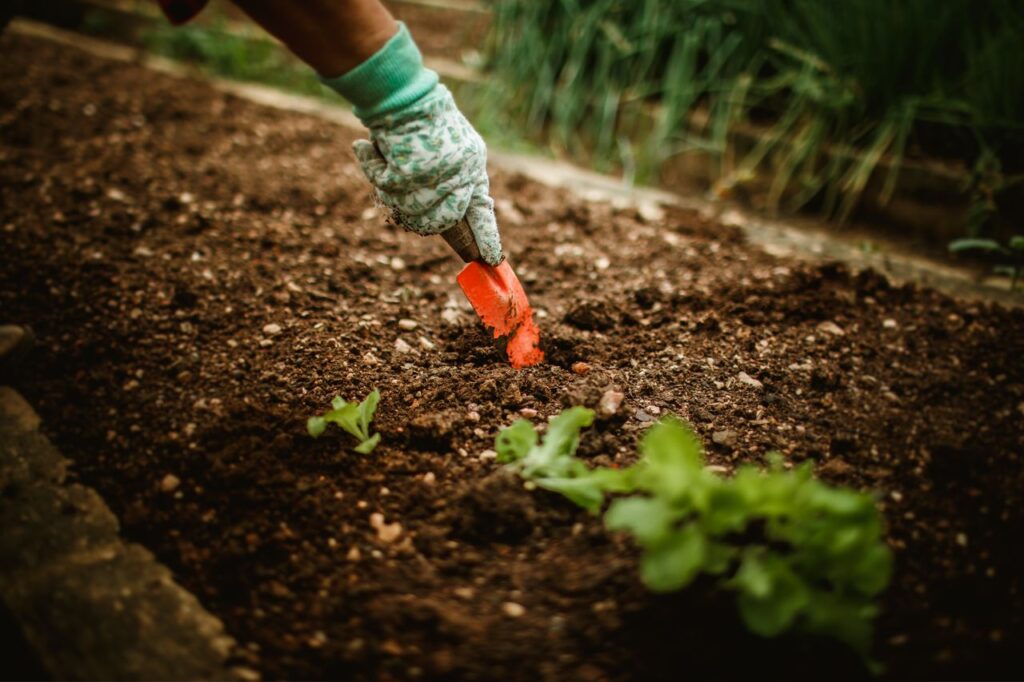
Integrated Pest Management, usually shortened to IPM, is a way of managing pests by combining several practical methods instead of relying automatically on pesticides.
For a home gardener, IPM means:
identify the pest correctly,
monitor how serious the problem is,
prevent conditions that encourage outbreaks,
use physical or biological controls where practical,
and apply pesticides only when they are genuinely needed.
The goal is not to create a garden with zero insects.
The goal is to keep pests at levels where plants can remain healthy and productive while causing as little unnecessary harm as possible to:
beneficial insects,
people,
pets,
the wider garden ecosystem,
and the plants themselves.
IPM Is Not the Same as “Never Use Pesticides”
This is one of the biggest misunderstandings.
Integrated Pest Management does not mean refusing to use all pesticides.
It means pesticides are one tool among many, rather than the automatic first response.
Sometimes a pest problem can be managed through:
hand removal,
pruning,
better plant spacing,
sticky traps,
water sprays,
insect netting,
or natural predators.
Other times, a carefully selected pesticide may be justified.
IPM asks:
What is the least disruptive effective option for this specific problem?
Step 1: Identify the Pest Correctly
Good pest management begins with diagnosis.
A curled chilli leaf could be caused by:
thrips,
mites,
heat,
water stress,
root problems,
or viral disease.
Brown leaf tips might result from:
pest damage,
fertiliser burn,
salinity,
or drought.
If you identify the problem incorrectly, you may treat something that was never a pest problem in the first place.
Before acting, look carefully at:
both sides of leaves,
flowers,
stems,
growing tips,
and the soil surface.
A hand lens can be extremely useful.
Step 2: Decide Whether the Pest Actually Needs Control
Seeing one insect does not automatically mean the plant needs treatment.
Healthy gardens naturally contain insects.
Some are pests.
Some are predators.
Some are pollinators.
And many have little meaningful effect on your plants.
Ask:
How many pests are present?
Is the population increasing?
Is fresh damage appearing?
Is the plant still growing normally?
Is yield being affected?
A few aphids on one leaf may not justify treatment if ladybird beetles are already feeding nearby.
A chilli plant covered with whiteflies, however, requires a different response.
Pest Presence Is Not the Same as Pest Damage
This distinction is central to IPM.
A garden can contain pests without suffering serious damage.
If you treat every insect immediately, you may kill natural enemies that were helping keep the pest population under control.
That can actually make future outbreaks worse.
The practical target is usually not:
“zero pests.”
It is:
“pests below damaging levels.”
Step 3: Monitor Instead of Guessing
Regular monitoring is one of the strongest IPM tools available to home gardeners.
Once or twice a week, inspect vulnerable plants.
Look at:
new leaves,
leaf undersides,
flowers,
fruit,
and growing tips.
Sticky traps can help monitor certain flying pests such as:
whiteflies,
thrips,
and fungus gnats.
Take photos when you notice something suspicious.
This gives you a record of whether the problem is:
improving,
stable,
or becoming worse.
Malaysia’s Climate Makes Monitoring Especially Important
Malaysia’s tropical climate allows many pests to remain active for much of the year.
We do not have a long cold winter that reliably interrupts pest populations.
Warm temperatures can support repeated generations of:
thrips,
whiteflies,
mites,
aphids,
and scale insects.
That means a Malaysian home gardener often benefits more from regular observation than from waiting until pests become severe.
Step 4: Prevent Problems Before They Become Outbreaks
Prevention is one of the least dramatic but most valuable parts of IPM.
Simple actions can reduce the likelihood of major pest problems.
These include:
inspecting nursery plants before bringing them home,
removing badly infested crop residue,
spacing plants so they are easy to inspect,
keeping plants appropriately watered,
avoiding excessive nitrogen fertiliser,
and cleaning tools when disease spread is a concern.
None of these guarantees a pest-free garden.
They simply make severe outbreaks less likely.
Start With Healthy Plants
A healthy plant is not immune to pests.
But it generally tolerates some feeding better than a plant already suffering from:
drought,
poor drainage,
severe root restriction,
nutrient imbalance,
or prolonged heat stress.
Good IPM therefore includes good general plant care.
Do not think of plant health and pest management as separate subjects.
They are connected.
Step 5: Use Physical Controls Where Practical
Home gardeners have an advantage over large farms.
You may have:
five chilli plants,
three brinjal plants,
and a few herbs.
That means you can inspect individual plants closely.
Physical controls can include:
hand-picking caterpillars,
removing badly infested leaves,
pruning scale-covered branches,
washing mites from sturdy foliage,
using insect netting,
or crushing small pest colonies manually.
For a small infestation, these methods may be enough.
Remove Pest Hotspots Instead of Treating Everything
Imagine one chilli leaf is covered with whitefly nymphs while the rest of the plant is relatively clean.
Removing that single leaf may eliminate a major concentration of pests.
That can be better than spraying the entire plant.
Likewise, one heavily scale-infested branch may be removed without treating every leaf in the garden.
Targeted action is a major part of IPM.
Step 6: Protect Beneficial Insects
Not every insect in your garden is an enemy.
Natural pest predators can include:
ladybird beetles,
lacewings,
spiders,
predatory mites,
and parasitoid wasps.
These organisms can reduce pest populations naturally.
If you repeatedly apply broad-spectrum insecticides, you may kill the predators together with the pests.
The pests may then recover quickly while the beneficial population takes longer to return.
This can create recurring outbreaks.
Flowering Plants Can Support Beneficial Insects
A garden containing a variety of flowering plants may provide:
nectar,
pollen,
and habitat
for beneficial insects.
This does not mean planting one particular “magic companion plant” will eliminate pests.
The more useful concept is diversity.
A garden with different plant types and flowering periods may support a wider range of beneficial organisms than an extremely simplified planting.
Step 7: Use Barriers and Exclusion
Preventing a pest from reaching the crop can sometimes be easier than killing it afterwards.
Insect netting can help protect certain crops from incoming pests.
But Malaysian conditions need to be considered.
Fine netting can reduce airflow and trap heat and humidity if installed badly.
Make sure protected plants still receive:
adequate ventilation,
light,
and access where pollination is necessary.
Barriers should solve one problem without creating another.
Step 8: Use Biological Controls When They Make Sense
Biological control means using living organisms or biologically derived agents to manage pests.
Examples may include:
predatory mites,
beneficial nematodes,
and certain microbial pest-control products.
For home gardeners, biological control can be very effective in the right situation.
But it is not automatically simple.
Living control organisms may require specific:
temperatures,
moisture,
storage,
and application conditions.
Use them deliberately rather than assuming anything labelled “biological” will work everywhere.
Step 9: Use Lower-Impact Treatments Carefully
Some pest situations may justify products such as:
insecticidal soap,
horticultural oil,
or appropriately labelled neem-based products.
These can be valuable tools.
But they are still treatments.
They can damage plants when:
mixed too strongly,
used too frequently,
or applied during unsuitable weather.
Malaysia’s intense heat makes spray timing particularly important.
Oil-based treatments applied to hot, drought-stressed foliage may cause injury.
Follow the label carefully.
“Natural” Does Not Automatically Mean Safe
This is another important IPM principle.
A homemade spray is not automatically safer than a commercial pesticide.
Mixtures containing:
dishwashing detergent,
vinegar,
cooking oil,
essential oils,
or other household substances
can injure plants when used at unsuitable concentrations.
Organic products can also affect beneficial organisms.
Evaluate a treatment according to:
evidence,
dose,
target pest,
plant safety,
and proper use,
not simply whether it sounds natural.
Step 10: Escalate to Pesticides Only When Necessary
Sometimes pest pressure becomes severe enough that a pesticide is justified.
If so, choose a product that is:
labelled for the target pest,
appropriate for the crop,
and suitable for the intended setting.
For edible crops, follow:
application rates,
maximum frequency,
protective instructions,
and pre-harvest intervals.
The pre-harvest interval tells you how long you must wait between treatment and harvesting.
Never assume produce becomes safe simply because it is washed.
Targeted Pesticides Are Often Better Than “Kill Everything” Products
Where options are available, choose a treatment aimed at the pest you actually have.
Broad-spectrum pesticides may kill:
pests,
predators,
pollinators,
and other non-target organisms.
That may provide fast visible results while weakening the biological balance of the garden.
IPM favours precision over unnecessary force.
Resistance Matters
Pests such as:
thrips,
whiteflies,
and spider mites
can develop resistance to repeatedly used pesticides.
If every generation is exposed to the same active ingredient, less susceptible individuals may survive and reproduce.
Eventually, the pesticide may become much less effective.
Do not respond by simply spraying more often or making the solution stronger.
Follow resistance-management instructions where relevant and combine chemical control with other IPM methods.
Break the Life Cycle, Not Just the Visible Population
This is where IPM becomes much more powerful than reactive spraying.
Whitefly adults may be visible while eggs and nymphs remain underneath leaves.
Fungus gnat adults may fly around while larvae remain inside potting mix.
Scale adults may be difficult to treat while crawlers are much more vulnerable.
Thrips may hide inside flowers.
Spider mite eggs may remain after adults are reduced.
Ask:
Which life stages survived?
Then build management around the weak point in the pest’s life cycle.
Keep the Garden Clean — But Not Sterile
Sanitation matters.
Remove:
badly infested crop residue,
dead diseased material,
and unnecessary pest reservoirs.
But a healthy garden does not need to look like a laboratory.
Some leaf litter, insects, and natural biodiversity are normal.
IPM is about managing risk, not sterilising every surface.
A Simple IPM Example: Thrips on Chillies
Imagine you discover thrips on several chilli flowers.
A non-IPM reaction might be:
spray a strong insecticide immediately.
An IPM approach could be:
1. Confirm thrips are present.
2. Check how many plants are affected.
3. Remove a few heavily damaged flowers or shoots.
4. Inspect nearby host plants.
5. Use sticky traps to monitor adult activity.
6. Keep plants properly watered and avoid excessive nitrogen.
7. Preserve beneficial insects.
8. Use an appropriate labelled treatment if numbers continue increasing.
9. Reinspect after treatment.
That is IPM in practice.
Another Example: Fungus Gnats
Instead of repeatedly spraying adults around a pot:
check whether the growing medium stays constantly wet,
improve drainage,
adjust unnecessary watering,
use a sticky trap for adults,
and target larvae only if the population remains high.
This solves the underlying pest system rather than simply chasing flies.
An Easy IPM Routine for Home Gardeners
You can reduce IPM to five questions:
1. What is the problem?
Identify it correctly.
2. How serious is it?
Decide whether action is actually needed.
3. Why is it happening?
Look for environmental conditions and pest life stages.
4. What is the least disruptive effective solution?
Start with prevention, physical controls, biological controls, or targeted low-impact treatments where suitable.
5. Did it work?
Monitor the plant afterwards.
That final step is often forgotten.
Keep Simple Records
Write down:
the crop,
pest,
date,
severity,
weather,
treatment,
and result.
Over time, you may discover patterns such as:
spider mites appearing during hot dry periods,
fungus gnats following prolonged wet soil,
or whiteflies repeatedly entering through one group of ornamental plants.
Once you know the pattern, prevention becomes much easier.
IPM Is a Decision-Making System
The most important thing to understand is that IPM is not one product.
You cannot buy a bottle of “IPM”.
It is a way of making decisions.
Observe first.
Identify.
Measure the problem.
Prevent what you can.
Use the least disruptive control that is likely to work.
Escalate only when necessary.
Then monitor the result.
At the end of the day, Integrated Pest Management is about managing pests intelligently rather than reacting to every insect with a spray bottle. For Malaysian home gardeners, where warm weather allows many pests to remain active throughout the year, regular inspection and early intervention are especially valuable. Build healthy plants, monitor pest numbers, protect beneficial insects, remove serious hotspots, break pest life cycles, and use pesticides responsibly when other methods are not enough. A successful IPM garden does not have to be insect-free — it simply keeps pest populations low enough for the garden to remain healthy, productive, and resilient.
Already using some form of IPM without realising it? Maybe you inspect your chillies weekly, hand-remove caterpillars, use sticky traps, preserve ladybird beetles, or only spray when pest numbers become serious. Share your own pest-management routine, photos, and results by tagging @projectharvest.my on Instagram. Seeing how Malaysian home gardeners combine different methods can help our community move away from “spray first, ask later” and towards smarter, more sustainable pest management.