
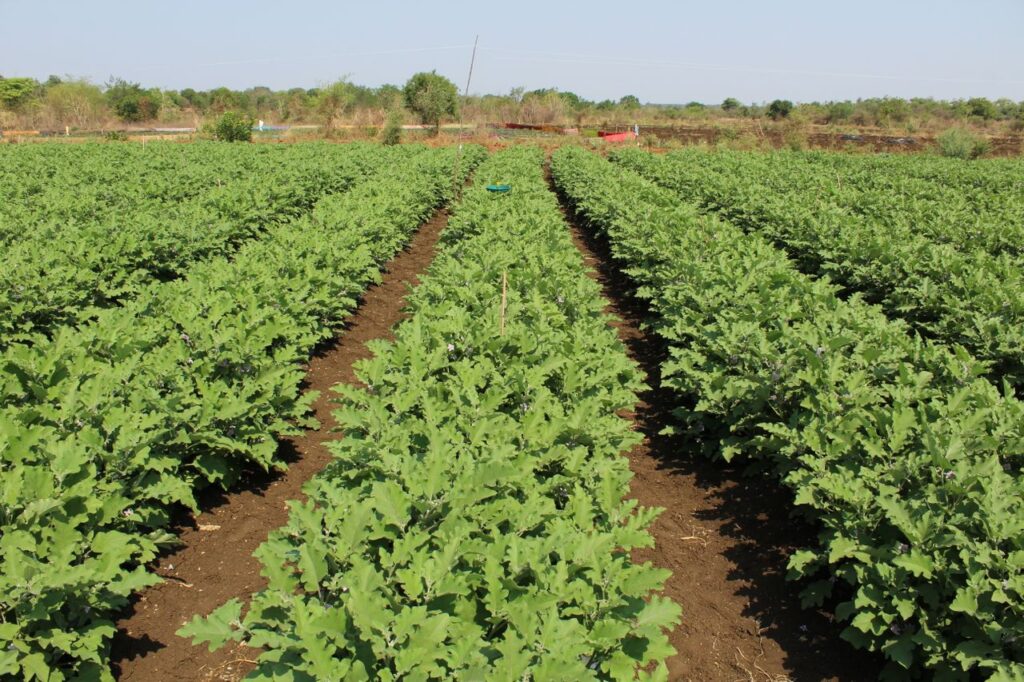
Yes, trap crops can sometimes help lure pests away from valuable vegetables — but only when the pest genuinely prefers the trap crop and you actively manage the insects that gather there.
A trap crop is a plant grown mainly to attract a particular pest away from the crop you care about more.
Instead of expecting the garden to remain pest-free, the idea is to concentrate pest pressure in one area where it becomes easier to:
monitor,
remove,
or control.
This can be a useful part of Integrated Pest Management, or IPM.
But trap cropping is not as simple as planting one “pest-repelling” flower beside a chilli plant and expecting all insects to move there.
What Exactly Is a Trap Crop?
A trap crop is deliberately chosen because it is more attractive to a target pest than the main crop.
Imagine you are growing an important vegetable crop.
A second plant is placed:
around it,
beside it,
or nearby.
If the pest prefers the trap crop, more insects may settle and feed there instead of moving immediately into the main crop.
This gives the gardener an opportunity to intervene.
The important word is target.
Trap cropping usually works against particular pests, not every pest in the garden.
Trap Crops Attract Pests — They Do Not Repel Them
This distinction is crucial.
A trap crop works by attracting pests toward itself.
That means you are intentionally encouraging a pest to gather in a particular part of the garden.
If you then ignore that plant, the trap crop can become a breeding ground.
Instead of protecting your vegetables, it may eventually produce even more pests that spread into them.
A trap crop therefore requires monitoring.
Why Would a Pest Choose One Plant Over Another?
Insects do not treat every plant equally.
They may respond to differences in:
plant species,
leaf chemistry,
plant age,
flowering stage,
smell,
colour,
and tenderness of growth.
A pest may strongly prefer one plant even though it is capable of feeding on several.
Trap cropping takes advantage of that preference.
Timing Is Extremely Important
A trap crop needs to be attractive when the pest arrives.
If you plant it too late, the pests may already be established on your vegetables.
For example, a tiny newly germinated trap crop beside a mature vegetable bed may provide little protection because it is not yet the most attractive host.
Trap crops often need to be planted:
before,
or at least at the same time as,
the main crop.
The exact timing depends on the crop and pest.
Placement Matters Too
There are several ways to use trap crops.
You might plant them:
around the outside of a vegetable bed,
in a row along the pest’s likely entry point,
or in small patches close to the main crop.
The best arrangement depends on how the pest moves through the garden.
For a small Malaysian terrace-house garden, even one or two strategically placed trap plants may sometimes be useful.
But random placement is less likely to produce reliable results.
Border Trap Cropping
One approach is to grow the trap crop as a border around the crop you want to protect.
Pests arriving from outside encounter the attractive trap plant first.
This can work particularly well when insects tend to move into the garden from surrounding vegetation.
However, a border may also reduce airflow if planted too densely.
In Malaysia’s humid climate, avoid creating a thick wall of foliage around vegetables that need ventilation.
Trap Crops Work Better for Some Pests Than Others
Not every garden pest is a good candidate for trap cropping.
The method is most promising when:
the pest has a clear plant preference,
the pest can be detected easily,
and the trap crop can be managed before the insects spread.
Pests that move rapidly between many hosts may be much harder to contain.
Likewise, pests already established throughout the entire garden may not suddenly abandon your vegetables because you add a trap crop.
Trap cropping is usually better as a preventive or early-intervention strategy.
You Still Need to Inspect the Main Crop
Do not assume the main vegetables are safe simply because pests are visible on the trap crop.
Inspect both.
Look at:
leaf undersides,
young shoots,
flowers,
and fruit.
The trap crop should reduce pressure, not create a false sense of security.
If pests begin colonising both plants heavily, additional management may be required.
What Should You Do With Pests on the Trap Crop?
This is where the method succeeds or fails.
Once pests concentrate on the trap crop, you may:
hand-remove them,
remove heavily infested leaves,
prune affected sections,
wash suitable pests off,
or apply an appropriate targeted treatment.
In some situations, the entire trap plant may eventually be removed and disposed of.
The trap crop is not meant to become a permanent pest nursery.
Do Not Let the Pest Complete Generation After Generation
Suppose aphids gather heavily on a trap crop.
If you leave them untouched, they reproduce.
Their offspring reproduce again.
Eventually, winged adults may spread throughout the rest of the garden.
At that point, the trap crop has stopped helping.
Successful trap cropping means concentrating the pest and then interrupting its life cycle.
Trap Crops Fit Naturally Into IPM
Trap cropping works best alongside other management methods.
You might combine it with:
regular plant inspection,
sticky traps,
physical removal,
beneficial insects,
insect netting,
or targeted pesticide use when necessary.
This is a classic IPM approach.
No single method needs to carry the entire pest-control programme.
Be Careful With Broad-Spectrum Pesticides
If a trap crop attracts both pests and beneficial insects, spraying it indiscriminately may kill:
ladybird beetles,
parasitoid wasps,
predatory bugs,
and other natural enemies.
Whenever treatment is necessary, choose the least disruptive effective option.
A trap crop can sometimes become a useful place for beneficial insects to find prey.
That advantage disappears if everything is repeatedly sprayed.
Can Flowers Be Used as Trap Crops?
Sometimes.
But flowering plants are often discussed online as though any colourful flower will automatically attract pests away from vegetables.
That is too simplistic.
A flower might:
attract beneficial insects,
attract pollinators,
have little effect on your target pest,
or even host another pest.
A plant should be called a trap crop only when there is a reasonable biological basis for the target pest preferring it.
That is different from general companion planting.
Trap Cropping Is Not the Same as Companion Planting
Companion planting is a broad term covering many ideas about growing plants together.
Some claims are well supported.
Others are mostly gardening tradition.
Trap cropping is more specific.
Its purpose is to manipulate pest behaviour by offering a more attractive host.
So instead of asking:
“What plant keeps pests away?”
ask:
“What plant does this particular pest prefer, and can I manage the pests once they gather there?”
That is a much stronger question.
Could the Trap Crop Attract More Pests Into the Garden?
Possibly.
That is one of the main risks.
An attractive trap crop may draw pests into your growing area.
If you manage them properly, that can be useful.
If you do not, the plant may increase the total pest population.
This is why trap crops require more attention than passive companion planting.
Monitor Trap Crops More Often Than Main Crops
If you deliberately plant something to attract pests, inspect it frequently.
Look for:
eggs,
young insects,
adults,
feeding damage,
honeydew,
or distorted growth.
During periods of high pest pressure, check every few days if practical.
Do not wait until the plant is completely covered.
Malaysian Conditions Can Speed Up Pest Reproduction
Malaysia’s warm climate allows many garden pests to remain active throughout much of the year.
Without a long winter to interrupt reproduction, insects may move rapidly from:
egg,
to immature stage,
to reproducing adult.
This means a trap crop can switch from useful to problematic quite quickly.
Frequent monitoring matters.
Heavy Rain Can Change How the System Behaves
Malaysia’s thunderstorms may:
wash some pests from foliage,
damage flowers,
or temporarily change insect movement.
After prolonged rain, inspect both the trap crop and main crop again.
Do not assume the pests disappeared.
Many may remain under leaves, inside buds, or on sheltered stems.
Avoid Creating an Overcrowded Garden
Adding trap crops means adding more plants.
In a small balcony or terrace-house garden, space may already be limited.
Do not sacrifice:
airflow,
light,
or access
just to fit a trap crop.
Crowding vegetables can create:
humidity,
disease,
and pest-inspection problems
that outweigh any benefit from the trap crop.
Choose Something You Can Manage Easily
An ideal trap crop for a home garden should be:
easy to inspect,
easy to remove,
and not so valuable that you refuse to sacrifice it.
Remember its purpose.
If the trap crop becomes badly infested, you may need to cut it back or remove it.
That is much easier emotionally when you planned for that from the beginning.
Do Trap Crops Completely Protect Vegetables?
No.
Think of trap cropping as reducing pest pressure, not creating an invisible barrier.
Some pests will still reach the main crop.
That is normal.
Success might mean:
far fewer pests,
later infestation,
less damage,
or easier control.
It does not necessarily mean the main vegetables remain completely untouched.
When Is Trap Cropping Worth Trying?
It is most worth considering when:
you repeatedly experience the same pest,
the pest has a known preference for certain plants,
you have enough space for additional plants,
you can inspect them regularly,
and you are willing to remove or treat the trap crop when necessary.
It may be less suitable when:
garden space is extremely limited,
you cannot monitor frequently,
or the pest is already widespread across many plants.
Start Small
Home gardeners do not need to redesign the entire garden around trap cropping.
Experiment.
Try a small setup.
Record:
which pest appears,
which plant it chooses,
whether the main crop has less damage,
and how quickly the trap crop becomes infested.
If it works in your specific Malaysian garden, expand the system later.
A Simple Trap-Crop Trial
If you want to experiment:
1. Identify the pest first.
Do not choose a trap crop without knowing what you are targeting.
2. Research whether the pest strongly prefers another suitable host.
Avoid relying only on internet companion-plant lists.
3. Plant the trap crop early enough.
It needs to be attractive when pests arrive.
4. Place it strategically.
Often near the outer edge or likely pest entry area.
5. Inspect both crops regularly.
Confirm whether pests actually prefer the trap.
6. Control pests on the trap crop before they multiply excessively.
7. Remove severely infested trap plants if necessary.
8. Record the result.
Compare damage with previous growing cycles.
What Does Success Look Like?
A useful trap crop may result in:
more pests concentrated on the trap plant,
fewer pests on the main crop,
slower pest spread,
less damage,
and easier targeted management.
If both plants become equally infested, the strategy is not providing much protection.
If the trap crop continually produces pests that spread elsewhere, it may be making the problem worse.
Use evidence from your garden.
Trap Crops Are a Tool, Not a Trick
The attraction of trap cropping is obvious.
The idea of pests choosing another plant instead of your vegetables sounds almost too easy.
And that is exactly why it is sometimes oversold.
Good trap cropping requires:
a suitable pest,
a suitable plant,
correct timing,
correct placement,
and active management.
Without those pieces, it becomes just another plant in the garden.
At the end of the day, trap crops can help lure certain pests away from valuable vegetables, but they work by concentrating pests rather than magically repelling them. For Malaysian home gardeners, warm year-round conditions mean those concentrated populations can reproduce quickly, so monitoring and follow-up control are essential. Choose a trap crop for a specific pest, plant it at the right time and location, watch both the trap and main crop closely, and remove or treat the pest concentration before it becomes a breeding ground. Used as part of IPM, trap cropping can be a clever way to reduce pest pressure — but it should always be tested against what actually happens in your own garden.
Have you experimented with a plant that seemed to attract pests away from your chillies, leafy vegetables, brinjal, beans, or other crops? Share the trap plant you tried, the pest it attracted, and whether your main vegetables actually suffered less damage by tagging @projectharvest.my on Instagram. Real Malaysian garden trials can help us separate genuinely useful trap-crop strategies from companion-planting claims that sound good but do not hold up in practice.