
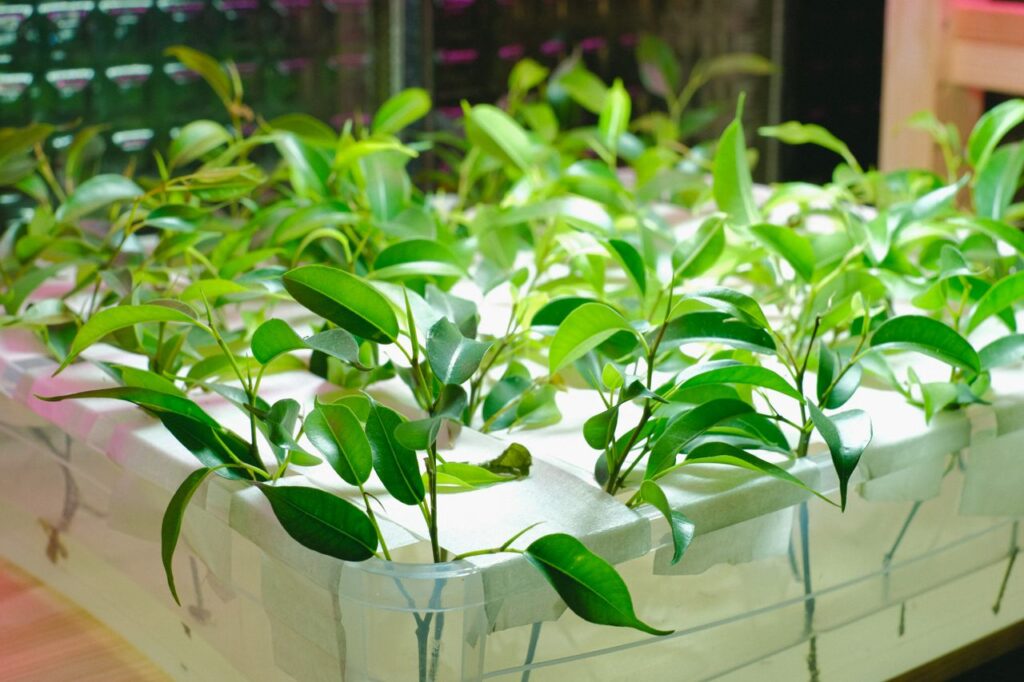
Kratky hydroponics is one of the simplest ways to try growing plants without soil because it can work without a water pump, air pump, timer, or circulating nutrient system.
The plant grows above a covered container filled with nutrient solution.
Its roots extend downward into the solution while an air space gradually develops between the plant and the water.
That combination gives the roots access to:
water,
dissolved nutrients,
and oxygen.
For Malaysian home gardeners who want to experiment with hydroponics without immediately building a complicated system, Kratky can be an excellent starting point.
What Is the Kratky Method?
The Kratky method is a type of passive hydroponics.
Passive means the system does not rely on powered water circulation.
Instead, a plant sits in a net pot above a reservoir.
Its roots grow down into nutrient solution.
As the plant uses water, the liquid level gradually falls.
The upper portion of the root system becomes exposed to the humid air space inside the container.
These roots help the plant obtain oxygen while lower roots continue accessing the nutrient solution.
The system is simple because that air gap develops naturally.
Why Doesn’t Kratky Need an Air Pump?
In deep-water hydroponic systems, roots may remain submerged while an air pump supplies oxygen to the nutrient solution.
Kratky works differently.
As the plant drinks water, the solution level drops.
This exposes part of the root system to moist air.
Those exposed roots provide much of the oxygen the plant needs.
That is why maintaining the air gap is essential.
If you repeatedly refill the reservoir right to the top and submerge roots that have adapted to air, the plant may struggle.
What Do You Need to Start?
A basic Kratky setup can be very simple.
You typically need:
an opaque container with a lid,
a net pot or suitable plant holder,
hydroponic nutrient solution,
a seedling,
and a small amount of growing medium.
Possible growing media include:
coco-based plugs,
rockwool,
clay pebbles,
or another material suitable for supporting the seedling.
The growing medium holds the young plant in position.
It is not where most of the mature root system will eventually grow.
Why Should the Reservoir Be Opaque?
Light entering the nutrient solution encourages algae.
Algae can:
consume nutrients,
affect oxygen conditions,
make the reservoir difficult to clean,
and interfere with the growing system.
Transparent bottles may look convenient, but they often need to be completely covered from light.
Use an opaque container or wrap a suitable container so sunlight cannot reach the nutrient solution.
Reservoir Size Matters
A tiny reservoir changes much faster than a large one.
Small containers:
run out of water quickly,
heat up faster,
and experience faster changes in nutrient concentration.
This makes them less forgiving.
For beginners, a slightly larger reservoir usually makes management easier.
The plant should have enough nutrient solution to support most or all of its expected growing cycle.
This is especially important if you want the classic low-maintenance Kratky approach.
Start With Leafy Vegetables
Leafy vegetables are among the easiest crops for first-time Kratky growers.
Good beginner choices may include:
pak choi,
sawi,
kailan,
bayam,
and heat-tolerant lettuce varieties.
Some herbs such as basil can also work well.
These crops generally have:
shorter growing cycles,
smaller root systems,
and lower structural demands
than large fruiting vegetables.
Can You Grow Chillies With Kratky?
Yes, but it becomes more demanding.
A chilli plant:
lives much longer,
uses much more water,
needs more root space,
and eventually requires support.
Its nutrient requirements also change as it moves from vegetative growth into flowering and fruiting.
Large-reservoir Kratky systems can support fruiting crops, but they are not the easiest place for a beginner to start.
Learn with leafy greens first.
Start With a Healthy Seedling
Do not place a freshly germinated seed directly above a huge reservoir and expect everything to work automatically.
Start with a healthy seedling that has developed enough roots to reach moisture and eventually grow toward the nutrient solution.
During the early stage, the growing medium needs to remain appropriately moist.
But it should not remain completely waterlogged.
The root system still needs oxygen.
Where Should the Initial Water Level Be?
At the beginning, the nutrient solution should reach high enough that the young root system can access moisture.
Depending on the net pot and growing medium, the bottom of the pot or initial roots may be close to the solution.
As the roots grow downward and the plant uses water, the liquid level falls.
That falling level is important.
It creates the air space that makes the Kratky method work.
Do Not Keep Topping the Reservoir Back to the Original Level
This is one of the most important Kratky rules.
Once the plant has developed exposed air roots, constantly refilling the container to its original full level may submerge them.
That can reduce their access to oxygen.
For short-cycle leafy vegetables, a well-sized reservoir may not need much refilling at all.
For longer crops, topping up may become necessary, but the established air gap should generally be maintained.
Use Proper Hydroponic Nutrients
Do not use ordinary compost tea, banana peel water, kitchen-waste liquid, or random homemade fertiliser mixtures as your nutrient solution.
Hydroponic plants depend directly on dissolved mineral nutrients.
A proper hydroponic fertiliser is formulated to provide essential nutrients such as:
nitrogen,
phosphorus,
potassium,
calcium,
magnesium,
and micronutrients.
Balanced nutrition matters more in hydroponics because there is no soil reservoir to compensate for an incomplete feeding mixture.
Follow the Nutrient Instructions
More concentrated nutrient solution does not mean faster growth.
Too much fertiliser can create excessive salt concentration around the roots.
This can make water uptake more difficult and damage the plant.
Start with the nutrient manufacturer’s recommendations for:
crop type,
growth stage,
and solution volume.
For more technical growing, EC measurement can help monitor nutrient concentration.
What About pH?
pH affects nutrient availability.
If nutrient solution becomes too acidic or too alkaline, the plant may struggle to absorb certain nutrients even when those nutrients are present.
Beginners can start by following a reliable hydroponic nutrient programme, but anyone continuing with hydroponics should eventually learn to monitor pH.
A simple pH meter or suitable testing method becomes useful once you want more consistent results.
Malaysia’s Heat Is a Major Kratky Challenge
The simplicity of Kratky does not remove the problem of hot water.
A small black container sitting in direct Malaysian afternoon sun can become extremely warm.
High root-zone temperatures can stress plants and reduce the amount of dissolved oxygen available in the solution.
Keep the reservoir:
out of direct intense sun,
shaded where possible,
and protected from heat-reflecting surfaces.
The leaves may need good light while the reservoir itself benefits from staying cooler.
A Balcony Can Work Very Well
Kratky is particularly suitable for:
apartment balconies,
covered patios,
terrace-house porches,
and small urban gardens.
There are no pipes or pumps to install.
But check how much light the location receives.
Hydroponics does not compensate for inadequate sunlight.
A leafy vegetable in a badly shaded location can still become:
weak,
stretched,
and unproductive.
Protect the System From Heavy Rain
An uncovered reservoir can be disrupted by tropical rain.
Rainwater entering the container can:
dilute nutrients,
raise the water level,
eliminate the air gap,
and cause overflow.
Keep the reservoir covered.
The opening around the net pot should also be designed to reduce rain entering the nutrient solution.
At the same time, do not place the entire plant in a poorly ventilated enclosure just to protect it from rain.
Mosquito Prevention Is Essential
Kratky uses standing nutrient solution.
In Malaysia, that means mosquito prevention must be built into the system from the beginning.
The reservoir should be:
properly covered,
sealed around unnecessary openings,
and designed so mosquitoes cannot easily reach the water.
Do not leave unused openings uncovered.
Check the reservoir regularly for gaps.
A hydroponic garden should never become mosquito habitat.
Keep the Net Pot Opening Covered Properly
Light, mosquitoes, and debris can enter through gaps around the plant.
Make sure the lid fits properly around:
net pots,
support holes,
and any access openings.
If you make extra holes while experimenting, close unused ones.
This small detail can make the system much cleaner and safer.
Watch for Algae
Green growth inside the container or around the opening usually means light is reaching nutrient-rich water.
Do not solve this by repeatedly adding random chemicals.
First, block the light.
Clean the system between crops and improve:
lid coverage,
container opacity,
and gap sealing.
Prevention is much easier than fighting algae after it develops.
Roots Should Not Be Judged by Colour Alone
Healthy hydroponic roots are often described as white or cream-coloured.
But nutrient products can stain roots.
Some plant species also naturally develop different root colours.
Instead of judging only by appearance, consider:
texture,
smell,
plant vigour,
and root structure.
Healthy roots are generally firm rather than slimy and foul-smelling.
What If the Roots Turn Brown?
Brown roots do not automatically mean root rot.
Check whether the nutrient itself stains the roots.
Then look for other warning signs such as:
slimy texture,
bad smell,
rapid wilting,
and collapsing growth.
Root problems are more concerning when several symptoms occur together.
Warm nutrient solution and poor oxygen conditions can increase the risk of root stress.
Do You Need to Change the Nutrient Solution?
In a classic Kratky setup designed around a short crop cycle, the reservoir is often prepared to support the plant through much of its growth without constant changes.
But real home systems vary.
If the solution becomes:
contaminated,
bad-smelling,
severely imbalanced,
or affected by root disease,
a reset may be necessary.
For a first experiment, short-cycle leafy crops make this much easier.
Kratky Is Simple — But Not Maintenance-Free
You still need to check:
plant growth,
water level,
root condition,
reservoir temperature,
pests,
algae,
and nutrient solution.
The difference is that you are not maintaining:
pumps,
pipes,
timers,
or circulating water.
This reduces mechanical complexity.
It does not remove the need for observation.
Pests Can Still Attack Kratky Plants
Hydroponic vegetables can still get:
thrips,
whiteflies,
aphids,
spider mites,
and caterpillars.
The roots may be growing in nutrient solution, but the leaves are still ordinary plant tissue.
Use the same Integrated Pest Management principles you would use in a soil garden.
Growing without soil does not mean growing without pests.
How Much Does a Beginner Setup Cost?
Kratky can be one of the cheaper ways to experiment with hydroponics because you do not need:
pumps,
timers,
air stones,
or long pipe systems.
A simple setup mainly requires:
containers,
net pots,
nutrients,
growing medium,
and seedlings.
You can begin with only a few plants and expand later.
There is little reason to invest heavily before knowing whether you actually enjoy hydroponic growing.
A Simple Kratky Beginner Setup
For your first attempt:
1. Choose a fast leafy crop.
Pak choi, sawi, or another suitable leafy vegetable is easier than chilli.
2. Choose an opaque reservoir.
Make sure it can be securely covered.
3. Prepare hydroponic nutrient solution.
Follow the product instructions.
4. Place a healthy seedling into a net pot.
Support it with an appropriate growing medium.
5. Set the initial solution level correctly.
The young roots need access to moisture.
6. Place the system somewhere bright but keep the reservoir protected from strong heat.
7. Allow the water level to fall naturally as the plant grows.
Do not automatically refill to the top.
8. Keep mosquitoes and light out of the reservoir.
9. Check the plant regularly.
Monitor roots, pests, water level, and growth.
10. Harvest, clean the system, and review what you learned.
Then try another crop.
Common Beginner Mistakes
Kratky systems often struggle because gardeners:
use transparent containers,
allow reservoirs to overheat,
make the nutrient solution too strong,
refill the reservoir completely after air roots form,
leave openings accessible to mosquitoes,
start with demanding fruiting crops,
or assume hydroponics needs no monitoring.
Avoiding those mistakes matters more than buying expensive equipment.
Is Kratky Really the Simplest Hydroponic Method?
For many home gardeners, yes.
It removes several things that make hydroponics intimidating:
no pump,
no timer,
no circulating pipes,
and no constant mechanical system.
You get to learn the fundamentals:
roots,
nutrients,
pH,
water use,
and plant response
without building a miniature commercial farm.
That makes it an excellent learning system.
When Should You Move Beyond Kratky?
Once you are comfortable growing several successful crops, you may want more control.
Systems such as:
NFT,
deep-water culture,
drip hydroponics,
or other recirculating systems
can support larger plantings and different crops.
But there is no requirement to “upgrade”.
If Kratky reliably gives you the leafy vegetables you want, a simple system may be all you need.
At the end of the day, Kratky hydroponics is one of the most accessible ways for Malaysian home gardeners to experience growing without soil because it removes pumps, timers, and circulating water from the equation. Its simplicity depends on a few important details: use a sufficiently large opaque reservoir, supply proper hydroponic nutrients, allow an air gap to develop, protect the solution from Malaysia’s heat and heavy rain, and make mosquito exclusion non-negotiable. Start with a fast leafy vegetable, learn how the roots and reservoir behave in your own home, and only make the system more complicated if you actually need to.
Trying your first Kratky container on a Malaysian balcony, porch, or backyard — or already harvesting vegetables from one? Share your setup, crop, reservoir size, root photos, and what you learned by tagging @projectharvest.my on Instagram. Seeing simple Kratky systems working in real Malaysian homes can help other gardeners realise that experimenting with hydroponics does not have to begin with pumps, pipes, and an expensive installation.