
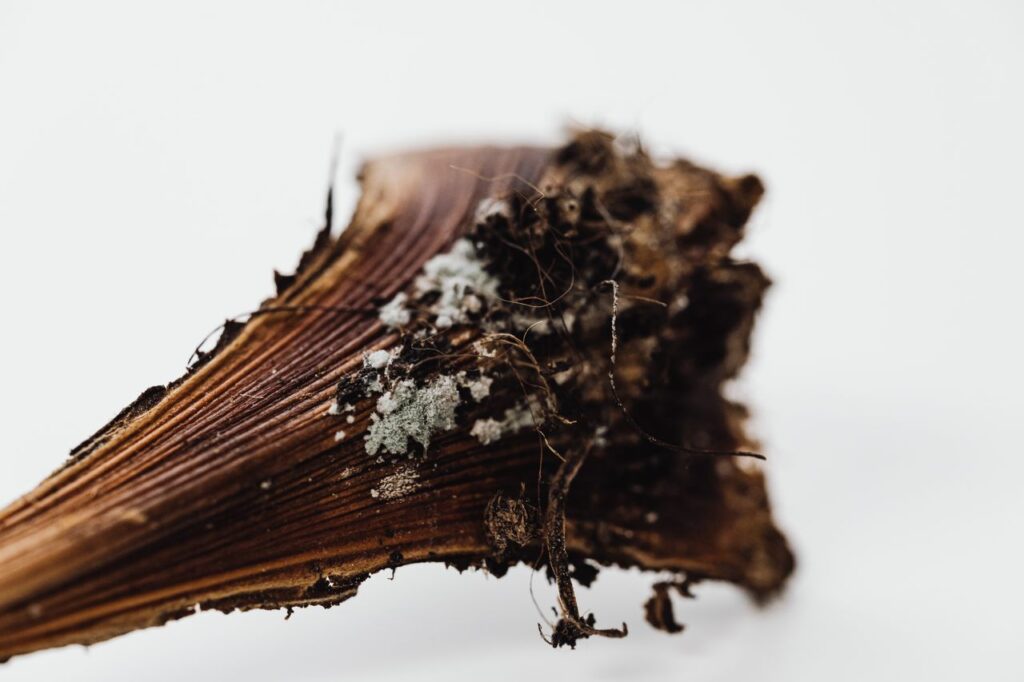
Fungal problems often appear as leaf spots, powdery patches, mould, stem rot, or spreading yellow and brown areas. Malaysia’s warm and humid weather can make these problems more common, especially when plants are crowded, leaves stay wet for long periods, or soil drains poorly. Natural care can help with mild fungal issues, but the most effective approach begins with correcting the conditions that allowed the problem to develop.
Start by removing badly affected leaves, stems, or fruit with clean pruning scissors. Place the diseased material in the rubbish instead of adding it to homemade compost, especially when you are unsure what caused the infection. Clean your tools after cutting so the problem is not transferred to another plant.
Next, improve airflow around the plant. Move pots slightly farther apart, thin out dense growth, and guide climbing plants onto stakes or trellises. Better spacing allows leaves to dry faster after rain or watering. Avoid heavy pruning all at once, particularly if the plant is already weak.
Watering habits are equally important. Water near the soil instead of repeatedly wetting the entire plant. Morning watering is usually helpful because any moisture on the leaves has more time to dry. Check drainage holes and remove water trapped in saucers or decorative pots. Permanently wet roots can lead to rot and make the plant more vulnerable.
For mild powdery growth or small fungal patches, some gardeners use diluted bicarbonate-based or soap sprays. However, homemade mixtures can burn leaves if they are too strong. Test any spray on one or two leaves first, apply it during a cooler part of the day, and wait to see whether the plant reacts. Do not mix many ingredients together or spray stressed plants under strong sunlight.
Neem-based products may help with certain fungal problems, but they should be used according to the product label. Avoid spraying open flowers, confirm that the product is suitable for edible crops, and observe any waiting period before harvesting.
Natural remedies work best when fungal problems are caught early. If the disease continues spreading, repeatedly returns, or affects most of the plant, remove the worst plant to protect the rest of the garden and seek a more specific diagnosis.
At the end of the day, managing fungal problems naturally is mainly about cleanliness, airflow, careful watering, healthy roots, and early action. Sprays may support recovery, but better growing conditions are what help prevent the same problem from returning.
If you are managing fungal problems naturally in your home garden, we would love to learn from your experience. Tag @projectharvest.my on Instagram and share your plant recovery, garden-care methods, and growing journey with us — your experience might help another Malaysian beginner build a healthier and more resilient garden too.