
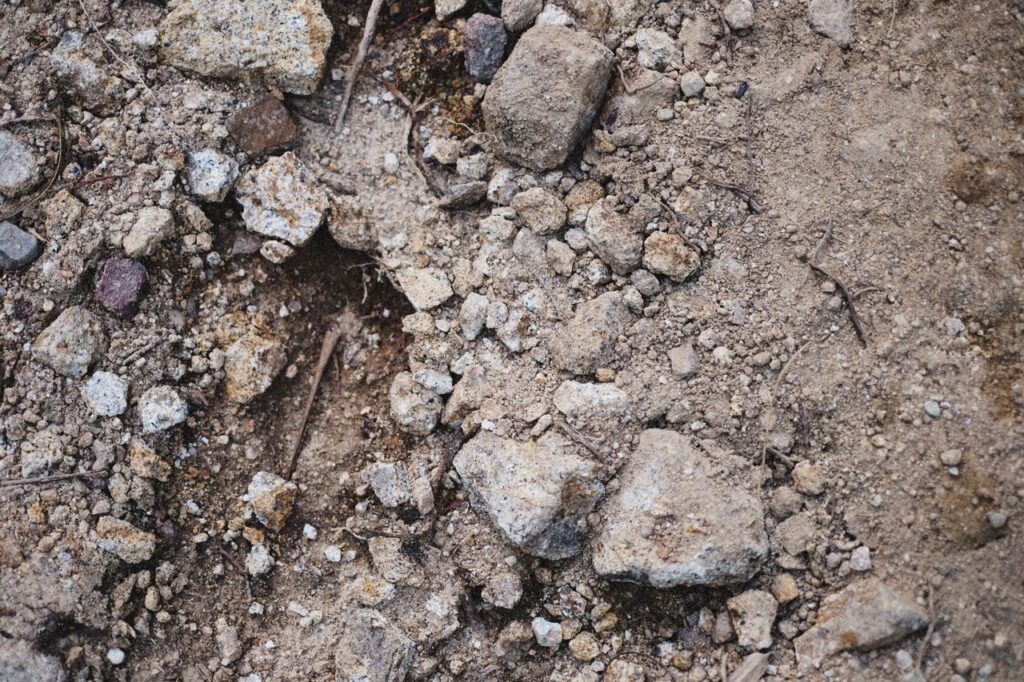
Compacted soil can quietly hold a garden back. Plants may still survive, but roots struggle to spread, water drains poorly, and the soil can become harder to manage after rain or during dry weather. The problem is especially common in small Malaysian home gardens where people regularly walk through planting areas, construction soil has been disturbed, or heavy rain repeatedly hits bare ground.
The good news is that you do not need specialist equipment to recognise most signs of soil compaction. A few simple observations can tell you a lot.
The Soil Feels Hard Even When It Is Moist
One of the easiest signs is simply how the soil feels.
Healthy soil should usually allow a garden fork, trowel, or finger to enter with reasonable effort when moisture conditions are suitable. Compacted soil may feel unusually hard and resistant, almost as though you are trying to dig through a solid layer.
Do not test this when the soil is extremely dry, because even healthy soil can become firm during a hot spell.
Try again after the soil has received some moisture but is not waterlogged. If you still struggle to push a tool into the ground, compaction may be part of the problem.
Water Sits on the Surface
Watch what happens during watering or after a Malaysian downpour.
Does the water soak into the soil steadily, or does it remain in puddles for a long time?
Compaction reduces the spaces between soil particles. With fewer larger pores available, water moves through the ground more slowly.
You may notice water running sideways across the surface instead of soaking downward.
This does not automatically prove the soil is compacted. Heavy clay, poor site drainage, or an unusually intense storm can create similar symptoms.
But when puddling appears alongside hard soil and weak root growth, compaction becomes more likely.
Plants Develop Shallow Roots
Roots often reveal what is happening underground.
When soil becomes too dense, roots may struggle to penetrate deeper layers. Instead, they begin growing sideways near the surface or follow cracks and softer pockets.
If you remove a struggling vegetable plant and notice that the roots are concentrated in a shallow layer despite having plenty of soil beneath them, the lower soil may be compacted.
This can make plants less resilient during Malaysia’s hot weather because shallow roots lose access to moisture more quickly.
Plants Grow Slowly Despite Basic Care
Compaction can sometimes look like a nutrient or fertiliser problem.
A plant may remain small, wilt easily, produce weak growth, or respond poorly to fertiliser even though you are providing enough water and light.
Why?
Healthy roots need both water and oxygen.
When soil is compacted, roots cannot explore easily and oxygen movement into the soil may be reduced. The plant effectively has a smaller usable root zone.
Before adding more fertiliser to a struggling plant, check whether its roots have enough physical space to grow.
The Surface Forms a Hard Crust
Some compacted soils develop a dense crust after rain or watering.
The surface may dry into a hard layer that is difficult for seedlings to push through.
You may also notice tiny cracks appearing as the soil dries.
Surface crusting is particularly common where bare soil is repeatedly exposed to heavy rainfall. Raindrops can break apart soil aggregates and cause fine particles to settle into a denser surface layer.
Mulch can help protect the soil from this repeated impact.
Try the Garden Fork Test
A very simple test is to use a garden fork, metal rod, screwdriver, or similar sturdy tool.
Push it vertically into the soil using steady pressure.
Notice how easily it enters and whether you suddenly hit a hard layer.
Test several areas rather than relying on one location.
If the tool enters easily in one section but stops repeatedly at the same depth elsewhere, you may have a compacted layer beneath the surface.
This sometimes happens where construction machinery, repeated foot traffic, or previous gardening activity compressed the soil.
Compare a Walkway with a Growing Bed
Another useful experiment is to compare two areas.
Push your tool into a frequently walked path and then into an undisturbed planting bed.
The difference can be surprisingly obvious.
Areas that receive regular foot traffic usually become more compacted because the pressure squeezes soil particles together and reduces pore space.
This is why well-designed gardens use pathways rather than requiring gardeners to walk directly through growing beds.
What Causes Soil Compaction?
Foot traffic is one of the most common causes in home gardens.
Other causes include repeatedly working soil when it is very wet, construction activity, heavy equipment, storing heavy objects on garden beds, and having too little organic matter.
Clay soils can be particularly vulnerable when worked while saturated because wet clay particles compress easily.
Container soil can also become compacted over time as organic components decompose and the potting mix settles.
Do Not Confuse Compaction with Naturally Heavy Soil
Heavy clay soil and compacted soil are related but not identical.
Clay describes the texture of the soil.
Compaction describes its physical condition.
You can have clay soil with good structure that supports healthy roots, or clay soil that has been badly compacted.
Likewise, even loamy soil can become compacted when repeatedly walked on.
This distinction matters because simply adding sand or replacing the soil may not address the real cause.
When Should You Be Concerned?
A little firmness is normal.
You should pay more attention when several symptoms appear together:
the soil is difficult to penetrate, water pools frequently, roots remain shallow, seedlings struggle, and plants perform poorly even when their basic needs are being met.
At that point, improving the soil structure becomes more important than simply adding another fertiliser or watering more often.
At the end of the day, compacted soil is mostly about missing space. Healthy soil needs tiny pathways for roots, air, and water to move through. Check how easily tools enter the soil, observe drainage after rain, look at root growth, and pay attention to areas receiving heavy foot traffic. Recognising compaction early gives you the chance to improve the soil before it becomes a bigger problem for the whole garden.
Think your garden soil might be compacted? Try the fork test and take a closer look at what is happening beneath the surface. Tag @projectharvest.my on Instagram and share your soil photos, test results, root problems, or garden improvements with us — your experience might help another Malaysian gardener realise that sometimes a struggling plant needs more breathing room underground rather than more fertiliser above it.