
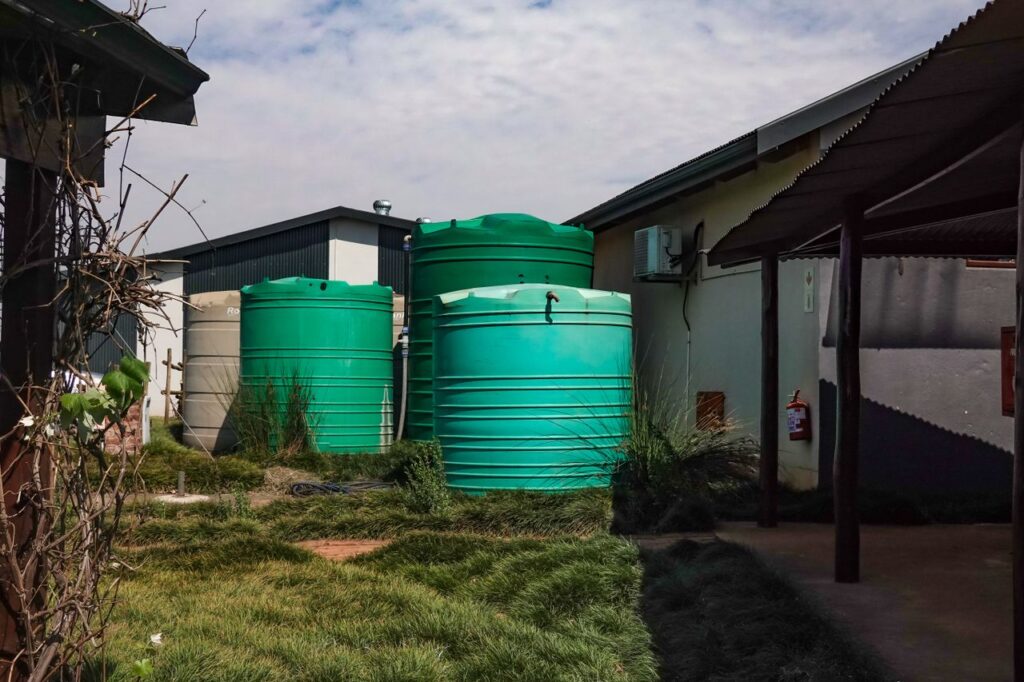
Malaysia receives plenty of rain, yet many home gardeners still rely entirely on treated tap water for their plants. Rainwater harvesting offers a simple alternative: collect some of the water already falling on your roof, store it, and use it later when the garden needs irrigation.
For a small home garden, this does not have to mean installing an enormous underground tank. Even a properly covered rain barrel connected to a roof gutter can provide useful water for pots, raised beds, herbs, and vegetables.
However, collecting rain is only half the job. A good system also needs to keep debris out, prevent mosquitoes from breeding, handle overflow during tropical downpours, and store the water appropriately until you are ready to use it.
Why Harvest Rainwater for the Garden?
The most obvious benefit is reducing the amount of treated mains water used for irrigation.
During a dry period, stored rainwater can provide a useful reserve for vegetables and container plants.
It can also be particularly helpful if you have several raised beds or a growing collection of pots that require frequent watering.
Rainwater harvesting also helps gardeners think differently about water.
Instead of seeing heavy rain simply as water that rushes from the roof into a drain, you begin seeing part of it as a resource that can be stored for later.
For Project HARVEST, that fits naturally into building more resilient home gardens.
Start with Your Roof and Gutters
Most small home systems collect rainwater from a roof.
Rain falls onto the roof, enters the gutter, travels through the downpipe, and is redirected into a storage tank or barrel.
Before setting up the system, inspect the roof and gutters.
Leaves, bird droppings, dirt, dead insects, and other debris can accumulate there.
Keep gutters reasonably clean and consider installing leaf screens or suitable filters before water enters the tank.
The cleaner the water entering the system, the easier the storage tank is to maintain.
What Is a First-Flush Diverter?
The first water that runs off a roof after a dry period often contains more dust and debris than the rain that follows.
A first-flush diverter is a simple device that directs this initial runoff away from the main storage tank.
Once that first portion has been diverted, cleaner roof runoff is allowed to enter the tank.
For a basic garden system, this can improve stored-water quality and reduce the amount of sediment that builds up inside the container.
It is particularly useful if your roof collects a lot of dust, leaves, or other environmental debris between storms.
Choose a Proper Storage Container
Rainwater should be stored in a durable container designed to hold water.
Do not assume any old drum or industrial container is suitable.
Avoid containers that previously held chemicals, fuels, pesticides, oils, or unknown substances.
For an edible garden, knowing what the container previously contained is important.
Purpose-made rainwater tanks and food-safe water-storage drums are much better options.
The container should also be stable when full.
Remember that one litre of water weighs approximately one kilogram.
A 200-litre barrel can therefore weigh around 200 kilograms before you even count the weight of the container itself.
Place it on a strong, level base.
Always Keep the Tank Covered
This is essential in Malaysia.
Any stored rainwater can become a mosquito-breeding site if adult mosquitoes can reach the water.
The tank should have a secure lid.
Inlets, outlets, vents, and overflow pipes should also be designed or screened so mosquitoes cannot easily enter.
Do not rely only on remembering to check for larvae later.
The best strategy is physical exclusion from the beginning.
If mosquitoes cannot access the stored water, they cannot use the tank for breeding.
Your Overflow System Matters
Malaysia can receive a large amount of rain in a short period.
A small rain barrel may fill surprisingly quickly.
Once full, the incoming water needs somewhere safe to go.
Install an overflow outlet near the top of the tank and direct that water towards an appropriate drain, infiltration area, or another safe location.
Do not allow overflow to pour against your house foundation, flood a walkway, or create a permanently wet patch beside the garden.
If your system connects several tanks, overflow from the first tank can sometimes be directed into another storage container.
But eventually, every system needs a final overflow route.
How Much Rainwater Can You Actually Collect?
Potential collection is larger than many gardeners realise.
As a rough principle, 1 millimetre of rain falling on 1 square metre of roof produces about 1 litre of water before allowing for losses.
So if 10 mm of rain falls on a 50-square-metre roof, the theoretical amount is around 500 litres.
Not all of that will reach your tank because some is lost through splash, evaporation, first-flush diversion, and system inefficiency.
But the calculation shows how quickly storage can fill during Malaysian rain.
This is why choosing tank size should be based partly on roof area and how much water your garden actually uses.
Bigger Is Not Automatically Better
It can be tempting to install the largest tank you can afford.
But think about your garden first.
If you only have ten pots, a massive storage system may be unnecessary.
If you have several raised beds, fruit trees, and dozens of containers, a larger tank may make much more sense.
Also consider space.
Terrace-house side yards and car porches may have limited room, and a full tank is extremely heavy.
Choose a system that fits both your water demand and your property.
How Should You Use Stored Rainwater?
For home gardeners, stored rainwater is particularly useful for watering soil around plants.
You can fill watering cans directly from a tank tap.
Larger systems can feed a hose or drip-irrigation system, although pressure may be lower than from a mains tap unless the tank is elevated or a pump is used.
If you connect rainwater to drip irrigation, include suitable filtration.
Small emitters can clog easily if sediment or organic debris enters the lines.
Gravity-fed irrigation can work particularly well for simple garden setups if the tank is positioned high enough above the emitters.
Is Rainwater Automatically Clean?
No.
Rainwater may begin relatively clean in the atmosphere, but once it touches a roof it can collect contaminants.
Roof material, animal droppings, dust, leaves, insects, pollution, and storage conditions can all affect water quality.
For ordinary soil irrigation in a home garden, properly collected rainwater can be useful.
But do not assume untreated roof runoff is automatically safe for drinking, food preparation, washing harvested vegetables, or other household uses.
Those uses involve different water-quality considerations.
For Project HARVEST’s purposes, think primarily of harvested rainwater as irrigation water unless it has been appropriately treated and verified for another use.
Be Sensible Around Edible Crops
When watering vegetables with collected rainwater, applying it directly to the soil around the root zone is generally preferable to unnecessarily spraying edible leaves and produce.
This is particularly sensible for vegetables eaten raw.
Drip irrigation, a watering can directed towards the soil, or a hose at the base of plants helps keep harvested rainwater where it is most useful: around the roots.
Also keep the storage system itself clean and properly maintained.
Water quality depends heavily on the entire collection system.
Clean the Tank and Filters
Rainwater systems are not maintenance-free.
Over time, sediment may accumulate at the bottom.
Filters can become blocked.
Leaves may collect around inlets.
Algae may develop if sunlight enters the tank.
Inspect the system periodically.
Clean gutter screens and filters.
Check mosquito-proof mesh.
Make sure the overflow remains clear.
If the tank develops excessive sediment or unpleasant odours, it may need cleaning.
An opaque tank is generally better than a transparent container because limiting sunlight reduces algae growth.
Do Not Let the Water Sit Forgotten Forever
Stored water is most useful when it cycles through the system.
Collect it.
Use it.
Collect the next rain.
If water sits unused for very long periods, sediment, biological growth, or other water-quality issues may become more significant.
A garden provides a convenient way to regularly rotate stored water.
During dry periods, use the tank supply first.
Then allow the next rainfall to replenish it.
Malaysia’s Rainfall Means You Need to Think About Timing
One interesting challenge is that the time you have the most rain is also the time your garden may need the least irrigation.
During a week of thunderstorms, the soil may already be saturated while your rainwater tank is overflowing.
The stored water becomes more valuable when a dry period follows.
This means storage capacity determines how much benefit you get.
A tiny barrel may capture plenty of water but overflow during every storm, leaving only a small reserve for later.
If you regularly run out of stored rainwater soon after rain stops, increasing storage may be worth considering.
Combine Rainwater Harvesting with Efficient Irrigation
Harvesting water and then wasting it through poor watering practices defeats the purpose.
Combine stored rainwater with:
mulch,
deep watering,
drip irrigation,
self-watering containers,
or other efficient methods.
A drip system supplied from a rain tank can make each stored litre go much further than spraying large areas with a hose.
Likewise, mulch helps the soil retain the water after you have delivered it.
Think of rainwater harvesting as one part of the entire garden water system.
Is a Simple Rain Barrel Worth It?
For many Malaysian homes, yes.
You do not need an elaborate system to begin learning.
A properly covered storage barrel connected to one suitable downpipe can teach you:
how quickly your roof collects water,
how much your garden uses,
how often the tank overflows,
and whether larger storage would actually benefit you.
Starting small also lets you learn the maintenance requirements before investing in a much bigger system.
If the first tank constantly empties during dry weather, expansion becomes easier to justify.
When Rainwater Harvesting May Not Be Practical
Not every property is suitable.
Apartment gardeners may not have access to roof runoff.
Some homes may have nowhere safe to position a heavy tank.
Certain gutter arrangements may make diversion difficult.
And if you only maintain a few small pots, the amount of water saved may not justify installing a dedicated system.
In those cases, improving watering efficiency may produce more benefit than adding rainwater storage.
A useful garden system should solve a problem, not simply create another maintenance project.
A Simple Setup for a Malaysian Terrace House
For a landed home, a practical starter system could look like this:
A roof gutter feeds a downpipe.
A leaf screen removes large debris.
A first-flush device diverts the dirtiest initial runoff.
The remaining water enters a covered, opaque storage tank.
All openings are screened against mosquitoes.
A tap near the bottom allows water to fill a watering can or supply a suitable irrigation line.
An overflow pipe directs excess water safely towards drainage.
That is already a functional rainwater-harvesting system.
You can expand it later if the garden uses more water than the tank can store.
The Best Rainwater System Is One You Maintain
A beautifully designed tank that is never inspected can eventually become more trouble than it is worth.
Keep gutters clear.
Keep the tank covered.
Keep mosquitoes out.
Check filters.
Keep overflow flowing.
Use the stored water regularly.
These basic habits matter more than owning the most complicated harvesting equipment.
At the end of the day, rainwater harvesting can be a practical way to make a Malaysian home garden less dependent on treated tap water. Start with a clean collection surface, store the water in a safe covered container, keep mosquitoes completely excluded, provide reliable overflow for tropical storms, and use the water efficiently around plant roots. You do not need to capture every drop falling on your roof — even saving a portion of it can help keep your garden growing when the next hot, dry stretch arrives.
Collecting rainwater for your home garden already, or thinking about setting up your first tank? Tag @projectharvest.my on Instagram and share your barrel, downpipe connection, overflow design, irrigation setup, or how much water you managed to collect after a Malaysian storm. Your setup could help another gardener realise just how much useful water normally disappears straight from the roof into the drain.