
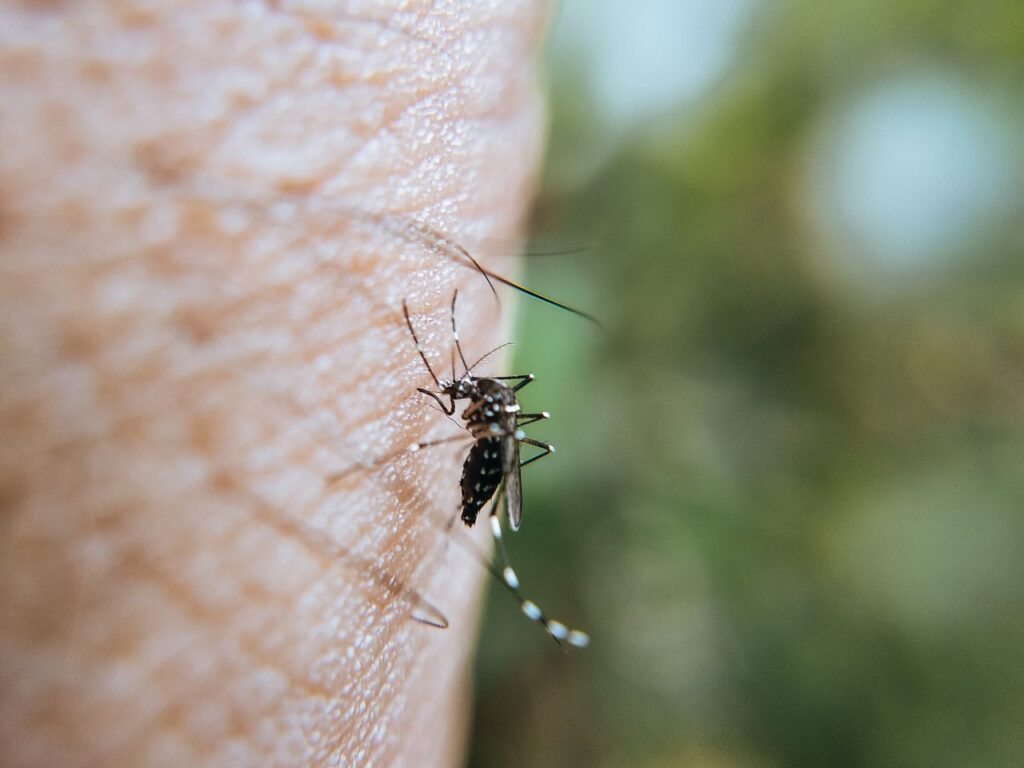
Rainwater is useful for a Malaysian home garden, but there is one rule that should never be ignored: stored water must not become accessible to mosquitoes.
A rain barrel or storage tank can hold hundreds of litres of useful irrigation water, but even a much smaller pocket of stagnant water can become a problem if adult mosquitoes can reach it.
The safest approach is not to wait until larvae appear.
Design the system so mosquitoes cannot get into the water in the first place.
Start with a Fully Covered Container
The storage tank should always have a secure lid.
Not a loose board.
Not a cloth draped across the top.
Not a half-open barrel that is “usually covered.”
The lid should fit properly and remain closed except when maintenance requires access.
If you are using a purpose-built rainwater tank, the main opening should already be designed for secure closure.
For DIY systems, choose a container that can be sealed reliably.
This is the first and most important layer of protection.
Remember That Mosquitoes Can Enter Through Small Openings
Closing the main lid is not enough if mosquitoes can reach the water through:
the inlet pipe,
overflow pipe,
vent,
inspection gap,
tap opening,
or any other uncovered hole.
Every pathway leading to stored water needs attention.
Fit suitable fine insect mesh over openings where water or air still needs to move.
The mesh should be fine enough to block mosquitoes while allowing the system to function normally.
Check that it remains securely attached after heavy rain.
Screen the Rainwater Inlet
Water coming from your roof needs to enter the tank somewhere.
This inlet is one of the easiest mosquito entry points.
Install suitable screening at the inlet and make sure there are no gaps around the pipe.
A leaf screen or debris filter can also help keep larger material out of the tank.
This has two benefits.
It helps block mosquito access, and it reduces leaves and organic debris that can accumulate in the stored water.
Cleaner water is easier to maintain.
Do Not Forget the Overflow Pipe
A rainwater tank in Malaysia absolutely needs an overflow.
During a strong storm, even a large tank can fill quickly.
But an open overflow pipe leading directly into the reservoir can also become a mosquito entrance.
Fit suitable mosquito-proof screening to the overflow outlet.
Make sure the mesh does not become clogged with leaves, algae, or sediment.
The overflow still needs to move water quickly enough during heavy rain.
This is an important balance: block insects without blocking drainage.
Keep the Tank Opaque
Clear or translucent containers allow sunlight into the stored water.
That can encourage algae growth.
An opaque tank keeps the interior darker and generally makes water storage easier to manage.
If you are reusing a suitable food-grade container, avoid transparent drums where possible or place them somewhere shaded and protected from light.
Shade also helps reduce the amount of heat the water absorbs during Malaysian afternoons.
Keep the Area Around the Tank Dry
Sometimes the main tank is perfectly covered, but the surrounding area creates the mosquito problem.
Check for:
water trapped inside overturned lids,
small buckets,
blocked drains,
plant saucers,
discarded pots,
tarpaulin folds,
gutters,
and puddles around the tank base.
A beautifully mosquito-proof rain barrel does not help much if several small containers beside it are collecting rainwater.
After storms, walk around the area and empty unnecessary standing water.
Watch the Tank Base and Tap
Small leaks can create persistent puddles.
Check taps, hose connections, fittings, and the base of the container periodically.
If the tank is elevated on a stand, make sure the area underneath drains properly.
Do not allow water to sit in depressions around the structure.
The tap itself should also close completely after use.
A slow drip may not seem important, but repeated dripping can create a permanently wet area below.
Clean Gutters Regularly
Your mosquito-prevention system starts before the water reaches the tank.
Blocked roof gutters can hold pools of stagnant water between rainstorms.
Leaves, soil, and organic debris can prevent water from draining properly.
Inspect gutters periodically and remove accumulated material.
The same applies to first-flush diverters and filters.
Any part of the rainwater collection system that can trap standing water should be included in your maintenance routine.
Do Not Leave Open Buckets of Harvested Rainwater
A common mistake is transferring rainwater from a covered tank into several open buckets “for later.”
You have now created multiple unprotected water-storage points.
If you use watering cans or buckets, empty them after use or store them upside down.
If you need secondary storage, it should follow the same principles as the main tank: covered, screened, and maintained.
Rainwater does not become safer simply because it was collected from a mosquito-proof tank first.
Use Stored Water Regularly
A rainwater harvesting system works best when water moves through it.
Collect rain.
Use it for the garden.
Allow the next rainfall to replenish the supply.
Regular use reduces the chance of forgotten water sitting untouched for long periods.
During Malaysia’s rainy season, the tank may remain full for longer because your garden needs less irrigation.
That is exactly when inspections become more important.
Check the covers, screens, overflow, and surrounding area even if you are not using much water.
What If You Find Mosquito Larvae?
If you notice wriggling larvae in the tank, assume mosquitoes have found an entry point.
Do not treat the larvae as the only problem.
The real issue is how the adults reached the water.
Inspect every opening.
Check the lid.
Check inlet screens.
Check overflow mesh.
Look for cracks and poorly sealed fittings.
Correct the access problem.
For small containers, emptying and cleaning them is usually straightforward.
For large tanks, appropriate treatment depends on the tank design and intended use, so follow local public-health guidance or the instructions for products specifically approved for mosquito control in stored water.
Do not pour random household chemicals, pesticides, bleach, oils, or homemade remedies into irrigation water.
What About Mosquito Dunks or Larvicides?
Some products are designed specifically to control mosquito larvae in stored water.
Whether they are appropriate depends on the product, local approval, the type of tank, and how the water will be used.
For a home edible garden, physical exclusion should always be your first line of defence.
A properly sealed and screened tank should not need continuous chemical treatment simply to compensate for poor design.
If you do use any mosquito-control product, follow its label exactly.
Never assume that something described as “natural” is automatically suitable for water that will later be used around edible crops.
First-Flush Systems Need Mosquito Protection Too
A first-flush diverter temporarily stores the initial dirty roof runoff before cleaner rainwater enters the main tank.
That means the diverter itself can contain standing water.
Make sure it drains or empties according to its design.
Inspect it periodically.
If the system relies on a slow-release drainage hole, confirm that the opening has not become blocked.
Any forgotten chamber containing water can become part of the mosquito problem.
Check the System After Heavy Rain
Tropical storms can shift lids, loosen screens, overflow gutters, and move debris.
After particularly heavy rain, inspect the rainwater system.
Check:
Is the lid still secure?
Is the inlet screen intact?
Is the overflow clear?
Has water collected around the tank?
Are gutters draining normally?
Have any nearby containers filled with rain?
These checks take only a few minutes and can catch problems early.
Think of Mosquito Prevention as Part of the Design
The best rainwater system is not one where you constantly inspect the water for larvae.
It is one where mosquitoes cannot reach the water in the first place.
That means mosquito protection should be included when the system is built.
A good Malaysian home-garden setup should have:
a secure lid,
screened inlet,
screened overflow,
covered vents,
good surrounding drainage,
clean gutters,
and no unnecessary open water nearby.
Once those basics are in place, maintenance becomes much easier.
A Simple Mosquito-Safe Setup
For a small terrace-house system, a practical design might look like this:
Roof water enters through a gutter and debris screen.
A first-flush diverter removes the dirtiest initial runoff.
The cleaner water enters a fully covered opaque tank through a screened inlet.
The tank has a screened overflow that drains safely away.
A tap near the bottom provides water for a watering can or drip system.
All openings are protected.
The surrounding area remains free of open containers and standing water.
That is far safer than simply placing an open barrel under a downpipe.
At the end of the day, storing rainwater without creating a mosquito problem comes down to one principle: do not give mosquitoes access to standing water. Keep tanks securely covered, screen every inlet and overflow, maintain gutters and filters, prevent puddles around the system, and inspect everything after heavy Malaysian rain. Rainwater harvesting should make your garden more sustainable — not create a new problem beside it.
Already storing rainwater for your garden? Tag @projectharvest.my on Instagram and show us your covered tank, mosquito-proof inlet, overflow setup, gutter system, or DIY rain barrel. Your safe rainwater design could help another Malaysian gardener realise that collecting water responsibly is not only about saving rain — it is also about making sure nothing unwanted gets the chance to grow in it.