
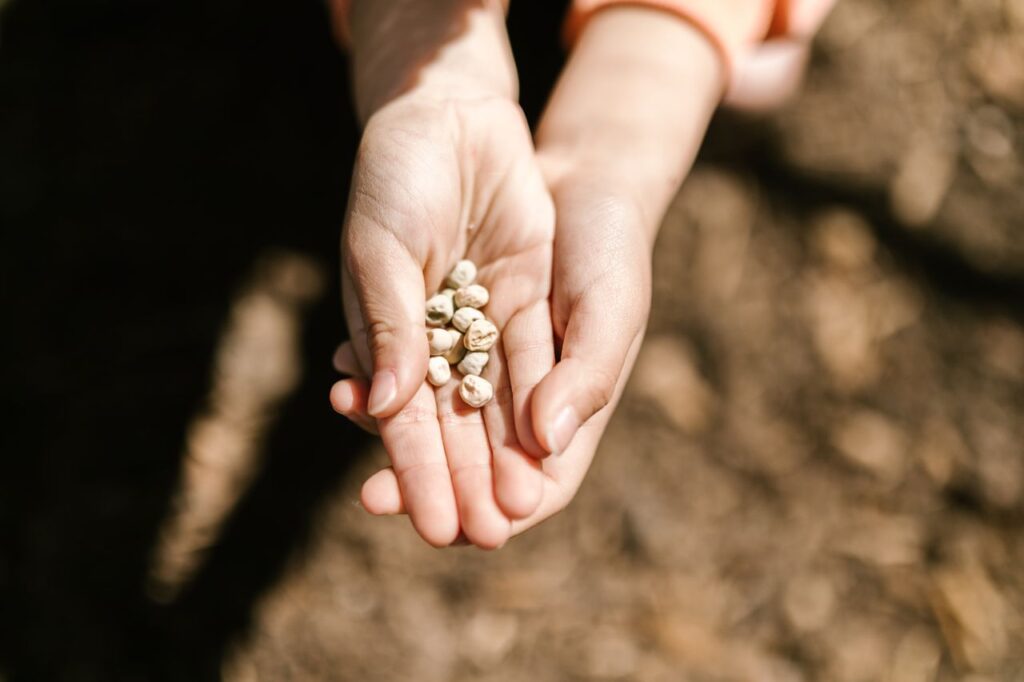
Old seeds are not automatically dead.
A packet of chilli, tomato, basil, okra, or vegetable seeds that has been sitting in a drawer for a few years may still contain plenty of viable seeds, especially if it was stored somewhere cool, dry, and protected from humidity.
Instead of throwing the packet away or planting the entire thing and hoping for the best, you can run a simple germination test first.
The basic idea is easy: take a small sample of seeds, give them suitable moisture and warmth, count how many germinate, and use that result to estimate whether the rest of the packet is still worth planting.
What Does Seed Viability Mean?
Seed viability simply means whether a seed is still alive and capable of germinating under suitable conditions.
A seed may look perfectly normal on the outside while no longer being viable.
Age is one factor, but storage conditions matter just as much.
Seeds generally deteriorate faster when exposed to:
heat,
humidity,
repeated temperature changes,
and moisture.
That is particularly relevant in Malaysia, where warm and humid indoor conditions can shorten seed storage life if packets are left open or kept somewhere damp.
The Simplest Method: The Damp Paper Towel Test
You only need:
the old seeds,
a paper towel or clean tissue,
water,
a small container or resealable bag,
and a label.
Start by counting out a sample of seeds.
Ten seeds is convenient because the maths is easy.
If you have plenty of seed and want a more reliable result, you can test 20 or more.
Moisten the paper towel with clean water.
It should be damp, not dripping wet.
Place the seeds on one half of the towel, leaving a little space between them.
Fold the other half over the seeds.
Then place the towel inside the container or bag.
Keep the Seeds Moist, Not Soaked
The seeds need moisture to germinate, but they still require oxygen.
If the paper towel is completely saturated and the seeds sit in pooled water, they may rot.
If the towel dries out, germination may stop.
Check it regularly and add a little water if necessary.
In Malaysia’s warm conditions, enclosed bags may retain moisture well, so do not keep adding water simply because you are checking the seeds every day.
Damp is enough.
Keep Them at a Suitable Temperature
Place the test somewhere appropriate for the crop.
Warm-season vegetables such as chillies, tomatoes, brinjal, cucumbers, and okra generally respond well to warm conditions.
But avoid leaving the bag in direct afternoon sun.
A closed plastic bag sitting in strong Malaysian sunlight can become much hotter than the surrounding air.
A bright or warm indoor location away from intense direct sun is often sufficient.
If the crop has specific germination temperature requirements, follow those instead.
Label Everything
If you are testing several old packets at once, label each test clearly.
Write down:
the crop,
variety,
date the test started,
and number of seeds tested.
Otherwise, ten days later you may have several bags of germinating seeds and no idea which chilli variety is which.
A simple label saves a lot of confusion.
How Long Should You Wait?
That depends on the crop.
Some vegetables germinate quickly.
Others take longer.
Beans, cucumbers, and many leafy vegetables may germinate relatively fast under suitable conditions.
Chillies can take considerably longer.
Do not decide the test has failed after only two or three days.
Use the usual germination time for that particular seed as your guide.
If most viable seeds of that crop should have germinated within a certain period, allow a little extra time for older seed before ending the test.
How to Calculate Germination Percentage
Once the testing period is finished, count the seeds that successfully germinated.
Suppose you tested 10 seeds.
If 8 germinated:
8 ÷ 10 × 100 = 80% germination
If 5 germinated:
5 ÷ 10 × 100 = 50% germination
Testing ten seeds makes this particularly easy because every successful seed represents roughly 10%.
If you test 20 seeds and 15 germinate:
15 ÷ 20 × 100 = 75% germination
This gives you a rough estimate of the packet’s viability.
What Is a Good Germination Rate?
There is no single percentage that determines whether seeds must be kept or thrown away.
Think practically.
If 80–100% germinate, the seeds are still performing well.
If 60–80% germinate, they are generally still quite usable.
If 30–60% germinate, you can still use them, but you may want to sow more seeds than usual.
If germination is very low, replacing the seed may be easier unless the variety is rare or difficult to obtain.
These ranges are practical guidelines rather than strict industry standards.
Your decision also depends on how valuable the seed is and how much you have left.
Low Germination Does Not Mean You Must Throw Them Away
Imagine you have an old chilli variety you really like and only 40% of the seeds germinate.
That is not necessarily useless.
You can simply sow more seeds.
If you normally sow one seed per cell, perhaps sow two or three and keep the strongest seedling later.
For a rare heirloom or sentimental variety, even a 20% germination rate may be worth working with.
For an inexpensive common vegetable seed, buying a fresh packet may be more practical.
What If None of the Seeds Germinate?
Before declaring the packet dead, check whether the test conditions were suitable.
Ask:
Was the towel kept moist?
Was it too wet?
Was the temperature appropriate?
Were the seeds given enough time?
Does the species require special germination treatment?
If the conditions were suitable and nothing germinated after the normal period plus some extra time, viability is probably very poor.
A Germination Test Is Better Than Looking at the Seed
Appearance is not a reliable viability test.
A seed can look plump, clean, and healthy while being completely dead inside.
Likewise, slightly faded seed may still germinate successfully.
You may see advice online suggesting that viable seeds can always be identified by floating them in water.
Be cautious with this.
A simple float test is not a reliable universal method for determining viability across different crops.
Actual germination is much more informative because it tests the thing you really care about: whether the seed can grow.
Can You Plant the Seeds After Testing Them?
Usually, yes.
If the roots have only just emerged and you handle them very carefully, germinated seeds can often be planted into seed-starting mix.
Make a small hole and place the seed gently without damaging the young root.
Do not wait until the seedling has developed a long, tangled root inside the paper towel.
At that stage, transplanting becomes much more difficult.
If you plan to plant the tested seeds, check them frequently as germination begins.
Why Do Old Seeds Lose Viability?
Seeds slowly deteriorate during storage.
Cell membranes become damaged.
Stored food reserves degrade.
Proteins and other cellular structures become less functional.
Eventually, the seed can no longer restart normal growth.
How quickly this happens varies enormously between species.
Some seeds naturally remain viable much longer than others.
Storage conditions can either slow or accelerate that ageing process.
Malaysian Humidity Makes Storage Important
Humidity is one of the biggest challenges for seed storage in Malaysia.
An opened seed packet left in a warm kitchen drawer may deteriorate much faster than one stored dry inside a sealed container.
After using a packet, close it properly.
Consider placing seed packets inside an airtight storage box with an appropriate moisture-control method, such as a food-safe desiccant packet, especially if you plan to keep them for several seasons.
Store them somewhere cool and dry.
Do not place seeds somewhere exposed to direct sun, vehicle heat, or outdoor humidity.
Good storage gives future-you a much better germination test.
Test Before the Planting Season
Do not wait until the exact day you want to sow the garden.
If you know you have older seeds, test them ahead of time.
That gives you time to buy replacements if viability is poor.
It also tells you whether you should sow extra seeds.
A simple ten-seed test can prevent you from wasting two weeks waiting for an empty seed tray.
Keep Basic Records
If you regularly save seeds or keep packets for several years, write down:
the year purchased or harvested,
storage method,
germination percentage,
and date tested.
Over time, you will learn which crops store well in your conditions and which ones lose viability quickly.
This is particularly useful for gardeners building their own home seed collection.
At the end of the day, the easiest way to find out whether old seeds are still worth using is not to guess from the packet date — it is to give a small sample the chance to germinate. A damp paper towel, suitable warmth, and a simple count can tell you whether the seeds are still strong, whether you should sow extra, or whether it is time for a fresh packet. In Malaysia’s humid climate, regular viability testing can save both garden space and weeks of waiting for seeds that were never going to emerge.
Found an old packet of chilli, tomato, herb, or vegetable seeds hiding at the back of your cupboard? Run a simple germination test and tag @projectharvest.my on Instagram with your setup and results. Tell us how old the seeds were and how many still germinated — we would love to see which forgotten seed packets Malaysian gardeners manage to bring back to life.