
Air layering is a propagation technique where you encourage a branch to grow roots while it is still attached to the parent plant.
Instead of cutting a stem first and hoping it survives long enough to root, air layering keeps the branch connected to the parent tree while new roots form around a prepared section of stem.
Once enough roots have developed, the rooted branch is cut off and planted as a new plant.
This makes air layering particularly useful for woody plants that can be difficult to propagate from ordinary cuttings.
In Malaysia, the method is also commonly known as marcotting.
Why Air Layering Works
A branch normally sends sugars and other products of photosynthesis down through tissue beneath the bark.
When a small section of bark is carefully removed or interrupted, those materials begin accumulating above the wound.
If that area is kept moist and protected, the plant may respond by producing new roots there.
Meanwhile, because the branch is still connected to the parent plant, it continues receiving water through its existing vascular system.
This is the biggest advantage of air layering.
The branch does not have to survive without roots while it is trying to make new ones.
How Is Air Layering Different from Stem Cuttings?
With a stem cutting, you cut the branch from the parent first.
The cutting then has to survive while producing an entirely new root system.
With air layering, the branch stays attached during the rooting stage.
That makes it especially useful for:
woody branches,
larger propagation material,
and plants that do not root easily from simple cuttings.
The final new plant may also be much larger than a plant started from a small cutting.
Which Plants Can You Air Layer?
Air layering works best on many woody shrubs and trees.
Common candidates may include:
citrus,
guava,
mulberry,
fig,
pomegranate,
some mango varieties,
some ornamental shrubs,
ficus,
and several tropical fruit or landscape plants.
Success varies by species and even by variety.
Just because a plant is woody does not automatically mean it is an ideal candidate.
Research the particular plant before removing bark from an important branch.
Citrus Can Be a Good Candidate
Many citrus-type plants can be propagated through air layering.
For Malaysian gardeners, that may include suitable varieties of:
lime,
limau kasturi,
limau purut,
and other citrus plants.
However, there is an important difference between an air-layered citrus tree and a nursery tree grafted onto a selected rootstock.
A grafted tree may benefit from a rootstock chosen for disease resistance, soil tolerance, vigour, or size control.
An air-layered plant grows on its own roots.
That does not automatically make it worse, but it means it may not perform exactly like a grafted nursery tree.
Guava Is Another Common Choice
Guava can respond well to air layering.
A healthy branch can potentially develop roots while still attached to the tree, producing a new plant genetically identical to the parent.
That is one of the major advantages of vegetative propagation.
If the parent guava has fruit qualities you like, the air-layered plant preserves those genetics.
A seed-grown plant, by comparison, may show more variation.
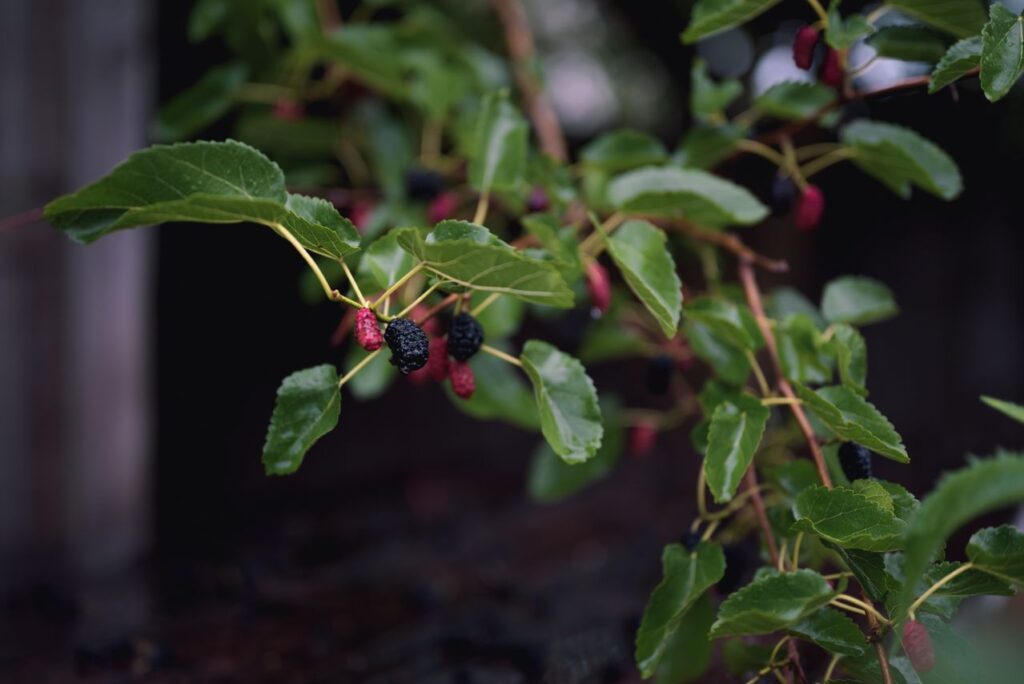
Mulberry Can Be Propagated Several Ways
Mulberry is already relatively easy to propagate from cuttings, so air layering is not always necessary.
However, it can still be used.
Air layering may be useful if you want to root a larger established branch rather than starting with a small cutting.
For an ordinary home gardener, stem cuttings may be simpler.
This illustrates an important point:
just because a plant can be air layered does not mean air layering is always the best propagation method.
What About Mango?
Mango is more complicated.
Some mangoes can form roots through air layering, but success can be variable and the resulting tree may not offer the same advantages as a grafted mango from a good nursery.
Grafted mango trees are often preferred because the desired fruiting variety is combined with a suitable root system.
If you experiment with air layering mango, treat it as a propagation experiment rather than automatically assuming it is the best way to produce a long-term fruit tree.
Choose the Right Branch
Start with a healthy parent plant.
Choose a branch that is:
healthy,
free from pests and disease,
reasonably mature,
and not extremely old or damaged.
A branch around pencil thickness to finger thickness is often manageable for home propagation, depending on the species.
Very thin shoots may dry or break easily.
Very thick branches take longer to root and create a larger wound on the parent plant.
For beginners, avoid experimenting on an important structural branch.
Choose a secondary branch that the plant can afford to lose.
Where Should You Make the Air Layer?
Choose a straight, accessible section of branch.
The area should be easy to wrap and inspect later.
Avoid working immediately against a branch junction where handling becomes difficult.
You also want enough branch above the rooting site to support healthy foliage.
The leaves above the air layer continue producing energy while the new roots develop.
The Basic Ring-Barking Method
One common air-layering method involves removing a narrow ring of bark around the branch.
Using a clean sharp knife, make two shallow circular cuts around the stem, separated by a short distance.
Then connect the cuts and carefully remove the bark between them.
The exposed layer underneath may also need to be gently scraped to interrupt the cambium — the thin growing tissue responsible for producing new bark.
This is important because if the wound heals too quickly, the branch may simply reconnect instead of producing roots.
Do not cut deeply into the wood.
You are removing bark and interrupting the cambium, not sawing halfway through the branch.
How Wide Should the Ring Be?
The exact width varies with branch size and plant species.
For small woody branches, a ring of roughly 1 to 3 cm is often used as a practical starting range.
The important thing is to remove enough bark to prevent quick reconnection without making an unnecessarily large wound.
Bigger is not automatically better.
If you are working with a valuable fruit tree, research the species before cutting.
Do You Need Rooting Hormone?
Air layering can succeed without rooting hormone on suitable species.
However, a properly labelled rooting hormone may improve rooting on some more difficult plants.
If you use one, apply it according to the product instructions.
Do not assume stronger concentrations are better.
Excess hormone can be ineffective or even reduce success depending on the product and plant.
Homemade substitutes such as honey or cinnamon should not be assumed to work like actual rooting hormone.
What Material Should Go Around the Wound?
The prepared section needs a material that can:
hold moisture,
allow some air,
and stay in contact with the wounded stem.
Moist sphagnum moss is traditionally used.
For Malaysian home gardeners, a suitable clean cocopeat-based medium may also be practical in some setups.
Whatever you use, it should be moist but not dripping wet.
A saturated ball around the branch can become stagnant and increase the risk of rot.
Wrap the Rooting Area Securely
Place the moist rooting material around the wounded area.
Then wrap it securely with plastic so the medium stays in place and retains moisture.
Seal the top and bottom reasonably well.
Some gardeners then cover the plastic with aluminium foil, opaque material, or another outer layer to reduce heat and light exposure.
If you use clear plastic, it has the advantage of letting you see roots as they develop.
However, exposed clear plastic can heat up under strong Malaysian sun.
Providing some protection from intense direct heating can help.
Malaysia’s Humidity Helps — But Rain Can Complicate Things
Our humid climate can reduce how quickly the rooting medium dries out.
That is useful.
But heavy tropical rain means the wrapping needs to be secure.
Rainwater should not constantly enter the air-layering bundle.
If the medium becomes waterlogged, rooting conditions may deteriorate.
Check the wrapping after storms.
Make sure it is still secure and has not torn or slipped.
Keep the Medium Moist
The rooting material should stay moist while roots develop.
If the bundle is properly sealed, you may not need to add water very often.
If it begins drying out, carefully add moisture without flooding it.
Do not open the entire wrapping every few days just to check.
Repeated disturbance can damage developing roots and allow the medium to dry.
How Long Does Air Layering Take?
There is no universal timeline.
Some plants may produce usable roots within several weeks.
Others can take a few months.
Species, branch maturity, temperature, humidity, plant health, and season all affect rooting speed.
Do not cut the branch off simply because a fixed number of weeks has passed.
Wait until you can see a reasonably developed root system.
How Much Root Is Enough?
If you are using clear wrapping, look for multiple healthy roots growing through the propagation material.
One tiny root is not enough reason to cut the branch from the parent.
You want enough root development to support the leafy branch once it loses its connection to the original plant.
More established root growth generally gives the new plant a better chance of surviving.
How to Remove the Air Layer
Once roots are sufficiently developed, use clean pruning tools to cut the branch below the rooted section.
Support the branch as you cut so it does not tear or fall.
Then carefully remove the outer wrapping.
Avoid pulling apart the rooted medium.
New roots can be fragile.
The entire rooted section can usually be planted as one intact root ball.
Pot It Up Before Planting in the Ground
For many air-layered plants, starting in a container is safer than planting immediately into a permanent landscape position.
Use an appropriately sized pot with good drainage and a suitable growing medium.
Plant the rooted section securely.
Water it thoroughly.
Keep the new plant protected from harsh conditions while it establishes.
Remember: although the branch may look large above ground, its new root system is still relatively small.
Reduce Stress After Separation
A newly separated air layer suddenly loses the large root system of its parent plant.
Its new roots must now supply all the leaves above them.
Temporary bright shade can reduce water stress.
Avoid strong wind and intense afternoon sun immediately after separation.
Keep the root zone appropriately moist.
Do not waterlog it.
Once the plant begins producing healthy new growth, gradually introduce it to its normal growing conditions.
Should You Prune the Top?
Sometimes reducing a little foliage can help balance a large canopy with a relatively small new root system.
But do not automatically remove half the plant.
Pruning needs depend on the species, branch size, and amount of root development.
Remove obviously damaged material and avoid excessive canopy reduction unless necessary.
A plant still needs leaves for photosynthesis.
What Can Go Wrong?
Common air-layering failures include:
the rooting medium drying out,
the medium becoming waterlogged,
bark growing back across the wound,
the branch being too weak,
using unhealthy parent material,
removing the layer before enough roots form,
or exposing the new plant to harsh sun immediately after separation.
Sometimes the species simply does not respond well.
Propagation always involves some failure.
Do not experiment first on the only branch of a valuable tree you cannot afford to lose.
Air Layering Produces a Clone
An air-layered plant is genetically the same as the branch it came from.
That means desirable characteristics of the parent plant are preserved.
If the parent produces good fruit, attractive flowers, or a growth habit you like, the new plant should carry those same genetics.
However, environment still affects how the new plant performs.
A clone planted in poor soil or unsuitable light will not magically behave exactly like the parent growing under ideal conditions.
Air Layering vs Growing from Seed
Seed-grown plants begin genetically new individuals.
They may differ from the parent.
Air layering preserves the parent genetics.
It can also give you a larger starting plant.
For fruit trees, this may reduce some of the juvenile period compared with starting from seed because the branch came from mature plant tissue.
However, fruiting time still depends on species, plant health, climate, and growing conditions.
Do not assume every air-layered fruit tree will produce fruit immediately.
Air Layering vs Grafting
These are also different techniques.
Air layering gives the new plant its own roots.
Grafting combines the upper part of one plant, called the scion, with the root system of another plant, called the rootstock.
Rootstocks can provide valuable characteristics such as disease resistance, size control, or better adaptation to particular soils.
This is why air layering should not automatically replace grafting for every fruit tree.
Both methods have their place.
Is Air Layering Worth Trying at Home?
Yes, especially if you already have a healthy woody plant you want to duplicate.
It requires more patience than dividing lemongrass or rooting mint in water, but the process is still manageable for a home gardener.
Start with an easy candidate.
Choose one non-essential branch.
Follow the process carefully.
Once you successfully unwrap your first air layer and see a whole new root system growing halfway up a branch, the technique becomes much easier to understand.
At the end of the day, air layering is a clever way of letting the parent plant support a branch while that branch builds its own root system. It can be particularly useful for woody shrubs and fruit plants that are harder to propagate from ordinary cuttings. For Malaysian gardeners, our warm and humid climate can support rooting well, but the wrapped medium still needs good moisture management and protection from tropical rain and excessive heat. Start with a healthy plant, choose the right branch, and give the roots time to develop before making the final cut.
Thinking of trying air layering on a guava, citrus, mulberry, fig, or another woody plant in your garden? Tag @projectharvest.my on Instagram and show us your wrapped branches, developing roots, successful separations, or even the attempts that did not root. We would love to see which plants Malaysian home gardeners are successfully propagating halfway up the branch.