
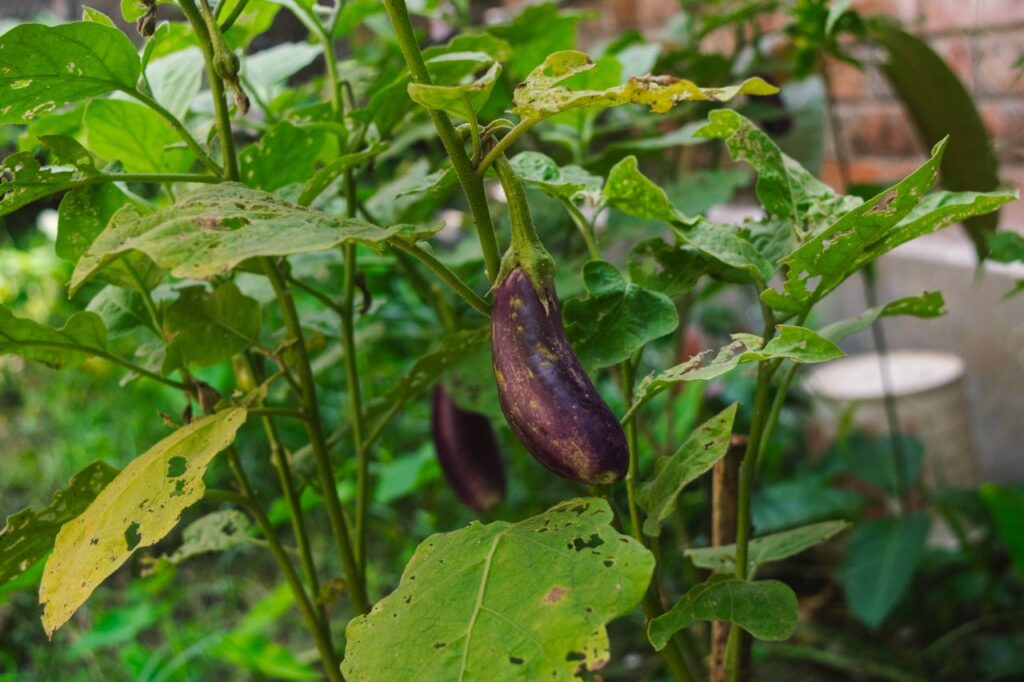
If your brinjal plant is producing flowers but they keep falling off before fruit develops, the plant is experiencing flower abortion.
This can happen occasionally even on healthy plants.
A brinjal may produce more flowers than it eventually carries as fruit, and not every flower is guaranteed to develop.
The problem becomes more important when most or nearly all flowers keep dropping and fruit set remains poor.
In Malaysian home gardens, common causes include heat stress, inconsistent watering, poor pollination, excessive nitrogen, weak plant condition, pest damage, or a combination of several factors.
The first step is to look at the whole plant before reaching for fertiliser.
Brinjal Flowers Can Usually Pollinate Themselves
Brinjal flowers contain both male and female reproductive structures.
That means they are generally capable of self-pollination.
They do not rely on separate male and female flowers the way pumpkins and cucumbers often do.
However, pollen still needs to move within the flower.
Wind, vibration, and insect activity can help this happen.
A flower may look perfectly healthy but still fail to set fruit if pollen is not released or transferred effectively.
Some Flower Drop Is Normal
Do not panic when one or two flowers fall.
A healthy brinjal plant may naturally shed flowers because:
conditions changed,
the plant is still young,
it already carries several fruits,
or a particular flower was not successfully pollinated.
Look for the pattern.
If the plant continues flowering and some young fruits are forming, occasional drop is usually not a major concern.
If nearly every flower falls, investigate further.
Heat Can Reduce Fruit Set
Brinjal is a tropical crop and generally handles warm Malaysian conditions well.
But very high temperatures can still affect flowers and pollen.
This is especially relevant in urban gardens where plants may sit beside:
concrete walls,
metal fencing,
rooftops,
or paved surfaces.
These areas can become significantly hotter than the general air temperature.
Extreme heat may reduce pollen performance or cause the plant to abort flowers before fruit develops.
If your brinjal looks healthy but repeatedly loses flowers during very hot periods, heat stress may be part of the problem.
High Humidity Can Affect Pollination
Malaysia’s humidity can also influence flower performance.
Under very humid conditions, pollen may not move as freely.
This can reduce successful self-pollination.
Good airflow around the plant can help.
Avoid crowding several large brinjal plants tightly together.
Spacing also helps leaves dry more quickly after rain and can reduce disease pressure.
Heavy Rain Can Interfere Too
Repeated tropical rain can affect flowering in several ways.
It may:
damage open flowers,
keep flowers wet,
reduce insect activity,
and leave the root zone waterlogged.
One or two storms may not matter much, but prolonged wet weather can reduce fruit set.
If flower drop happens mainly during rainy periods and improves later, the weather may be the main cause.
Water Stress Is a Major Trigger
Brinjal needs a reasonably steady water supply during flowering and fruit development.
If the soil dries too much, the plant may shed flowers to conserve resources.
This is particularly common in containers.
A brinjal in a small pot can dry quickly during hot Malaysian afternoons even if it looked fine in the morning.
Repeated severe wilting can reduce flower retention and fruit set.
Waterlogged Soil Is Not Better
Overwatering creates a different problem.
Roots need oxygen.
If the soil remains constantly saturated, root function declines.
The plant may then struggle to support flowers even though water is abundant.
Signs may include:
yellowing leaves,
slow growth,
persistent wilting despite wet soil,
or root problems.
Aim for moist, well-drained soil rather than permanently wet soil.
Too Much Nitrogen Can Produce Leaves Instead of Fruit
A lush green brinjal plant is not automatically a productive one.
If nitrogen is excessive, the plant may produce:
large leaves,
vigorous stems,
and lots of vegetative growth
while flower and fruit production remain disappointing.
This can happen when gardeners continue applying high-nitrogen fertiliser because the plant looks healthy and they want even more growth.
Once the brinjal is established and flowering, use a balanced fertiliser programme appropriate for fruiting vegetables.
Do not keep pushing leafy growth.
More Fertiliser Is Not Always the Answer
Flower drop is often blamed on a missing nutrient.
Sometimes nutrition is involved.
But if the cause is heat, water stress, poor pollination, or root problems, extra fertiliser will not fix it.
Excessive fertiliser can also increase salts in the soil and damage roots.
Before feeding, ask:
When did I last fertilise?
Is the plant growing strongly?
Are the leaves showing genuine deficiency symptoms?
Is the root zone healthy?
Diagnose before adding more.
Young Plants May Drop Early Flowers
A young brinjal may flower before it has developed enough roots and foliage to support fruit.
The plant may naturally drop some early flowers.
This is not necessarily a problem.
As the plant becomes larger and more established, later flowers may set more successfully.
Do not force a young plant into heavy fruiting with excessive fertiliser.
Give it time to build strength.
A Heavy Fruit Load Can Reduce New Fruit Set
If the plant already carries several developing brinjals, it may not retain every new flower.
Fruit development requires substantial energy and water.
The plant may naturally balance how much it can support.
This means some flower drop on a heavily loaded plant can be normal.
The real measure of success is overall harvest, not whether every flower becomes a fruit.
Poor Pollination Can Still Happen
Even though brinjal flowers can self-pollinate, they still benefit from movement.
In a very sheltered balcony or enclosed garden, the flowers may receive little vibration from wind or insects.
A gentle tap on the flower clusters or stems can sometimes help release pollen.
Do not shake the entire plant aggressively.
Light movement is enough.
Pollinating Insects Can Help
Bees may visit brinjal flowers and help improve pollen movement.
Supporting a garden with flowering herbs and other suitable flowers can increase pollinator activity.
Avoid unnecessary insecticide spraying around open flowers.
If pest control is genuinely needed, follow the product label carefully and pay attention to pollinator precautions.
Thrips Can Damage Brinjal Flowers
Thrips are small pests that can feed on flowers and young growth.
Because they are tiny, they can be easy to miss.
Possible signs include:
damaged or distorted flowers,
scarring,
distorted young leaves,
or poor fruit set.
If brinjal flowers repeatedly drop, inspect the inside of the flowers and new growth carefully.
Do not assume thrips are responsible without actually finding evidence.
Mites and Other Pests Can Weaken the Plant
Spider mites, aphids, whiteflies, and other pests can reduce plant vigour.
A heavily stressed plant may have trouble holding flowers.
Look for:
stippling,
curling,
sticky residue,
webbing,
or insects on the underside of leaves.
Treat only when necessary and use an appropriate method for the identified pest.
Disease Can Also Reduce Flower Retention
A plant fighting disease may divert resources away from reproduction.
If flower drop occurs together with:
wilting,
leaf spots,
stem damage,
yellowing,
or dieback,
the problem may be broader than pollination.
Investigate the entire plant rather than focusing only on the flower.
Poor Light Can Limit Fruiting
Brinjal can grow surprisingly well in marginal light, but fruit production usually improves with strong sunlight.
A plant may remain green and continue producing flowers while failing to set many fruits.
This is common in terrace houses and balconies where the plant receives only a few hours of direct sun.
Check whether the location has become more shaded over time.
Nearby vines, walls, trees, and buildings can all reduce light.
Overcrowding Can Make Flower Drop Worse
A dense brinjal canopy can create:
less airflow,
more humidity,
competition for light,
and greater pest pressure.
If several plants are packed tightly together, flower performance may suffer.
Give mature plants enough room rather than spacing them according to seedling size.
Root Restriction Can Reduce Productivity
A brinjal growing in a very small pot may stay alive and green but struggle to support heavy fruiting.
As the plant becomes larger, root demand increases.
Possible signs of an undersized container include:
rapid drying,
frequent wilting,
roots circling densely,
and slowed growth.
If the plant is still young enough and root restriction is obvious, repotting into a larger suitable container may help.
Pruning Is Not a Cure for Flower Drop
Some gardeners respond to poor fruit set by heavily pruning the plant.
That can make things worse.
Leaves produce the carbohydrates needed to support flowers and fruit.
Remove damaged, diseased, or unnecessary growth where appropriate, but do not strip healthy foliage in the hope that the plant will suddenly fruit more.
How to Tell Whether Pollination Is Working
Look closely after a flower fades.
If fruit set is successful, you should eventually see a small brinjal beginning to enlarge behind the flower.
If the flower dries and the entire structure falls, fruit set failed.
Observe several flowers rather than just one.
This gives you a better idea of whether the problem is occasional or consistent.
What Should You Do First?
If your brinjal keeps dropping flowers, work through the basics.
1. Check the Weather
Has it been unusually hot or extremely wet?
2. Check Soil Moisture
Is the root zone repeatedly drying out or staying saturated?
3. Check Sunlight
Does the plant receive enough direct light?
4. Review Fertiliser
Have you been feeding heavily with nitrogen?
5. Inspect the Flowers
Look for thrips, damage, or poor pollen movement.
6. Check Root Space
Is the container large enough for the mature plant?
7. Look at the Whole Plant
Are there signs of pests, disease, or general stress?
This sequence is much more useful than immediately adding another fertiliser.
Try Gentle Vibration
If the plant appears healthy and conditions are good but fruit set remains poor, gently tap the flowering branches in the morning.
This can help pollen move within the flower.
Some growers use vibration to improve pollination in crops such as tomatoes and brinjal.
You do not need special equipment in a small home garden.
A gentle tap is enough.
Keep Watering Consistent During Flowering
During flowering, avoid severe moisture swings.
Water deeply enough to moisten the root zone.
Then allow excess water to drain.
Check the soil rather than following a rigid daily schedule.
A brinjal in a large raised bed may need watering very differently from one growing in a black plastic pot on a hot balcony.
Watch the Next Flowering Cycle
Once you make adjustments, do not expect existing dropped flowers to recover.
They are already gone.
Instead, watch the next set of blooms.
If later flowers begin setting fruit, you have probably improved the growing conditions.
This is why changes should be judged over several days or weeks rather than overnight.
Do Not Expect Every Flower to Become a Brinjal
Even on a strong plant, some flowers will fall.
That is normal.
Your goal is not 100 percent fruit set.
The goal is a healthy plant that produces a consistent number of good-quality fruits over time.
A plant that drops a few flowers while regularly producing brinjals is doing its job.
At the end of the day, brinjal flowers can drop without setting fruit because the plant is dealing with heat, humidity, heavy rain, inconsistent watering, poor pollination, excess nitrogen, pests, root restriction, or other stress. In Malaysian home gardens, the most effective approach is to look at the whole growing environment instead of treating every fallen flower as a fertiliser problem. Keep the plant well lit, consistently watered but well drained, appropriately fed, properly spaced, and free from serious pest pressure, then observe the next round of flowers. A healthy brinjal usually gets more than one chance to set fruit.
Is your brinjal flowering beautifully but dropping the blooms before any fruit appears? Tag @projectharvest.my on Instagram and share a photo of the flowers, the whole plant, and your growing setup. Tell us whether it is in a pot, raised bed, balcony, or terrace-house garden too — comparing real Malaysian growing conditions can help all of us understand why some flowers set fruit while others fall.