
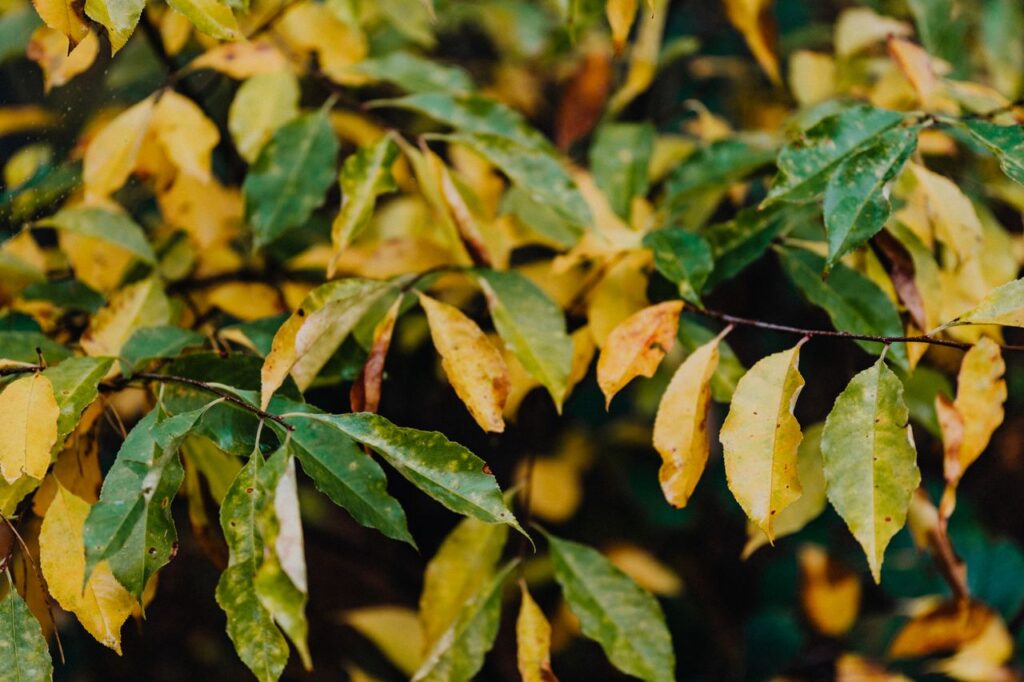
Potassium deficiency often begins on older leaves, with yellowing developing around the leaf edges before progressing into brown, dry, or scorched-looking margins.
As the problem becomes more severe, the affected leaves may curl, become brittle, or die prematurely. Plant growth may weaken and fruit production or quality can also suffer.
But brown leaf edges do not automatically mean potassium deficiency.
Heat, drought, excessive fertiliser salts, damaged roots, waterlogging, and several other problems can produce similar symptoms.
The most useful diagnosis therefore comes from combining leaf pattern, plant age, fruiting performance, soil conditions, and fertiliser history.
Why Does Potassium Deficiency Usually Affect Older Leaves First?
Potassium is a relatively mobile nutrient inside the plant.
When supplies become limited, the plant can move potassium from older tissues toward younger, actively growing leaves.
The oldest leaves therefore tend to show symptoms first.
This is similar to nitrogen deficiency in that both commonly begin lower on the plant.
However, the appearance is usually different.
Nitrogen deficiency often causes fairly general yellowing of the entire older leaf.
Potassium deficiency is more likely to begin around the leaf margins and tips.
What Does Potassium Actually Do?
Potassium is involved in several important plant processes.
It helps regulate:
water movement,
stomatal opening and closing,
enzyme activity,
carbohydrate movement,
stress tolerance,
and fruit development.
Stomata are tiny openings on leaves that regulate gas exchange and water loss.
Because potassium plays a major role in water regulation, deficient plants may struggle more under heat or drought stress.
For fruiting vegetables such as chillies, tomatoes, brinjal, and cucumbers, adequate potassium also supports normal crop development.
The Classic Leaf-Edge Pattern
One of the most useful clues is the progression of symptoms.
An older leaf may first develop:
pale or yellow margins,
followed by brown patches around the edges,
then dry, scorched-looking tissue.
The centre of the leaf may remain greener for some time.
As deficiency progresses, more older leaves become affected.
The plant can gradually lose useful foliage.
This pattern is more suspicious than one random brown leaf tip.
Do Not Diagnose from One Leaf
One damaged leaf tells you very little.
A leaf may have been:
sun-scorched,
physically injured,
attacked by pests,
or naturally ageing.
Look for the same pattern appearing on several older leaves.
A nutrient deficiency usually produces a recognisable progression across the plant rather than one isolated blemish.
Potassium Deficiency Can Reduce Plant Vigour
As the deficiency becomes more significant, you may notice:
slower growth,
weaker stems,
reduced resistance to stress,
premature leaf decline,
and poorer overall crop performance.
A fruiting plant may continue producing, but the harvest can become less impressive.
However, these symptoms are not unique to potassium deficiency.
Always consider the entire growing system.
Can Potassium Deficiency Cause Small Fruit?
It can contribute to poor fruit development, but small fruit alone does not prove potassium deficiency.
Chillies may remain small because of:
variety genetics,
heavy fruit load,
insufficient sunlight,
root restriction,
irregular watering,
or other nutritional problems.
Likewise, a tomato or brinjal may produce disappointing fruit for many reasons unrelated to potassium.
Look for foliage symptoms as well.
Fruit Quality May Be Affected
Severe potassium deficiency can contribute to reduced fruit quality and overall productivity.
Depending on the crop, you may see:
smaller harvests,
slower fruit development,
weaker plants,
or reduced stress tolerance.
But there is no single fruit symptom that reliably diagnoses potassium deficiency by itself.
The leaves usually provide more useful clues.
Malaysian Rain Can Increase Potassium Loss
Potassium is relatively mobile in soil.
During prolonged Malaysian rainfall, it can move downward through the soil profile or leach from containers.
This matters particularly in:
pots,
grow bags,
raised beds,
and very free-draining growing media.
A long-lived chilli or brinjal exposed to frequent heavy rain may gradually lose available nutrients.
However, do not automatically fertilise after every storm.
Repeated unnecessary feeding can create the opposite problem: excess salts.
Frequent Container Watering Can Also Leach Potassium
During hot periods, container plants may need frequent watering.
Every time large volumes of water drain through the pot, some soluble nutrients can be lost.
Over time, fruiting plants grown in containers may therefore need nutrient replenishment.
This is one reason fertiliser management for pots often needs more attention than a vegetable growing in a large volume of fertile ground soil.
Sandy Soil Can Lose Potassium More Easily
Very sandy soil generally holds nutrients less effectively than soil with more clay or organic matter.
If you grow fruiting vegetables in sandy soil, potassium and other nutrients may need more careful management.
Adding mature compost can improve the soil’s ability to hold both water and nutrients.
This does not replace fertiliser where nutrients are genuinely deficient, but it can improve the growing environment.
Do Not Confuse Potassium Deficiency with Fertiliser Burn
This is one of the biggest diagnostic traps.
Too much fertiliser can also cause brown, scorched leaf margins.
If symptoms appeared shortly after a heavy fertiliser application, potassium deficiency may be the wrong diagnosis.
Fertiliser burn may also be accompanied by:
leaf-tip damage,
wilting,
salt crusting on the soil surface,
or root stress.
Adding more potassium fertiliser would make that situation worse.
Always review what has recently been applied.
Salt Buildup Can Look Very Similar
Container-grown plants can accumulate fertiliser salts over time.
This is especially possible when:
fertiliser is applied frequently,
drainage is poor,
or insufficient water moves through the growing medium.
Salt stress may produce scorched leaf edges that resemble potassium deficiency.
Check for white mineral crusting around:
the soil surface,
pot rim,
or drainage areas.
If salinity is the problem, another dose of fertiliser is not the answer.
Drought Stress Can Cause Brown Margins Too
A plant that repeatedly becomes extremely dry may develop:
brown leaf tips,
crispy margins,
wilting,
and premature leaf loss.
That can look similar to potassium deficiency.
The difference may become clearer from the watering history.
If the pot regularly dries until the plant collapses in the afternoon, correct the moisture problem before diagnosing nutrient deficiency.
Heat Stress Can Confuse the Picture
Malaysia’s urban gardens can become very hot.
Plants growing beside:
concrete walls,
metal fencing,
rooftops,
or paved areas
may experience intense reflected heat.
Leaf edges may scorch even when potassium is adequate.
If only the sun-exposed side of the plant is damaged, environmental stress may be more likely than a whole-plant nutrient deficiency.
Root Problems Can Create a False Deficiency
Potassium may be present in the soil but unavailable to the plant because the roots cannot absorb it effectively.
Possible causes include:
waterlogging,
root rot,
compacted soil,
root restriction,
or damaged roots.
This is an uptake problem, not necessarily a shortage in the soil.
Adding more potassium will not fix unhealthy roots.
Soil pH Can Affect Nutrient Availability
Soil chemistry influences how easily roots can access nutrients.
If soil pH is unsuitable, nutrient availability can change even when fertiliser has been applied.
Persistent deficiency-like symptoms despite reasonable feeding may justify checking soil pH.
Do not attempt major pH correction based on potassium symptoms alone.
Test first.
Too Much of Other Nutrients Can Affect Balance
Plant nutrition is about balance.
Large amounts of certain nutrients can influence how others are taken up.
Heavy and repeated fertiliser use therefore does not guarantee perfect nutrition.
A plant can be surrounded by plenty of fertiliser and still experience imbalance.
This is another reason not to keep adding individual supplements whenever one symptom appears.
Potassium Deficiency vs Nitrogen Deficiency
Both usually begin on older leaves.
But the visual pattern is often different.
Nitrogen deficiency:
Older leaves become generally pale or yellow.
Potassium deficiency:
Older leaves often develop yellowing around the margins followed by brown or scorched edges.
Think:
nitrogen = broader yellowing,
potassium = edge-focused damage.
This is a useful starting guide, not an absolute diagnostic rule.
Potassium Deficiency vs Magnesium Deficiency
Magnesium deficiency also commonly begins on older leaves.
But magnesium deficiency typically produces interveinal chlorosis.
That means the tissue between the veins becomes yellow while the veins remain relatively green.
Potassium deficiency is more strongly associated with marginal yellowing and scorching.
Looking carefully at the pattern can help separate the two.
Do Not Use Fruit Symptoms Alone
It is tempting to diagnose potassium deficiency because:
chillies are small,
tomatoes are not sweet,
brinjal is slow,
or cucumber yield is disappointing.
Those observations are too broad.
Fruit production depends on:
sunlight,
pollination,
water,
temperature,
root health,
genetics,
and multiple nutrients.
Always look at the foliage and overall plant as well.
Review the Fertiliser Label
If potassium deficiency seems possible, check what you are already applying.
For example, a fertiliser labelled:
15-15-15
contains equal proportions of the three main NPK components.
A product such as:
12-12-17
has proportionally more potassium than nitrogen or phosphorus.
But the numbers alone do not tell you what your plant needs.
Check:
application rate,
frequency,
release type,
and how much product has already been used.
How Should You Correct a Genuine Potassium Deficiency?
If potassium deficiency is reasonably likely, the roots are healthy, and existing fertilisation is inadequate, use an appropriate potassium-containing fertiliser suitable for the crop.
This might be:
a balanced vegetable fertiliser,
a fruiting fertiliser with a higher potassium proportion,
or another appropriate product.
Follow the labelled rate.
Do not pour extra fertiliser onto the plant hoping for faster recovery.
Avoid the “More Potassium = More Fruit” Trap
Potassium is important for fruiting crops.
But excessive potassium does not guarantee:
more flowers,
larger fruit,
or higher yield.
Too much fertiliser can increase salinity and interfere with nutrient balance.
You are trying to correct a deficiency, not maximise the potassium concentration of the soil.
Once adequate nutrition is restored, more is not necessarily useful.
What About Homemade Potassium Sources?
Banana peels are frequently promoted online as an instant potassium fertiliser.
They do contain potassium, but placing banana peels around a plant does not provide a precise or immediate dose.
The material first needs to decompose.
It may also attract pests if used poorly.
Properly composted organic material can contribute nutrients over time, but it should not be treated as a controlled emergency treatment for confirmed potassium deficiency.
Wood Ash Needs Even More Caution
Wood ash contains potassium and can influence soil chemistry, but it can also raise soil pH significantly and contains varying amounts of minerals depending on the source.
It should not be casually applied to container plants because you think they need potassium.
Without knowing the soil conditions and material, it can create more problems than it solves.
Do Not Expect Damaged Leaves to Recover Completely
Once leaf margins have become brown and dead, that tissue will not turn green again.
Judge improvement by:
new leaves,
slower progression of symptoms,
stronger growth,
and healthier future foliage.
The old damage may remain visible until the leaf eventually drops.
Give the Plant Time to Respond
After correcting the likely cause, do not fertilise again two days later because the scorched leaf still looks scorched.
Plants need time to produce new tissue.
Monitor the plant over the following growth period.
Improvement should appear in new growth rather than in dead leaf margins.
A Simple Potassium-Deficiency Checklist
Potassium deficiency is more likely when:
1. Older leaves are affected first.
2. Yellowing begins near the leaf margins.
3. Margins later become brown or scorched.
4. Several older leaves show a similar pattern.
5. Plant vigour or fruiting performance is declining.
6. Nutrient loss through heavy rain, sandy soil, or frequent container watering is plausible.
But before applying potassium, also ask:
7. Has fertiliser recently been overapplied?
8. Is salt buildup present?
9. Has the plant been repeatedly drying out?
10. Are roots healthy and well drained?
That second group of questions can prevent a costly misdiagnosis.
Diagnose Before You Supplement
The goal is not to memorise that brown leaf edges equal potassium deficiency.
The goal is to recognise a pattern.
Start with the affected leaves.
Check which leaves showed symptoms first.
Review watering.
Look at the roots.
Review fertiliser applications.
Consider Malaysia’s recent heat and rainfall.
Only then decide whether potassium supplementation actually makes sense.
At the end of the day, potassium deficiency in fruiting plants often shows itself as yellowing and eventual scorching around the margins of older leaves, combined with declining plant performance. But the same appearance can be caused by drought, heat, fertiliser burn, salt buildup, or damaged roots. Malaysian home gardeners should therefore diagnose the whole growing system before reaching for a high-potassium fertiliser. Potassium is essential for healthy water regulation and fruit development, but adding more only helps when a genuine shortage is actually part of the problem.
Seeing yellow or brown edges developing on the older leaves of your chilli, tomato, brinjal, cucumber, or another fruiting plant? Share photos of both the affected and healthy leaves, your fertiliser label, and your growing setup, and tag @projectharvest.my on Instagram. Comparing the whole plant rather than one damaged leaf can help Malaysian gardeners get much better at recognising when potassium really is running low — and when something else is responsible.