
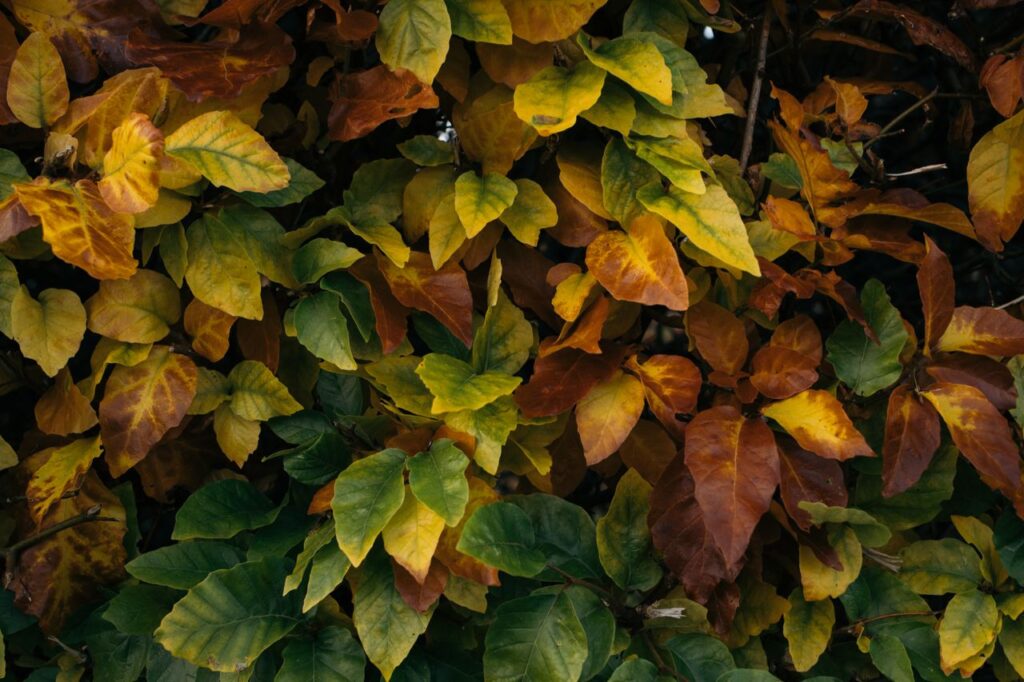
Nitrogen deficiency usually causes a plant to become paler and less vigorous, with yellowing often beginning on the older leaves first.
As the deficiency becomes more severe, the yellowing can spread upward through the plant, growth may slow, leaves may become smaller, and the overall plant may look weak.
But yellow leaves alone do not prove nitrogen deficiency.
Overwatering, root damage, poor drainage, natural leaf ageing, disease, unsuitable soil pH, and other nutrient problems can create similar symptoms.
The most useful diagnosis therefore comes from looking at the pattern of yellowing together with the plant’s overall growth and root-zone conditions.
Why Does Nitrogen Deficiency Usually Start on Older Leaves?
Nitrogen is a mobile nutrient within the plant.
That means when nitrogen becomes limited, the plant can move some nitrogen out of older leaves and redirect it toward younger growing tissues.
The plant essentially prioritises its newest growth.
As a result, older leaves commonly become:
pale green,
then yellow,
while younger leaves initially remain greener.
This older-leaves-first pattern is one of the strongest clues pointing toward nitrogen deficiency.
What Does Nitrogen Deficiency Look Like?
Typical symptoms can include:
older lower leaves becoming pale green,
fairly uniform yellowing across the leaf,
slower overall growth,
smaller leaves,
thin or weak-looking growth,
reduced branching,
and lower productivity.
With a severe or prolonged deficiency, older leaves may eventually dry and fall.
The entire plant may gradually become lighter in colour.
Nitrogen Deficiency Usually Causes General Yellowing
The yellowing associated with nitrogen deficiency is often relatively uniform across the affected leaf.
That is different from some deficiencies where the tissue between leaf veins yellows while the veins remain noticeably green.
For example, magnesium deficiency can often produce more obvious interveinal yellowing on older leaves.
Iron deficiency commonly affects younger growth first and may also leave greener veins.
These patterns are not perfect diagnostic rules, but they help narrow down the possibilities.
One Yellow Lower Leaf Is Not Nitrogen Deficiency
Plants naturally lose old leaves.
A mature chilli, brinjal, cucumber, tomato, or other vegetable may occasionally drop one of its oldest lower leaves.
If:
one or two old leaves yellow,
the rest of the plant remains deep green,
new growth is strong,
and production is normal,
there may be nothing to fix.
Nitrogen deficiency usually produces a progressive pattern, not one isolated old leaf.
Slow Growth Is Another Important Clue
Nitrogen is essential for:
chlorophyll,
proteins,
enzymes,
and vegetative growth.
A deficient plant therefore often grows slowly.
You may notice that:
new leaves remain small,
stems lengthen slowly,
the canopy stays sparse,
or the plant simply seems stuck.
A pale plant that is also growing poorly is more suspicious than a vigorous plant with one yellow leaf.
Leafy Vegetables Can Show Nitrogen Problems Quickly
Leafy vegetables such as:
bayam,
sawi,
kailan,
and other greens
depend heavily on healthy leaf production.
When nitrogen becomes limited, the crop may become:
pale,
small,
and slow to produce harvestable foliage.
Because the leaves themselves are the harvest, a nitrogen shortage can quickly affect both yield and appearance.
However, do not respond by heavily fertilising immediately.
First determine why nitrogen has become unavailable.
Fruiting Vegetables Need Nitrogen Too
Gardeners sometimes stop supplying nitrogen once chillies, tomatoes, brinjal, or cucumbers begin flowering.
That can go too far.
Fruiting vegetables still need healthy leaves to photosynthesise and support developing fruit.
A plant that becomes severely nitrogen-deficient during fruiting may lose productive leaf area and weaken.
The goal is not zero nitrogen during fruiting.
It is enough nitrogen without excessive leafy growth.
Heavy Malaysian Rain Can Contribute to Nitrogen Loss
Nitrogen can be quite mobile in soil, particularly in nitrate form.
During repeated Malaysian downpours, soluble nitrogen can move downward through the soil or wash through containers.
This is especially relevant for:
pots,
grow bags,
raised beds with very free-draining media,
and containers exposed directly to heavy rain.
A plant that was adequately fed earlier may become pale after prolonged wet weather.
But do not automatically fertilise after every storm.
Look at the plant and the existing fertiliser schedule first.
Frequent Container Watering Can Also Leach Nutrients
Containers often require frequent watering in Malaysia’s heat.
Every time water drains heavily through the bottom, some soluble nutrients may be lost.
Over time, a long-lived chilli or brinjal plant may therefore need nutrient replenishment.
This is one reason container fertilisation often requires more regular management than plants growing in large volumes of fertile garden soil.
Overwatering Can Look Like Nitrogen Deficiency
Here is where gardeners frequently make mistakes.
A waterlogged plant may develop yellow leaves because the roots are deprived of oxygen.
Damaged roots cannot absorb nutrients efficiently.
The plant may therefore look nitrogen-deficient even when nitrogen is present in the soil.
If you add more fertiliser without fixing the waterlogging, the plant may not improve.
You may also increase salt concentration around already stressed roots.
Check the Soil Before Fertilising
If leaves are yellowing, feel the soil.
Is it constantly wet?
Does the pot drain properly?
Has there been several days of heavy rain?
Does the growing medium smell sour or stagnant?
If yes, root stress may be involved.
Correct drainage and root-zone conditions first.
Healthy roots are required before fertiliser can work properly.
Root Damage Can Cause Deficiency-Like Symptoms
Nitrogen may be available in the soil but inaccessible because roots are damaged by:
root rot,
severe compaction,
waterlogging,
physical injury,
or pest problems.
This is sometimes described as a nutrient-uptake problem rather than a true nutrient shortage.
The symptoms above ground can look similar.
That is why diagnosing the root environment matters as much as looking at the leaves.
Soil pH Can Affect Nitrogen Availability
Soil pH influences nutrient availability and microbial activity.
If conditions become unsuitable, plants may have more difficulty accessing nutrients even when fertiliser has been applied.
Do not dramatically change soil pH because leaves look yellow.
If persistent nutrient problems continue despite reasonable fertilisation and healthy roots, testing pH can provide useful information.
Severe Root Restriction Can Reduce Uptake
A plant left too long in a small pot may become root-bound.
The growing medium may:
dry very quickly,
hold fewer available nutrients,
and contain a dense mass of roots.
A large chilli or brinjal growing in a tiny container may show pale foliage and declining productivity even if it is occasionally fertilised.
In that case, root space and growing-medium condition need attention too.
Do Not Confuse Nitrogen Deficiency with Iron Deficiency
Iron deficiency usually affects the youngest leaves first.
New growth may become pale yellow while the veins remain greener.
Nitrogen deficiency usually begins on the older leaves first.
That difference is extremely useful.
If the newest leaves are yellow while the old leaves remain green, nitrogen should not be your first assumption.
Do Not Confuse It with Magnesium Deficiency
Magnesium is also mobile within plants, so deficiency commonly appears on older leaves.
However, magnesium deficiency often causes interveinal chlorosis — yellowing between the veins while the veins stay greener.
Nitrogen deficiency tends to produce more general, uniform paling.
Real symptoms can overlap, so use the pattern as evidence rather than absolute proof.
Fertiliser Burn Can Also Cause Yellowing
Too much fertiliser may cause:
brown leaf edges,
scorching,
wilting,
root damage,
and eventually yellowing.
If symptoms appeared soon after a heavy fertiliser application, adding more nitrogen would obviously be the wrong response.
Review the recent fertiliser history before diagnosing deficiency.
Pest and Disease Problems Can Mimic Deficiency
Certain pests and diseases can cause yellow leaves.
For example:
mites may cause pale stippling,
sap-sucking insects can weaken foliage,
and root diseases can cause widespread yellowing.
Inspect the plant closely.
Look underneath leaves.
Check growing tips.
Inspect stems and roots where practical.
Do not diagnose nutrition without checking for other obvious problems.
How Do You Know Whether the Plant Actually Needs Nitrogen?
Look for several clues together:
older leaves yellowing first,
relatively uniform leaf paling,
slow growth,
smaller new leaves,
weak overall vigour,
and a plausible reason nitrogen may be low.
Possible reasons include:
long periods without feeding,
very poor soil,
heavy cropping,
frequent container leaching,
or intense rainfall.
The more of these clues align, the stronger the diagnosis becomes.
Review What You Have Already Applied
Before adding fertiliser, ask:
What product am I currently using?
What is its NPK analysis?
When was the last application?
How much did I apply?
Is it slow-release or fast-release?
Does the pot receive heavy rain?
It is surprisingly easy to forget that a slow-release fertiliser is already supplying nitrogen and then add another product unnecessarily.
Keeping simple fertiliser records helps.
How Should You Correct Nitrogen Deficiency?
If nitrogen deficiency is reasonably likely and the roots are healthy, use an appropriate nitrogen-containing fertiliser.
This might be:
a balanced NPK fertiliser,
a fertiliser formulated for vegetables,
or another product suited to the crop.
Follow the labelled application rate.
Do not double the dose in an attempt to make the plant recover faster.
The plant needs time to produce healthy new growth.
Do Not Expect Yellow Leaves to Turn Perfectly Green Again
Old leaves that have become severely yellow may not fully recover.
When correcting a deficiency, focus on:
new growth,
overall plant colour,
and renewed vigour.
If new leaves emerge healthy and plant growth improves, that is a better sign of recovery than waiting for every damaged old leaf to become green again.
Liquid Fertiliser Can Act Faster — But Still Requires Care
A suitable liquid fertiliser can provide nutrients relatively quickly.
That may be useful for a plant with a confirmed deficiency.
But concentrated liquid fertilisers can also burn roots if mixed too strongly.
Always follow dilution instructions.
Never assume making the solution twice as concentrated will correct the deficiency twice as fast.
Slow-Release Fertiliser Works Differently
Slow- or controlled-release fertilisers provide nutrients gradually.
They can be useful for long-term container crops.
But they are not necessarily the quickest way to correct a severe short-term deficiency.
If your pot already contains slow-release fertiliser, consider that before adding another fertiliser source.
Layering several products can lead to overfeeding.
Compost Can Help Soil Health but May Not Correct Deficiency Quickly
Mature compost contributes organic matter and some nutrients.
It can help improve:
soil structure,
water retention,
and long-term fertility.
But compost nutrient levels are variable and generally less concentrated than formulated fertilisers.
If a plant has a clear acute nitrogen deficiency, adding a small amount of compost may not correct it quickly enough by itself.
Think of compost and fertiliser as related but different tools.
Can You Use Homemade Nitrogen Sources?
Many online gardening tips recommend:
coffee grounds,
grass clippings,
kitchen waste,
or other homemade materials.
These materials may contain nitrogen, but nutrients are not necessarily immediately available to plants.
Fresh organic material can also affect decomposition, moisture, pests, and nutrient balance.
Do not bury random kitchen waste around a nitrogen-deficient plant and expect an immediate correction.
Compost organic materials properly where appropriate.
Too Much Nitrogen Creates the Opposite Problem
Once gardeners recognise nitrogen deficiency, there is a temptation to keep applying nitrogen to maintain very dark green leaves.
That can lead to:
excessive foliage,
soft growth,
poor fruit balance,
and unnecessary salt accumulation.
Healthy plants do not need to be the darkest possible green.
Stop once adequate growth and colour are restored.
Watch the Next One to Two Weeks
After correcting the likely cause, observe the plant.
Depending on the crop and fertiliser, improvement may appear as:
greener new growth,
stronger shoots,
larger leaves,
and better overall vigour.
Do not keep adding fertiliser every few days because recovery is not immediate.
Plant growth takes time.
A Simple Nitrogen-Deficiency Checklist
Nitrogen deficiency is more likely when:
1. Older leaves yellow before younger leaves.
2. Yellowing is relatively uniform.
3. The whole plant looks pale.
4. Growth has slowed.
5. Leaves are becoming smaller.
6. The plant has not been adequately fertilised or nutrients may have leached away.
But before treating, also check:
7. Is the soil waterlogged?
8. Are roots healthy?
9. Is the plant root-bound?
10. Could pests, disease, or another nutrient issue explain the symptoms?
That second half of the checklist prevents many fertiliser mistakes.
Diagnosis Comes Before the Nitrogen
The most important lesson is not simply learning which fertiliser contains nitrogen.
It is learning when nitrogen is actually the problem.
A plant with yellow leaves does not automatically need feeding.
Sometimes it needs:
less water,
better drainage,
healthier roots,
more root space,
or a completely different diagnosis.
Once those possibilities are considered, nitrogen deficiency becomes much easier to recognise accurately.
At the end of the day, genuine nitrogen deficiency usually shows itself as a progressive paling and yellowing of older leaves combined with slower, weaker growth. Because nitrogen can move from older leaves into younger tissues, the plant sacrifices its oldest foliage first. But Malaysian gardeners should always check heavy rainfall, container leaching, waterlogging, root health, pH, and previous fertiliser applications before adding more nitrogen. Diagnose the pattern, correct the underlying cause, and judge recovery by the quality of the new growth rather than simply trying to make every yellow leaf green again.
Have a chilli, vegetable, herb, or other garden plant that you suspect is running low on nitrogen? Share photos showing both the older and newer leaves, your growing container or bed, and the fertiliser you have been using, and tag @projectharvest.my on Instagram. Seeing the whole plant — not just one yellow leaf — is one of the best ways for Malaysian home gardeners to learn what true nitrogen deficiency actually looks like.