
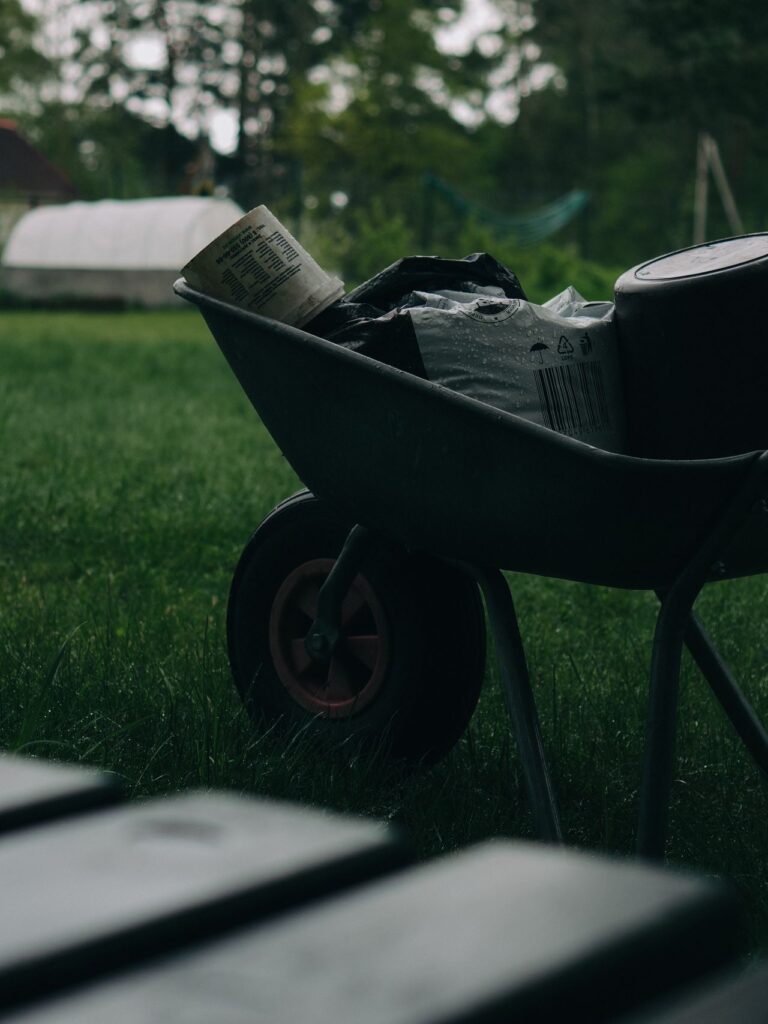
Weather changes how plants use fertiliser.
Heavy rain can wash nutrients out of containers and free-draining soil.
Hot weather can increase water demand and sometimes increase the risk of fertiliser burn when roots are already stressed.
Prolonged wet weather can damage roots and reduce nutrient uptake.
Cloudy periods can slow plant growth and reduce nutrient demand.
This means a fertiliser schedule should not be followed blindly.
The same plant may need different feeding decisions during:
a hot dry spell,
a week of heavy rain,
a cloudy monsoon period,
or a stretch of normal growing weather.
For Malaysian home gardeners, fertilising well means responding to both the plant and the weather.
Fertiliser Works Through Water
Most plant nutrients are absorbed from the soil solution — the thin film of water surrounding soil particles and roots.
This means fertiliser and watering are closely connected.
Too little water can reduce nutrient uptake.
Too much water can leach nutrients away or damage roots.
The weather therefore affects both:
how much nutrient remains in the root zone,
and how effectively the plant can use it.
Heavy Rain Can Leach Nutrients
One of the biggest issues in Malaysian gardens is nutrient leaching.
When large amounts of water move through soil, soluble nutrients can move downward and out of reach of roots.
This is especially relevant for:
pots,
grow bags,
raised beds,
and sandy or very free-draining soil.
Nitrogen in nitrate form is particularly mobile, but other nutrients can also be lost over time.
After several days of intense rain, a container plant may have less available nutrition than it had before.
But Do Not Fertilise Automatically After Every Storm
This is where gardeners can overcorrect.
A heavy rain event does not necessarily remove all fertiliser.
If you use:
slow-release granules,
a nutrient-rich potting mix,
or recently applied fertiliser,
some nutrition may still remain.
Do not respond to every storm by adding another full dose.
Instead, consider:
how long the rain lasted,
how freely the container drains,
what fertiliser was already applied,
and how the plant is growing.
Slow-Release Fertiliser Can Help During Variable Weather
Slow- or controlled-release fertiliser can provide more gradual nutrient supply.
This may be useful during periods of variable rainfall because you are not relying entirely on a single liquid feed.
However, slow-release fertiliser is not immune to weather.
Once nutrients are released into the soil solution, they can still move with drainage water.
Warm temperatures can also affect the release rate of some controlled-release products.
Always follow the product label.
Liquid Fertiliser Is Easier to Time Around Rain
Liquid fertiliser offers more control.
If heavy rain is expected, you can simply postpone feeding.
Applying a soluble fertiliser immediately before a major downpour may lead to unnecessary nutrient loss.
Wait until conditions are more stable.
The plant does not need fertiliser on the exact calendar date if the weather makes application inefficient.
Hot Weather Changes Plant Water Demand
Hot Malaysian afternoons can dramatically increase water loss from plants and containers.
As plants transpire more, they need more water.
If the soil dries excessively, nutrient uptake can decline even when fertiliser is present.
A very dry plant may struggle to absorb both water and nutrients.
This is why heavily fertilising a heat-stressed plant is usually a poor idea.
Correct the moisture problem first.
Do Not Fertilise Severely Dry Plants Aggressively
A dry root zone already contains less available water.
Adding concentrated fertiliser increases the salt concentration around the roots.
That can make water uptake even more difficult.
If a plant is badly wilted because the pot dried out, restore normal moisture first.
Once the plant has recovered and is actively growing again, resume feeding appropriately.
Heat Can Increase the Risk of Fertiliser Burn
Fertiliser burn is mainly a salt-concentration problem.
During hot weather, containers can dry quickly.
As water disappears from the growing medium, salts become more concentrated.
A fertiliser dose that seemed safe in consistently moist soil may become harsher if the pot repeatedly dries severely.
This is one reason containers need especially careful fertiliser management during hot spells.
Large Containers Are Easier to Manage
A very small container can shift rapidly between:
wet,
dry,
hot,
and highly concentrated.
Larger containers generally buffer those changes better.
They hold more moisture and provide more root volume.
For long-lived crops such as chillies, tomatoes, brinjal, and herbs, an adequately sized pot can make both watering and fertilising more forgiving.
High Humidity Can Slow Water Movement
Malaysia’s high humidity can reduce transpiration under some conditions.
If a plant loses less water through its leaves, water and nutrient movement through the plant may also change.
This matters particularly for nutrients such as calcium, which rely heavily on water movement through the plant.
However, high humidity does not mean you should simply increase fertiliser.
The plant may actually be growing more slowly during cloudy, humid conditions and therefore need less.
Cloudy Weather Can Reduce Nutrient Demand
Several days of cloudy weather can reduce photosynthesis.
The plant produces less energy and may grow more slowly.
If growth slows, nutrient demand may also decrease.
Continuing aggressive feeding during a prolonged low-light period can leave more unused fertiliser in the root zone.
For container plants, this can contribute to salt buildup.
Match feeding to actual growth.
Heavy Rain Plus Cloudy Weather Can Be a Double Problem
A prolonged wet spell can create two effects at once:
nutrient leaching,
and slower plant growth.
That can make fertiliser decisions confusing.
The answer is not always “add more.”
First check:
root health,
soil moisture,
new growth,
and whether the plant is actually showing signs of nutrient shortage.
If roots are waterlogged, feeding may need to pause despite nutrient loss.
Waterlogged Roots Should Not Be Fertilised Heavily
When soil remains saturated, roots receive less oxygen.
Root activity declines.
Even if nutrients are present, the plant may struggle to absorb them effectively.
Adding more fertiliser at that point can increase salt concentration once the soil begins drying.
Fix drainage and let the root zone recover.
Healthy roots come before extra feeding.
Dry Spells Can Increase the Need for Consistent Feeding — But Carefully
During a dry period, plants may grow strongly if they receive reliable irrigation.
That can increase nutrient demand.
But more demand does not mean heavier single doses.
It is usually safer to maintain:
consistent watering,
appropriate feeding,
and stable root conditions
rather than alternating between drought and large fertiliser applications.
Steady management gives better results than extremes.
Frequent Watering Can Leach Nutrients Too
During hot weather, container plants may need more frequent watering.
Each time excess water drains from the pot, some soluble nutrients may be lost.
That can gradually reduce fertility.
This is one reason long-term container plants often need a regular fertiliser programme.
But do not confuse frequent watering with permission to fertilise every time.
Follow an appropriate schedule.
Wind Can Increase Water Loss
Strong wind can dry:
leaves,
soil,
and containers
faster than expected.
Balcony gardens can be particularly exposed.
A windy hot day may create much greater water stress than the temperature alone suggests.
If pots are drying quickly, focus first on maintaining moisture.
Fertiliser does not replace water.
Sudden Weather Swings Matter
Malaysian weather can shift quickly.
A plant may experience:
two very hot days,
followed by intense thunderstorms,
then cloudy wet conditions.
Those rapid changes affect:
soil moisture,
root oxygen,
nutrient concentration,
and plant growth.
A fixed feeding schedule cannot respond to all of that.
Observation becomes more important than calendar dates.
Wet Season Does Not Mean “Stop Fertilising Completely”
If plants remain healthy and actively growing during rainy periods, they still need nutrients.
The adjustment may simply involve:
less frequent feeding,
better timing,
or choosing a fertiliser system that suits the conditions.
Do not remove nutrition completely just because it is raining.
Instead, avoid wasteful or poorly timed applications.
Dry Season Does Not Mean “Feed More”
Similarly, hot dry conditions do not automatically mean the plant needs more fertiliser.
It may simply need more reliable water.
If growth remains strong, continue the normal feeding programme.
If the plant is heat-stressed or repeatedly wilting, feeding should not be increased until the stress is corrected.
Rain Shelters Change Fertiliser Behaviour
Some Malaysian gardeners grow vegetables under:
clear roofing,
rain shelters,
or covered balconies.
These plants may avoid heavy nutrient leaching from rain.
But the growing medium can also accumulate salts more easily because natural rainfall is not flushing the containers.
This means covered plants may need more deliberate leaching or careful fertiliser measurement.
Protection from rain changes the nutrient system.
Balcony Gardens Need Special Attention
Balconies can create unusual microclimates.
They may be:
windy,
very hot,
partially shaded,
or protected from rain.
Two balconies in the same building may have completely different fertiliser needs depending on orientation and exposure.
Do not follow a fertiliser routine designed for an open garden without adapting it.
Temperature Can Affect Controlled-Release Fertiliser
Some coated fertilisers release nutrients faster when temperatures are warmer.
In a hot tropical environment, this can matter.
A product labelled to last a certain number of months may behave differently under Malaysian conditions than under cooler climates.
Do not assume the stated release period is an exact guarantee.
Observe plant response and follow tropical-use guidance where available.
Fertiliser Timing Can Be More Important Than Fertiliser Type
A good fertiliser applied at the wrong time can be inefficient.
For example:
liquid feeding before torrential rain,
heavy fertilisation during root waterlogging,
or strong feeding during severe heat stress
may all produce poor results.
Sometimes the simplest improvement is not changing fertiliser.
It is changing when you apply it.
Early Morning Is Often Practical
For many Malaysian home gardens, early morning is a practical time for root feeding.
Temperatures are lower.
Plants are usually less heat-stressed.
The gardener can also observe soil moisture before the hottest part of the day.
For foliar feeding, morning can also be useful when the product label permits it and rain is not expected immediately afterwards.
Avoid Fertilising Just Before Extreme Rain
If thunderstorms or prolonged heavy rain are expected shortly, delaying a soluble fertiliser application usually makes sense.
This reduces unnecessary nutrient loss.
For granular or controlled-release products, follow their application instructions rather than assuming they should always be delayed.
Do Not Double the Next Dose
If you skip fertilising because of bad weather, do not compensate by doubling the following application.
Plants do not need missed fertiliser “repaid.”
Simply return to the normal programme when conditions are suitable.
Double dosing increases the risk of:
salt buildup,
root stress,
and nutrient imbalance.
Watch the Plant, Not Just the Forecast
Weather information helps.
But the plant provides the final evidence.
Look at:
new growth,
leaf colour,
flowering,
fruit development,
root-zone moisture,
and overall vigour.
Two plants exposed to the same rain can respond differently because of:
container size,
soil type,
root health,
and crop stage.
A Simple Weather-Based Fertiliser Guide
During heavy rain:
Delay highly soluble feeding if major rain is expected. Check drainage and avoid feeding waterlogged roots.
After prolonged rain:
Assess the plant before replacing nutrients. Look for leaching, but also check root health.
During extreme heat:
Prioritise watering and root-zone stability. Avoid aggressive fertilising of wilted plants.
During a dry period:
Maintain consistent irrigation and normal feeding rather than using heavy individual doses.
During cloudy, slow-growth periods:
Consider reducing or delaying feeding if plant growth has clearly slowed.
During windy weather:
Watch moisture loss carefully, especially on balconies and in small containers.
Under rain shelters:
Monitor salt buildup because natural rainfall may not flush the root zone.
Keep Fertiliser Records Alongside Weather Notes
A simple garden journal becomes very useful here.
Record:
fertiliser date,
product,
rate,
rainfall,
heat,
plant response,
and harvest.
Over time, you may notice patterns.
For example:
a particular chilli may lose colour after several weeks of heavy rain,
or a certain pot may develop leaf burn during hot periods because it dries too quickly.
Your own garden data can become more useful than a generic feeding calendar.
Weather Does Not Change the Basic Rule
The basic rule remains:
feed according to plant demand and root condition.
Weather simply changes both.
Rain can remove nutrients.
Heat can increase water stress.
Humidity can alter plant water movement.
Cloudy conditions can slow growth.
The fertiliser decision should respond accordingly.
At the end of the day, weather changes the way fertiliser behaves because it affects water movement, root health, nutrient loss, salt concentration, and plant growth rate. In Malaysian home gardens, heavy tropical rain can leach nutrients, intense heat can increase salt stress and water demand, while prolonged cloudy or waterlogged conditions can reduce nutrient uptake. The best fertiliser programme is therefore flexible. Adjust timing and frequency to the actual weather, keep the root zone healthy, and resist the temptation to compensate for missed feeds with heavier doses later.
Have you noticed your plants responding differently to fertiliser during heavy rain, hot dry spells, or cloudy monsoon weather? Share your feeding routine, crop, weather conditions, and what changed by tagging @projectharvest.my on Instagram. Real Malaysian garden observations can help everyone build fertiliser schedules that respond to our climate instead of fighting against it.