
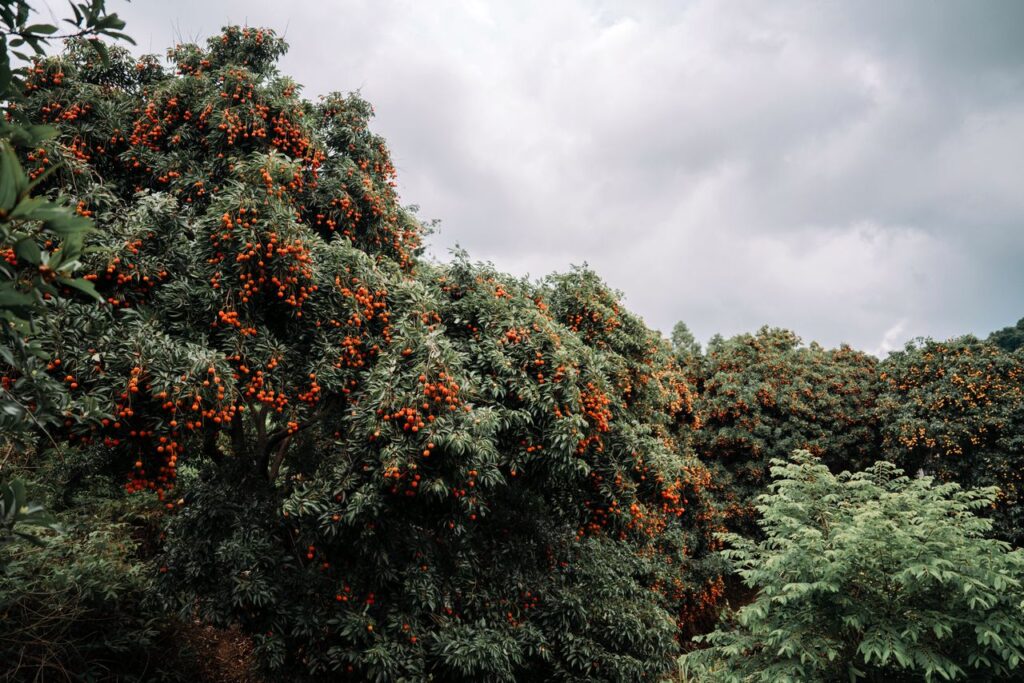
More fertiliser does not automatically produce more fruit because plants can only use nutrients up to the level they actually need.
Once nutrition is adequate, extra fertiliser may provide little additional benefit.
In some cases, it can make fruiting worse.
Too much fertiliser can encourage excessive leafy growth, increase salt concentration around the roots, disrupt nutrient balance, and stress the plant.
And if the true reason for poor fruiting is:
low light,
poor pollination,
heat,
water stress,
root problems,
or genetics,
more fertiliser will not solve the problem at all.
The goal is not to feed as much as possible.
It is to remove the nutrient limitations that are actually holding the plant back.
Plants Need Balance, Not Maximum Feeding
Plants require a mixture of nutrients, including:
nitrogen,
phosphorus,
potassium,
calcium,
magnesium,
sulphur,
and micronutrients.
These nutrients work together.
A productive chilli plant does not need the highest possible level of every nutrient.
It needs enough of each one in a suitable balance.
Once one nutrient is no longer limiting growth, adding more of it does not automatically increase yield.
Nitrogen Is the Classic Example
Nitrogen supports:
leaf growth,
chlorophyll,
proteins,
and general vegetative growth.
A nitrogen-deficient plant may be pale and weak.
Correcting that deficiency can improve growth and ultimately support better fruiting.
But excessive nitrogen can push the plant toward:
large leaves,
rapid shoot growth,
and dense foliage.
You may end up with a huge chilli or tomato plant that looks impressive but produces fewer flowers or fruit than expected.
A Bigger Plant Is Not Always a More Productive Plant
Gardeners often judge success by plant size.
But fruit yield depends on much more than foliage.
A plant needs enough leaves to photosynthesise, but excessive vegetative growth can create other problems.
Dense foliage may:
shade flowers,
reduce airflow,
increase humidity,
and make pest or disease problems harder to detect.
The plant may be using a lot of energy to maintain leaves and stems instead of supporting reproduction.
High Nitrogen Does Not Directly “Block” Fruit
It is better to avoid oversimplifying this.
Nitrogen is still essential during flowering and fruiting.
Fruiting vegetables should not be starved of nitrogen.
The problem is excess nitrogen relative to the plant’s overall needs and conditions.
A tomato or chilli still needs healthy leaves to support fruit production.
The aim is balance, not eliminating nitrogen.
More Phosphorus Does Not Guarantee More Flowers
Phosphorus is often marketed as a “flower nutrient.”
It is true that phosphorus is involved in:
energy transfer,
root development,
and reproductive processes.
But if the plant already has enough phosphorus, adding more does not force it to produce extra flowers.
A plant with poor flowering because of:
insufficient sunlight,
extreme heat,
or excess vegetative growth
will not necessarily improve because you add a high-phosphorus fertiliser.
More Potassium Does Not Automatically Make Fruit Bigger
Potassium is important for:
water regulation,
enzyme activity,
stress response,
and fruit development.
That is why many fruiting fertilisers contain proportionally more potassium.
But extra potassium cannot override:
genetics,
small root systems,
poor pollination,
water stress,
or inadequate light.
If your chilli variety naturally produces small fruit, potassium will not turn it into a large-fruited cultivar.
Excess Potassium Can Also Create Imbalance
Very high potassium levels can interfere with the uptake of other nutrients, including magnesium and calcium.
This can create new deficiency-like symptoms.
A gardener may then respond by adding more supplements.
Soon the plant is receiving:
extra potassium,
extra magnesium,
extra calcium,
plus its original fertiliser.
The feeding programme becomes more complicated while the real problem gets harder to diagnose.
Fertiliser Salts Can Damage Roots
Most mineral fertilisers contribute soluble salts to the root zone.
At an appropriate concentration, these nutrients are useful.
At excessive concentrations, they can make it harder for roots to take up water.
This may lead to:
fertiliser burn,
brown leaf tips,
wilting,
root damage,
and reduced growth.
A damaged root system cannot support heavy fruiting well.
So adding more fertiliser can eventually reduce the plant’s ability to use nutrients at all.
Container Plants Are Especially Vulnerable
In a pot, roots occupy a limited volume of growing medium.
There is less room for excess nutrients to disperse.
This makes container-grown:
chillies,
tomatoes,
brinjal,
cucumbers,
and herbs
more vulnerable to salt buildup.
In Malaysian weather, containers may also cycle rapidly between:
heavy rain,
frequent watering,
and hot dry conditions.
That makes careful fertiliser management even more important.
Fruit Production Depends on Light
Fertiliser cannot replace sunlight.
Leaves need light to carry out photosynthesis and produce the carbohydrates used for:
growth,
flowering,
and fruit development.
A heavily fertilised tomato on a dark balcony may grow leaves but still fruit poorly.
If light is the limiting factor, more fertiliser does not remove that limitation.
Sometimes the best “fertiliser adjustment” is actually better plant placement.
Pollination Can Be the Real Limitation
If a cucumber has plenty of flowers but female flowers are not being pollinated, fruit may fail to develop.
Adding:
potassium,
phosphorus,
or fruiting fertiliser
does not solve the pollination problem.
Likewise, tomatoes, chillies, and brinjal can experience poor fruit set under stressful weather even when nutrition is adequate.
Always identify the real bottleneck.
Heat Can Reduce Fruit Set
Malaysia’s heat can affect:
pollen viability,
flower retention,
and fruit set.
Very hot conditions can cause flowers to drop even when the plant is well fed.
A gardener may interpret poor fruiting as nutrient deficiency and apply more fertiliser.
But if temperature is the main problem, extra nutrients may do little.
The better approach may involve:
better watering,
shade management where appropriate,
improved airflow,
or simply waiting for more favourable conditions.
Water Stress Can Reduce Fruit Production
Irregular watering can cause:
flower drop,
poor fruit development,
cracking,
and blossom-end rot.
A plant cannot convert fertiliser into fruit effectively if it is repeatedly:
wilting,
drying severely,
or becoming waterlogged.
Water management and nutrition work together.
Good fertiliser cannot compensate for unstable moisture.
Root Space Can Be the Limiting Factor
A large chilli or brinjal growing in a tiny pot may become root-bound.
Its roots may:
dry quickly,
struggle for oxygen,
and have limited access to stable moisture.
Adding more fertiliser does not create more root space.
In fact, concentrated fertiliser in a small container may make stress worse.
Sometimes the plant needs a larger root environment, not stronger feeding.
Genetics Set Limits Too
Every variety has its own natural potential.
One chilli cultivar may:
produce many small fruits,
while another produces fewer large fruits.
One tomato may naturally form compact clusters.
Another may produce large individual fruit.
Fertiliser can help the plant reach its genetic potential.
It cannot rewrite that potential.
Fruit Load Matters
A plant carrying many fruits divides its resources among them.
This can affect average fruit size.
If a chilli plant is carrying a very heavy crop, individual fruits may be smaller even when nutrition is adequate.
Adding more fertiliser does not necessarily change that trade-off.
The plant still has limits on:
root uptake,
leaf area,
water supply,
and total energy production.
Fertiliser Works Best When It Corrects a Limitation
Imagine a plant genuinely deficient in potassium.
Correcting that shortage may improve:
growth,
water regulation,
and fruit development.
In that situation, fertiliser helps because potassium was limiting the plant.
But once potassium becomes adequate, doubling the dose does not double the harvest.
The response usually levels off.
Past that point, the risk of imbalance or toxicity begins to rise.
Think of Fertiliser as Removing a Bottleneck
A useful way to think about plant nutrition is:
the plant’s performance is limited by whatever essential factor is currently in shortest supply.
That factor might be:
nitrogen,
potassium,
water,
light,
root space,
pollination,
or something else.
Adding more of something that is already sufficient does not fix the actual bottleneck.
Good gardening is about identifying the limiting factor.
More Fertiliser Can Also Cost You More
Over-fertilising does not only affect the plant.
It wastes:
money,
product,
and time.
In exposed pots and raised beds, excess nutrients can also wash away during heavy Malaysian rain.
Applying more than the plant can use is inefficient.
A smaller, well-timed application may give better results than repeated heavy feeding.
Do Not Chase Dark-Green Leaves
Very dark green leaves are sometimes treated as proof of excellent plant health.
But extremely dark, lush foliage may indicate high nitrogen availability.
Healthy foliage should look appropriate for the crop and variety.
The goal is not to make every plant as dark green and leafy as possible.
The goal is productive, balanced growth.
How Do You Know If a Fruiting Plant Needs More Fertiliser?
Look at several things together:
Is new growth healthy?
Are older leaves showing genuine deficiency symptoms?
Is the plant flowering normally?
Is fruit developing?
When was it last fed?
What fertiliser is already present?
Has heavy rain caused likely nutrient loss?
Is the pot very small or heavily leached?
If the plant is healthy and productive, do not assume that another feeding will improve it.
Use the Label Rate
The label gives you a practical starting point for application.
Do not double the rate because the plant has started fruiting.
If you think the crop needs a different nutrient balance, choose an appropriate product rather than simply increasing the amount of the existing one.
Concentration and nutrient ratio are not the same thing.
Do Not Stack Multiple “Fruiting” Products
A common mistake is combining:
high-potassium fertiliser,
bloom booster,
calcium,
magnesium,
micronutrients,
and liquid feed
because the plant is fruiting.
Several of these may contain overlapping nutrients.
The result can be excessive salts and imbalance.
Use a simple, deliberate programme.
Track Yield Instead of Guessing
If you want to know whether a feeding change actually helps, record:
fertiliser,
application date,
fruit count,
harvest weight,
and plant condition.
This is much better than relying on memory.
You may discover that doubling your fertiliser made no difference at all — or that a lower, steadier rate produced better results.
A Simple Fruiting-Fertiliser Checklist
Before increasing fertiliser, ask:
1. Is there a real nutrient deficiency?
2. Is the plant getting enough sunlight?
3. Is pollination working?
4. Is watering consistent?
5. Are roots healthy?
6. Is the container large enough?
7. Is heat causing flower drop?
8. Is the plant already carrying a heavy fruit load?
9. What fertiliser has already been applied?
10. Could adding more create salt buildup instead of more fruit?
If nutrition is not the limiting factor, more fertiliser is unlikely to be the answer.
Feed for Balance, Not Maximum Input
A productive plant needs enough nutrition to support:
healthy leaves,
strong roots,
flowering,
and fruit development.
Once those needs are satisfied, the next improvement may come from:
better light,
better watering,
better pollination,
more root space,
or a more suitable variety.
That is why experienced gardeners gradually move away from asking:
“How much fertiliser can I give?”
and start asking:
“What is actually limiting this plant?”
At the end of the day, more fertiliser does not mean more fruit because plants respond to balanced nutrition and the most limiting factor in their growing environment, not simply to the amount of fertiliser applied. Excess nitrogen may produce lots of leaves, excessive salts can damage roots, and too much potassium or other nutrients can create imbalance. In Malaysian home gardens, fruiting can also be limited by heat, heavy rain, poor pollination, inconsistent watering, limited sunlight, or small containers. Feed enough to remove genuine nutrient limitations — then focus on the rest of the growing system instead of trying to fertilise your way to a bigger harvest.
Have you ever increased fertiliser on a chilli, tomato, brinjal, or cucumber only to get more leaves instead of more fruit? Share what you were growing, the fertiliser you used, and what happened to your harvest by tagging @projectharvest.my on Instagram. Those real Malaysian garden results can help other growers learn where extra feeding genuinely helps — and where the answer lies somewhere else.