
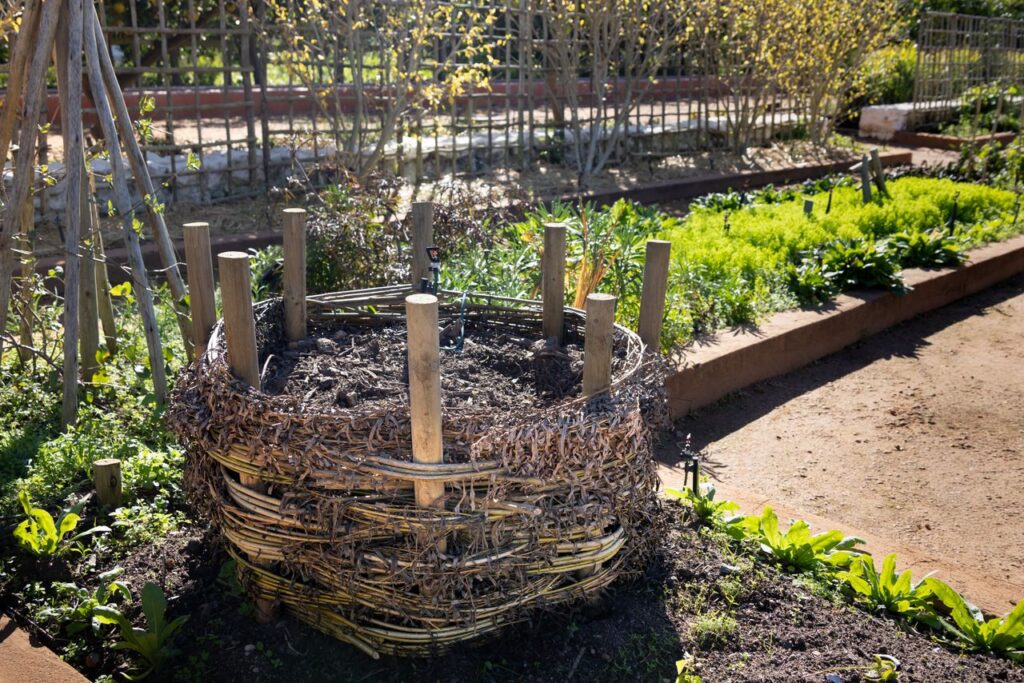
If you want to make compost at home, one of the first choices is whether to manage the pile actively and try to make it heat up, or simply add organic material gradually and let nature take its time.
These two approaches are commonly called hot composting and cold composting.
Both can produce useful compost. The real difference is how quickly they work, how much effort they require, how much material you need at once, and how carefully you manage moisture, air, and the balance of ingredients.
For a Malaysian home gardener, neither method is automatically better. The best choice depends on your space, lifestyle, garden size, and how much organic waste you generate.
What Is Hot Composting?
Hot composting is an actively managed process designed to make a compost pile heat up as microorganisms rapidly break down organic material.
A successful hot pile usually needs a good mix of nitrogen-rich “green” materials and carbon-rich “brown” materials.
Greens may include fresh grass clippings, vegetable scraps, fresh weeds, and soft green plant material.
Browns include dry leaves, shredded cardboard, dry stems, and other carbon-rich materials.
The pile also needs moisture and oxygen.
When these conditions come together in a pile that is large enough to retain heat, microbial activity can raise the temperature significantly.
Temperatures in an actively managed compost pile may reach roughly 55°C to 65°C, although conditions vary.
At these temperatures, decomposition happens quickly, and sustained heat can reduce many weed seeds and some plant pathogens.
What Is Cold Composting?
Cold composting is the slower, more relaxed method.
Instead of collecting a large volume of materials and carefully balancing everything at once, you add organic waste gradually.
Dry leaves this week.
Vegetable scraps next week.
Spent garden plants later.
Microorganisms, insects, worms, fungi, and other decomposers slowly work through the material over time.
The pile may warm slightly in places, but you are not deliberately trying to maintain high temperatures.
Cold composting generally takes much longer, but it also demands less active management.
For many casual home gardeners, that simplicity is exactly the appeal.
Hot Composting Is Much Faster
Speed is the biggest advantage of hot composting.
With the right materials and good management, a hot pile can break down substantially within weeks, although the compost should still be allowed to mature before being used heavily around plants.
Cold composting can take many months and sometimes a year or longer depending on the materials, climate, moisture, and pile size.
So if you regularly need compost for multiple vegetable beds, hot composting may be worth the effort.
If you only need a little compost occasionally, speed may not matter very much.
Hot Composting Requires More Material at Once
A hot pile needs enough volume to retain the heat generated by microorganisms.
A tiny container containing three banana peels and a handful of dry leaves is unlikely to become a proper hot compost pile.
As a rough guide, a pile around one cubic metre is often recommended as a practical size for retaining sufficient heat.
That can be a lot of material for an urban Malaysian household.
If you have a large garden, regularly prune plants, collect bags of leaves, or have access to grass clippings and other clean organic material, building a full pile may be straightforward.
For someone living in a terrace house with a tiny backyard, gathering that much material at once may be inconvenient.
Cold composting is much more forgiving because you can add material little by little.
Hot Composting Needs More Attention
A hot compost pile is not necessarily difficult, but it does require management.
You need to monitor whether the pile is too wet or too dry.
You may need to turn it to bring oxygen back into the centre.
You need a reasonable mixture of greens and browns.
And if you want to know whether the pile is genuinely heating properly, a long compost thermometer is useful.
If the pile cools too early, you may need to troubleshoot the balance, moisture, pile size, or aeration.
Cold composting asks much less of you.
Add suitable material, keep the pile reasonably moist, occasionally mix it if convenient, and wait.
For busy gardeners, this low-maintenance approach can be a major advantage.
Malaysia’s Climate Helps — and Complicates — Both Methods
Malaysia’s warmth supports rapid microbial activity throughout the year.
Unlike gardeners in colder climates, we do not have a long winter period where composting activity slows dramatically.
However, we also deal with heavy rainfall and high humidity.
A compost pile exposed directly to repeated tropical storms can become saturated.
When too much water fills the spaces between materials, oxygen levels fall and the pile can turn anaerobic. Instead of smelling earthy, it may become sour or rotten.
A simple roof, lid, or sheltered location can help prevent excessive rain from entering while still allowing airflow.
On the other hand, a compost pile sitting under intense sun can dry out quickly at the edges.
The ideal location is usually shaded or partly sheltered rather than completely exposed to Malaysia’s strongest weather.
Which Method Handles Weeds Better?
Hot composting has an advantage when managing certain weed materials.
If the entire pile reaches and maintains sufficiently high temperatures, heat can kill many weed seeds.
But this only works if all parts of the pile experience adequate heat.
The cooler outer edges may not.
That is why turning the pile is important: material from the outside gets moved into the hot centre.
Cold compost piles generally should not be trusted to destroy weed seeds reliably.
If a weed has already produced mature seeds, putting it into a cold pile may allow those seeds to survive and return to the garden later.
Problem weeds are often better excluded unless you are confident in your composting method.
What About Diseased Plants?
Hot composting may reduce certain plant pathogens when temperatures are high enough for long enough.
However, a small home compost pile does not automatically become a sanitising system simply because it feels warm.
If you are dealing with a serious or uncertain plant disease, especially one that may persist in plant debris, disposing of the affected material through an appropriate waste route may be safer than relying on an inconsistent home compost pile.
Cold composting is even less suitable for material containing serious plant diseases because the temperatures generally remain too low to provide reliable pathogen reduction.
When in doubt, keep badly diseased plant material out.
Which Method Smells Less?
Both methods should smell mostly earthy when managed correctly.
A strong rotten smell usually means the materials have become too wet, too compacted, or too rich in nitrogen without enough carbon and air.
Hot piles can become unpleasant very quickly if a large amount of wet grass or kitchen waste is added without enough dry brown material.
Cold piles may develop smells when food scraps are left exposed or the pile becomes waterlogged.
Covering fresh kitchen scraps with dry leaves, shredded cardboard, or existing compost can help.
Avoid adding meat, fish, dairy, oily leftovers, and similar materials to an ordinary home compost pile because these can create odours and attract pests.
Which Produces Better Compost?
Neither method automatically produces “better” compost.
Hot compost can be produced quickly and may have a more uniform texture when managed well.
Cold compost has more time for fungi, worms, insects, and other decomposers to work through the pile gradually.
The final quality depends more on the materials used and whether the compost is properly mature than on whether it was hot or cold.
Finished compost should generally be dark, crumbly, earthy-smelling, and no longer produce obvious heat after being turned.
If it still smells strongly of the original ingredients or continues heating aggressively, give it more time.
Cold Composting May Suit Small Malaysian Homes Better
Imagine a typical terrace-house garden.
You have a few curry leaf plants, pandan, chilli pots, herbs, and some fallen leaves.
You produce a small container of vegetable scraps every few days.
You probably do not generate enough garden waste to build a one-cubic-metre compost pile all at once.
Cold composting may suit that situation better.
A covered bin can gradually receive shredded dry leaves, small amounts of vegetable waste, old potting material, and suitable plant trimmings.
You accept that the process is slower in exchange for convenience.
If most of your organic waste comes specifically from the kitchen rather than the garden, vermicomposting or bokashi may also suit you better than either traditional method.
Hot Composting Makes Sense for Larger Gardens
Now imagine a larger landed property.
You have grass clippings, pruning waste, dry leaves, spent vegetable plants, and several beds that need compost regularly.
You can collect enough material to build a full pile.
In this situation, hot composting may be extremely useful.
Instead of waiting a year, you can convert a large volume of garden waste into usable compost much faster.
The active management becomes worthwhile because the output is larger.
Can You Start Cold and Then Go Hot?
Absolutely.
Composting does not need to fit perfectly into one label.
You might collect dry leaves and garden waste gradually in a holding area, then build a hot pile once enough material is available.
Alternatively, a pile may begin hot and then gradually cool into a slower decomposition stage.
That is completely normal.
The important thing is understanding what is happening rather than worrying about whether your compost fits a strict category.
A Simple Way to Choose
Choose hot composting if you:
have plenty of organic material at once,
want compost relatively quickly,
have enough space for a larger pile,
do not mind turning and monitoring it,
and want a better chance of reducing weed seeds through heat.
Choose cold composting if you:
produce smaller quantities of waste,
prefer low-maintenance gardening,
have limited space,
do not urgently need finished compost,
and are happy to let decomposition happen gradually.
For many Malaysian home gardeners, cold composting is the easiest starting point.
For gardeners with bigger properties and greater amounts of organic material, hot composting becomes much more attractive.
You Can Combine Composting Methods
There is no reason your home needs only one system.
A larger garden might use hot composting for pruning waste and leaves, while a worm bin processes selected vegetable scraps.
A terrace house might use cold composting for garden material and bokashi for cooked food waste.
The goal is not to become loyal to one composting method.
The goal is to find the easiest way to keep useful organic material out of the rubbish bin and return it to the soil safely.
At the end of the day, the difference between hot and cold composting comes down to speed versus simplicity. Hot composting gives you faster results but demands enough material, attention, moisture control, and regular aeration. Cold composting takes much longer but allows you to add waste gradually with far less effort. For Malaysian gardeners, both can work year-round — just protect the pile from excessive tropical rain, maintain enough dry carbon material, and choose the system that realistically fits the way you live and garden.
Are you a hot-compost, cold-compost, or mixed-system gardener? Tag @projectharvest.my on Instagram and share your compost pile, bin setup, finished compost, troubleshooting experiments, or garden results with us. Seeing how different Malaysian homes handle their organic waste could help another gardener choose a method they will actually stick with.