
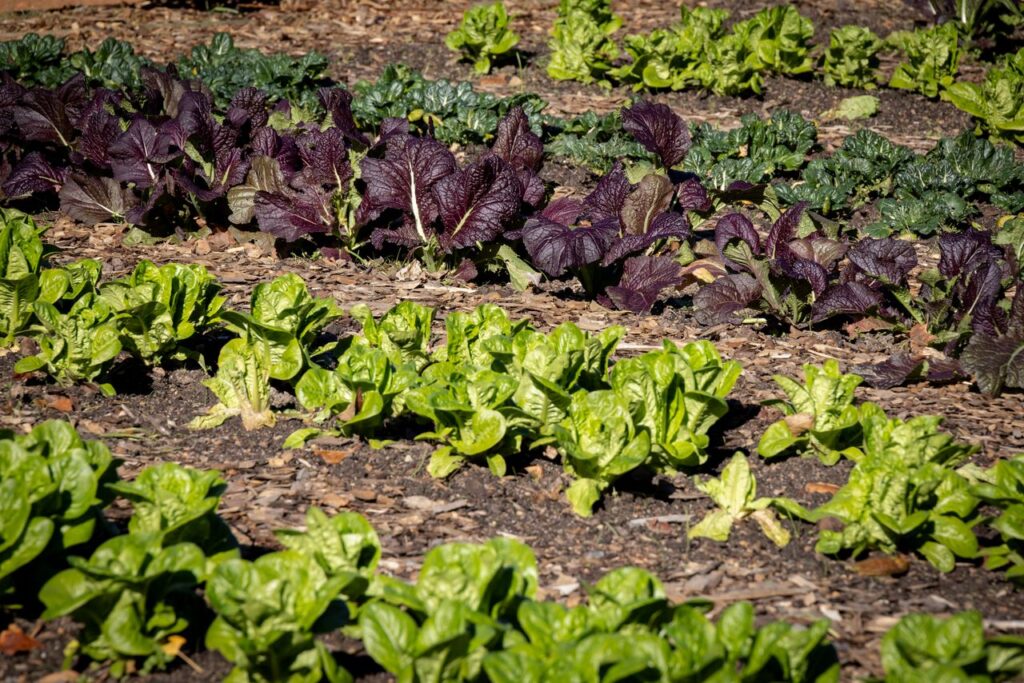
A continuously productive garden is not one where every plant is ready at the same time.
It is a garden where different crops are reaching harvest at different stages, while replacement plants are already growing before older crops finish.
For Malaysian home gardeners, this approach can work especially well because many edible plants can be grown through much of the year.
Instead of treating the garden as one big planting followed by one big harvest, design it as a system that is always moving.
Some plants are newly sown.
Some are developing.
Some are producing heavily.
Some are being harvested repeatedly.
And some are nearing the end of their productive life and already have replacements waiting.
That is the foundation of continuous harvesting.
Build the Garden Around Different Crop Lifespans
The easiest way to create continuity is to grow crops that operate on different timelines.
Divide the garden broadly into three groups.
Fast Crops
These give relatively quick harvests.
Examples include:
bayam,
sawi,
kailan,
some leafy vegetables,
and certain herbs.
They fill short gaps and can be replanted frequently.
Medium-Term Crops
These take longer to establish but can begin producing within a few months.
Examples include:
okra,
cucumber,
long beans,
and some herbs.
They usually occupy space longer than leafy vegetables.
Long-Term Producers
These remain productive for months or years.
Examples include:
chillies,
brinjal,
curry leaf,
pandan,
lemongrass,
mint,
and certain fruiting or perennial edible plants.
A continuous garden works best when all three groups are present at the same time.
Use Permanent Edibles as the Garden’s Foundation
Some plants should stay in place rather than constantly rotating.
Curry leaf, pandan, lemongrass, limau purut, and established herbs can form a permanent layer of the garden.
These plants provide dependable ingredients while the shorter vegetable crops change around them.
For example, your garden may always contain:
one curry leaf plant,
a few pandan plants,
lemongrass,
and a permanent herb section.
Then the raised beds and other containers can rotate through leafy greens, okra, beans, cucumbers, and other vegetables.
This creates a stable base of harvests even when temporary crops are between cycles.
Keep Some Crops Producing for Months
Repeat-harvest crops are extremely valuable.
Chillies, okra, brinjal, beans, cucumber, basil, and mint can provide more than one harvest when healthy and properly managed.
These crops create continuity because you do not have to replant them after every picking.
A productive chilli plant may continue supplying the kitchen while several batches of leafy vegetables come and go around it.
The longer a healthy plant remains productive, the fewer gaps you have in the overall garden.
Stagger Short-Term Crops
Fast vegetables should not all be planted together.
If you sow all your sawi on the same day, much of it may reach harvest around the same period.
Then the supply disappears.
Instead, sow smaller batches at intervals.
For example:
Week 1: first batch of sawi
Week 3: second batch
Week 5: third batch
By the time the first batch is harvested, another is already developing.
This is succession planting, and it is one of the most important techniques for continuous harvesting.
Design a Dedicated Rotation Bed
If you have raised beds, consider reserving at least one section specifically for short-cycle crops.
For example, Bed A might continuously rotate through:
bayam,
sawi,
kailan,
radish,
or other fast vegetables.
While permanent chilli and herb containers stay elsewhere, this bed acts as the garden’s rapid-production zone.
Once one batch is harvested, the next crop moves in quickly.
This keeps part of the garden producing fresh vegetables almost continuously.
Keep a Seedling Area Ready
A continuously productive garden needs replacement plants.
If you wait until an old crop is removed before sowing its replacement, you create a gap.
Instead, start seedlings while the existing crop is still productive.
For example, if your cucumber vine is approaching the end of its useful life, start the next cucumber plant before removing the old one.
Once the trellis becomes available, the replacement can take over.
A small nursery shelf, tray area, or sheltered corner can serve as the garden’s replacement station.
Use Overlapping Crop Cycles
Continuous harvesting is built on overlap.
Imagine three cucumber plants at different stages.
One is producing.
One is beginning to flower.
One is still young.
If the oldest plant declines, the next is already approaching production.
The same principle works with okra, beans, herbs, and leafy vegetables.
The goal is not to have everything mature together.
It is to create a chain.
Plan Harvest Zones
Another useful approach is to divide the garden by role.
For example:
Permanent Zone: curry leaf, pandan, lemongrass.
Long-Term Zone: chilli and brinjal.
Quick-Harvest Zone: bayam, sawi, kailan.
Vertical Zone: cucumber and beans.
Replacement Zone: seedlings and young transplants.
This does not require a large garden.
Even a terrace-house garden or balcony can be organised in this way using containers, shelves, and trellises.
The zones help ensure the garden always contains plants at different stages.
Use Vertical Space
Vertical growing increases the number of productive layers.
Cucumber, long beans, bitter gourd, and other climbers can use trellises.
Below or nearby, shorter crops can grow where light remains adequate.
This allows the garden to produce more without expanding its footprint.
However, avoid creating a wall of vines that blocks all sunlight.
Continuous production depends on healthy plants, not maximum crowding.
Keep Harvest Paths Clear
A garden designed for constant production also needs to be easy to harvest.
Make sure you can reach:
chilli plants,
okra,
trellises,
leafy vegetable beds,
and herb pots
without stepping into growing areas.
Easy access encourages more frequent harvesting and inspection.
If produce is difficult to reach, it is more likely to become overripe or forgotten.
Harvest at the Right Time
Continuous production depends partly on regular picking.
Okra pods become tough quickly if left too long.
Beans may become fibrous.
Cucumbers can become oversized.
Basil benefits from repeated cutting.
Chillies can be picked at the stage suited to your intended use.
Regular harvesting can help keep many plants productive and prevents mature crops from remaining on the plant unnecessarily.
Use Cut-and-Come-Again Crops Where Suitable
Some vegetables and herbs can be harvested repeatedly rather than removed completely.
Mint and basil are obvious examples.
Some leafy greens can also be harvested progressively depending on the species and growing style.
This stretches one planting over a longer period.
However, not every crop responds well to repeated cutting.
Do not force a cut-and-come-again system onto crops that are better harvested whole.
Replace Plants Before They Become Completely Unproductive
A common mistake is keeping exhausted plants because they are technically still alive.
A cucumber vine may have stopped producing useful fruit.
An old leafy vegetable may be flowering and becoming tough.
A chilli may be severely declining.
If the plant is no longer earning its space, replace it.
Continuous harvesting requires knowing when to move on.
Ideally, the replacement plant is already growing somewhere else.
Do Not Remove Productive Plants Too Soon
The opposite mistake is also common.
If a chilli or brinjal plant is still healthy and producing well, there is no reason to replace it just because a calendar says the crop is old.
Keep productive plants working.
The longer they produce reliably, the easier it is to maintain a steady harvest.
Use plant performance rather than age alone to decide when replacement is necessary.
Design Around What Your Family Eats
A continuous harvest is only useful if the food is actually used.
If your household eats bayam every week but cucumber only occasionally, allocate more succession space to bayam.
If curry leaves and pandan are constantly used in cooking, maintain healthy permanent plants.
If nobody enjoys brinjal, do not dedicate valuable long-term space to it simply because it produces well.
Continuous harvesting should match household demand.
Track How Long Crops Really Produce
Record:
sowing date,
first harvest,
peak production,
and when yield begins to decline.
This helps you determine when to start replacements.
For example, if your records show that cucumber usually begins declining around Week 9 or 10, you can start new plants several weeks earlier.
Over time, your garden journal becomes a personalised harvest calendar.
Plan for Malaysia’s Rain and Heat
Continuous production does not mean planting exactly the same way every month.
Malaysia’s weather still changes.
During very wet periods:
young seedlings may need shelter,
drainage becomes more important,
and disease pressure may increase.
During hot, dry periods:
containers may dry faster,
leafy crops may struggle,
and irrigation may need adjustment.
A continuous garden has to be flexible enough to respond to weather without stopping completely.
Keep Backup Crops
Not every planting will succeed.
Seeds may fail.
Pests may damage a crop.
Heavy rain may destroy seedlings.
Keeping a few replacement seedlings gives you insurance.
You do not need dozens.
Even a small number of backups can prevent an empty section of garden after an unexpected failure.
Do Not Overplant Just to Avoid Gaps
A garden packed too tightly may look productive at first but can eventually suffer from:
poor airflow,
heavy competition,
more disease,
and difficult harvesting.
Continuous production should come from timing and diversity of crop stages, not overcrowding.
It is better to have fewer healthy crops producing at different times than too many plants struggling together.
A Simple Continuous-Harvest Layout
Imagine a small Malaysian garden containing:
three chilli plants in large pots,
two brinjal plants,
one curry leaf plant,
pandan and lemongrass,
a raised bed divided into three leafy vegetable sections,
one cucumber or bean trellis,
and a small seedling shelf.
The leafy bed is staggered so each section is at a different stage.
The chilli and brinjal produce over longer periods.
The permanent herbs provide regular small harvests.
The trellis is replanted before the previous crop fully finishes.
The seedling shelf keeps replacements ready.
Even though the garden is small, there is rarely a point when everything finishes at once.
Review the System Every Few Months
Ask:
Which crops created harvest gaps?
Which produced too much?
Which stayed productive longest?
Which replacements were started too late?
Which areas were overcrowded?
Which crops did the household actually use?
Then adjust the design.
A continuous garden becomes better with every cycle because you gradually learn the timing of your own space.
At the end of the day, designing a garden for continuous harvesting is about creating overlapping layers of production. Keep permanent edible plants for stability, mix fast and long-term crops, stagger your sowing dates, start replacement plants before older crops finish, and harvest productive crops regularly. In Malaysia’s tropical climate, this approach can turn even a modest terrace-house garden, balcony, or raised-bed setup into a much steadier source of fresh food throughout the year.
Trying to turn your garden into one that always has something ready for the kitchen? Tag @projectharvest.my on Instagram and show us your permanent herbs, staggered leafy vegetables, replacement seedlings, trellises, or weekly harvests. We would love to see how Malaysian home gardeners are designing spaces where one crop finishes just as the next one is ready to take over.