
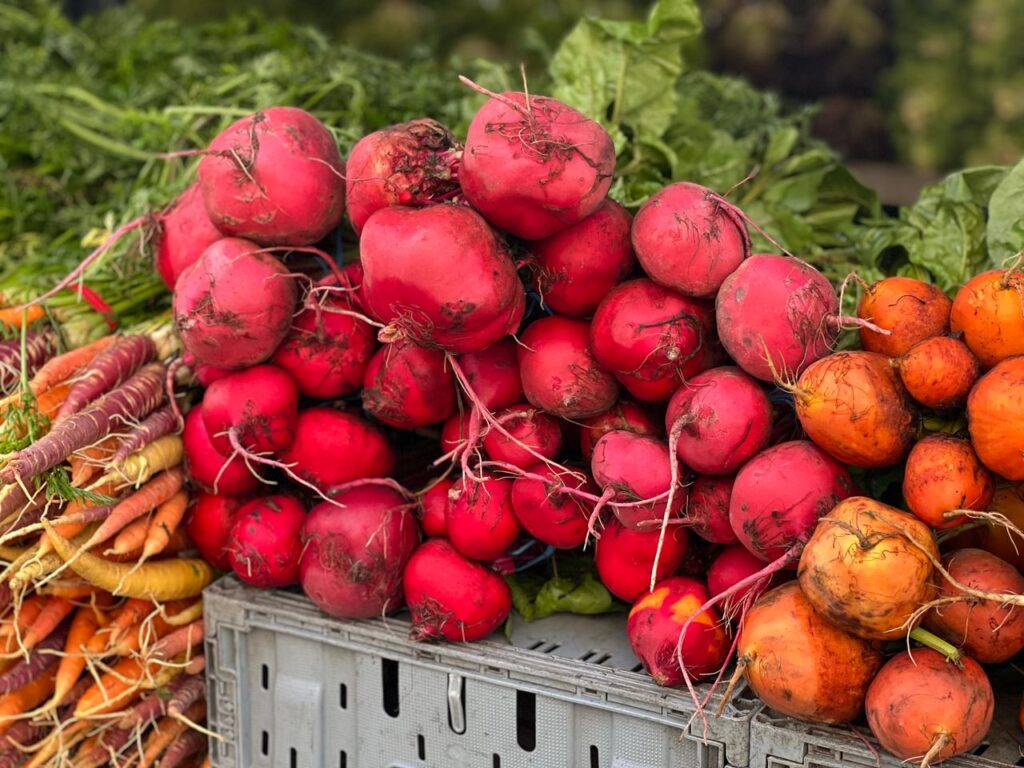
Root crops can be very satisfying to grow, but they can also be easy to damage during harvest if you rush the process. Many beginners make the mistake of grabbing the leaves and pulling hard, only to end up with snapped roots, bruised vegetables, or a handful of tops with the actual crop still stuck in the soil. The good news is that root crops are not difficult to harvest well once you know the right approach. The secret is to loosen first, then lift gently.
The first thing to remember is that the soil condition matters a lot. Root crops are easier to lift when the soil is slightly moist rather than dry and hard. If the bed has been very dry, a light watering the day before harvest can help make the soil easier to work with. This is especially useful for crops like carrots, beetroot, radish, and other vegetables that sit firmly in the ground. Dry, compacted soil increases the chance of broken roots.
Instead of pulling straight away, use a hand fork, garden fork, or small digging tool to loosen the soil around the crop. Push the tool into the soil a short distance away from the root, not directly on top of it. Then gently lift or loosen the surrounding soil so the crop has room to come free. Once the ground is loosened, you can usually pull the root much more safely and cleanly. This simple step makes a huge difference, especially for deeper or more delicate root crops.
It also helps to harvest with patience. Do not rush and do not yank. A gentle lift is always better than a forceful pull. If a root does not want to move, it usually means the soil needs more loosening, not more strength. Pulling too hard can break the vegetable, damage the skin, or leave part of it buried in the ground.
After lifting, handle the crop gently. Root vegetables can bruise more easily than many beginners realise. Shake off loose soil, but do not bang them around or scrub them roughly right away. If needed, trim the tops after harvest rather than twisting them off aggressively. A cleaner, calmer handling process helps protect both appearance and storage quality.
At the end of the day, harvesting root crops without damaging them comes down to moisture, loosening the soil first, and lifting with care instead of pulling blindly. Once you get into that habit, harvesting becomes much easier and your vegetables come out looking far better.
If you are harvesting root crops at home, we would love to see it. Tag @projectharvest.my on Instagram and share your harvests, your edible garden, and your gardening journey with us — your home garden might inspire another Malaysian beginner to start growing too.