
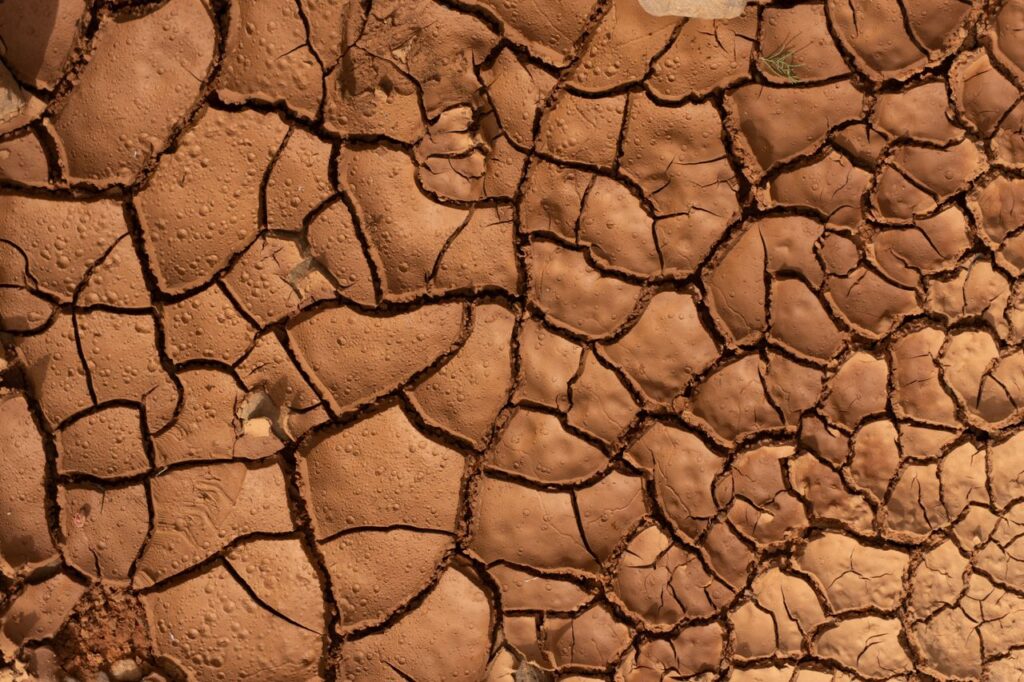
Heavy clay soil can be frustrating to garden in. After heavy Malaysian rain, it may stay sticky and waterlogged for days. During a hotter, drier spell, the same soil can become hard, compacted, and difficult to dig. Plant roots may struggle for oxygen, water may sit around the root zone, and young vegetables can grow slowly even when the soil appears rich.
The good news is that clay soil is not automatically poor soil. Clay particles can hold nutrients extremely well. The real challenge is usually soil structure: the way those tiny particles are arranged and how much space exists between them for air, water, and roots.
Improving clay soil therefore means creating better structure over time rather than trying to replace the clay completely.
Why Clay Soil Behaves Differently
Soil is made from particles of different sizes. Sand particles are relatively large, while clay particles are extremely small.
Because clay particles pack closely together, the spaces between them can also become very small. This means water moves through heavy clay more slowly and less oxygen reaches plant roots when the soil becomes saturated.
This becomes particularly important in Malaysia because intense tropical rain can deliver a lot of water in a short period. If the soil already drains slowly, a vegetable bed may remain saturated long after the rain has stopped.
Poor drainage can then contribute to root stress, nutrient problems, and root diseases.
At the same time, clay soil has advantages. It generally holds nutrients and moisture better than very sandy soil. So your goal is not to turn clay into sand. It is to improve how the clay behaves.
Start with Finished Compost
One of the most reliable ways to improve clay soil is to add well-decomposed organic matter, particularly finished compost.
Organic matter helps clay particles form better aggregates, or small clusters. These clusters create larger pore spaces through which air, water, and roots can move more easily.
Over time, compost can make clay soil easier to work while improving drainage and supporting soil microorganisms. Research-based gardening guidance consistently recommends organic matter as one of the most effective amendments for heavy soil.
Spread finished compost over the garden surface and gently incorporate it into the upper soil layer when establishing a new bed. For an established garden, you can also apply compost as a surface layer and allow soil organisms, watering, and normal cultivation to gradually incorporate it.
The important word here is gradually.
One enormous application will not permanently transform clay soil. Organic matter continues decomposing, especially in Malaysia’s warm conditions, so maintaining good soil structure requires regular additions over time.
Mulch the Soil Surface
Once the soil has been improved with compost, cover it with a suitable organic mulch.
Dried leaves, partially decomposed plant material, bark, wood chips, or other appropriate organic materials can help protect the soil surface from direct tropical sun and pounding rain.
Heavy rainfall hitting bare clay can break down surface structure and create a dense crust. Mulch reduces that impact.
It also helps moderate soil moisture and provides a slow supply of organic material as it decomposes.
Keep mulch slightly away from plant stems and tree trunks so the area directly around the plant base does not remain unnecessarily damp.
Avoid Working Clay Soil When It Is Very Wet
One of the easiest ways to make clay soil worse is to dig or walk over it while it is saturated.
Wet clay compresses easily.
Digging, stepping repeatedly through the bed, or moving heavy equipment over wet soil can squeeze out pore spaces and leave the soil even more compacted after it dries.
After heavy rain, give the garden time to drain before cultivating.
A simple test is to squeeze a handful of soil. If it forms a sticky lump that smears easily and feels like modelling clay, it is probably too wet to work.
If it crumbles more naturally when pressed, conditions are safer.
Raised Beds Can Be a Major Upgrade
If your garden sits in a naturally low area or remains waterlogged despite soil improvements, organic matter alone may not solve the problem.
Water still needs somewhere to go.
This is where raised beds can be extremely useful for Malaysian vegetable gardens.
Raising the root zone above the surrounding ground gives you more control over soil structure and allows excess rainfall to move away from plant roots more easily.
You do not necessarily need a complicated timber structure. Even a properly shaped raised mound or simple brick-edged bed can improve growing conditions.
Fill it with a balanced mixture that contains good-quality soil and compost rather than pure compost.
Raised beds are especially useful for chillies, tomatoes, brinjal, okra, herbs, and other edible plants that dislike sitting in permanently saturated ground.
Do Not Just Add a Little Sand
One of the most common pieces of gardening advice is:
“Clay soil is heavy, so add sand.”
Unfortunately, the reality is more complicated.
Small amounts of sand mixed into clay may do very little to improve drainage. In certain combinations, clay particles can fill the spaces between sand particles and create an even denser mixture.
Research-based guidance therefore generally recommends prioritising organic matter rather than casually mixing small quantities of sand into clay. Adding enough mineral material to significantly change soil texture would usually require a very large volume.
For a Malaysian home gardener, compost, mulch, raised beds, and better drainage are usually much more practical strategies.
What About Gypsum?
Gypsum is another product frequently promoted as something that will magically “break up clay.”
It can help improve soil structure in certain sodic soils, where high sodium causes clay particles to disperse.
But ordinary heavy clay is not automatically sodic.
Research-based extension guidance notes that gypsum does not consistently improve every clay soil, so applying it without knowing the soil conditions may simply add another product without solving the drainage problem.
If you suspect a serious structural or chemical soil issue, get the soil tested before applying large quantities of amendments.
Grow Roots Through the Soil
Plants themselves can help improve soil structure.
A garden that continually grows different plants develops a network of roots at different depths. When old roots die and decompose, they leave small channels through the soil.
Cover crops and ground-covering plants can be particularly useful in larger beds between growing cycles because they protect the surface while maintaining biological activity below ground.
Even in a small edible garden, avoiding long periods of completely bare soil can help.
Consider Where the Water Is Coming From
Sometimes the problem is not only the soil.
Look at what happens during a Malaysian thunderstorm.
Does water from the roof pour directly into the garden bed?
Does your neighbour’s property drain towards your garden?
Does water collect because the bed is lower than the surrounding concrete?
Is the soil trapped between walls with nowhere for excess water to escape?
If water physically cannot leave the area, adding compost will only do so much.
You may need to redirect roof runoff, improve surface grading, add appropriate drainage, or raise the planting area.
Solving the water movement problem is often more important than endlessly amending the soil.
Be Careful with Fresh Manure and Unfinished Compost
Organic matter is useful, but that does not mean every organic material should be buried directly into clay.
Fresh manure and unfinished compost can contain excessive salts, unstable organic materials, weed seeds, or pathogens.
Materials that are still decomposing can also temporarily affect nitrogen availability.
For vegetable gardens, use mature, properly finished compost wherever possible.
Organic does not automatically mean safe or suitable.
Improvement Takes More Than One Season
Clay soil improvement is a long-term project.
After the first compost addition, you may notice that digging becomes easier and drainage improves.
After several cycles of compost, mulch, root growth, and careful cultivation, the soil can become noticeably more crumbly and easier to manage.
Malaysia’s warm climate means organic matter decomposes relatively quickly, so maintaining those improvements requires ongoing soil care.
Think of it less as:
“How do I fix my clay soil?”
and more as:
“How do I keep building better soil structure every growing season?”
That shift in mindset makes a big difference.
When Should You Consider Starting Fresh?
For a small raised vegetable bed or container garden, there are times when heavily compacted site soil may simply be impractical.
If the ground is extremely dense, badly waterlogged, contaminated with construction debris, or located somewhere with fundamentally poor drainage, building a raised bed with suitable growing soil may be more sensible than trying to completely transform the existing ground.
You can still gradually improve the native soil underneath, but your vegetables do not have to wait years while that happens.
At the end of the day, heavy clay soil is not something you need to fight. It is a soil type that needs better structure and water management. Add finished compost regularly, protect the surface with mulch, avoid compacting wet soil, use raised beds where drainage remains poor, and solve any larger water-flow problems around the garden. Resist quick fixes such as casually adding sand or gypsum without understanding what your soil actually needs. With consistent management, even difficult clay soil can become a productive foundation for a Malaysian edible garden.
Working with stubborn clay soil at home? Tag @projectharvest.my on Instagram and show us your soil before and after, your raised-bed setup, compost additions, drainage improvements, or the plants that finally started thriving. Your soil transformation might help another Malaysian gardener realise that difficult ground does not mean an impossible garden.