
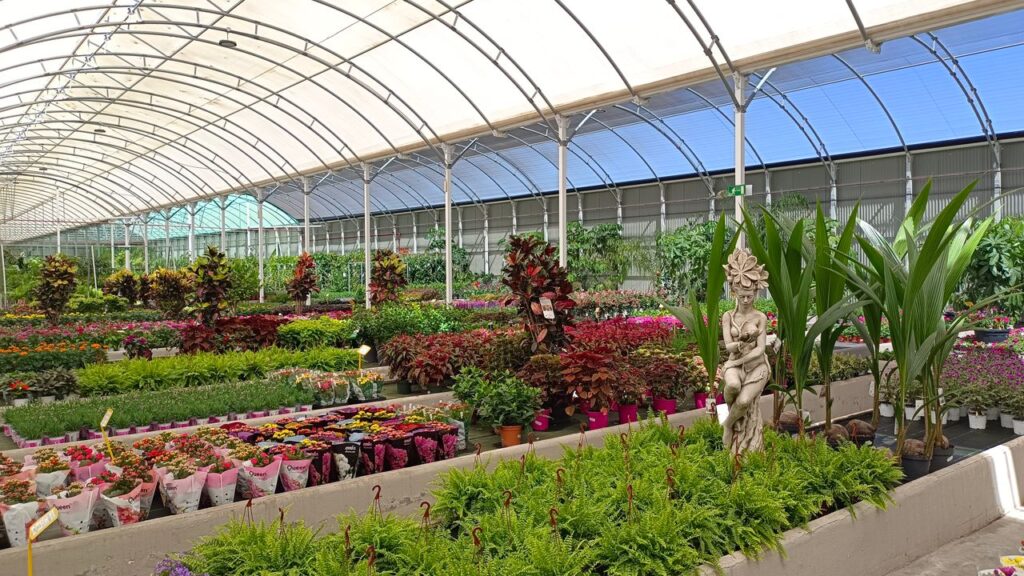
Before buying a nursery plant, spend a few minutes checking the leaves, growing tips, stems, potting mix, roots, and overall plant shape.
You are looking for more than whether the plant appears green.
A plant can look healthy from a distance while hiding:
thrips inside flowers,
whiteflies under leaves,
scale insects along stems,
spider mites on leaf undersides,
fungus gnats in wet potting mix,
or early disease symptoms.
Bringing one infested plant into an established garden can introduce a pest that later spreads through many other plants.
A quick inspection is therefore one of the simplest forms of pest prevention.
Start With the Whole Plant
Before touching the plant, step back and look at its overall condition.
Ask:
Does it look balanced and vigorous?
Is the foliage reasonably full?
Is one side badly wilted?
Are large sections yellowing?
Does the plant appear unusually stunted compared with others of the same type?
A healthy nursery plant does not need to look perfect, but obvious overall decline deserves caution.
Compare Several Plants of the Same Type
If the nursery has ten chilli plants, compare them.
One plant may suddenly stand out because it has:
smaller leaves,
distorted growth,
yellow patches,
or fewer healthy shoots.
Comparison is useful because plants of the same crop and similar age should usually look broadly similar when grown under the same nursery conditions.
An abnormal plant becomes easier to recognise when you have healthy neighbours beside it.
Check the Newest Leaves First
Tender new growth is one of the best places to detect hidden pest problems.
Look for:
curling,
twisting,
silvering,
distortion,
narrow leaves,
or unusual mottling.
Thrips, mites, viruses, and other problems can all affect new growth.
One imperfect leaf is not necessarily serious.
But repeated abnormal new leaves are a stronger warning sign.
Turn the Leaves Over
This is one of the most important steps.
Many pests prefer leaf undersides.
Look for:
whiteflies,
spider mites,
thrips,
scale,
eggs,
tiny nymphs,
webbing,
or sticky residue.
Do not inspect only the prettiest top leaves.
Check several leaves from different parts of the plant.
Look for Whiteflies
Gently disturb the foliage.
If tiny white insects suddenly fly up, whiteflies may be present.
Then turn over the leaves.
Look for:
small adults,
tiny pale eggs,
and flat immature stages attached underneath.
A heavily infested plant is usually best left at the nursery.
Look for Thrips
Thrips can be difficult to see because they are tiny and often hide inside:
flowers,
buds,
and new growth.
Look for:
silvery scars,
distorted young leaves,
tiny black specks,
and slender moving insects.
If the plant is flowering, gently inspect a few flowers.
You can also tap a flower over white paper and look for tiny moving lines.
Check for Spider Mites
Spider mites are especially important during hot weather.
Look closely at leaf undersides for:
tiny moving dots,
fine stippling,
bronzing,
and delicate webbing.
Heavy webbing is an obvious warning sign.
But early infestations may only show pale speckling.
A small hand lens can make mites much easier to detect.
Inspect the Stems for Scale
Scale insects can look like ordinary bumps on the plant.
Check:
young stems,
woody branches,
leaf joints,
and veins.
Look for small:
brown,
tan,
white,
or grey shell-like bumps.
Also check for:
sticky honeydew,
ants,
and black sooty mould.
These secondary signs can reveal scale even when the insects themselves are easy to overlook.
Look for Mealybugs in Tight Spaces
Mealybugs commonly hide in:
leaf joints,
stem crevices,
around new shoots,
and sometimes around roots.
They often look:
white,
cottony,
or fluffy.
One small hidden colony can spread quickly once the plant joins the rest of your garden.
Inspect tight spaces, not only open leaves.
Check Flowers and Buds
Flowers can hide pests.
Inspect them for:
thrips,
small caterpillars,
aphids,
and unusual damage.
If the flowers are badly scarred, distorted, or dropping while the rest of the plant looks stressed, investigate before buying.
Flower damage can sometimes reveal a pest problem earlier than leaf symptoms.
Examine the Potting Mix
Look at the soil or potting medium.
Ask:
Is it extremely wet?
Does it smell sour?
Is green algae covering the surface?
Are tiny flies emerging from it?
A constantly wet growing medium may support fungus gnats and can also indicate poor drainage.
A few fungus gnats are not necessarily disastrous, but buying a heavily infested pot may introduce them to your home growing area.
Watch for Fungus Gnats
Gently move the pot or disturb the upper surface.
If many tiny dark flies begin moving or hovering around the soil, fungus gnats may be present.
Check whether the mix appears:
saturated,
compact,
or unusually wet.
Remember that fungus gnats often indicate persistent moisture rather than a problem with the leaves themselves.
Look at the Drainage Holes
If practical, inspect underneath the pot.
Check whether:
roots are emerging heavily,
the drainage holes are blocked,
or the bottom smells stagnant.
A few roots coming through drainage holes are normal.
But a thick mass of roots circling underneath may indicate the plant is extremely root-bound.
That does not automatically make the plant unsuitable, but it means repotting may be needed soon.
Can You Check the Root Ball?
Do not pull plants out of nursery pots without permission.
But if nursery staff allow inspection, a healthy root ball should generally have:
firm roots,
no strong rotten smell,
and no obvious mass of soft black roots.
Root colour varies between species and growing media, so do not use colour alone.
Texture and smell can be more useful.
Avoid Plants With Persistent Wilting
A plant wilting at noon in strong heat may recover normally later.
But a plant that remains wilted despite moist soil may have:
root damage,
disease,
salinity,
or other stress.
If neighbouring plants are standing upright while one remains collapsed, choose another specimen.
Look for Leaf Spots
Check for:
brown,
black,
water-soaked,
or target-like spots.
A few old damaged leaves may not matter.
But numerous spreading lesions could indicate:
fungal,
bacterial,
or other disease problems.
Pay particular attention if several nearby nursery plants show similar spotting.
That suggests the issue may not be isolated.
Watch for Possible Viral Symptoms
Be cautious with plants showing combinations such as:
mosaic colouring,
mottling,
persistent distorted new growth,
unusual vein patterns,
stunting,
or severely curled leaves.
These symptoms do not prove viral disease.
But a plant with several suspicious signs is rarely worth introducing into an established edible garden.
There is usually another healthy plant available.
Check for Chewing Damage
Small holes in leaves may simply indicate old caterpillar or beetle feeding.
Look for the pest itself.
Check:
leaf undersides,
folded leaves,
buds,
and stems.
One old hole is not necessarily a reason to reject the plant.
Fresh widespread chewing and active pests are more concerning.
Look for Honeydew and Sooty Mould
Run your fingers near suspicious leaves.
Do they feel sticky?
Sticky honeydew can indicate sap-feeding pests such as:
whiteflies,
aphids,
mealybugs,
or soft scale.
Black sooty mould growing over the sticky residue is another warning sign.
If you see sooty mould, look carefully for the pest producing the honeydew.
Ant Activity Can Reveal Hidden Pests
A few ants around a nursery are normal.
But if ants are repeatedly climbing one particular plant, inspect it closely.
They may be visiting honeydew-producing pests.
Follow the trail.
It may lead you directly to:
aphids,
scale,
mealybugs,
or whiteflies.
Do Not Buy a Sick Plant Just Because It Is Discounted
A heavily discounted plant can be tempting.
Sometimes the problem is harmless cosmetic damage.
But a bargain becomes expensive if it introduces:
thrips,
scale,
mites,
whiteflies,
or disease
to the rest of your garden.
If you are experienced and deliberately want to rehabilitate a plant, that is different.
For most home gardeners, buy the healthiest specimen available.
Inspect the Plants Beside It
Do not inspect your chosen plant in isolation.
Look at neighbouring pots.
If surrounding plants are covered with:
whiteflies,
thrips,
scale,
or disease,
your plant may already be exposed even if you cannot immediately see pests.
The condition of the surrounding nursery area gives useful information.
Check the Nursery’s General Plant Care
Notice whether plants are:
extremely overcrowded,
constantly waterlogged,
covered in pests,
or carrying widespread diseased foliage.
A nursery does not need to be spotless.
Outdoor plants naturally experience insects and weather damage.
But obvious widespread pest pressure should make you inspect purchases more carefully.
After Buying, Do Not Put the Plant Straight Into the Middle of Your Garden
Even a good inspection can miss tiny pests or eggs.
Where practical, keep new plants slightly separated from your main collection for an observation period.
This is often called quarantine, although for a home garden it does not need to be complicated.
The goal is simply to give yourself time to notice hidden problems before pests spread.
Where Should You Keep a New Plant?
Place it somewhere with:
appropriate light,
good airflow,
and enough distance from your main plants that leaves are not touching.
Do not put a shade-loving nursery plant into full afternoon Malaysian sun simply because you are observing it separately.
The quarantine location should still suit the plant.
How Long Should You Observe It?
There is no perfect universal number of days for every pest.
For a home gardener, even a short observation period is better than none.
During that time, repeatedly inspect:
new leaves,
leaf undersides,
stems,
flowers,
and potting mix.
Some hidden eggs or immature pests may become easier to see after the plant has been home for several days.
Do Not Automatically Spray Every New Plant
Preventive spraying can seem sensible, but it may expose the plant and beneficial organisms to unnecessary pesticides.
It can also make diagnosis harder if the plant reacts badly to the treatment.
Inspect first.
Treat only when there is a reason.
If treatment is required, use an appropriate method for the pest you actually found.
Do Not Repot Immediately Unless Necessary
A nursery plant is already experiencing a change of environment.
Immediately combining:
transport,
repotting,
root disturbance,
pruning,
and pesticide treatment
can create unnecessary stress.
If the plant is healthy and the pot is adequate, allow it to acclimatise before making major changes.
Repot sooner only when there is a clear reason such as:
severe root binding,
damaged media,
or drainage failure.
Remember the Change in Light
Plants grown under nursery shade may not be ready for direct full sun.
This is especially relevant in Malaysia.
Moving a plant straight from a shaded nursery into intense afternoon sunlight can cause leaf scorch.
Gradually adjust it to brighter conditions where necessary.
Otherwise, you may mistake sun damage for disease shortly after bringing the plant home.
A Five-Minute Nursery Inspection
Before buying, follow this simple routine:
1. Look at the whole plant.
Check vigour, colour, and overall shape.
2. Inspect the newest growth.
Look for distortion, silvering, curling, or mottling.
3. Turn over several leaves.
Check for whiteflies, mites, eggs, and other pests.
4. Inspect stems and leaf joints.
Look for scale and mealybugs.
5. Check flowers and buds.
Look for thrips and hidden pests.
6. Examine the potting mix.
Watch for fungus gnats, algae, and excessive moisture.
7. Look underneath the pot.
Check drainage and severe root binding.
8. Check for spots, honeydew, and sooty mould.
9. Inspect nearby nursery plants.
10. Choose the healthiest plant, not simply the biggest one.
Those five minutes can save a great deal of trouble later.
Prevention Is Easier Than Eradication
Once a pest enters a crowded balcony or terrace-house garden, it can move quickly between pots.
Whiteflies can fly.
Thrips can move between flowers.
Spider mites can spread between touching plants.
Scale crawlers can establish on nearby hosts.
That is why inspecting a plant before it joins your garden is such a valuable IPM habit.
You are stopping the problem at the easiest possible stage: before it arrives.
At the end of the day, inspecting nursery plants means looking beyond whether a plant appears green and attractive from a distance. Check the newest growth, leaf undersides, flowers, stems, soil, drainage holes, and neighbouring plants for signs of pests, disease, or root stress. In Malaysian home gardens, where warm conditions allow many pests to remain active throughout the year, bringing home one infested nursery plant can quickly create a much larger problem. Choose healthy stock, observe new arrivals separately where practical, and remember that prevention is almost always easier than trying to eliminate an established infestation later.
Found a great-looking nursery plant only to discover thrips, scale, mites, whiteflies, or fungus gnats after bringing it home? Share what you missed — or the inspection habit that saved your garden — by tagging @projectharvest.my on Instagram. Real nursery-buying experiences from Malaysian gardeners can help everyone become better at spotting hidden problems before they leave the shop.