
Some plants are known for strong scents, natural compounds, or flowers that may help discourage certain garden pests. They can also attract beneficial insects that feed on unwanted pests. However, pest-repelling plants are not a guaranteed shield. They work best as part of a wider garden-care routine that includes healthy soil, good airflow, regular inspection, and early pest removal.
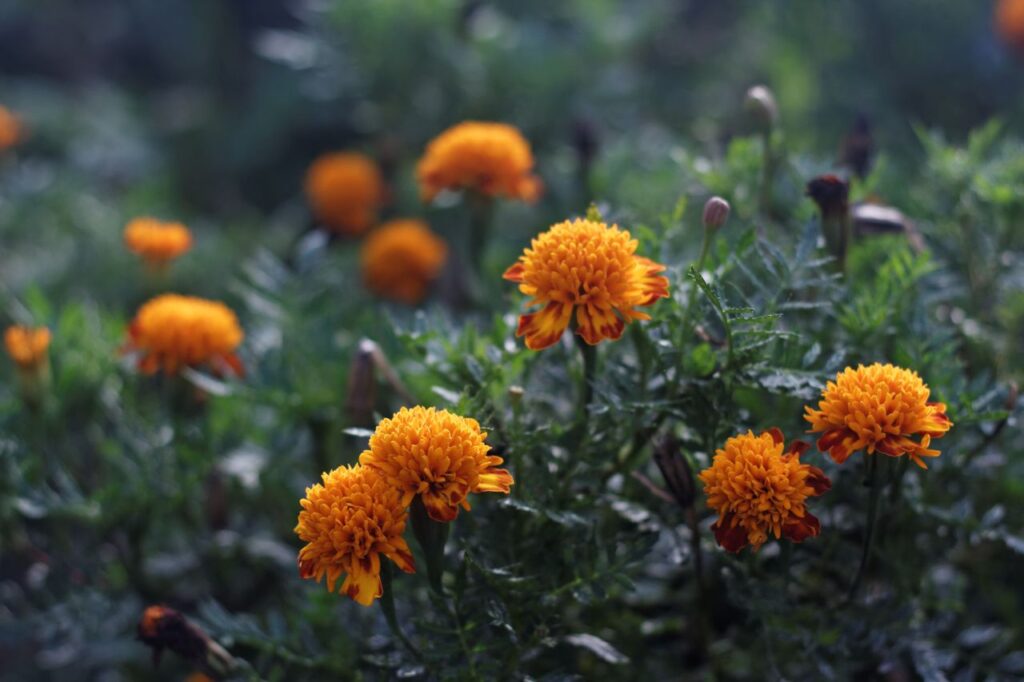
Marigolds are among the most popular plants used in mixed gardens. Their bright flowers can attract pollinators and other useful insects, while certain types may help reduce some soil pests when grown as part of a proper planting system. Marigolds are useful companions around chillies, tomatoes, brinjal, and leafy vegetables, but they should not be expected to remove every pest problem on their own.
Basil is another practical choice for edible gardens. Its strong scent may help confuse or discourage some insects, while its flowers attract bees and other beneficial visitors. Growing basil near tomatoes, chillies, or other vegetables also gives you an extra crop to harvest. Allowing one or two plants to flower can support insects, while the rest can be trimmed regularly for leaves.
Mint has a strong smell that some pests may dislike, but it spreads aggressively. It is usually safer to grow mint in a pot rather than directly in a garden bed. Place the pot near areas where pests are often noticed, while still checking nearby plants regularly.
Lemongrass, or serai, is well suited to Malaysia’s warm climate and has a strong citrus scent. It can be grown around garden edges or in large containers. The plant needs enough space because mature clumps can become large and may shade smaller crops.
Other useful options include spring onions, chives, rosemary, and flowering herbs such as coriander or dill. Strong-smelling herbs may help make the garden less attractive to some pests, while flowers can bring in hoverflies, lacewings, and other helpful insects. Plant diversity is often more useful than relying on one “miracle” repellent plant.
Remember that a serious infestation still needs direct action. Inspect the undersides of leaves, remove caterpillars or badly damaged growth, wash off small pest groups, and use a targeted treatment only when necessary. Companion plants support pest management, but they do not replace observation.
At the end of the day, plants such as marigolds, basil, mint, lemongrass, and spring onions can help create a more diverse and balanced garden. Use them to support natural pest control, attract beneficial insects, and make your edible garden more productive.
If you are growing pest-repelling plants in your home garden, we would love to see your combinations. Tag @projectharvest.my on Instagram and share your companion plants, pest-control progress, and gardening journey with us — your experience might inspire another Malaysian beginner to build a healthier garden naturally too.