
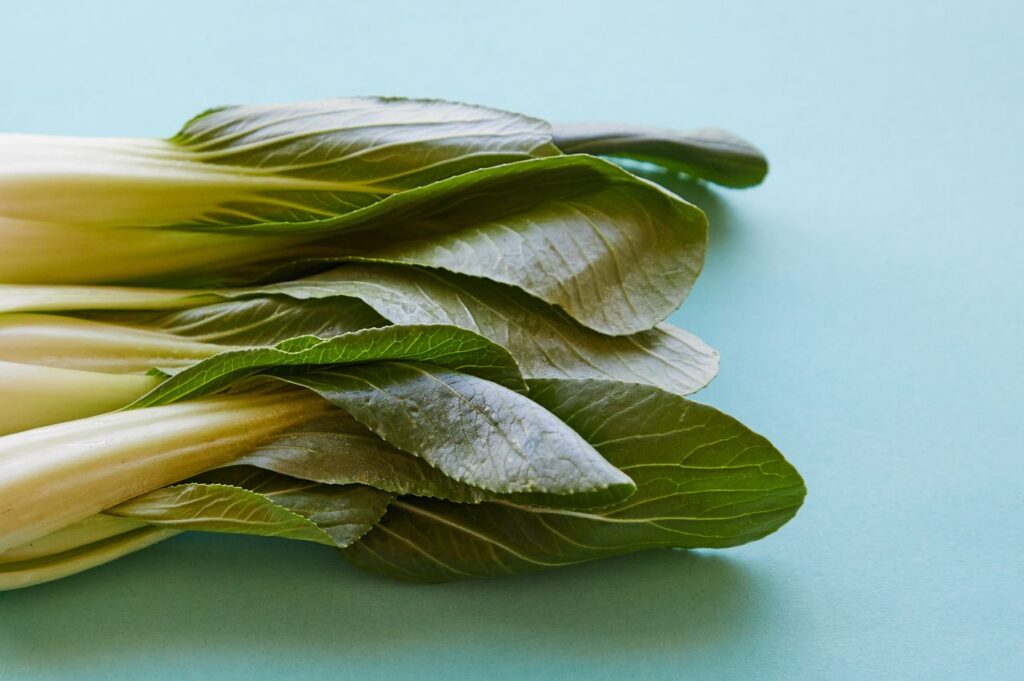
The easiest crops to grow successfully with the Kratky method are generally fast-growing leafy vegetables and herbs.
Good beginner choices for Malaysian home gardeners include:
pak choi,
sawi,
kailan,
kangkung,
bayam,
basil,
and suitable lettuce varieties.
You can also grow larger fruiting crops such as:
chillies,
tomatoes,
cucumbers,
and brinjal,
but these require much larger reservoirs, stronger plant support, more careful nutrient management, and a longer growing period.
If you are trying Kratky hydroponics for the first time, leafy greens are usually the best place to start.
Why Some Crops Suit Kratky Better Than Others
Kratky is a passive hydroponic method.
There is usually:
no water pump,
no air pump,
and no continuous nutrient circulation.
The plant grows above a reservoir while its roots extend into nutrient solution.
As the plant consumes water, an air gap develops above the solution.
This system works particularly well for crops that:
grow quickly,
have relatively modest root systems,
do not require huge amounts of water,
and can complete their crop cycle before the reservoir becomes difficult to manage.
That description fits leafy vegetables very well.
Pak Choi Is an Excellent Beginner Crop
Pak choi is one of the easiest vegetables to try.
It has:
a relatively short growing cycle,
compact growth,
and manageable root requirements.
It also works well in small home hydroponic setups.
For Malaysian growers, heat is the main consideration.
Pak choi can become stressed or bolt more quickly under very hot conditions, so give it:
good morning light,
some protection from extreme afternoon heat where necessary,
and a reservoir that does not overheat.
Sawi Works Well Too
Many types of sawi can grow successfully in hydroponic systems.
They are useful because Malaysians already cook with them regularly.
That makes them a practical crop rather than something grown simply because it looks impressive in a hydroponic setup.
Choose a reservoir large enough to support the crop through harvest.
For a first Kratky experiment, growing one plant per small reservoir or several plants in a properly sized larger container makes monitoring easier.
Kailan Is Possible
Kailan can also be grown using the Kratky method.
It tends to develop a larger structure than small pak choi, so give it:
more spacing,
more reservoir capacity,
and enough light.
Harvesting while the stems and leaves are still tender can make a compact home setup easier to manage.
Avoid overcrowding several kailan plants simply because they started as tiny seedlings.
Kangkung Can Be a Good Malaysian Choice
Kangkung is naturally adapted to moist growing conditions and can perform well hydroponically.
It grows quickly in Malaysia’s climate and is familiar in the kitchen.
That makes it an interesting crop for someone who wants fast results from a simple system.
However, kangkung can grow aggressively.
Give it enough space and harvest regularly rather than allowing the plants to become an overcrowded mass.
Bayam Is Worth Experimenting With
Bayam can also be a useful option for Malaysian hydroponic growers.
It tolerates our warm climate better than many cool-weather leafy vegetables.
This can make it more forgiving than lettuce during hot periods.
As with other leafy crops, good light and appropriate nutrition are still essential.
Hydroponics does not compensate for a dark balcony.
Lettuce Works — But Malaysia’s Heat Makes It Trickier
Lettuce is one of the crops most commonly associated with hydroponics.
It can grow very well with Kratky.
But Malaysian conditions make crop selection and placement important.
Many lettuce varieties prefer cooler temperatures.
Excess heat can cause:
rapid bolting,
bitter leaves,
loose heads,
and poor quality.
If you want to grow lettuce, choose heat-tolerant varieties and protect the plants from intense afternoon heat where appropriate.
Keeping the nutrient reservoir cooler also helps.
Basil Is One of the Best Herbs to Try
Basil can perform extremely well in hydroponics.
Once established, it produces:
fast leafy growth,
strong roots,
and repeated harvests.
Thai basil is especially relevant for Malaysian kitchens.
Because basil can become a fairly large plant, give it more reservoir space than you would give a small lettuce plant.
Regular harvesting and pruning can help keep the plant bushy and manageable.
Mint Can Grow Very Aggressively
Mint can grow successfully using Kratky.
In fact, it may grow so vigorously that a small reservoir becomes crowded with roots.
This is not necessarily bad, but it means the plant may need:
a larger container,
regular harvesting,
and occasional system renewal.
Growing mint hydroponically also keeps it physically contained, which can be useful because mint spreads aggressively in ordinary garden beds.
What About Daun Kesum?
Daun kesum prefers moisture and can be experimented with in hydroponic systems.
For Malaysian gardeners, it is an interesting local herb to test rather than relying only on the usual international hydroponic crop lists.
However, Kratky performance can vary depending on:
light,
temperature,
plant maturity,
and reservoir management.
Start with one plant and observe how it responds rather than immediately building a large system around it.
Can You Grow Chillies with Kratky?
Yes.
A chilli plant can grow and fruit successfully in a properly designed Kratky system.
But this is a significant jump from growing pak choi.
A mature chilli plant needs:
a large reservoir,
more nutrients,
more water,
plant support,
and a much longer growing period.
Small jars and tiny containers that work for lettuce are not suitable for a mature fruiting chilli.
The reservoir may need to hold many litres of nutrient solution, depending on plant size and growing conditions.
Fruiting Crops Use Much More Water
This is one of the biggest differences.
A leafy vegetable may be harvested relatively quickly.
A chilli or tomato may remain in the system for months.
During hot Malaysian weather, a large fruiting plant can consume water rapidly.
That means reservoir management becomes much more important.
If the nutrient solution drops too far, the plant can suffer.
If you refill incorrectly and drown established air roots, you can create another problem.
Fruiting Kratky crops therefore require more experience.
Tomatoes Are Possible — But Need Space
Tomatoes can also be grown using Kratky methods.
However, they require:
large reservoirs,
strong stakes or trellises,
good sunlight,
and careful nutrient management.
Indeterminate tomato varieties can become very large.
For a Malaysian balcony, a smaller or more compact variety may be easier.
Tomatoes are best treated as an advanced Kratky crop rather than your first hydroponic experiment.
Cucumbers Can Work
Cucumbers are fast-growing plants with high water demand.
They can grow hydroponically, including in passive systems with sufficient reservoir capacity.
But they need:
a trellis,
plenty of light,
large nutrient reserves,
and attention to pollination depending on the variety.
A cucumber in a tiny Kratky container can empty the reservoir surprisingly quickly.
Use a large system if you want to experiment with them.
What About Brinjal?
Brinjal can also be grown hydroponically.
Like chillies and tomatoes, it is a long-lived fruiting plant.
Expect:
larger roots,
greater nutrient demand,
and a need for physical support as fruit develops.
It is possible, but not the crop we would recommend for learning the basics of Kratky.
Can You Grow Okra?
Okra can technically be grown hydroponically, but it becomes a large plant with substantial root and support requirements.
For most Malaysian home gardeners, growing okra in:
soil,
raised beds,
or large containers
will usually be simpler than building an appropriately large passive hydroponic system.
Kratky can grow many things.
That does not mean every crop is practical.
Root Crops Are Generally Less Suitable
Root vegetables are usually not the strongest choice for a simple Kratky setup.
Crops such as:
carrots,
beetroot,
and radish
need physical growing space for their edible roots to develop.
They can be grown using specialised hydroponic methods and suitable substrates, but a basic net-pot-over-water Kratky container is not ideal.
If your goal is carrots, ordinary container growing is usually much easier.
Large Perennials Are Usually Not Worth It
Long-lived plants such as:
fruit trees,
large shrubs,
and many perennial crops
are generally poor choices for simple Kratky systems.
The reservoir and structural requirements become enormous.
Hydroponics can support large perennial crops in professional systems, but that is far beyond the simplicity that makes Kratky attractive for home gardeners.
Choose Crops According to Reservoir Size
A useful rule is:
the longer and larger the crop grows, the larger the reservoir needs to be.
A small leafy vegetable may complete its cycle using a relatively modest amount of nutrient solution.
A mature chilli plant has a completely different demand.
Do not choose the plant first and then force it into whatever container happens to be available.
Match the system to the crop.
Malaysian Heat Increases Water Demand
A crop list that works in a cool climate may behave differently here.
Under Malaysian heat, plants can use water rapidly.
Small reservoirs also heat up quickly.
For larger crops, provide:
more water volume,
shade for the reservoir,
and protection from direct heat.
The leaves still need sufficient light.
The reservoir itself does not need to sit in full sun.
Heavy Rain Matters Too
For outdoor Kratky systems, protect the reservoir from rain entering it.
Heavy Malaysian storms can:
raise the water level,
dilute the nutrient solution,
destroy the established air gap,
and cause overflow.
A system may perform perfectly during dry weather and suddenly become unstable after one major thunderstorm if the lid is poorly designed.
Mosquito Protection Is Non-Negotiable
Every Kratky reservoir contains standing water.
In Malaysia, that means it must be securely covered.
Seal unnecessary openings.
Keep net-pot gaps as closed as practical.
Do not leave open containers of nutrient solution sitting around the garden.
Crop choice does not matter if the system becomes mosquito habitat.
Start With Crops You Actually Eat
Do not choose a crop simply because hydroponic growers online recommend it.
If your household regularly eats:
sawi,
pak choi,
kangkung,
bayam,
or basil,
start there.
A successful hydroponic crop is much more satisfying when it actually goes into the kitchen.
This also helps when you eventually compare:
cost,
harvest weight,
and productivity.
A Beginner Kratky Crop Ranking
Easiest
Good first choices include:
Pak choi
Fast, compact, and manageable.
Sawi
Practical for Malaysian cooking and relatively straightforward.
Kangkung
Fast-growing and well suited to warm conditions.
Bayam
Useful in Malaysian weather and quick to harvest.
Basil
Excellent herb once you give it adequate reservoir space.
Moderate
These require slightly more management:
Lettuce
Easy hydroponically but more sensitive to Malaysian heat.
Kailan
Larger than many leafy greens and needs more room.
Mint
Easy to grow but can develop a very aggressive root system.
Daun kesum
Worth experimenting with, especially for local home gardens.
More Advanced
These can work but need significantly larger systems:
Chillies
Tomatoes
Cucumbers
Brinjal
These crops are better after you already understand:
nutrient solution,
pH,
water consumption,
root behaviour,
and air-gap management.
What Should Your First Kratky Crop Be?
For most Malaysian beginners, we would choose:
pak choi,
sawi,
kangkung,
bayam,
or basil.
Pick one or two.
Do not begin with ten different crops.
Using similar crops makes it easier to learn what the system itself is doing.
Once you successfully complete a few growing cycles, experiment with:
larger herbs,
chillies,
or another fruiting vegetable.
Successful Does Not Mean Possible
This distinction matters.
You can find examples online of people growing almost anything hydroponically.
That does not mean every crop is a sensible home Kratky choice.
Ask:
Can the plant grow?
How large must the reservoir be?
How long will it stay there?
How much support will it require?
How often will I need to intervene?
Does Kratky actually make growing this crop easier?
Sometimes the answer is yes.
Sometimes a pot of soil is far more practical.
At the end of the day, the crops most likely to succeed with the Kratky method in Malaysian homes are fast-growing leafy vegetables and manageable herbs such as pak choi, sawi, kangkung, bayam, kailan, and basil. Lettuce can work well if you manage our tropical heat, while chillies, tomatoes, cucumbers, and brinjal are possible once you are ready for larger reservoirs and more careful nutrient management. Start with crops that are easy, fast, and actually useful in your kitchen. Once you understand how the reservoir, roots, nutrient solution, and Malaysian weather interact, you can gradually test how far you want to push this wonderfully simple hydroponic method.
Growing something interesting with the Kratky method in your Malaysian balcony, porch, or backyard? Share the crop, reservoir size, root development, harvest results, and any surprises you encountered by tagging @projectharvest.my on Instagram. We would especially love to see which Malaysian vegetables and herbs turn out to be the most reliable Kratky crops in real home gardens.