
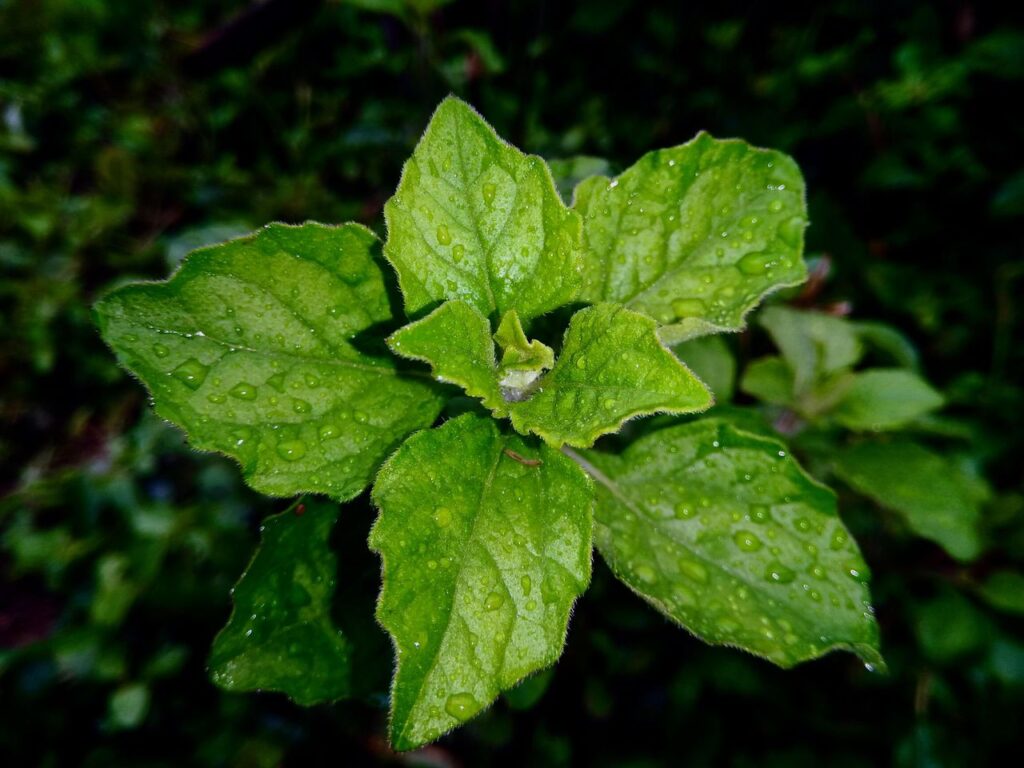
Whiteflies often seem to disappear after treatment and then return a few days later because the flying adults are only one stage of the pest’s life cycle.
Eggs and immature whiteflies can remain attached to the undersides of leaves even after many adults have been killed.
Nearby weeds, ornamentals, or untreated vegetable plants may also continue harbouring whiteflies.
That means effective control requires more than spraying the insects you can see.
For Malaysian home gardeners, the best approach is to combine:
regular inspection,
leaf sanitation,
sticky-trap monitoring,
healthy plant management,
and targeted treatment when pest numbers justify it.
What Are Whiteflies?
Whiteflies are tiny sap-feeding insects.
Despite the name, they are not true flies.
They are more closely related to pests such as:
aphids,
scale insects,
and mealybugs.
Adult whiteflies are usually small, pale insects with powdery white wings.
When an infested plant is disturbed, adults often fly up in a small cloud.
That sudden burst of white insects is one of the easiest ways to recognise the problem.
Check the Undersides of Leaves
Adult whiteflies usually spend much of their time underneath leaves.
This is also where females lay eggs.
The immature stages then remain attached to the leaf surface and feed there.
So if you only inspect the tops of leaves, you may miss most of the infestation.
Turn over several leaves, especially:
younger leaves,
middle-canopy leaves,
and leaves close to obvious adult activity.
What Do Whitefly Eggs Look Like?
Whitefly eggs are extremely small.
They may appear as tiny pale or yellowish dots attached to the underside of leaves.
Depending on species and age, they may darken before hatching.
You may need a hand lens to see them clearly.
For most home gardeners, it is not necessary to count individual eggs.
The important point is understanding that eggs can remain after adult whiteflies have been treated.
What Do Whitefly Nymphs Look Like?
After hatching, young whiteflies go through immature stages that feed while attached to the leaf.
They can look like:
tiny flat discs,
pale scales,
or translucent oval spots.
Because they barely move once settled, they are easy to overlook.
They can even be mistaken for scale insects.
This hidden immature population is one of the biggest reasons whiteflies appear to “come back.”
Why Killing the Adults Is Not Enough
Imagine spraying a plant and killing most of the flying whiteflies.
It looks successful.
But underneath the leaves there may still be:
eggs,
young nymphs,
and later immature stages.
Several days later, new adults emerge.
It seems as though the whiteflies returned from nowhere.
In reality, the next generation may already have been on the plant before the first treatment.
Whiteflies Reproduce Quickly in Warm Conditions
Malaysia’s warm climate can allow whiteflies to reproduce rapidly.
Without a cold winter to interrupt the cycle, populations may remain active for long periods.
This is especially true in:
covered balconies,
sheltered terrace-house gardens,
greenhouse-like structures,
and dense vegetable areas.
A small population can become large surprisingly quickly.
Which Plants Are Commonly Affected?
Whiteflies can attack many garden plants.
Home gardeners may find them on:
chillies,
brinjal,
tomatoes,
beans,
cucumbers,
okra,
herbs,
ornamentals,
and various fruiting plants.
Some nearby non-crop plants can also act as hosts.
This is why treating one vegetable plant while ignoring the rest of the garden may not solve the problem.
What Damage Do Whiteflies Cause?
Whiteflies feed on plant sap.
Large populations can contribute to:
yellowing leaves,
weakened growth,
premature leaf drop,
reduced plant vigour,
and poor crop performance.
Plants under heavy infestation may simply look tired and unproductive.
However, leaf yellowing is not unique to whiteflies.
Confirm the insects themselves before diagnosing.
Honeydew Is an Important Secondary Sign
Whiteflies excrete a sugary liquid called honeydew.
This sticky material may collect on:
lower leaves,
stems,
fruit,
pots,
or nearby surfaces.
If your leaves suddenly feel sticky, check underneath foliage for whiteflies and other sap-feeding pests.
Sooty Mould Often Follows
Honeydew can support the growth of black fungi known as sooty mould.
Leaves may develop a dark coating.
The mould usually grows on the sugary residue rather than invading healthy leaf tissue directly.
But heavy coverage can reduce the amount of light reaching the leaf.
If you find sooty mould, controlling the honeydew-producing pest is more important than simply washing away the black coating.
Ants Can Make the Problem More Complicated
Ants are often attracted to honeydew.
You may notice them repeatedly moving up and down an infested plant.
In some situations, ants can interfere with natural predators that would otherwise feed on sap-sucking pests.
So heavy ant activity may help a whitefly population persist.
Control the whiteflies first and address persistent ant activity where necessary.
Why Whiteflies Keep Returning from Nearby Plants
Whiteflies can move between hosts.
You may successfully reduce them on one chilli plant while they remain on:
the brinjal next to it,
a weed behind the pot,
an ornamental shrub,
or a nearby nursery plant.
Adults then recolonise the treated plant.
That is why you should inspect the whole growing area, not only the plant with the worst symptoms.
New Nursery Plants Can Introduce Whiteflies
Whiteflies may arrive on newly purchased plants.
Before adding a new plant to your established garden, inspect:
leaf undersides,
young growth,
and nearby stems.
Gently shake the plant.
If tiny white insects fly up, investigate before placing it among your existing vegetables.
A short period of separation can prevent a larger garden-wide infestation.
Remove Heavily Infested Leaves Carefully
If only a few leaves carry heavy concentrations of eggs and nymphs, removing them can reduce the population quickly.
This is especially useful early in an outbreak.
Do not strip the plant bare.
Remove only leaves that are:
heavily infested,
badly yellowed,
or no longer contributing much to plant health.
Dispose of them away from the growing area.
Yellow Sticky Traps Can Help
Yellow sticky traps are commonly used to monitor adult whiteflies.
Place them near the plant canopy.
They can help show:
whether adults are present,
whether numbers are increasing,
and whether your management efforts are reducing flying populations.
But sticky traps do not remove eggs and nymphs from leaves.
They are a monitoring and support tool, not a complete control strategy.
Do Not Rely on Traps Alone
If a trap catches many adults but the undersides of leaves remain covered with immature whiteflies, the infestation will continue.
Use traps together with:
leaf inspection,
sanitation,
and targeted treatment.
A Strong Water Spray Can Reduce Adults and Nymphs
On sturdy plants, a firm but plant-safe spray of water can physically dislodge some whiteflies.
Focus particularly on leaf undersides.
This can be useful for small infestations.
However, one wash will not remove every life stage.
And in Malaysia’s humid conditions, repeated soaking can increase disease pressure if foliage remains wet for too long.
Use water strategically and allow good airflow afterwards.
Insecticidal Soap Can Be Useful
Products specifically labelled as insecticidal soap can help control exposed whiteflies, especially younger stages.
These products work mainly through direct contact.
Coverage is therefore critical.
You need to reach:
leaf undersides,
young nymphs,
and adult resting areas.
Follow the label for:
dilution,
application interval,
crop suitability,
and edible-crop instructions.
Do not substitute household dishwashing liquid.
Household detergents can damage plant tissue.
Horticultural Oils Can Also Help
Horticultural oils can suppress:
eggs,
nymphs,
and exposed adults
by coating them.
Neem-based horticultural products may also have a role where the product is properly labelled.
But oils can damage leaves if misused.
Always follow the correct concentration and timing.
Avoid Spraying Oils in Strong Heat
Malaysia’s midday and afternoon heat can increase the risk of leaf scorch after oil-based sprays.
Where the label permits, cooler conditions such as early morning are often safer.
Do not spray a plant that is already severely:
heat-stressed,
drought-stressed,
or wilted.
Restore normal growing conditions first.
Rain Timing Matters
A tropical downpour shortly after spraying may wash off a contact treatment.
Check the weather when possible.
At the same time, avoid spraying so late that foliage remains unnecessarily wet through a humid night.
The best timing balances:
heat,
rain,
humidity,
and drying time.
One Treatment Is Rarely Enough
Because whiteflies have multiple life stages, repeated treatment may be needed.
But repeat only according to the product label.
Do not spray every day simply because adults remain visible.
The goal is to catch successive generations without:
damaging the plant,
harming beneficial insects,
or increasing resistance risk.
Resistance Can Become a Serious Problem
Whiteflies are capable of developing resistance to insecticides.
Repeated use of the same active ingredient can make future control less effective.
If a pesticide is needed, follow resistance-management guidance and use only products legally labelled for the crop and pest.
Changing the brand name does not necessarily mean you are changing how the pesticide works.
Two products may contain the same active ingredient.
Avoid Broad-Spectrum Spraying Where Possible
Whiteflies have natural enemies, including:
ladybird beetles,
lacewings,
predatory insects,
and parasitoid wasps.
Broad-spectrum pesticides can kill these beneficial insects as well.
The whitefly population may later rebound without natural predators helping to suppress it.
This is one reason an integrated approach often works better in a home garden.
Do Not Mix Random Spray Cocktails
Avoid combining:
neem oil,
soap,
synthetic pesticide,
fungicide,
and fertiliser
into one homemade mixture unless the labels clearly permit it.
Combining products can:
increase leaf injury,
change effectiveness,
or create unnecessary exposure.
More ingredients do not automatically create stronger pest control.
Edible Plants Need Extra Care
If you are treating:
chillies,
tomatoes,
brinjal,
beans,
cucumbers,
or herbs,
use only pest-control products suitable for edible crops.
Follow:
label rates,
maximum application frequency,
protective instructions,
and pre-harvest intervals where applicable.
The pre-harvest interval tells you how long you must wait between pesticide application and harvesting.
Do not assume washing produce makes incorrect pesticide use safe.
Reduce Excessive Soft Growth
Plants receiving too much nitrogen may produce very lush tender growth.
This can sometimes create more attractive feeding tissue for sap-sucking pests.
Do not starve the plant.
Simply avoid excessive nitrogen.
A balanced, healthy plant is easier to manage than one constantly pushed into soft growth.
Maintain Good Airflow
Dense plants are harder to inspect.
They also make spray coverage less effective.
Maintain reasonable spacing and selectively remove dead or severely crowded growth.
This helps you see:
leaf undersides,
egg clusters,
and early infestations
before the population becomes large.
Watch for Virus Symptoms
Some whiteflies can transmit plant viruses.
If a plant shows:
severe yellowing,
mosaic patterns,
leaf curling,
stunting,
or abnormal new growth
that continues even after whitefly numbers are reduced, disease may also be involved.
A virus cannot be cured by applying more insecticide.
In severe suspected cases, removing the plant may help protect healthier neighbours.
When Should You Remove the Whole Plant?
Consider removing a plant when:
it is heavily infested,
production has collapsed,
much of the foliage is already declining,
control repeatedly fails,
and the plant is acting as a source of whiteflies for healthier crops.
Saving one old chilli plant is not always worth allowing it to continually reinfest ten younger ones.
A Practical Whitefly Management Plan
When you discover whiteflies:
1. Inspect leaf undersides.
Confirm adults, eggs, or nymphs.
2. Check nearby plants.
Find hidden host plants.
3. Remove heavily infested leaves selectively.
Do not strip healthy foliage unnecessarily.
4. Add yellow sticky traps.
Use them to monitor adult activity.
5. Physically wash sturdy plants if appropriate.
Focus on leaf undersides.
6. Use labelled insecticidal soap or horticultural oil if pest pressure requires it.
Coverage matters.
7. Repeat only according to product instructions.
Target successive life stages rather than spraying continuously.
8. Avoid unnecessary broad-spectrum insecticides.
Protect beneficial predators.
9. Monitor ants and honeydew.
They can reveal continued whitefly activity.
10. Keep inspecting new growth.
The infestation is under control when fresh damage and new populations decline.
How Do You Know Control Is Working?
Look for:
fewer adults flying when the plant is disturbed,
lower sticky-trap catches,
fewer nymphs under leaves,
less fresh honeydew,
less new sooty mould,
and healthier new growth.
Old damaged leaves will remain yellow or scarred.
Do not judge success by whether old symptoms disappear.
Judge what happens next.
Why Whiteflies “Come Back”
In most cases, whiteflies return because one or more parts of the pest system were left behind:
eggs survived,
nymphs survived,
nearby plants remained infested,
adults recolonised,
or treatment did not reach leaf undersides.
Once you think about the whole life cycle, whiteflies become much less mysterious.
The problem is not that they are magically reappearing.
The pest cycle was simply never fully interrupted.
At the end of the day, whiteflies keep coming back because killing visible adults does not remove the eggs, nymphs, hidden colonies, or nearby host plants that keep the population going. Malaysian home gardeners should inspect leaf undersides regularly, reduce heavily infested foliage, use yellow sticky traps for monitoring, preserve beneficial insects, and apply labelled soaps, oils, or other appropriate controls only when needed. The aim is to break the pest cycle across several weeks — not to chase every flying adult with stronger and stronger sprays.
Getting the same whiteflies on your chillies, brinjal, tomatoes, or other vegetables no matter how many times you treat them? Share photos of the leaf undersides, what methods you have tried, and whether ants or sooty mould are also present by tagging @projectharvest.my on Instagram. Those real Malaysian cases can help other gardeners understand why whiteflies return — and what finally breaks the cycle.