
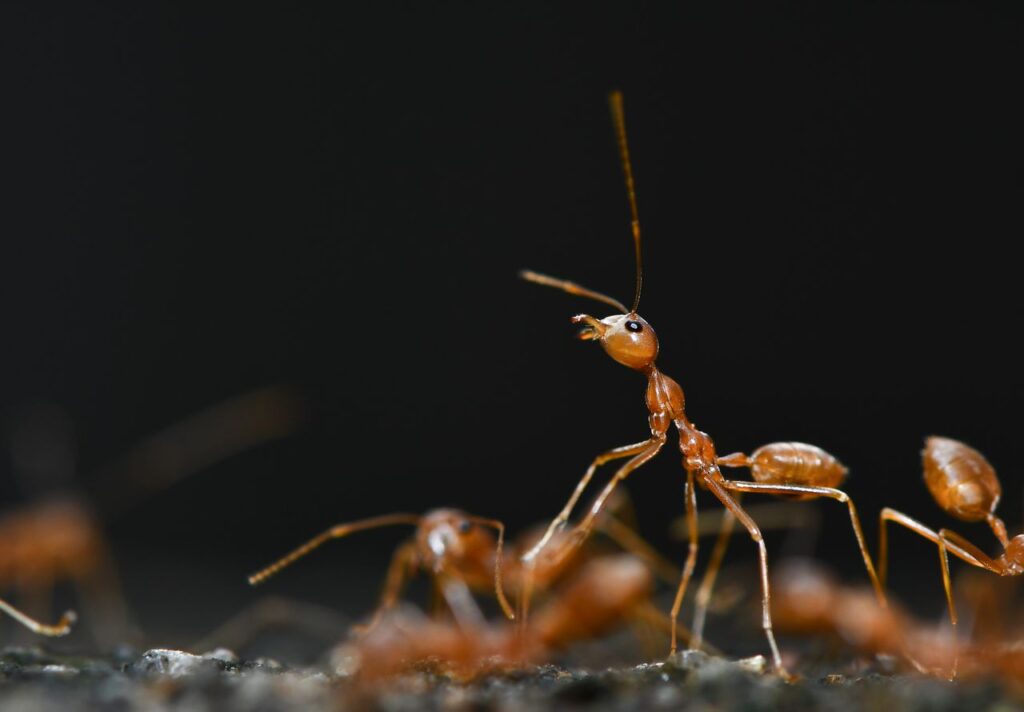
Seeing ants around your plants does not always mean the ants are eating them. In many cases, ants appear because they have found food, moisture, shelter, or other insects that produce a sweet substance called honeydew. Understanding what is attracting them is the first step towards managing the problem properly.
One of the most common reasons ants gather on plants is the presence of aphids, mealybugs, whiteflies, or scale insects. These sap-sucking pests release sticky honeydew while feeding. Ants are attracted to this sugary liquid and may travel repeatedly up and down stems to collect it. Some ants may even protect these pests from natural predators, allowing the infestation to become worse.
Check the undersides of leaves, soft new shoots, stem joints, and flower buds carefully. Look for clusters of tiny insects, white cotton-like patches, sticky leaves, curled growth, or black sooty mould. Removing the sap-sucking pests often reduces the ant activity naturally because their main food source disappears.
Ants may also build nests in dry, loose potting mix or beneath containers where they are protected from rain and disturbance. If ants are constantly entering drainage holes or moving through the soil, gently inspect the pot. Watering the soil thoroughly may disturb a small nest, but avoid flooding the plant repeatedly because excessive moisture can damage the roots.
Fallen fruit, sweet plant sap, food scraps, and spilled drinks can also attract ants. Keep the garden tidy, remove overripe fruit, clean sticky surfaces, and avoid placing fresh kitchen waste directly around plants. Compost containers should be covered and managed properly.
Do not automatically spray the entire plant just because ants are present. A few ants may simply be passing through, and some species help remove dead insects or organic debris. Action is more important when large numbers appear constantly, ants are nesting in pots, or they are protecting a serious pest infestation.
For potted plants, move the pot away from walls or branches that create easy ant pathways. Clean the surrounding area and manage the actual food source. Avoid pouring boiling water, strong household cleaners, or harsh chemicals into pots, as these can damage the plant and soil.
At the end of the day, ants around plants are often a clue rather than the main problem. Inspect for sap-sucking pests, remove food sources, keep the area clean, and check whether the ants are nesting in the soil. Once the attraction is removed, their numbers usually become easier to manage.
If ants keep appearing around your plants, we would love to hear what you discover. Tag @projectharvest.my on Instagram and share your plant inspection, pest-control progress, and gardening journey with us — your experience might help another Malaysian beginner understand what the ants are really trying to tell them.