
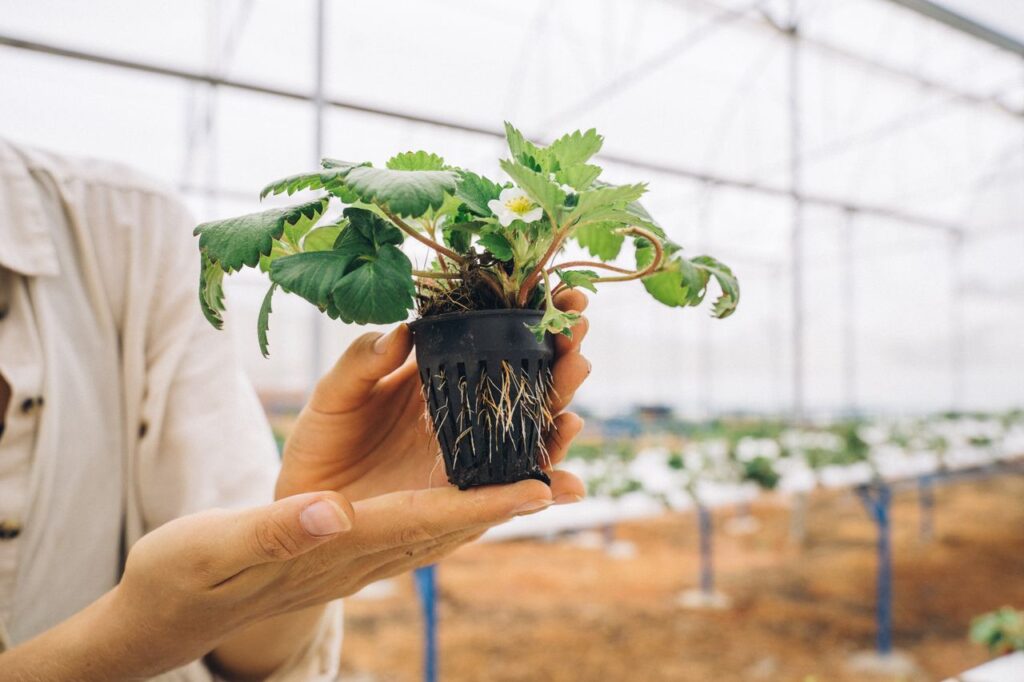
Brown hydroponic roots do not automatically mean root rot.
Healthy hydroponic roots are often described as bright white, but real root systems can also be:
cream,
beige,
light tan,
or stained brown by nutrient solution.
The more important warning signs are roots that become:
dark,
slimy,
soft,
bad-smelling,
or easily damaged,
especially when the plant is also wilting or declining.
When roots change colour, look at the entire root system and growing environment before reaching for a treatment.
Healthy Roots Do Not Have to Be Pure White
Photos of hydroponic systems often show perfectly white roots.
That can create the impression that anything darker is unhealthy.
In reality, root colour varies according to:
plant species,
root age,
nutrient formulation,
water conditions,
and materials used in the system.
Older roots may naturally become slightly darker than fresh young roots.
Some nutrient products can also stain otherwise healthy roots.
Colour alone is therefore a poor diagnosis.
Nutrient Solution Can Stain Roots
Some hydroponic nutrients contain strongly coloured ingredients.
Iron compounds and other nutrient components may leave roots looking:
tan,
yellow-brown,
or slightly rusty.
This can appear alarming even though the root remains healthy.
A nutrient-stained root usually still feels:
firm,
structured,
and intact.
The plant may continue producing perfectly healthy new growth.
If the roots are brown but:
firm,
not slimy,
not foul-smelling,
and the plant is growing normally,
staining is one possibility.
Organic Products Can Darken Roots Too
Hydroponic systems containing certain organic or biologically active additives may develop darker root surfaces.
But adding organic material also makes the reservoir biologically more complicated.
For beginner hydroponics, a clean mineral nutrient programme is usually easier to monitor and troubleshoot than adding:
compost extracts,
homemade teas,
or other decomposing organic materials.
A dark root system in a biologically active reservoir can be harder to diagnose visually.
What Does Root Rot Look Like?
Root rot usually involves more than colour.
Warning signs can include:
brown or dark roots,
slimy surfaces,
soft root tissue,
roots breaking apart easily,
an unpleasant or sour smell,
rapid plant wilting,
yellowing foliage,
and slowed growth.
The root mass may lose the firm branching structure seen in healthy roots.
A severely affected plant may wilt even though plenty of water surrounds the roots because damaged roots can no longer function properly.
Smell Is an Important Clue
A healthy hydroponic reservoir should not smell strongly rotten.
If you open the system and notice a:
sour,
swampy,
fermented,
or foul smell,
investigate immediately.
Bad odour often indicates that undesirable microbial activity or decaying root material is present.
This does not identify the exact organism responsible, but it tells you the root environment is no longer healthy.
Root Texture Matters More Than Colour
Touching roots is not always necessary, but if you are inspecting them during maintenance, texture can be very informative.
Healthy or simply stained roots are usually:
firm,
flexible,
and structurally intact.
Seriously damaged roots may be:
slimy,
mushy,
fragile,
or easily stripped apart.
A tan root that remains firm may be healthier than a white-looking root that is soft and deteriorating.
Why Do Hydroponic Roots Rot?
Root decline can develop when the root environment becomes unsuitable.
Common contributing factors include:
excessive nutrient-solution temperature,
low oxygen availability,
poor system hygiene,
dead organic material,
damaged roots,
and disease-causing microorganisms.
These factors often interact rather than appearing individually.
For Malaysian growers, high reservoir temperature is especially important.
Malaysia’s Heat Can Stress Hydroponic Roots
A hydroponic reservoir sitting in direct tropical sun can heat rapidly.
Warm water naturally holds less dissolved oxygen than cooler water.
At the same time, warm conditions may encourage faster microbial activity.
The combination of:
hot solution,
stressed roots,
and reduced oxygen availability
can create conditions where root problems become more likely.
Keep reservoirs:
out of direct sun,
opaque,
and protected from heat-reflecting surfaces where practical.
The Leaves Need Light — The Reservoir Does Not
This is an important design principle.
Your vegetables may need strong light for photosynthesis.
Your nutrient reservoir does not.
A Kratky bucket or hydroponic tank sitting beside a hot concrete wall in full afternoon sun may heat unnecessarily.
Position or shade the reservoir while still allowing the canopy to receive suitable light.
Insulation or a larger reservoir can also help reduce rapid temperature swings.
Small Reservoirs Heat Faster
A small bottle of nutrient solution can change temperature rapidly.
A larger reservoir has more thermal mass and usually changes more slowly.
Small systems also experience faster changes in:
EC,
pH,
water level,
and nutrient concentration.
That does not mean small Kratky systems cannot work.
It simply means they are less forgiving, particularly in Malaysia’s hot weather.
Oxygen Matters
Roots need oxygen for respiration.
In systems such as aerated deep-water culture, air pumps deliberately add oxygen to the nutrient solution.
Kratky systems operate differently.
As the solution level drops, an air gap forms and part of the root system becomes exposed to moist air.
Those air roots are essential.
If you repeatedly refill a Kratky reservoir to the top and submerge roots that adapted to the air zone, oxygen stress can result.
This is one reason understanding the system design matters.
Pump Failure Can Cause Problems Quickly
In systems that rely on pumps for:
water circulation,
aeration,
or both,
pump failure can rapidly change root conditions.
Check pump-driven systems regularly.
Watch for:
blocked pipes,
failed air pumps,
power interruptions,
and low reservoir levels.
The more dependent the system is on active equipment, the more important equipment monitoring becomes.
Root Disease Can Be Involved
Several disease-causing organisms can attack hydroponic roots.
One commonly discussed group includes Pythium species.
Pythium is technically an oomycete, sometimes called a water mould, rather than a true fungus.
It can contribute to serious root rot under favourable conditions.
However, brown roots alone do not prove Pythium.
Trying to identify a specific pathogen purely from root colour is unreliable.
For home growers, improving the root environment is usually the first priority unless professional diagnosis is needed.
Dead Roots Can Feed Further Problems
Roots naturally age and some die over time.
Small amounts of old root material are normal.
But large quantities of decomposing roots can add organic material to the reservoir.
This can encourage microbial growth and worsen water quality.
When resetting a system between crops, remove:
old roots,
dead plant material,
algae,
and accumulated debris.
Good system hygiene reduces the amount of decaying material available.
Algae Can Complicate Root Conditions
If light reaches nutrient solution, algae may grow.
Algae is not the same thing as root rot, but heavy algae growth can complicate the reservoir environment.
It may:
consume nutrients,
affect oxygen conditions,
coat surfaces,
and contribute organic material when it dies.
The first solution to algae is usually not a chemical treatment.
Block light from entering the reservoir.
High EC Can Stress Roots Too
Very concentrated nutrient solution can create osmotic stress.
This makes water uptake more difficult and can damage sensitive roots.
If brown roots appear together with:
high EC,
brown leaf tips,
wilting,
or fertiliser-burn symptoms,
check nutrient concentration.
Do not assume the problem needs more fertiliser.
It may need less.
pH Problems Can Add More Stress
An unsuitable pH can make certain nutrients less available even when they are present in the reservoir.
The plant may then become nutritionally stressed.
While pH problems do not usually explain slimy root rot by themselves, prolonged nutrient imbalance can weaken the plant and complicate diagnosis.
Check both:
EC,
and pH
when hydroponic plants begin declining.
What Should You Do When Roots Start Turning Brown?
Start with diagnosis rather than treatment.
Check the roots
Are they:
firm or slimy?
light tan or dark brown?
intact or disintegrating?
Smell the reservoir
Does it smell normal or foul?
Check the plant
Is new growth healthy?
Is it wilting?
Are leaves yellowing?
Check the nutrient solution
Look at:
EC,
pH,
temperature,
water level,
and cleanliness.
Check the system
Has a pump failed?
Is light reaching the reservoir?
Has the Kratky air gap been flooded?
This gives you much more information than root colour alone.
If the Roots Are Only Stained
If the plant is growing strongly and roots remain:
firm,
odour-free,
and structurally healthy,
avoid unnecessary treatment.
Continue monitoring.
New roots may emerge lighter in colour and later become stained by the nutrient solution too.
Trying to “whiten” healthy roots with chemicals can create a problem that did not exist.
If Root Rot Appears Likely
If roots are:
dark,
slimy,
foul-smelling,
and associated with plant decline,
act quickly.
Remove obviously dead root material carefully where practical.
Correct the underlying environmental problem.
This may include:
reducing reservoir heat,
restoring aeration,
fixing failed pumps,
correcting excessive nutrient concentration,
and cleaning the system.
For severe cases, replacing contaminated nutrient solution and cleaning the reservoir may be necessary.
Do Not Remove Every Root
Aggressive root cutting can leave the plant with too little functioning root system to recover.
Remove only material that is:
clearly dead,
soft,
or decomposing
where intervention is justified.
Healthy roots should be preserved.
A plant recovering from root stress needs functioning roots more than it needs a cosmetically perfect root ball.
Be Careful With Hydrogen Peroxide
Hydrogen peroxide is frequently recommended online as an instant treatment for hydroponic root problems.
It can act as an oxidising disinfectant at appropriate concentrations, but careless use can also damage root tissue and disrupt beneficial microorganisms in systems designed to contain them.
It should not be treated as a universal cure for every brown root.
First identify and correct:
heat,
oxygen,
nutrient,
and hygiene
problems.
If a sanitising treatment is being considered, use a product and concentration appropriate for the system rather than improvising a strong chemical dose.
Do Not Add Multiple “Root Treatments” at Once
A struggling hydroponic plant may receive:
peroxide,
beneficial microbes,
fungicide,
extra nutrients,
enzymes,
and supplements
all within a few days.
That makes troubleshooting almost impossible.
Some treatments may also be incompatible.
Change the most likely underlying problem first.
Then observe the response.
Beneficial Microbe Systems and Sterile Systems Are Different Approaches
Some hydroponic growers manage systems using beneficial microbial products.
Others aim for a cleaner, more sanitised reservoir environment.
Both approaches can be used successfully when understood properly.
Problems arise when gardeners randomly alternate between:
adding beneficial organisms,
and repeatedly applying disinfectants that kill them.
Choose a management approach deliberately and follow product instructions.
When Should You Replace the Nutrient Solution?
Replacing the reservoir may be sensible when:
it smells bad,
root rot is severe,
large amounts of decaying material are present,
the nutrient balance has become difficult to correct,
or the solution is visibly contaminated.
Changing nutrient solution alone will not solve the problem if:
the reservoir remains too hot,
aeration is still failing,
or dead roots remain throughout the system.
Correct the cause as well as the symptom.
Clean the System Between Crops
After harvesting or removing a badly affected plant:
remove old roots,
empty the reservoir,
clean reusable equipment,
clear channels and tubing,
and remove algae or debris.
Sanitise equipment appropriately if serious root disease occurred.
Starting the next crop in a dirty system increases the chance of repeating the same problem.
A Quick Root-Diagnosis Guide
Brown roots but plant looks healthy
Possible nutrient staining or normal root ageing.
Action: Monitor.
Brown roots with high EC and burnt leaf tips
Possible excessive nutrient concentration.
Action: Check feeding and correct EC appropriately.
Brown, slimy roots with foul smell
Serious root-zone deterioration or root rot is more likely.
Action: Investigate immediately and correct the environment.
Brown roots after the reservoir became very hot
Heat and oxygen stress may be contributing.
Action: Cool and protect the reservoir.
Roots decline after a Kratky system was refilled to the top
Established air roots may have been submerged.
Action: Restore correct Kratky water-level management.
Green or algae-covered roots and reservoir
Too much light is probably reaching nutrient solution.
Action: Block light and clean the system.
Watch the New Roots
Recovery is easiest to judge by what develops next.
A recovering plant may begin producing:
fresh root tips,
new branching roots,
healthier leaves,
and stronger new growth.
Old damaged roots may never look beautiful again.
Just as with damaged leaves, judge recovery by new healthy growth, not whether old tissue returns to its original appearance.
Prevention Is Easier Than Rescue
For Malaysian home hydroponics:
keep reservoirs shaded,
block light from nutrient solution,
maintain appropriate nutrient strength,
monitor pH,
protect Kratky air gaps,
maintain pumps where required,
remove dead organic material,
and clean systems between crops.
These simple habits prevent many of the conditions that allow root problems to become severe.
At the end of the day, brown hydroponic roots do not automatically mean the plant has root rot. Healthy roots may become cream, tan, or brown because of nutrient staining or normal ageing, while truly unhealthy roots are more concerning when they become slimy, soft, foul-smelling, and associated with wilting or declining growth. Malaysian growers should pay particular attention to reservoir heat and oxygen because our tropical conditions can warm nutrient solution rapidly. Diagnose colour together with texture, smell, EC, pH, temperature, and plant behaviour before treating anything. The goal is not perfectly white roots — it is a healthy, functioning root system.
Opened your Kratky or hydroponic reservoir and found brown roots that left you wondering whether the plant was healthy or rotting? Share clear photos of the roots, the crop, your reservoir setup, EC and pH readings if available, and what the roots smell or feel like by tagging @projectharvest.my on Instagram. Comparing real Malaysian hydroponic root systems can help other growers learn the important difference between harmless staining and a root problem that genuinely needs attention.