
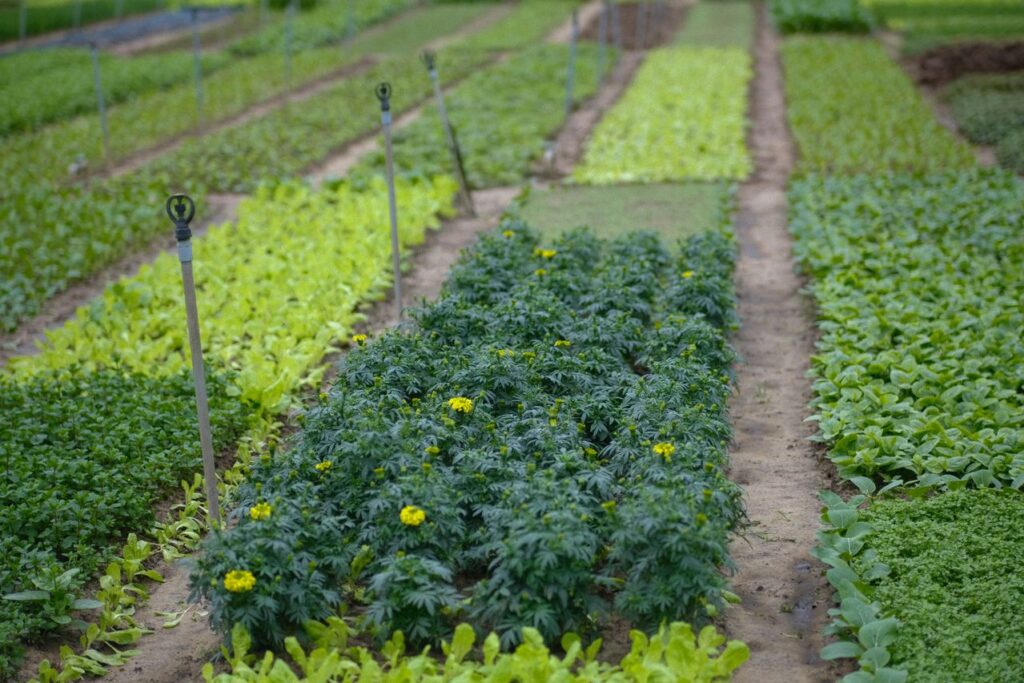
Companion planting means growing different plants near one another because they may share space well, attract useful insects, provide shade, or help create a more balanced garden. It is often presented as a way to make certain plants grow better together, but beginners should remember that companion planting is not magic. Good sunlight, healthy soil, proper watering, airflow, and enough root space still matter more than any plant pairing.
One useful approach is to combine plants with different growth habits. Tall plants can provide light shade for smaller crops, while climbing plants can use vertical space above low-growing herbs or vegetables. For example, long beans or cucumbers can grow upward on a trellis while leafy greens grow nearby at ground level. This helps use limited space more efficiently, especially in small Malaysian gardens.
Herbs and flowering plants can also be useful companions. Basil, coriander, dill, mint, and other herbs may attract pollinators and beneficial insects when allowed to flower. Marigolds, zinnias, and butterfly pea can add colour while providing nectar for bees and butterflies. These plants do not guarantee that pests will disappear, but they can help create a more diverse garden ecosystem.
Some common pairings include chillies with basil, tomatoes with spring onions or basil, and brinjal with flowering herbs nearby. Leafy vegetables can also grow beside taller crops if they still receive enough light and airflow. The important thing is to avoid crowding. Plants that look compatible on paper may still compete if they are planted too closely.
Companion planting can also include separating plants with very different needs. A moisture-loving plant like daun kesum may not perform well beside herbs that prefer drier soil. Grouping plants by watering and sunlight requirements often makes more sense than following popular pairing charts blindly.
It is also important to be realistic about pest control. Strong-smelling herbs may confuse or discourage some pests, but they will not replace regular inspection. Check beneath leaves, remove pests early, and maintain healthy growing conditions.
At the end of the day, companion planting works best as a way to improve diversity, save space, attract beneficial insects, and make the garden easier to manage. Choose combinations based on plant size, sunlight, water needs, and airflow rather than relying only on gardening myths.
If you are experimenting with companion planting in your Malaysian home garden, we would love to see your combinations. Tag @projectharvest.my on Instagram and share your plant pairings, garden setup, and growing journey with us — your experience might inspire another Malaysian beginner to create a more balanced edible garden too.