
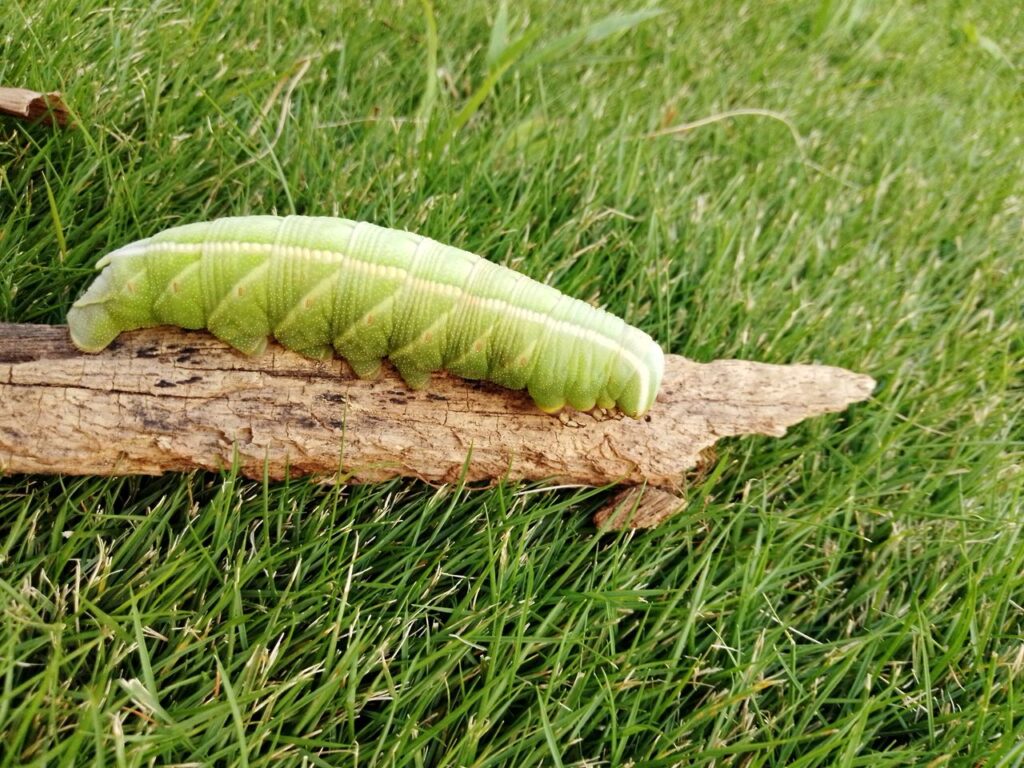
Caterpillars are common visitors in home gardens, especially around leafy vegetables, herbs, chillies, tomatoes, and flowering plants. They are the young stage of moths and butterflies, and while some eventually become useful pollinators, their feeding can cause serious damage when their numbers become too high. Large holes, chewed leaf edges, damaged seedlings, and dark droppings are some of the clearest signs that caterpillars are active.
The best place to begin is with regular plant inspection. Check the tops and undersides of leaves, along stems, near new growth, and around rolled or folded leaves. Caterpillars often hide during the hottest part of the day, so inspecting plants early in the morning or later in the afternoon may make them easier to find. Look for clusters of eggs too, as removing them early can prevent a larger infestation.
For a small home garden, hand-picking is often the easiest control method. Wear gloves if needed and remove visible caterpillars from the plant. Check the same plant again over the next few days because smaller caterpillars or eggs may have been missed during the first inspection.
Fine insect netting can help protect young vegetables by preventing moths and butterflies from laying eggs on the leaves. Secure the netting properly so there are no large gaps, and make sure it does not press tightly against the foliage. Remove or open the cover when plants need pollination, unless the crop does not depend on insect visitors.
Keep the garden tidy by removing badly damaged leaves, fallen plant material, and weeds that may provide hiding places. However, avoid stripping away too much healthy foliage from an already stressed plant. Good spacing and airflow also make it easier to inspect the garden and notice fresh damage.
When caterpillar activity is severe, a targeted biological treatment containing Bacillus thuringiensis, commonly called Bt, may be considered. It works best on young caterpillars and must be used according to the product label. Avoid spraying unnecessarily, especially around open flowers or plants visited by beneficial insects.
At the end of the day, controlling caterpillars is about early detection and consistent action. Inspect leaves regularly, remove eggs and caterpillars by hand, protect vulnerable plants with netting, and use targeted treatments only when the damage becomes difficult to manage.
If you are dealing with caterpillars in your home garden, we would love to see how you protect your plants. Tag @projectharvest.my on Instagram and share your pest-control method, plant recovery, and gardening journey with us — your experience might help another Malaysian beginner save their vegetables before too much damage is done.