
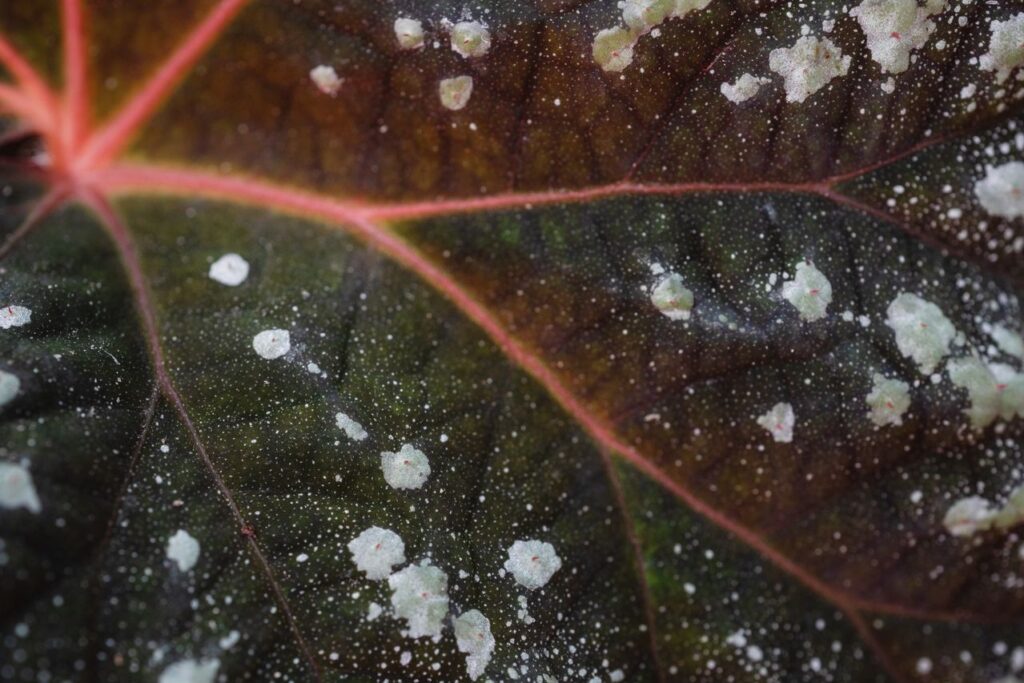
Fungal infections are common in home gardens, especially in warm, humid, and rainy conditions. They often begin quietly with a few small marks before spreading across leaves, stems, flowers, or fruit. Catching the problem early can make it much easier to manage, reduce plant damage, and protect nearby plants.
One of the first signs to look for is unusual spotting on leaves. Fungal leaf spots may appear brown, black, yellow, grey, or reddish, sometimes with a darker border around them. A single damaged leaf does not always mean disease, but concern increases when similar spots begin appearing on several leaves or continue spreading.
Another common sign is a powdery or dusty coating. Powdery mildew often looks like white or pale grey flour sprinkled across the leaves. It may begin in small patches before covering larger areas. Other fungal problems can create fuzzy mould, dark growth, or damp-looking patches on stems and soil surfaces.
Watch for yellowing around spots or along leaf edges. Infected tissue may gradually turn yellow, dry out, and fall away. Some leaves become distorted, curl inward, or drop earlier than expected. When the lower leaves are affected first and the problem moves upward, inspect the plant carefully for signs of spreading disease.
Wilting can also be a warning, especially when the soil is not dry. Fungal root or stem problems may stop the plant from taking up water properly. Check for soft, darkened stems, mushy roots, unpleasant smells, or a plant base that looks water-soaked. These symptoms may suggest rot rather than simple underwatering.
Look at the pattern across the garden. If several crowded plants begin showing similar spots after frequent rain or overhead watering, slow-drying foliage may be contributing to the problem. Poor airflow and trapped moisture create conditions where many fungal diseases spread more easily.
Not every brown mark is fungal. Sunburn, pest feeding, fertiliser damage, and watering problems can create similar symptoms. The best clue is a combination of signs that continues spreading over time.
At the end of the day, early fungal detection means checking plants regularly and noticing changes before they become severe. Look for spreading spots, powdery growth, yellowing, mould, stem damage, and unusual wilting. Early action gives the plant a much better chance of recovery.
If you notice possible fungal symptoms in your home garden, we would love to see what you find. Tag @projectharvest.my on Instagram and share your plant symptoms, recovery efforts, and gardening journey with us — your experience might help another Malaysian beginner recognise the warning signs earlier too.