
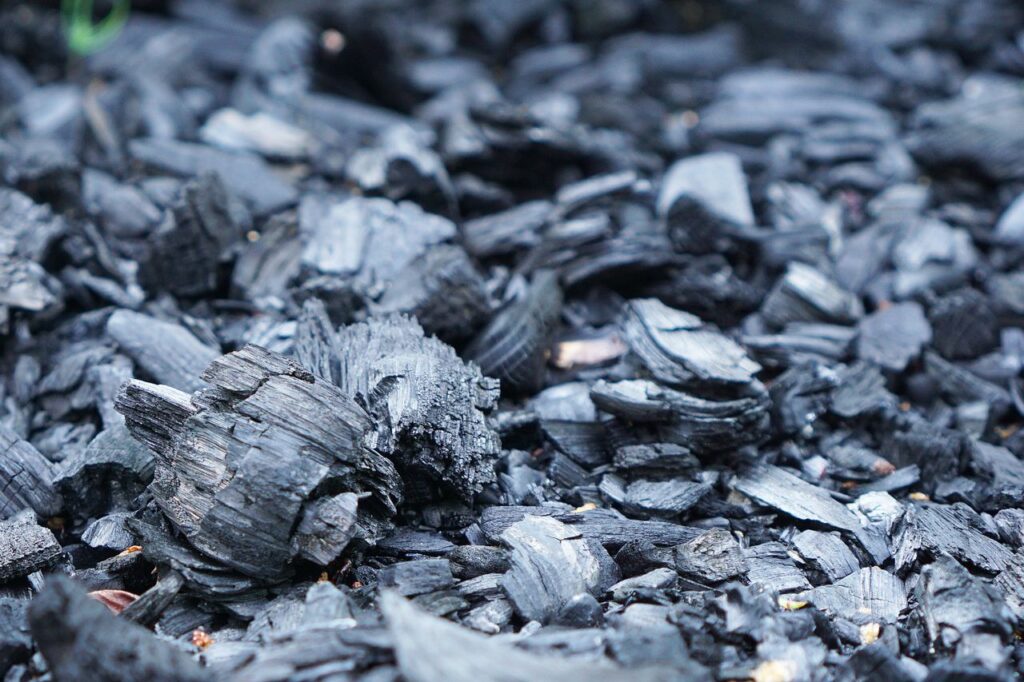
Biochar has become a popular soil amendment in gardening and sustainable agriculture, often promoted as something that can improve soil, hold nutrients, retain water, and even store carbon for long periods. Some of those benefits are real, but biochar is not a miracle powder that automatically makes every garden better.
For Malaysian home gardeners, biochar can be useful in the right situation, especially in soils that struggle to retain nutrients or moisture. But it works best when it is properly prepared, used in moderate amounts, and combined with good soil management rather than treated as a replacement for compost or fertiliser.
What Exactly Is Biochar?
Biochar is a carbon-rich material made by heating plant-based material such as wood, crop residues, or other biomass in a low-oxygen environment.
This process is called pyrolysis.
Because there is very little oxygen, the material does not simply burn into ash. Instead, much of the carbon remains behind in a porous, charcoal-like form.
That porous structure is one of the reasons biochar is interesting for soil.
Tiny pores can create surfaces where water, nutrients, and microorganisms may be held.
Biochar is therefore different from ordinary barbecue charcoal, fireplace ash, or burnt garden waste.
Not every black piece of carbon is suitable for putting into soil.
What Can Biochar Actually Do?
The effect of biochar depends on the type of biochar, the soil, climate, crop, and application rate.
One possible benefit is improved nutrient retention.
Biochar has a large surface area, and some types can help soil hold positively charged nutrients rather than allowing them to move away quickly with water.
This can be particularly interesting in sandy soils, where nutrients may leach easily.
Biochar can also influence water-holding capacity. In coarse or sandy soil, its porous structure may help retain some additional moisture around the root zone.
In heavy clay soil, the benefit may be different. Rather than dramatically increasing water storage, biochar may sometimes contribute to better structure when combined with organic matter.
But results vary.
That is why it is better to think of biochar as a tool for improving certain soil properties rather than a guaranteed cure for every soil problem.
Biochar Is Not Fertiliser
This is one of the most important points for beginners.
Biochar itself is usually not a complete fertiliser.
It may contain some minerals depending on how it was produced, but its main value is its structure and its potential influence on soil chemistry and biology.
If you mix plain biochar into poor soil and expect it to feed your chilli plants like a balanced fertiliser, you may be disappointed.
In fact, fresh biochar can initially absorb or hold nutrients from the surrounding soil.
This is why gardeners often “charge” biochar before using it.
What Does “Charging” Biochar Mean?
Charging means mixing biochar with nutrient-rich organic material before adding it to the garden.
Instead of putting dry, empty biochar straight into the soil, you allow its pores and surfaces to interact with compost, compost tea, manure-based compost, or another suitable nutrient source first.
For a home gardener, one of the easiest methods is simply to mix biochar with finished compost and leave it together for a period before use.
This allows the biochar to become colonised by microorganisms and absorb nutrients from the compost.
Once added to the soil, it is then less likely to act like a completely empty sponge.
You do not need an elaborate scientific process.
Mixing biochar thoroughly into mature compost before adding both to the bed is a practical starting point.
Where Could Biochar Help Most?
Biochar may be particularly useful in sandy or highly weathered soils where water and nutrients move through quickly.
If your garden dries rapidly after watering and fertiliser seems to disappear after repeated heavy rain, adding organic matter should still be your first step, but biochar may be a useful additional amendment.
Raised beds and container mixes can also benefit when biochar is used as one component rather than the main growing medium.
For example, a small amount mixed with compost and potting mix may help create a more stable root environment.
What About Malaysia’s Heavy Rain?
Malaysia’s rainfall makes nutrient loss an important issue, especially in well-drained or sandy soils.
Water moving through the soil can carry soluble nutrients deeper than shallow vegetable roots can reach.
Biochar’s ability to retain some nutrients may therefore be useful in certain Malaysian gardens.
However, biochar does not solve poor drainage.
If your garden is waterlogged because heavy clay soil or site design prevents water from escaping, adding biochar will not magically remove the excess water.
You still need to address drainage, soil structure, or use raised beds.
Can Biochar Change Soil pH?
Yes, and this is something to be careful with.
Some biochars can be alkaline, meaning they may raise soil pH.
The effect varies depending on the original material and how the biochar was produced.
If your soil is already alkaline, adding large quantities of strongly alkaline biochar may push the pH farther away from what your plants prefer.
This is another reason not to add large amounts blindly.
If you plan to use biochar extensively, especially in a permanent vegetable bed, testing the soil pH first is sensible.
How Much Should You Use?
More is not automatically better.
For home gardens, biochar is best treated as a minor soil amendment, not something that should make up half the bed.
There is no single perfect rate because products vary greatly.
Follow the manufacturer’s recommendation when using commercial biochar.
If you are experimenting with a new product, start with a small amount mixed thoroughly with compost and soil rather than applying a thick concentrated layer.
You can always add more in future growing cycles.
Once biochar is in the soil, it can remain there for a long time, so there is no reason to rush.
Do Not Use Random Charcoal from a Fire
Barbecue charcoal, charcoal briquettes, ash, and homemade burnt waste are not automatically equivalent to horticultural biochar.
Some commercial charcoal products contain binders, lighter fluid, additives, or other substances that you do not want in an edible garden.
Ash is also chemically different from biochar and can be strongly alkaline.
If you want to use biochar, buy or make a product specifically suitable for soil use and know what material it came from.
This matters even more when you are growing herbs and vegetables that will eventually be eaten.
What About Making Biochar at Home?
It is technically possible to make biochar from clean plant material using controlled low-oxygen burning methods.
However, the process involves fire, smoke, high temperatures, and air-quality concerns.
For most urban Malaysian homes, particularly terrace houses and apartments, making biochar yourself may not be practical or neighbour-friendly.
There are also local rules regarding open burning that must be respected.
Buying a suitable horticultural product is usually simpler for a small home garden.
Biochar Works Best as Part of a Bigger System
The most useful way to think about biochar is as one part of good soil management.
Biochar cannot replace:
finished compost,
proper drainage,
good watering,
mulch,
balanced fertilisation,
healthy plant roots,
or suitable soil pH.
But when those basics are already being managed well, biochar may help improve how the soil holds moisture, nutrients, and biological activity over time.
A good combination might look like this:
healthy soil + finished compost + small amounts of charged biochar + mulch + living roots.
That is far more useful than pouring a large bag of biochar into poor soil and expecting instant results.
Is Biochar Worth It for a Malaysian Home Garden?
For every gardener? Probably not.
If your soil already has good structure, holds moisture reasonably well, grows healthy plants, and receives regular organic matter, biochar may not create a dramatic difference.
If you have very sandy soil, nutrient leaching, low organic matter, or you are building a long-term raised-bed system, it may be worth experimenting with.
Start with one bed or a few containers rather than applying it everywhere.
Observe whether water retention, plant growth, or soil condition changes over several months.
Gardening experiments are far more useful when you can compare treated and untreated areas.
At the end of the day, biochar is a potentially useful soil amendment, but it is not a shortcut to perfect soil. Its porous structure may help certain soils retain water and nutrients, while its long-lasting carbon can become part of a stable soil system. Charge it with finished compost, use it in moderation, understand how it may affect pH, and combine it with good soil management. If your garden is already healthy, you may not need it at all — but in the right soil, biochar can be an interesting tool worth testing.
Have you tried biochar in your Malaysian home garden, or are you thinking about experimenting with it? Tag @projectharvest.my on Instagram and share your biochar-and-compost mix, soil results, plant growth, or questions with us. We’d especially love to see side-by-side experiments — your results could help another Malaysian gardener decide whether biochar is genuinely worth adding to their own soil.