
If you only have a few pots, watering by hand may be perfectly practical. But once your garden grows to include several containers, raised beds, herbs, vegetables, and fruit plants, carrying a hose or watering can around every day can start to feel like a job.
That is usually when gardeners begin considering drip irrigation.
So which method is actually better?
The answer depends on your garden size, budget, schedule, and how closely you want to manage each plant. Drip irrigation offers consistency and convenience, while hand watering gives you flexibility and encourages you to physically inspect the garden.
For many Malaysian home gardeners, the best solution is actually a combination of both.
What Is Hand Watering?
Hand watering means using a hose, watering can, or similar tool to water plants individually.
It is the simplest system because there is almost nothing to install.
You decide which plants need water, how much each receives, and when to stop.
For a small balcony with five pots, this can be ideal.
But if you have 40 containers and a raised vegetable bed, that same flexibility can become time-consuming.
What Is Drip Irrigation?
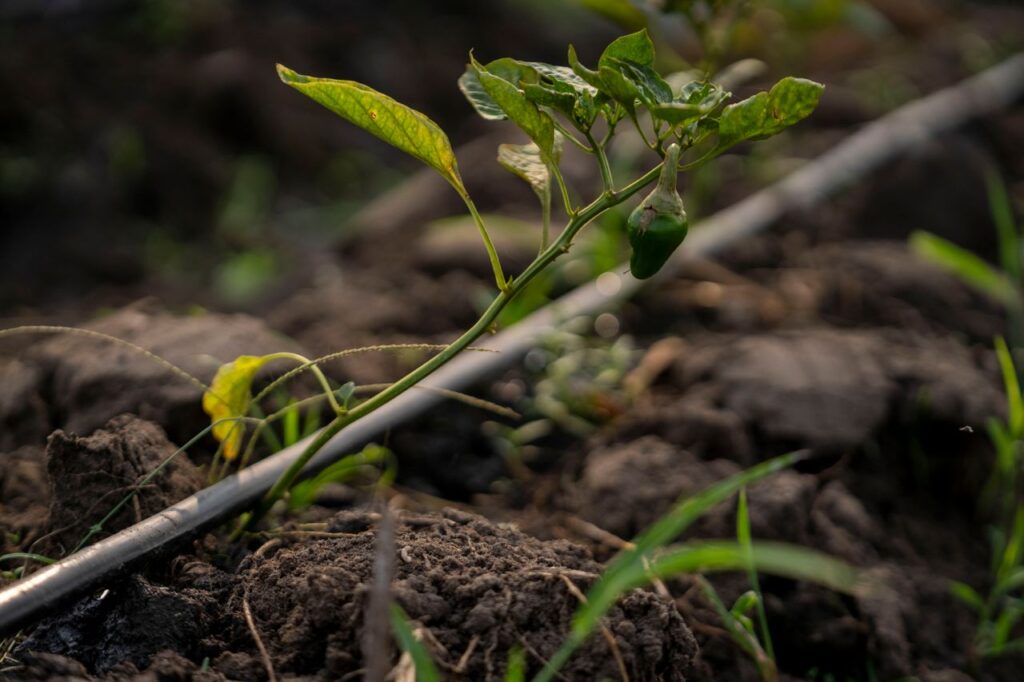
Drip irrigation carries water through tubing and releases it slowly through emitters positioned near plant roots.
Instead of manually watering each plant, one irrigation line can serve many pots or an entire vegetable bed.
A timer can automate the process further.
This makes drip irrigation especially useful for larger home gardens, gardeners with busy schedules, or plants that benefit from more consistent moisture.
Which Uses Less Water?
Drip irrigation can be very water-efficient when it is designed and operated properly.
Because water is delivered close to the root zone, less is lost through overspray or unnecessary watering of paths and surrounding areas.
Hand watering can also be efficient if you water slowly and directly at the soil.
The problem comes when a hose is left running too strongly or large areas receive water that plants do not actually need.
So drip irrigation has the potential to save water, but it is not automatically efficient.
A drip system running for three unnecessary hours is still wasting water.
Which Gives More Consistent Watering?
Drip irrigation usually wins here.
Once the system is adjusted correctly, each plant can receive a predictable amount of water.
That consistency can help crops such as tomatoes, chillies, cucumbers, and brinjal, where repeated cycles of severe drying followed by heavy watering can stress plants.
Hand watering depends more on the gardener.
You may water thoroughly on Monday but rush through it on Tuesday because you are late for work.
One pot gets two litres.
Another gets half a litre.
Drip irrigation reduces that variation.
Hand Watering Makes You Observe the Garden
This is one major advantage that automation cannot completely replace.
When you hand water, you naturally walk past every plant.
You notice the first aphids on a chilli shoot.
You see yellow leaves.
You spot a broken branch.
You realise one pot is still wet even though the others are dry.
This daily observation can help you catch problems early.
With automatic irrigation, it is easy to assume everything is fine because the timer switched on.
A blocked emitter may leave one plant dry for days without you noticing.
Automation should reduce repetitive work, not reduce your attention to the plants.
Which Is Better for Pots?
Both can work.
For a small number of pots, hand watering is usually simpler.
For a large collection of containers, drip irrigation can save considerable time.
However, pot size matters.
A small herb pot and a large curry leaf container should not automatically receive the same amount of water.
With hand watering, you can adjust immediately.
With drip irrigation, you may need different emitter flow rates, multiple emitters, or separate watering zones.
Container gardeners also need to check that water is spreading throughout the root ball rather than wetting only one small area.
Which Is Better for Raised Beds?
Drip irrigation is particularly useful for raised beds.
Dripline can run along vegetable rows and distribute water across the bed without soaking surrounding pathways.
Once properly adjusted, this can make watering several rows of vegetables much easier.
Hand watering still works, especially for smaller beds, but it can be harder to apply the same amount evenly across a larger area.
Spraying the surface quickly with a hose may make the soil look wet without actually moistening the full root zone.
What About Malaysian Rain?
This is where both methods require common sense.
Malaysia can move from several hot days to a heavy thunderstorm very quickly.
With hand watering, you can simply look at the soil and decide not to water after rain.
An automatic drip system may continue according to its timer unless you manually adjust it or use suitable sensors.
This means drip irrigation should never become a “set it once and forget it forever” system.
During wet weeks, reduce or pause watering if the soil is already sufficiently moist.
During hot, dry periods, plants may need more.
The weather should still influence your decisions.
Which Is Better If You Travel?
Drip irrigation has a clear advantage here.
A correctly installed system connected to a timer can keep plants watered while you are away.
This is particularly useful for gardeners with many pots that might otherwise dry quickly.
But test the system thoroughly before relying on it.
Check for leaks.
Make sure emitters are not blocked.
Confirm that the timer works.
Do not install an irrigation system the evening before a week-long trip and assume everything will be fine.
What About Cost?
Hand watering has almost no setup cost if you already own a hose or watering can.
Drip irrigation requires an initial investment in tubing, connectors, emitters, filters, and possibly a pressure regulator and timer.
For a very small garden, the cost may not be worthwhile.
For a larger garden, the time saved can justify the investment.
Drip irrigation systems can also be expanded gradually, so you do not need to automate your entire garden at once.
Maintenance Matters
A hose is simple.
A drip system has more components that can fail.
Emitters can clog.
Tubing can split.
Connections can leak.
Animals or gardening tools can damage lines.
Filters need cleaning.
None of this makes drip irrigation difficult, but it does mean you need to inspect the system periodically.
If one chilli plant suddenly wilts while everything else looks healthy, check its emitter before assuming it has a disease.
Which Is Better for Beginners?
For someone with only a few plants, start with hand watering.
It teaches you how quickly soil dries, how heavy a properly watered pot feels, and how different plants respond.
Those lessons are valuable.
Once the garden becomes larger and you understand your plants’ watering patterns, drip irrigation becomes easier to design properly.
Automating a watering routine you already understand is much safer than automating one you have never learned.
The Best Option May Be Both
Many gardeners do not need to choose one method exclusively.
You can use drip irrigation for the main daily watering and keep a hose or watering can for specific situations.
For example:
your raised beds and large chilli pots receive drip irrigation,
new seedlings are watered by hand,
a newly repotted plant receives extra attention,
and rainfall determines whether the automatic system runs at all.
This hybrid approach combines efficiency with observation.
So, Which One Should You Choose?
Choose hand watering if you have a small garden, enjoy checking plants individually, want minimal setup cost, or frequently change the arrangement of your pots.
Choose drip irrigation if you have many plants, raised beds, a busy schedule, frequently travel, or want more consistent watering.
Choose both if you want automation without losing the flexibility to respond to individual plants.
At the end of the day, the best watering method is the one that consistently gets the right amount of water into the root zone without wasting water or keeping plants permanently saturated. Hand watering gives you control and encourages close observation. Drip irrigation gives you consistency and saves time. For many Malaysian gardeners, using drip irrigation for routine watering while still walking through the garden and checking plants by hand gives you the strongest combination of convenience and good gardening.
Are you Team Hose, Team Drip, or somewhere in between? Tag @projectharvest.my on Instagram and show us your watering setup, irrigation lines, favourite watering can, or how you manage your garden during Malaysia’s hot and rainy weeks. Your setup might help another home gardener decide whether it is finally time to put down the hose and install a few drip lines.