
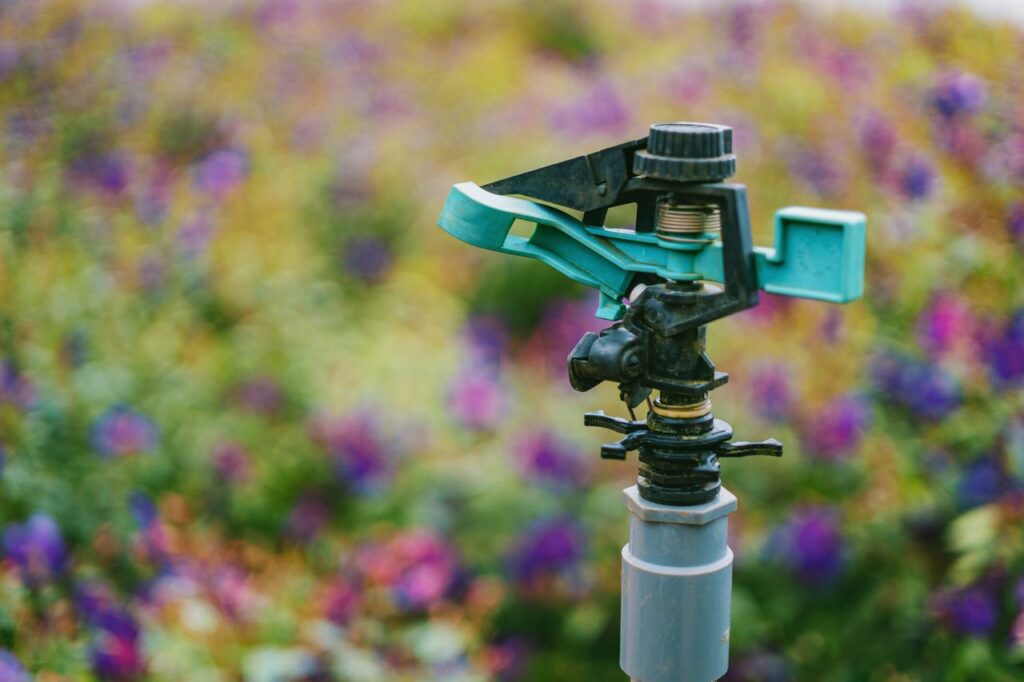
An irrigation timer can turn daily watering from a chore into something almost automatic. Connect it to a drip system, set the days and duration, and your garden can receive water even when you are busy or away from home.
The problem begins when “automatic” becomes “never check it again.”
In Malaysia, weather can change quickly. A timer programmed during a hot, dry week may continue watering through several days of thunderstorms unless you adjust it. The result can be constantly saturated soil, root stress, wasted water, and eventually problems such as root rot.
The best way to use an irrigation timer is to automate the routine while still letting soil conditions and weather decide whether watering is actually needed.
Start by Knowing What the Timer Controls
A basic irrigation timer attaches to a water source and controls when water begins and stops flowing.
Most allow you to set:
the starting time,
how long watering runs,
and how often it repeats.
More advanced timers may also allow separate watering days, multiple programmes, rain delays, moisture sensors, or weather-based adjustments.
You do not need the smartest controller available to water a small home garden properly.
Even a simple timer can work extremely well if the schedule is based on what your plants actually need.
Do Not Begin with “Every Day”
A common beginner approach is to programme the system for 15 or 20 minutes every morning simply because daily watering feels safe.
But frequency should not be chosen before you understand the soil.
After running your drip system, check how deeply the water has penetrated.
Then check again several hours later or the following day.
If the root zone remains moist, another full watering cycle may not be necessary.
The aim is not to make the timer run regularly.
The aim is to keep the root zone in a healthy moisture range.
Measure What Your Emitters Actually Deliver
The phrase “run irrigation for 20 minutes” means very little unless you know how much water the system releases.
A two-litre-per-hour emitter running for 30 minutes delivers about one litre of water.
A four-litre-per-hour emitter would deliver twice that amount in the same period.
So before programming a timer, check the rated flow of your emitters.
You can also perform a simple test by placing an emitter into a measuring container for a set amount of time.
Knowing the approximate output makes it much easier to understand what your plants are receiving.
Check the Soil, Not Just the Clock
Timers measure time.
They do not automatically know whether the soil is dry.
Push your finger several centimetres into the soil, use a wooden stick, or inspect the root zone before a scheduled watering cycle.
For larger containers or garden beds, check deeper than the surface.
The top centimetre may dry quickly under Malaysian sun while the soil underneath remains comfortably moist.
If the deeper root zone is still wet, extending the interval between watering cycles may be better than simply shortening every session.
Adjust for Malaysian Rainfall
This is one of the most important habits for local gardeners.
Malaysia can receive intense rain within a very short period.
If your garden receives a major evening thunderstorm and your timer runs again the following morning, you may be watering soil that is already saturated.
Use the timer’s rain delay or manual-off function when necessary.
If your controller supports a rain sensor, that can add another layer of automation.
But even with sensors, physically check the soil occasionally.
A rain sensor may know that rain fell. It does not always know how much water actually reached the root zone beneath a roof edge, balcony, or dense plant canopy.
Different Plants Need Different Schedules
One timer should not automatically control every plant in your garden.
A tray of seedlings, mature curry leaf tree, pandan plant, chilli, mint pot, and drought-tolerant ornamental may all use water at different rates.
Where practical, divide the garden into watering zones.
Plants with similar moisture requirements can share one schedule.
If your system has only one zone, use different emitter flow rates or keep plants with very different needs off the automatic line.
The simpler the watering group, the easier the timer is to manage.
Pots and Garden Beds Behave Differently
Containers generally dry more quickly because they hold less soil and are exposed to warm air from all sides.
A small chilli pot in full Malaysian afternoon sun may require much more frequent watering than a mulched raised bed nearby.
Large garden beds usually contain a greater volume of soil and can store moisture longer.
This is another reason to avoid putting every growing area onto the same timer programme.
Even among pots, size matters.
A 15-litre container and a 60-litre fruit-tree pot will not behave the same way.
Increase Watering Gradually During Hot Weather
When Malaysia experiences several hot, sunny days, plants may use more water.
Do not immediately double every irrigation cycle.
First check whether the soil is actually drying sooner.
If it is, you can adjust by watering slightly longer, watering slightly more frequently, or both.
Make small changes and observe the result.
The same approach works in reverse during rainy or cloudy periods.
Reduce the schedule gradually as plant water use falls.
Water Deeply Enough
A timer can also cause underwatering if the programmed sessions are too short.
For example, five minutes of drip irrigation may wet only the top few centimetres of soil.
Plants then develop shallow roots close to that frequently wet surface.
A better strategy is usually to apply enough water to moisten a meaningful portion of the root zone, then allow the soil to begin drying before the next cycle.
Check by gently digging beside the plant after irrigation.
Do not assume the moisture reached deep enough simply because the surface looks dark.
Avoid Permanent Saturation
Roots need oxygen as well as water.
If your timer keeps soil continuously saturated, air spaces remain filled with water and root health can decline.
Signs that your automatic schedule may be too generous include:
soil that never seems to dry,
yellowing lower leaves,
fungus gnats around container soil,
algae growing on the surface,
soft or declining roots,
and plants wilting even though the soil is wet.
Ironically, a plant in waterlogged soil can wilt because damaged roots are no longer functioning properly.
Do not respond by automatically adding more water.
Use Mulch When Appropriate
Mulch can help reduce how quickly outdoor soil loses moisture.
This can make irrigation schedules more stable during hot weather.
If you add mulch to a garden bed that was previously bare, however, remember that the soil may now stay moist for longer.
Your old timer settings may suddenly provide too much water.
Whenever you make a major change to soil, mulch, pot size, or plant layout, recheck the irrigation schedule.
Check Emitters Regularly
Automatic irrigation can fail silently.
One emitter becomes blocked.
Another falls out of the pot.
A connector begins leaking.
The timer still switches on every morning, so you assume everything is being watered.
Walk through the garden while the system is operating from time to time.
Check that every emitter is flowing correctly and that water is landing where roots can use it.
Automation works best when it is periodically inspected.
A Good Starting Routine
If you are setting up a new timer, begin conservatively.
Run the system manually and observe how long it takes to wet the root zone.
Let the soil begin drying.
Record how long that takes.
Use those observations to create your first timer schedule.
Then check the garden again after a week.
If soil remains too wet, increase the interval or reduce the run time.
If plants are drying too quickly, adjust upward.
Your first programme does not need to be perfect.
Think of it as a starting hypothesis that you refine.
Do You Need a Smart Irrigation Timer?
Not necessarily.
Smart controllers that use weather information, rain sensors, or soil-moisture sensors can be helpful in larger or more automated gardens.
But technology cannot fix a badly designed irrigation layout.
A simple timer paired with correctly positioned emitters and regular soil checks can perform extremely well.
Learn how your garden uses water first.
Then add smarter automation if it solves a real problem.
The Best Timer Schedule Is Not Permanent
This may be the most important rule of all.
Your irrigation programme should change.
Young plants become larger.
Roots expand.
Pots become crowded.
Mulch breaks down.
The rainy season changes soil moisture.
Hot spells increase water use.
A schedule that worked perfectly three months ago may not suit the same garden today.
Check the soil periodically and adjust.
An irrigation timer should save you from performing the same watering task manually every day — not remove you from the decision entirely.
At the end of the day, using an irrigation timer without overwatering comes down to treating the timer as a tool, not the gardener. Measure what your system delivers, check moisture below the surface, group plants with similar needs, pause watering after heavy Malaysian rain, and adjust the programme as weather and plants change. The best automatic watering system is not the one that runs most reliably every morning. It is the one that knows when your garden does not need to be watered.
Using a timer on your home irrigation system? Tag @projectharvest.my on Instagram and share your timer settings, drip-irrigation layout, rain-delay routine, or the adjustments that finally stopped your pots from staying too wet. Your watering experiment could help another Malaysian gardener discover that smarter irrigation often means learning when not to switch the water on.