
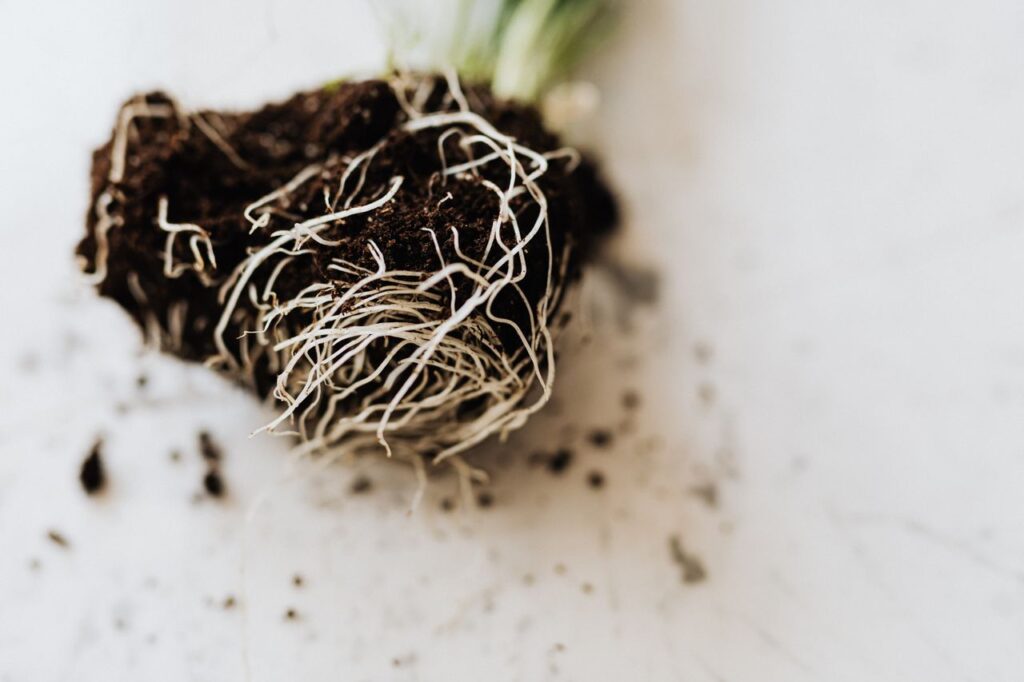
The safest way to transplant a seedling is to move it with as much of its root ball intact as possible.
Roots are the plant’s water and nutrient collection system, and the finest feeder roots are especially important. If too many are torn, crushed, or allowed to dry out, the seedling may wilt or stop growing while it tries to recover.
Good transplanting therefore comes down to three things: prepare first, handle the root ball gently, and minimise the time the roots spend exposed.
For Malaysian gardeners, timing also matters because young seedlings can lose water very quickly under hot sun and wind.
Transplant at the Right Stage
Seedlings should be large enough to handle but not so old that they have become badly root-bound.
For many vegetables, a good transplanting stage is when the plant has developed several true leaves and the root system holds the growing medium together when removed from the tray.
If you pull a very young seedling and the entire root ball falls apart, it may simply need more time.
If roots are circling densely around the outside of the cell and emerging heavily through drainage holes, you may have waited too long.
The ideal seedling is well established but not trapped.
Water the Seedlings Before You Start
Dry growing mix crumbles easily.
That can leave delicate roots exposed during removal.
Water the seedling tray beforehand so the root ball is evenly moist.
It should hold together when removed, but it should not be dripping wet or muddy.
Moist growing medium gives the roots physical support during transplanting and reduces the chance of them drying out while you work.
Prepare the New Pot or Bed First
Do not remove a seedling from its tray and then begin mixing potting media.
Prepare the new location before touching the plant.
If transplanting into a pot, fill it with suitable growing mix and create the planting hole.
If moving into a raised bed or garden soil, prepare the area and make the hole large enough to comfortably hold the root ball.
This allows the seedling to go directly from its old container into its new home.
Roots should not sit exposed on a table while you search for gardening tools.
Remove Seedlings by the Root Ball, Not the Stem
One of the easiest ways to damage a seedling is to pull it upwards by the stem.
Young stems are easily crushed or snapped.
Instead, gently squeeze the sides of the seedling cell or pot.
Then support the surface of the growing medium with your fingers and ease the root ball out.
If the plant does not release easily, tap or flex the container rather than pulling harder.
For plug trays, gently pushing from the drainage hole underneath can sometimes help release the seedling.
The whole goal is to make the container release the plant rather than forcing the plant out.
Handle Small Seedlings by a Leaf if Necessary
If you must handle a very small seedling above the soil line, gently holding one of the leaves is usually safer than gripping the stem.
A damaged leaf can be replaced.
A badly crushed main stem usually cannot.
Do not pinch or pull hard.
This is mainly useful for tiny seedlings being separated or moved carefully.
For larger seedlings, supporting the root ball is still the preferred method.
Keep the Root Ball Together
For seedlings grown in individual cells, there is usually no need to remove the growing mix from the roots.
Plant the whole root ball.
The existing mix protects fine roots and helps the plant transition into the new soil.
Do not wash soil from the roots.
Do not shake the seedling aggressively.
Do not try to expose every root because you think the plant needs to be “freed.”
For a healthy young transplant, preserving the root system matters more than making the roots perfectly visible.
What If the Roots Are Circling?
A lightly root-filled seedling can usually be planted as it is.
If the plant is badly root-bound, with thick roots circling repeatedly around the outside, some gentle loosening may help encourage outward growth.
But be conservative.
Use your fingers to tease apart only the outermost roots if necessary.
Do not tear the root ball completely apart.
The more root tissue you damage, the greater the stress after transplanting.
For vegetable seedlings, preventing severe root binding in the first place is better than trying to correct it later.
What If Several Seedlings Are Tangled Together?
Sometimes several seeds germinate in the same container and their roots become tangled.
If the plants are still young, water the growing medium first and gently remove the entire cluster.
Then slowly tease the roots apart with your fingers.
Work from the growing medium downward rather than pulling the seedlings away from each other by their stems.
If roots are heavily intertwined, separating them may cause more damage than expected.
Depending on the crop, it may be better to keep the strongest seedling and remove the weaker ones rather than trying to save every plant.
Make the Planting Hole Wide Enough
The hole should comfortably fit the root ball without forcing or folding it.
If roots are bent sharply upward or compressed sideways, they may struggle to establish.
Place the root ball into the hole and gently bring the surrounding soil around it.
Do not press the soil down aggressively.
Firm it lightly so there are no large air gaps while maintaining good soil structure.
Roots need contact with moist soil, but they also need oxygen.
Plant at the Correct Depth
Most seedlings should be transplanted at roughly the same depth they were previously growing.
Do not automatically bury the stem deeper.
Stem tissue that stays constantly wet can become vulnerable to rot in some crops.
Tomatoes are a useful exception because they can produce additional roots along buried portions of their stem.
For crops such as chillies, brinjal, and many herbs, planting close to the original soil line is usually safer.
If unsure, follow crop-specific advice.
Do Not Let Roots Dry Out
Fine roots can dry rapidly once exposed to air.
This is especially important in Malaysia’s warm conditions.
If you are transplanting many seedlings, do not remove all of them from their trays at once.
Work one by one or in small batches.
Remove the seedling.
Plant it.
Water it.
Then move on to the next one.
This keeps root exposure to a minimum.
Transplant During Cooler Conditions
Late afternoon or early morning is usually more comfortable for both you and the seedlings.
Avoid moving young plants during intense midday heat if possible.
Late afternoon can be especially practical because the plant then has several cooler hours to begin settling before the next period of strong sun.
If seedlings have already been properly hardened off, they should adapt more easily.
Still, very harsh heat immediately after root disturbance can increase wilting.
Water Immediately After Planting
Once the seedling is in position, water gently around the root zone.
This helps settle the surrounding soil against the root ball and gives the roots immediate access to moisture.
Do not use a strong jet that exposes the roots or washes the seedling sideways.
Water slowly.
For container seedlings, make sure excess water can drain.
For garden beds, the goal is moist soil around the root ball without turning the area into mud.
Avoid Pulling on the Seedling to “Straighten” It
If the plant is sitting crooked, do not grab the stem and tug it upwards.
Instead, adjust the surrounding soil.
Support the root ball and reposition it gently.
Then firm the soil again.
The roots may already have been disturbed during the move, so unnecessary pulling only adds more damage.
Do Not Fertilise the Roots Directly
Avoid putting concentrated fertiliser directly into the planting hole where young roots will touch it.
Strong fertiliser can damage tender roots, particularly if the soil becomes dry.
If the growing mix already contains adequate nutrients, the plant usually does not need an immediate heavy feeding.
Allow it to establish first.
Resume an appropriate feeding programme after healthy growth starts again.
Temporary Shade Can Reduce Stress
Even when roots were handled carefully, the plant may temporarily struggle to supply enough water to its leaves.
If conditions are especially hot, a little temporary shade can reduce water loss.
This is particularly helpful for young transplants going into exposed balconies, raised beds, or concrete-heavy terrace-house gardens.
Do not leave a full-sun crop permanently shaded.
A day or two of protection may simply help the plant settle.
How Do You Know the Roots Were Damaged?
Some mild wilting after transplanting can be normal.
But severe root damage may cause:
persistent wilting,
collapsed leaves,
little or no new growth,
rapid drying of foliage despite moist soil,
or complete plant decline.
If the soil is moist and the plant remains badly wilted, adding more water may not help.
Damaged roots may simply be unable to absorb water quickly enough.
Provide appropriate shade, keep the root zone moist but not saturated, and give the plant time to recover.
Avoid Transplanting During Severe Weather
If possible, do not choose the day before an extreme heat spell or major storm.
Freshly transplanted seedlings are already dealing with root disturbance.
A tropical downpour can then flatten them or saturate the growing area.
Strong sun can cause rapid water loss.
If conditions are poor, delaying transplanting by a day or two may be wiser.
Good timing is one of the easiest ways to reduce stress.
A Simple Root-Safe Transplanting Routine
A practical routine looks like this:
Water the seedlings beforehand.
Prepare the new growing area.
Make the planting hole.
Gently loosen the tray or pot.
Support and remove the root ball.
Keep the roots covered with the existing growing medium.
Place the seedling at the correct depth.
Firm soil gently around it.
Water the root zone.
Protect it briefly from extreme sun or wind if necessary.
Then monitor it for the next few days.
Most healthy seedlings should begin settling quickly.
Good Seedling Trays Make Transplanting Easier
This is one reason individual cell trays are useful.
Each seedling develops its own root ball.
When the time comes to transplant, the entire plug can be removed with minimal disturbance.
If you frequently start chillies, tomatoes, brinjal, basil, or other transplantable crops, choosing trays that release plugs cleanly can make the whole process easier.
Root-safe transplanting actually begins weeks before transplanting day.
The Goal Is Not Zero Root Disturbance
It is almost impossible to transplant a seedling without disturbing any roots whatsoever.
A few fine roots may be damaged.
That is usually not a problem.
Healthy seedlings can replace them.
The goal is to avoid unnecessary damage.
Keep the root ball intact, work gently, keep roots moist, and get the plant into its new growing environment quickly.
That gives the seedling the best chance to resume growth instead of spending days repairing severe root injury.
At the end of the day, transplanting without damaging the roots is less about having perfect technique and more about being gentle and prepared. Water the seedling first, prepare its new home before removal, support the root ball instead of pulling the stem, and minimise the time roots spend exposed to Malaysia’s warm air. A little care during those few minutes can preserve weeks of healthy seedling growth and help the plant move from tray to garden with far less stress.
Moving your chilli, tomato, brinjal, herb, or vegetable seedlings into their permanent homes? Tag @projectharvest.my on Instagram and show us your root balls, transplanting setup, or how the seedlings look a few days after the move. We would love to see those healthy roots make the jump from tiny seedling cells into bigger Malaysian home gardens.