
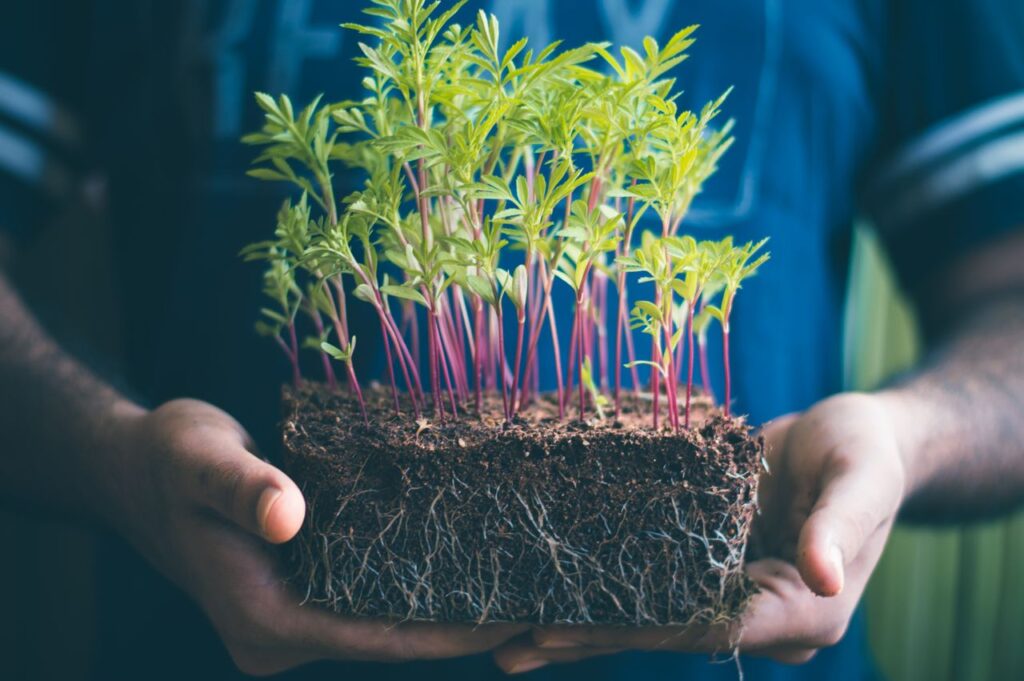
Transplant shock happens when a plant struggles to adjust after being moved from one growing environment to another.
A newly transplanted seedling may wilt, stop growing, drop leaves, or look weak for several days even though it was healthy before the move.
Some temporary slowdown is normal, but severe transplant shock can be reduced.
The key is to make the transition as gentle as possible by protecting the roots, managing moisture carefully, choosing the right time to transplant, and avoiding sudden exposure to harsh Malaysian sun and heat.
What Actually Causes Transplant Shock?
Transplant shock is not one single problem.
It is usually a combination of stresses.
When you move a seedling, its roots may be disturbed.
The plant may suddenly face stronger sunlight.
Wind may increase water loss from the leaves.
The new soil may hold moisture differently.
Temperature may be higher.
Even the microorganisms and nutrient conditions around the roots may change.
A small plant has to adapt to all of this at once.
The more changes you introduce in one day, the more difficult the transition can become.
Harden Seedlings Off First
One of the best ways to prevent transplant shock is to harden seedlings off before planting them outdoors.
Gradually expose them to stronger light, outdoor airflow, and normal temperature changes over several days.
A seedling raised under shade or indoors should not be moved directly into full Malaysian afternoon sun.
That sudden jump can cause leaf scorch and rapid water loss before the roots have adjusted.
A week or more of gradual exposure can make a major difference.
Water the Seedling Before Transplanting
The root ball should be appropriately moist before you remove the plant from its tray or nursery pot.
Dry roots are more fragile and the plant is already under water stress before transplanting even begins.
Water the seedling beforehand if necessary.
The growing medium should be moist enough to hold together around the roots but not so wet that it falls apart into mud.
A cohesive root ball is much easier to transplant with minimal disturbance.
Prepare the New Location First
Do not remove the seedling from its tray and then begin looking for a pot, digging a hole, or mixing soil.
Prepare everything beforehand.
If planting into a container, fill it with suitable growing mix and make the planting hole first.
If planting into a garden bed, prepare the soil and remove competing weeds.
The seedling should spend as little time as possible sitting outside its growing medium with exposed roots.
A smooth transplanting process reduces unnecessary stress.
Protect the Root Ball
For most vegetable seedlings, the less you disturb the roots, the better.
Remove the plant gently from its cell or pot while supporting the growing medium around the root system.
Avoid pulling the seedling out by the stem.
If necessary, squeeze or tap the sides of the container to loosen the root ball.
Handle the plant by the root ball or, for small seedlings, carefully by the leaves rather than gripping and crushing the stem.
Fine feeder roots are especially important because they absorb water and nutrients.
Damage too many of them and the plant may struggle to replace moisture lost through its leaves.
Do Not Tear Roots Apart Unless Necessary
If the root ball is healthy and only lightly filled with roots, plant it largely intact.
You do not need to aggressively loosen every root.
If a plant is badly root-bound, with thick roots circling around the outside, some careful loosening may help them grow into the surrounding soil.
But be gentle.
A seedling does not benefit from having half its root system ripped away immediately before being planted.
The objective is to encourage outward growth while preserving as much functioning root tissue as possible.
Plant at the Correct Depth
Most seedlings should be replanted at approximately the same soil level they were growing at before.
Do not automatically bury stems deeply.
Planting too deep can keep stem tissue constantly wet and may encourage rot in susceptible plants.
Tomatoes are a notable exception because their stems can produce additional roots when buried.
Even then, the technique should be used intentionally rather than copied across every vegetable crop.
For chillies, brinjal, herbs, and most other seedlings, maintain a sensible original planting depth.
Transplant During the Cooler Part of the Day
Malaysia’s midday and afternoon heat can create unnecessary stress during transplanting.
Late afternoon is often a practical time.
The strongest sunlight has passed, temperatures begin to ease, and the plant has the evening and overnight period to start settling into its new root zone.
Early morning can also work.
Avoid transplanting during intense midday heat unless there is a specific reason and the plant can be protected afterwards.
Water Immediately After Transplanting
Once the plant is in position, water the root zone gently.
This helps settle the growing medium around the roots and removes large air gaps.
It also ensures the disturbed root system has immediate access to moisture.
Water thoroughly enough to moisten the surrounding soil, but do not repeatedly flood the plant.
The goal is good root-to-soil contact and adequate moisture, not permanent saturation.
Keep Moisture Consistent During the First Few Days
A newly transplanted seedling has not yet extended many roots into the surrounding soil.
For a short period, it still depends heavily on the moisture close to its original root ball.
Check the soil regularly.
Do not let that area dry completely.
At the same time, avoid overwatering.
Keeping the soil constantly waterlogged can reduce oxygen around damaged roots and slow recovery.
Consistent moisture is much safer than swinging between very dry and very wet conditions.
Temporary Shade Can Help
Even properly hardened seedlings can benefit from temporary protection after transplanting during very hot weather.
A light shade cloth or sheltered position can reduce the amount of water the leaves lose while the roots recover.
This is particularly useful for plants transplanted into exposed terrace-house gardens, balconies, or raised beds surrounded by heat-reflecting concrete.
Do not keep a sun-loving crop in deep shade indefinitely.
Temporary protection is meant to help the plant through the transition.
Once it begins recovering, gradually return it to the appropriate light level.
Avoid Heavy Fertilising Immediately
A stressed plant does not need a strong dose of fertiliser.
Freshly disturbed roots can be more sensitive to concentrated salts.
If your soil or potting mix already contains appropriate nutrition, there is usually no need to add a powerful fertiliser immediately after transplanting.
Let the root system recover first.
Once the plant resumes healthy growth, continue with an appropriate feeding programme.
More fertiliser does not force a shocked plant to recover faster.
Avoid Heavy Pruning at the Same Time
Do not create several major stresses at once.
If possible, avoid combining transplanting with aggressive pruning, strong fertilisation, and major environmental changes.
A little removal of damaged foliage is fine.
But heavily cutting back a healthy seedling at the same time you disturb its roots is usually unnecessary.
Give the plant one main adjustment to deal with.
Protect Newly Transplanted Plants from Heavy Rain
Dry weather is not the only concern in Malaysia.
A tropical downpour shortly after transplanting can flatten young plants, wash soil away from the roots, and leave poorly draining containers saturated.
If severe rain is expected, some temporary overhead protection may help.
Make sure the area still has good airflow.
Do not seal plants inside a hot, humid plastic enclosure.
The goal is to reduce the physical impact of heavy rain while allowing the plant to breathe.
Wind Can Increase Transplant Stress
Wind increases water loss from leaves.
A newly transplanted plant with disturbed roots may struggle to replace that water quickly enough.
If your balcony or garden is very exposed, provide some temporary protection from strong wind.
Tall seedlings may also benefit from gentle staking if they are unstable.
Do not tie stems tightly.
The support should prevent excessive movement while still allowing natural growth.
What Does Normal Transplant Stress Look Like?
A small amount of drooping immediately after transplanting is not always a disaster.
The plant may look slightly tired for a day or two while roots adjust.
What matters is whether it begins recovering.
Healthy recovery usually includes:
leaves becoming firmer,
new growth appearing,
normal colour returning,
and the plant staying upright during cooler parts of the day.
If the plant continues deteriorating, investigate moisture, sun exposure, root damage, drainage, or disease.
Do Not Keep Watering Just Because the Plant Wilts
This is a common mistake.
A freshly transplanted plant may wilt because damaged roots cannot absorb water quickly enough.
That does not automatically mean the soil is dry.
If you keep adding water every time the leaves droop, the roots may eventually sit in saturated soil.
Check the root zone first.
If the soil is still wet, additional watering is unlikely to solve the problem.
Temporary shade or reduced wind exposure may be more helpful.
Larger Plants Can Suffer More Shock
Small seedlings are often easier to transplant because their root systems have not become heavily established.
A large plant may lose more roots during the move and has more leaves losing water above ground.
This is why it is usually better to transplant vegetables before they become oversized and root-bound.
Do not leave seedlings in tiny cells for weeks longer than necessary.
Timing matters.
A Simple Low-Shock Transplanting Routine
A practical approach looks like this:
Harden the seedling off first.
Water it before transplanting.
Prepare the new growing location.
Remove the root ball gently.
Plant at the correct depth.
Water the surrounding soil thoroughly.
Provide temporary protection from intense heat, wind, or heavy rain if necessary.
Keep moisture consistent for the next few days.
Avoid heavy fertilising until recovery begins.
Then watch for fresh growth.
If the plant resumes growing, the transplant has probably succeeded.
Prevention Is Easier Than Recovery
Once severe transplant shock occurs, there is no instant treatment.
The best approach is to reduce stress before it happens.
A healthy seedling with intact roots, suitable moisture, gradual outdoor exposure, and a well-prepared new home already has most of what it needs.
Gardeners sometimes look for special transplant tonics or miracle products.
In most cases, careful handling and good growing conditions matter far more than adding another product to the soil.
At the end of the day, preventing transplant shock is mostly about avoiding sudden change. Protect the root system, keep moisture steady, transplant during cooler conditions, and introduce seedlings gradually to Malaysia’s sun, wind, heat, and rain. A little drooping after a move can be normal, but a properly prepared seedling should begin settling into its new home quickly. The less unnecessary stress you create on transplanting day, the sooner the plant can stop recovering and start growing.
Transplanting chillies, tomatoes, brinjal, herbs, or leafy vegetables this week? Tag @projectharvest.my on Instagram and show us your seedlings before and after the move, your transplanting setup, or how quickly they recovered. If one plant struggled while another settled in immediately, share that too — those real garden experiences can help other Malaysian gardeners learn what makes a smoother transition.