
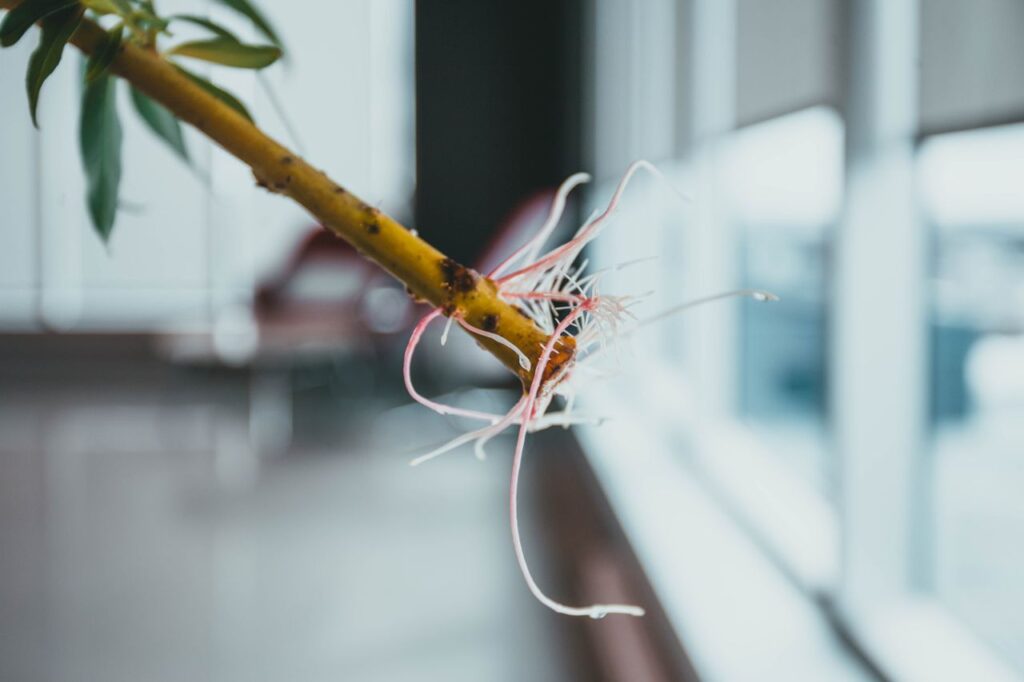
Stem cuttings are one of the simplest ways to turn one healthy plant into several.
Instead of waiting for seeds, you cut a suitable piece of stem from an existing plant, place it into water or a moist growing medium, and encourage it to produce new roots.
Once those roots develop, the cutting becomes an independent plant.
This method works particularly well for many herbs and ornamentals and can be useful for Malaysian home gardeners who want more plants without buying new ones every time.
The important thing to remember is that not every plant roots equally easily, and cuttings need a balance of moisture, air, humidity, and gentle light while they establish.
What Is a Stem Cutting?
A stem cutting is a section of a healthy shoot removed from a parent plant and used for propagation.
The cutting usually contains:
a section of stem,
one or more nodes,
and a few leaves.
A node is the point on a stem where leaves, buds, or side shoots emerge.
Nodes are important because many plants can produce new roots from tissue around these areas.
Once the cutting forms enough roots, it can begin growing normally as its own plant.
Which Plants Can Be Grown from Stem Cuttings?
Many common garden plants can be propagated this way.
Examples that often root relatively easily include:
mint,
basil,
coleus,
pothos and other common ornamentals,
some types of rosemary,
certain flowering shrubs,
and many soft-stemmed herbs.
Woody plants can sometimes be propagated from cuttings too, but they may require different techniques, longer rooting periods, or more controlled conditions.
Do not assume every fruit tree or vegetable can be multiplied efficiently from a simple stem cutting.
Different species respond very differently.
Choose a Healthy Parent Plant
Propagation starts with the plant you cut from.
Choose a healthy plant that is actively growing and free from obvious pests or disease.
Avoid taking cuttings from stems that are:
yellowing,
severely wilted,
heavily pest-infested,
rotting,
or badly damaged.
A cutting begins with limited stored energy.
Starting with weak plant material lowers its chances of producing roots successfully.
If the parent plant is struggling, solve its problem first before using it for propagation.
Choose the Right Part of the Stem
For many easy-to-root herbs, choose a young, healthy shoot that is neither extremely soft nor heavily woody.
A stem around 8 to 15 cm long is often practical, though the ideal length varies by plant.
Look for a section with several nodes.
Avoid flowering stems when possible.
A plant putting energy into flowers may be less focused on root production.
If the plant is flowering heavily, select a healthy non-flowering shoot where available.
Make a Clean Cut Below a Node
Use clean, sharp scissors, secateurs, or a suitable blade.
Make the cut just below a node.
This gives you a useful section of stem for rooting and reduces unnecessary stem below the lowest node.
A clean cut is better than crushing or tearing the stem.
Dirty tools can also spread plant diseases, so clean them before taking cuttings, especially if you are propagating several different plants.
Remove the Lower Leaves
The lower section of the cutting will be inserted into water or growing medium.
Remove leaves from the lower nodes so they do not sit buried or submerged.
Leaves left underwater or beneath wet soil can rot.
Keep a few healthy leaves at the top.
The cutting still needs some leaf area for photosynthesis, but too many leaves increase water loss.
A newly cut stem has no functioning root system yet, so it cannot replace lost moisture as effectively as the parent plant.
Reducing excess foliage helps balance that problem.
Should You Cut Large Leaves?
For plants with very large leaves, reducing some leaf area can sometimes lower water loss.
This may involve trimming part of a large leaf while keeping enough healthy tissue for photosynthesis.
For small-leaved herbs, this is usually unnecessary.
Do not remove every leaf.
A leafless cutting has much less ability to produce energy.
The goal is balance.
Water Propagation or Soil Propagation?
Both can work.
Some plants root easily in water.
Others establish better directly in a propagation medium.
Water propagation is convenient because you can see the roots developing.
It is useful for many easy-rooting herbs and houseplants.
Direct propagation into a light growing medium avoids the later transition from water-grown roots into soil.
Neither method is automatically better for every plant.
The right choice depends on the species.
How to Root Cuttings in Water
Fill a clean container with water.
Place the prepared cutting so one or more bare nodes are submerged while the leaves remain above the waterline.
Do not cram too many cuttings into one small container.
Place it somewhere bright but protected from harsh direct sun.
Change or refresh the water regularly if it becomes cloudy, develops odour, or accumulates debris.
Once a healthy root system develops, the cutting can be transferred into a suitable potting mix.
Do not necessarily wait until roots become extremely long and tangled.
How to Root Cuttings in Growing Medium
For soil-style propagation, use a light, well-aerated mix.
A combination containing cocopeat or another moisture-retentive material plus something that improves air space, such as perlite, can work well.
The medium should stay moist without becoming waterlogged.
Make a small hole first.
Insert the cutting so at least one bare node is below the surface.
Firm the mix gently around the stem.
Then water lightly to settle the medium.
Do not pack the soil tightly.
New roots need oxygen as well as moisture.
Keep the Medium Moist, Not Saturated
This is especially important in Malaysia.
Warmth and humidity can help cuttings avoid rapid dehydration, but constantly wet media can also encourage rot.
The propagation mix should remain evenly moist.
It should not stay swampy.
Containers must have drainage holes.
If water remains trapped around the cutting, the base may turn brown or mushy before roots form.
More water does not make roots appear faster.
Humidity Helps — But Too Much Can Cause Problems
Because the cutting has no developed root system, higher humidity can reduce water loss from its leaves.
This is why propagation trays are sometimes covered with a clear dome or plastic bag.
In Malaysia, however, ambient humidity is already high.
A completely sealed container sitting in warm conditions can quickly become excessively humid and stagnant.
That can encourage fungal growth and stem rot.
If you use a humidity cover, provide ventilation and monitor the cuttings closely.
You may not need a cover at all for easy-rooting plants in sheltered Malaysian conditions.
Give Bright Light Without Harsh Sun
Cuttings need light, but strong Malaysian afternoon sun can dehydrate them before roots develop.
Bright indirect light or gentle morning sun is often safer during the early stage.
Once the cutting has rooted and begun producing new growth, gradually increase light according to the needs of that particular plant.
Do not place a freshly cut basil or mint stem directly into several hours of intense afternoon sun and expect it to root comfortably.
Do You Need Rooting Hormone?
Not always.
Many easy-rooting herbs and ornamentals can form roots without it.
Rooting hormone contains compounds that encourage root formation and can improve success with some more difficult species.
If you use one, follow the product instructions.
More rooting hormone is not automatically better.
Do not dip wet cuttings directly into the main product container because this can contaminate the remaining powder or solution.
Pour out a small amount for use and discard the excess appropriately.
Do Homemade Rooting Remedies Work?
You may come across advice recommending honey, cinnamon, aloe vera, or various homemade liquids as substitutes for rooting hormone.
Be cautious with these claims.
Some household materials may have antimicrobial properties or other interesting characteristics, but that does not automatically make them reliable rooting hormones.
For easy-to-root plants, plain water or a good propagation mix is often enough.
For difficult species, use a properly labelled rooting product if needed rather than depending on an unproven homemade recipe.
How Long Do Cuttings Take to Root?
It depends completely on the plant.
Some soft-stemmed herbs may begin rooting relatively quickly.
Woody cuttings can take much longer.
Temperature, plant health, humidity, light, and season can all influence rooting speed.
Do not keep pulling a soil-grown cutting out every few days to check for roots.
That can damage the very roots you are trying to grow.
Instead, watch for signs such as:
fresh new leaves,
new shoots,
and gentle resistance when the stem is lightly tugged.
Resistance can indicate that roots are beginning to anchor the cutting.
Do Not Tug Too Hard
The “tug test” should be extremely gentle.
If the cutting resists slightly, leave it alone.
Do not pull until you can see whether roots are attached.
Fine new roots are fragile.
Repeated checking can slow establishment.
Patience is part of propagation.
When Should You Pot Up a Rooted Cutting?
Once a cutting has developed a reasonable root system and begins showing healthy new growth, it can move into a larger container.
Use a suitable potting mix for the plant.
Water after transplanting.
For water-rooted cuttings, keep the potting medium appropriately moist during the first few days while the roots adjust to growing in soil.
Do not immediately expose the new plant to harsh conditions.
It is still transitioning.
Take More Than One Cutting
Not every cutting will succeed.
That is normal.
If you want three new plants, consider taking several extra cuttings rather than relying on exactly three stems.
Some may rot.
Some may fail to root.
Others may root faster than expected.
Taking a few extras increases your chances without requiring much additional space.
Label Your Cuttings
This becomes important surprisingly quickly.
If you are propagating several chilli-related herbs, ornamental varieties, or different cultivars at once, label them when you start.
Write down the plant name and propagation date.
This helps you compare how long different plants take to root.
It also prevents the classic propagation problem of producing ten healthy plants and forgetting what half of them are.
Watch for Rot
Check cuttings regularly.
Warning signs include:
a black or mushy stem base,
bad smell,
rapid yellowing,
slimy water,
or collapsing leaves.
If one cutting begins rotting in a shared water container, remove it.
For soil propagation, improve airflow and moisture management if several cuttings are rotting.
You may be keeping conditions too wet.
Start with Easy Plants
If you have never propagated from cuttings before, begin with forgiving plants.
Mint and basil can be excellent practice because they often root relatively easily.
Once you understand the process, try more challenging species.
Propagation becomes much less mysterious after you watch your first ordinary stem develop its own root system.
A Simple Stem-Cutting Routine
A practical routine looks like this:
Choose a healthy parent plant.
Cut a healthy non-flowering stem.
Make the cut just below a node.
Remove the lower leaves.
Place one or more nodes in water or a light propagation medium.
Keep leaves above the water or soil.
Provide bright, gentle light.
Maintain moisture without waterlogging.
Watch for new growth and roots.
Once well rooted, transplant into an appropriate container.
Then gradually return the new plant to normal growing conditions.
That is the basic process behind a huge range of home-garden propagation.
At the end of the day, growing plants from stem cuttings is one of the most satisfying ways to expand a garden because you can literally turn one healthy plant into many. The secret is not a mysterious rooting formula: start with healthy stems, include a node, protect the cutting from excessive water loss, and give the developing roots a moist but airy environment. Malaysia’s warmth can make propagation wonderfully fast for suitable plants, but our humidity also means avoiding stagnant, overly wet conditions is just as important as preventing the cutting from drying out.
Have a mint, basil, herb, or favourite garden plant you want to multiply? Take a few cuttings and document what happens. Tag @projectharvest.my on Instagram with your propagation jars, rooting trays, first new roots, or the plants you eventually pot up. We would love to see how many new Malaysian home-garden plants can begin with nothing more than one carefully chosen piece of stem.