
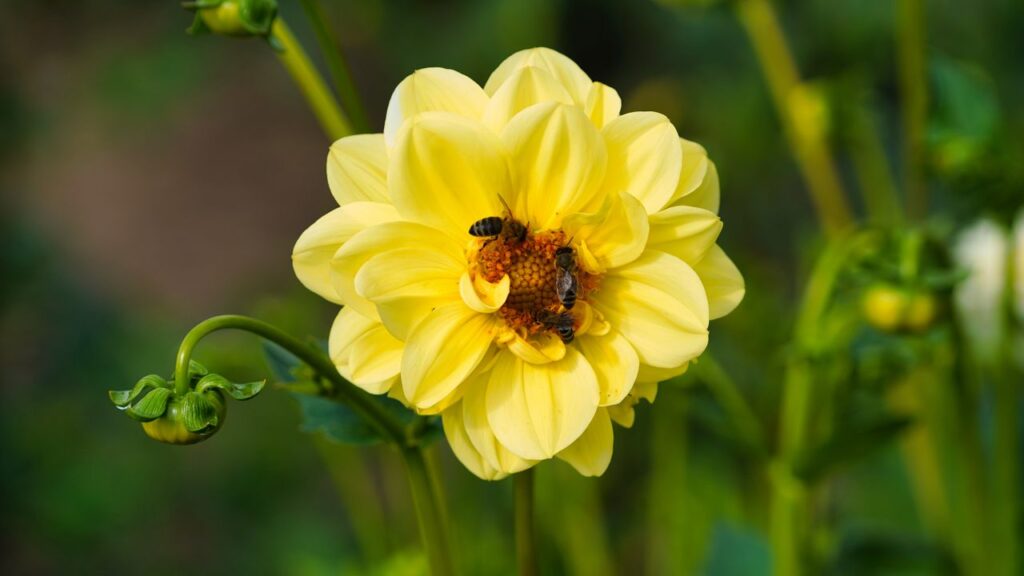
You do not need to let your garden become overgrown, messy, or difficult to manage just to attract more pollinators.
A pollinator-friendly garden can still look:
tidy,
structured,
intentional,
and easy to maintain.
The key is to provide useful flowers, safe feeding areas, and some habitat while keeping everything contained within clearly planned zones.
For Malaysian home gardeners with limited space, that could mean a few flowering herb pots beside a raised bed, a narrow flower border along a wall, or several compact flowering plants near cucumber and pumpkin vines.
You can support pollinators without turning your entire home garden into a jungle.
Start with Flowers, Not Mess
Pollinators primarily need access to nectar and pollen.
That means the most important improvement is usually more suitable flowers.
You do not need:
waist-high weeds,
unmanaged grass,
or plants growing everywhere.
Instead, choose specific places where flowering plants are allowed to grow.
For example:
along one side of a raised bed,
in several dedicated pots,
beneath a trellis,
or along the outer edge of a balcony.
This keeps the garden organised while adding resources for visiting insects.
Use Flowering Herbs
One of the easiest ways to combine productivity with pollinator support is to let selected herbs flower.
Herbs such as basil can produce small flowers that attract various insects.
Instead of allowing every basil plant to flower, you could keep most plants regularly harvested and allow one to bloom.
This gives you both:
kitchen herbs,
and pollinator resources.
The same principle can work with other suitable flowering herbs in your garden.
Create a Dedicated Pollinator Strip
A pollinator strip does not need to be large.
It could be one narrow section beside your vegetables.
Plant several flowering species together rather than scattering individual flowers randomly throughout the garden.
This has two advantages.
First, the garden looks deliberate.
Second, a cluster of flowers can be easier for pollinators to notice than one isolated bloom.
A narrow organised border can therefore support insects without making the whole garden feel uncontrolled.
Containers Make Pollinator Planting Easier to Control
For terrace houses and balconies, containers are particularly useful.
Use one or several pots specifically for flowering plants.
This allows you to:
move them,
replace tired plants,
control spreading,
and keep pathways clear.
If a plant becomes too large, you can prune or replace it without disturbing your vegetable beds.
Containers are also useful for species that might otherwise spread aggressively.
Choose Plants That Stay Manageable
Not every pollinator plant belongs in a small home garden.
Avoid choosing plants purely because they are described as “bee-friendly.”
Ask:
How large will it become?
Will it spread aggressively?
Will it self-seed everywhere?
Does it suit Malaysia’s climate?
Can it be kept in a container?
Will it block pathways?
A compact flowering plant that fits your space is far more useful than a vigorous species that becomes difficult to control.
Mix Flower Shapes
Different pollinators use different types of flowers.
A useful garden can include a mixture of:
small clustered flowers,
open flowers,
tubular flowers,
and flowering herbs.
This does not mean you need twenty species.
Even three or four flower types can create more variety than a garden containing only one ornamental plant.
Aim for diversity without making the design complicated.
Plan for Continuous Flowering
A garden that blooms for only two weeks provides a short-term food source.
Try to keep at least something flowering regularly.
You can achieve this by:
choosing plants with different flowering periods,
replacing finished annuals,
allowing herbs to flower at different times,
or staggering planting dates.
This creates a more dependable feeding area for visiting insects.
Keep Flowers Close to Fruiting Crops
Place pollinator plants near crops that benefit most from insect visits.
For example:
cucumber,
pumpkin,
bitter gourd,
and other cucurbits.
You do not need flowers directly underneath every vine.
A flowering strip or several pots within the same garden zone may be enough to encourage insects to explore nearby vegetable blooms.
Leave Enough Open Space
Pollinator-friendly does not mean filling every centimetre.
Dense planting can reduce airflow and make garden maintenance difficult.
This is especially important in Malaysia’s humid climate.
Leave:
walking space,
airflow between crops,
access for pruning,
and clear routes to harvest.
Pollinator flowers should complement the vegetable garden, not suffocate it.
Use Repetition for a Neater Look
If appearance matters, repetition helps.
Instead of using many unrelated plants in random locations, repeat the same few flowering plants.
For example:
three similar pots along a bed,
the same flowering herb at each corner,
or a repeated border planting.
This creates visual consistency.
The garden can remain attractive to insects while still looking designed.
Keep Edges Defined
Defined edges make even biologically diverse gardens look organised.
Use:
raised-bed borders,
pots,
planter boxes,
or clear pathways.
Then allow more natural growth inside those boundaries.
A flowering patch that stays within a defined bed often looks intentional.
The same plants growing randomly across a walkway may look neglected.
Structure makes a major visual difference.
Prune After Flowering Where Appropriate
Pollinator-friendly plants still need maintenance.
Remove:
dead stems,
diseased growth,
plants blocking paths,
and excessive spreading.
Some flowering plants may also benefit from trimming after flowering.
Do not assume everything must remain untouched because insects use the garden.
A managed pollinator garden can still be healthy and useful.
Deadheading Can Help — But Do Not Overdo It
Removing old flowers can encourage some plants to produce more blooms.
This can extend flowering and keep the garden tidy.
However, if you want certain plants to produce seed for birds, seed saving, or natural regeneration, you may leave selected flower heads to mature.
You do not need to choose one approach for the entire garden.
Keep some areas neat while allowing specific plants to complete their life cycle.
Avoid Routine Insecticide Spraying
Flowers cannot attract pollinators effectively if visiting insects are exposed to inappropriate pesticide use.
Do not spray simply because you noticed one insect.
Identify the problem first.
When treatment is necessary:
use an appropriate product,
follow the label,
and pay attention to pollinator precautions.
Avoid spraying open flowers unless the product instructions specifically allow it and treatment is genuinely necessary.
This applies to products marketed as natural too.
Natural does not automatically mean pollinator-safe.
Target Pests Instead of Spraying Everything
If one chilli plant has aphids, you do not automatically need to spray every flowering plant in the garden.
Targeted pest management helps protect beneficial insects.
You can also:
remove heavily infested leaves where appropriate,
monitor pest populations,
and treat only affected areas.
This approach works especially well in small home gardens where individual plants are easy to inspect.
Do Not Confuse Pollinators with Pests
A busy garden will contain more insects.
That is not necessarily bad.
You may see:
bees,
hoverflies,
small wasps,
butterflies,
beetles,
and many insects you cannot immediately identify.
Do not kill everything unfamiliar.
Observe first.
Some may be pollinators.
Some may be predators of pests.
Others may simply be harmless visitors.
A healthy garden is rarely insect-free.
Provide Shelter Without Creating Clutter
Pollinators also benefit from places to rest and shelter.
You can create this without leaving piles of rubbish around.
Options may include:
dense but controlled flowering plants,
small areas of mulch,
shrubs where space permits,
or purpose-built insect habitat structures.
If using a bug hotel, keep it well constructed and maintained rather than treating it as a decorative object that is never cleaned or inspected.
Habitat should be intentional.
Avoid Standing Water
Malaysia’s mosquito risk means water features require special care.
Do not leave:
buckets,
plant saucers,
open containers,
or stagnant puddles
for pollinators.
Any intentional water source must be maintained so mosquitoes cannot breed.
In many home gardens, pollinators can obtain moisture elsewhere, so there is no need to create risky standing water simply to make the garden more wildlife-friendly.
Mulch Can Help Without Looking Untidy
Mulch protects soil and can create a more stable environment around plants.
It can also make beds look more finished when applied neatly.
Use an appropriate mulch layer and keep it away from direct contact with vulnerable stems.
Do not pile random organic material everywhere.
A consistent, tidy mulch layer can support soil health while maintaining a clean appearance.
Avoid Overcrowding with “Beneficial” Plants
There is a temptation to keep adding flowers because each one is supposedly useful.
Eventually, the vegetables lose:
sunlight,
airflow,
root space,
and accessibility.
Remember the main purpose of an edible garden.
Pollinator plants should improve productivity, not compete heavily with the crops you actually want to harvest.
A few well-positioned flowering plants may be more useful than dozens squeezed into every gap.
Vertical Space Can Help
If ground space is limited, use vertical structure carefully.
Climbing vegetables can occupy trellises while compact flowering plants remain below.
Hanging containers may also work in suitable locations.
But avoid hanging flowers where they block light from crops underneath.
The goal is layering, not shading everything.
Keep Pathways Clear
This simple design choice dramatically changes how a garden feels.
A dense garden with clear paths still looks manageable.
A smaller garden with pots scattered across every walkway can feel chaotic.
Decide where people move first.
Then place flowers and vegetable containers outside those routes.
A garden should remain easy to:
water,
inspect,
harvest,
and clean.
Attract Pollinators Near the Garden Entrance
If you have a terrace-house garden, consider placing some visible flowers near the outer edge or entrance to the growing space.
They may help make the garden more noticeable to passing insects.
Then continue a smaller amount of flowering material deeper into the vegetable area.
This creates a simple visual pathway through the garden.
Protect Flowering Diversity
Do not remove every plant the moment it begins blooming.
Sometimes gardeners prune herbs continuously because the priority is leaves.
You can compromise.
Keep one basil plant flowering.
Harvest another regularly.
Allow one suitable vegetable or herb to bloom while the rest remain focused on food production.
That gives pollinators something to use without sacrificing your entire harvest.
Choose Quality Over Quantity
A well-maintained garden with six healthy flowering plants may be more effective than thirty neglected ones.
Healthy flowers produce better resources.
Stressed plants suffering from:
severe drought,
poor light,
or pest damage
are less useful.
Focus on keeping a manageable number of plants healthy.
Use Seasonal Rotation
Your pollinator planting does not need to remain identical throughout the year.
Replace plants that:
stop flowering,
become too large,
or perform poorly during certain weather conditions.
Your pollinator zone can change just like your vegetable beds.
This keeps the garden fresh and prevents permanent overcrowding.
Make the Garden Look Intentional
A simple design formula is:
vegetables in the main beds, flowers around the edges, herbs near the kitchen, and climbers on vertical supports.
This creates clear functions.
Another option is:
one pollinator container cluster beside each productive garden zone.
The exact style does not matter.
What matters is that each plant has a reason to be where it is.
That is what keeps a biodiverse garden from looking abandoned.
A Simple Small-Garden Pollinator Layout
For a compact Malaysian terrace garden, you could try:
Back: cucumber or bitter gourd trellis
Middle: raised bed with chillies, brinjal, or vegetables
Side edge: three flowering herb or flower containers
Front corner: another compact flowering plant
Pathway: left completely clear
This creates food, flowers, and access without overcrowding.
Observe What Actually Visits
Once flowers are established, watch them.
Spend a few minutes in the morning observing which plants attract insects.
You may discover that one flowering herb receives constant visits while another receives very little attention.
That information can guide future planting.
Your own garden is a better test than assuming every recommended flower will perform equally in your location.
Do Not Expect Instant Results
Adding flowers today does not guarantee a crowd of bees tomorrow.
Pollinator activity depends partly on the wider neighbourhood.
If there are few suitable insects nearby, visits may build slowly.
Maintain flowering resources consistently.
Over time, your garden may become a more predictable stop for insects moving through the area.
Hand-Pollination Is Still a Useful Backup
Even a pollinator-friendly garden may experience bad weeks.
Heavy rain may reduce insect activity.
A female pumpkin flower may open when few pollinators are around.
If an important flower needs pollination, hand-pollination remains useful.
The best approach combines:
natural pollinator support,
healthy plants,
and manual backup when necessary.
A Neat Pollinator Garden Checklist
To support more pollinators without losing control of the garden:
1. Create dedicated flower zones.
2. Use containers to control spreading plants.
3. Allow selected herbs to flower.
4. Keep several flower types available.
5. Maintain flowering across different periods.
6. Place flowers near fruiting vegetables.
7. Keep pathways and bed edges clear.
8. Avoid unnecessary insecticide use.
9. Prune and replace overgrown plants.
10. Avoid standing water and mosquito habitat.
You can have biodiversity and order at the same time.
Pollinator-Friendly Does Not Mean Untidy
A common misconception is that wildlife-friendly gardening requires letting nature take over completely.
It does not.
In a small urban home garden, boundaries and maintenance are important.
The goal is not maximum wilderness.
The goal is to provide enough food and habitat for useful insects while keeping the space practical for the people who live there.
A neat garden can still be alive.
At the end of the day, attracting more pollinators does not require sacrificing the look or usability of your garden. Use dedicated flower zones, compact flowering plants, selected flowering herbs, clear pathways, and thoughtful pest management to create a garden that feels organised while offering pollinators more reasons to visit. In a Malaysian terrace house, balcony, or small urban garden, even a few well-placed flowers can make the space more biologically active without letting it become difficult to manage.
Have you created a pollinator-friendly corner that still looks neat and organised? Tag @projectharvest.my on Instagram and show us your flowering herb pots, pollinator strip, raised-bed border, balcony setup, or the bees and other insects visiting your edible garden. We would love to see how Malaysian gardeners are proving that a garden can support more life without looking wild.