
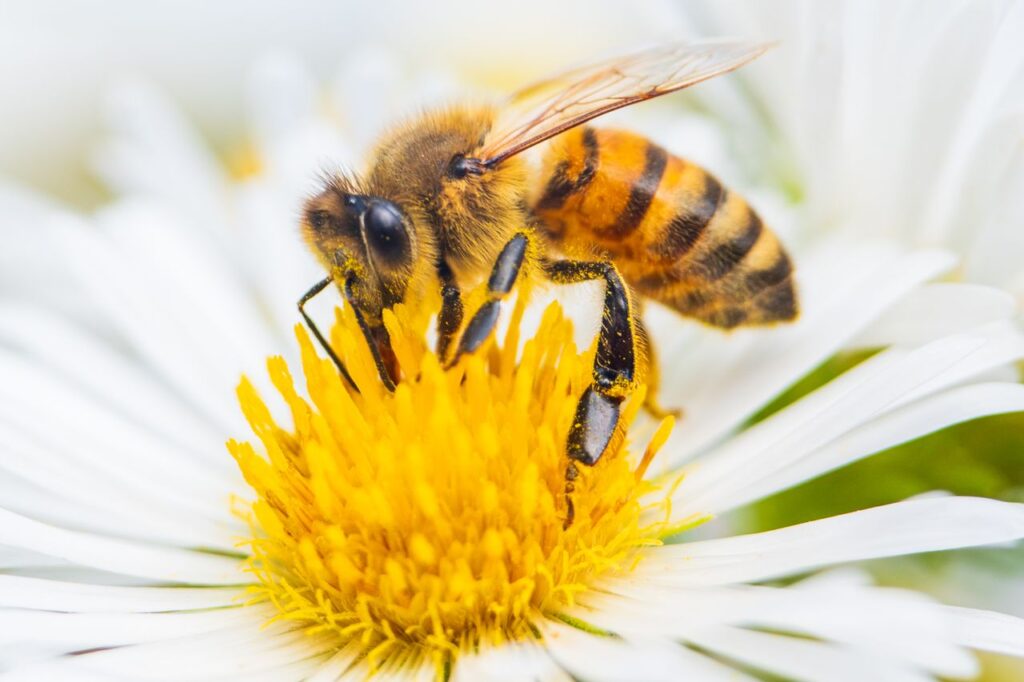
Improving pollination in an urban garden means making it easier for pollen to reach the flowers that need it.
Sometimes this happens naturally through:
bees,
other insects,
wind,
or movement of the plant.
Other times, particularly with cucumbers, pumpkins, gourds, and similar crops, gardeners may need to provide better conditions for pollinators or manually transfer pollen themselves.
Even a small Malaysian balcony, terrace-house garden, or raised-bed area can support good pollination if it provides the right combination of flowers, shelter, healthy plants, and safe growing conditions.
First, Understand Which Crops Need Help
Not every vegetable depends on pollination in exactly the same way.
Cucumbers, pumpkins, bitter gourds, bottle gourds, and many related crops commonly produce separate male and female flowers.
Pollen must reach the female flower for normal fruit development in varieties that require pollination.
Chillies, tomatoes, and brinjal have flowers containing both male and female reproductive structures.
They can often pollinate themselves, although movement from wind or insects can still help release and transfer pollen.
Knowing how your crop flowers helps you decide whether a pollination problem is likely.
Grow More Than Vegetables
One of the simplest ways to make an urban garden more attractive to pollinating insects is to include flowering plants alongside edible crops.
A garden containing only one cucumber vine may offer food to visiting insects for only a limited period.
A garden with several different flowers opening at different times provides a more consistent reason for pollinators to visit.
You do not need a huge flower garden.
Even a few containers can help.
Choose Flowers with Different Shapes
Different pollinating insects prefer different flower structures.
Instead of planting only one type of ornamental flower, create some variety.
Include plants with:
small clustered flowers,
open flat flowers,
herb flowers,
and different flower heights.
Flowering herbs can be particularly useful because they can serve both the kitchen and the garden.
Allowing some basil or other suitable herbs to flower occasionally can add another source of nectar or pollen.
Keep Something Flowering Regularly
A short burst of flowers is useful.
Continuous flowering is better.
Try to arrange the garden so that something is flowering during much of the period when your fruiting vegetables need pollination.
That may mean planting flowering plants in batches rather than all at once.
If every flower finishes before your cucumber starts producing female blooms, the timing is not particularly helpful.
Think of flowering plants as part of the garden system rather than decoration added afterwards.
Do Not Expect One Flower Pot to Solve Everything
Adding one flowering plant does not guarantee perfect pollination.
Pollinator activity also depends on:
the surrounding neighbourhood,
weather,
time of day,
garden accessibility,
pesticide exposure,
and which insects are naturally present.
Your goal is to make the garden more welcoming and easier to find.
It is not possible to command bees to visit a specific plant.
Avoid Unnecessary Insecticide Use
One of the fastest ways to make a garden unfriendly to pollinators is to spray insecticides unnecessarily.
This includes products marketed as natural or organic.
“Organic” does not automatically mean harmless to beneficial insects.
If a pest problem genuinely requires treatment:
identify the pest first,
use an appropriate product,
follow the label,
and pay close attention to instructions concerning flowering plants and pollinators.
Avoid casually spraying open flowers.
Treat Pest Problems Selectively
An urban garden rarely needs every plant sprayed because one leaf has a pest.
If only one plant has an infestation, manage that plant rather than automatically treating the entire garden.
Selective treatment helps preserve beneficial insects.
It can also prevent unnecessary chemical exposure on edible crops.
Integrated pest management is especially useful in pollinator-friendly gardens because it focuses on observation and targeted action rather than routine spraying.
Let Some Herbs Flower
Gardeners often remove herb flowers immediately because flowering can change the plant’s growth or leaf production.
But you do not necessarily need to stop every herb from blooming.
If you have several plants, allow one or two to flower while keeping others for regular harvest.
Small herb flowers can attract a variety of insects.
This gives your edible garden another function without requiring much extra space.
Make Flowers Easy to Reach
Pollinator-friendly plants should not all be hidden behind dense foliage.
On a balcony or terrace, position some flowering plants where visiting insects can easily see and access them.
That could be:
along the outer edge of a balcony,
beside a vegetable bed,
near a trellis,
or around the entrance to the garden area.
Avoid creating such dense growth that flowers become buried inside leaves.
Provide a Range of Heights
Urban gardens often use vertical space.
Pollinator plants can do the same.
You may have:
low flowering herbs,
medium-height flowers,
and climbing vegetables above them.
This creates more visual structure and can make the garden easier for insects to explore.
Just make sure taller plants are not shading vegetables that need strong sunlight.
Protect Flowers from Extreme Weather Where Practical
Malaysia’s heavy rain can interfere with pollination.
Flowers may become damaged, pollen may get wet, and pollinating insects may be less active.
You cannot control the weather, but garden design can help.
For container gardens, you may sometimes be able to position sensitive flowering plants where they receive strong light while avoiding the most violent direct rain.
Do not place them somewhere so enclosed that airflow disappears.
The goal is moderation, not complete shelter.
Heat Matters Too
Urban environments can become significantly hotter than surrounding greener areas.
Concrete walls, paved surfaces, rooftops, and metal railings absorb and reflect heat.
Severe heat can reduce flower quality and fruit set even if pollinators are present.
If your garden becomes extremely hot in the afternoon, consider:
better mulching,
consistent watering,
moving containers away from highly reflective surfaces,
or using appropriate shade during the harshest conditions where suitable for the crop.
Good pollination cannot compensate for flowers that are already being aborted because of severe stress.
Maintain Consistent Watering
A plant suffering from repeated drought stress may drop flowers before pollination has much chance to matter.
Keep soil moisture reasonably consistent during flowering.
This is especially important for pots and grow bags, which can dry quickly.
However, do not keep soil permanently saturated.
Waterlogged roots create a different kind of stress.
Healthy flowers begin with a healthy plant.
Provide Good Airflow
Urban gardens sometimes become packed with too many pots.
Crowding can reduce airflow and make flowers harder to access.
It can also create very humid conditions around the plant canopy.
Allow reasonable spacing between plants.
Train climbing vegetables onto trellises instead of letting vines collapse into dense piles.
Good airflow helps create a healthier flowering environment.
Wind Can Help Some Crops
Tomatoes and chillies do not rely on insects in exactly the same way as pumpkins and cucumbers.
Their flowers can often self-pollinate.
Gentle movement can help release pollen.
Outdoor wind may provide enough movement naturally.
In very sheltered locations, gently shaking or tapping the flower clusters can sometimes help.
There is no need to shake the plant aggressively.
A small amount of movement is enough.
Balconies Can Still Be Pollinator-Friendly
Apartment gardeners sometimes assume that bees will never reach upper floors.
Pollinating insects can visit balconies, although activity varies greatly depending on location and building height.
Make your balcony easier to discover by:
growing visible flowers,
avoiding unnecessary pesticides,
keeping plants healthy,
and maintaining flowers over time.
If visits remain limited, hand-pollination can act as a backup for crops that require it.
Do Not Create Standing Water for Pollinators
Providing water for wildlife sounds helpful, but Malaysia’s mosquito risk must be taken seriously.
Do not leave buckets, saucers, containers, or other stagnant water around the garden.
If you intentionally provide a small water source for insects, it must be designed and maintained so it does not become mosquito habitat.
Frequently refreshed shallow water with safe landing surfaces may be used carefully, but standing water should never be allowed to sit unmanaged.
Mosquito prevention takes priority.
Reduce Bare, Sterile Garden Design
A garden does not need to look messy to support useful insects.
But a completely sterile area containing only plastic pots and vegetables can offer limited habitat.
Adding:
flowering herbs,
a few flowering plants,
mulched soil,
and structural variety
can make the garden more biologically active.
The goal is not to turn a small balcony into wilderness.
It is simply to provide more than one resource.
Avoid Destroying Every Insect You See
Not every insect in the garden is a pest.
Many are harmless.
Some are predators.
Others may contribute to pollination.
Before killing an unfamiliar insect, identify it if possible.
A garden containing insects is not automatically an unhealthy garden.
A functioning edible garden often includes many organisms that are simply passing through.
Grow Flowers Near Crops That Need Pollination
If space permits, position pollinator-attracting flowers close to crops such as:
cucumber,
pumpkin,
bitter gourd,
and other gourds.
This does not guarantee that every insect will move directly from one flower to another.
But it helps concentrate flowering resources in the same area.
In a small urban garden, this can be easier than maintaining one separate ornamental section far away from the vegetables.
Grow More Than One Plant When Space Allows
For some crops, having multiple plants flowering at the same time can improve the availability of compatible pollen.
This can be especially helpful when individual vines do not produce male and female flowers in perfect synchronisation.
However, do not overcrowd the garden simply to increase plant numbers.
Two healthy, properly spaced vines are often better than six weak vines competing for the same small area.
Learn the Flowering Pattern of Your Crop
Improved pollination starts with observation.
With cucumbers and pumpkins, note:
when male flowers appear,
when female flowers begin,
what time they open,
and whether pollinators visit.
With chillies and tomatoes, watch whether flowers are being retained and whether small fruits begin developing.
The more closely you observe flowering, the easier it becomes to identify whether pollination is actually the problem.
Check the Garden in the Morning
Many cucurbit flowers are freshly open during the morning.
This makes morning a useful time to observe:
which flowers are male,
which are female,
whether bees are visiting,
and whether hand-pollination may be needed.
A five-minute morning inspection can tell you much more than looking at the vine after the flowers have already closed.
Use Hand-Pollination as a Backup
If natural pollination is unreliable, manual pollination can be very effective for small gardens.
For cucumber, pumpkin, and many gourds:
find a freshly opened male flower,
collect fresh pollen,
and gently transfer it to the stigma of a freshly opened female flower.
This is especially useful when you only have one or two vines and every female flower matters.
Hand-pollination should complement a healthy garden, not replace it entirely.
Do Not Assume Every Failed Fruit Is a Pollination Failure
If a tiny cucumber or pumpkin turns yellow and drops, poor pollination is one possibility.
But fruit can also fail because of:
water stress,
heat,
root problems,
disease,
or severe plant weakness.
If hand-pollination is successful but developing fruits continue aborting, investigate the rest of the plant.
Pollination is only one stage in fruit production.
Track Fruit Set
A simple garden journal can help.
For example:
Week 1: 8 female cucumber flowers, 2 fruits developing.
Week 2: added more flowering plants.
Week 3: 10 female flowers, 5 fruits developing.
This does not prove that the flowers alone caused the improvement, but it helps you observe patterns.
You can also record rain, heat, hand-pollination, or pollinator visits.
Over time, your own garden will show you what works.
Build Pollination Into the Garden Design
The easiest way to improve pollination is not to wait until fruit fails.
Include it in the garden from the beginning.
When planning an edible garden, think about:
vegetables,
flowering herbs,
pollinator-friendly flowers,
plant spacing,
airflow,
water,
and safe pest management
as parts of the same system.
Pollination becomes easier when the environment supports it naturally.
A Simple Urban Pollination Checklist
To improve pollination:
1. Grow several flowering plants or herbs.
2. Try to keep something flowering regularly.
3. Avoid unnecessary insecticide use.
4. Keep open flowers accessible.
5. Maintain healthy, consistently watered crops.
6. Avoid excessive crowding.
7. Watch flowering during the morning.
8. Learn which crops have separate male and female flowers.
9. Hand-pollinate when natural activity is unreliable.
10. Avoid standing water that could become mosquito habitat.
You do not need a large garden to do these things.
Small Gardens Can Still Have Excellent Pollination
Urban gardening does not automatically mean poor pollination.
A carefully planted terrace garden or balcony can become a useful feeding stop for many insects.
What matters is whether the space offers:
flowers,
safe conditions,
healthy plants,
and repeated opportunities to visit.
One well-designed small garden may be more useful than a much larger space containing no flowering diversity.
At the end of the day, improving pollination in an urban garden is about creating a garden where flowers are healthy, pollen can move, and pollinating insects have a reason to keep visiting. Grow a mixture of edible crops and flowering plants, avoid unnecessary pesticide use, manage Malaysia’s heat and heavy rain, keep plants properly watered, and learn which crops may need a helping hand. When natural pollination is unreliable, hand-pollination gives small-space gardeners another practical way to turn flowers into harvests.
Growing vegetables in a balcony, terrace house, rooftop, or other urban space? Tag @projectharvest.my on Instagram and show us the flowers, pollinating insects, cucumber vines, pumpkins, chillies, or other crops in your urban garden. We would love to see how Malaysian gardeners are turning small city spaces into productive gardens where both vegetables and pollinators can thrive.
Creating a pollinator-friendly urban garden is a great way to improve vegetable production, even in small spaces. I especially appreciate the emphasis on avoiding unnecessary pesticides and growing different flowering plants to attract beneficial insects. The practical tips on hand-pollination and observing flowers in the morning are also helpful for gardeners who want to improve their harvests.