
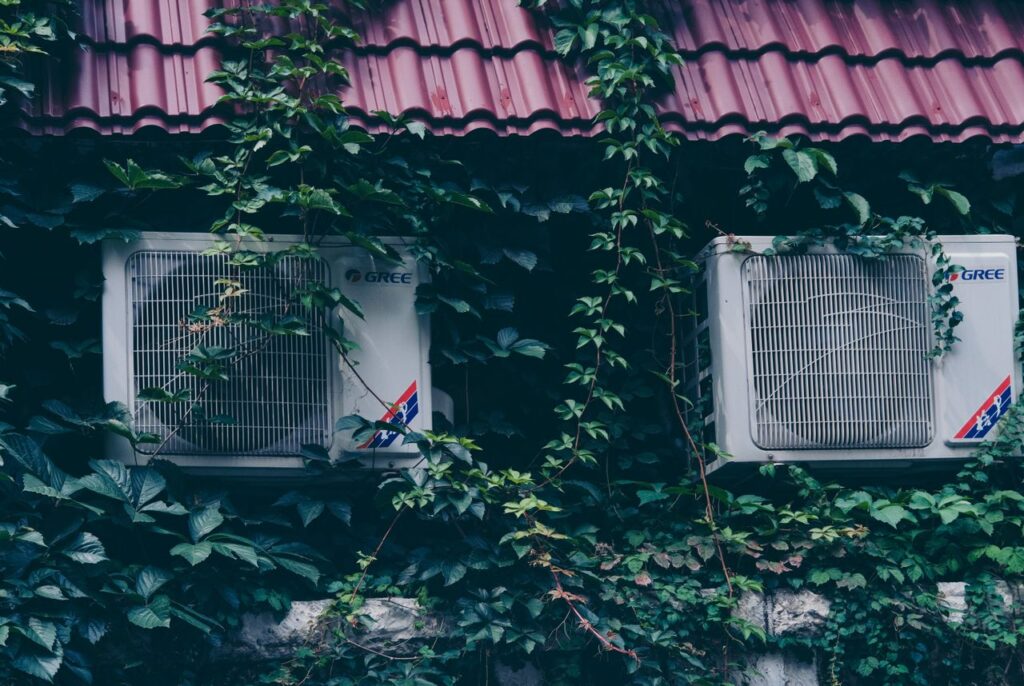
If you have ever noticed water steadily dripping from the drainage pipe of an air-conditioner, you may have wondered whether that water could be collected and used in the garden instead of disappearing into a drain.
The answer is yes, in many situations air-conditioner condensate can be used for irrigation.
Air-conditioning systems remove moisture from humid indoor air. When that moisture condenses on the cold cooling coil, it becomes liquid water that flows into a drain pan and eventually exits through the condensate pipe.
Because Malaysia is warm and humid and many homes run air-conditioning regularly, that can potentially create a useful secondary source of garden water.
But there are a few important limitations.
AC condensate should not automatically be treated as drinking water, and the cleanliness of the air-conditioning system and collection method matters.
Where Does Air-Conditioner Water Come From?
An air-conditioner cools warm indoor air by passing it over a cold coil.
As the air cools, some of the water vapour it contains condenses into droplets — similar to the water forming on the outside of an iced drink.
Those droplets collect in the air-conditioning unit’s drain pan and flow outside through a drainage pipe.
The water did not come from your household plumbing supply.
It came from humidity in the air.
This means it usually contains relatively little dissolved mineral content compared with many tap-water sources. Utah State University Extension describes AC condensate as low in dissolved salts and potentially useful for landscape irrigation.
Is AC Condensate Good for Plants?
For ordinary irrigation, it can be.
Low salt levels can actually be beneficial for plants that are sensitive to mineral accumulation, particularly container plants where salts can build up in the potting mix over time.
AC condensate also avoids using treated mains water for every gardening task.
Large buildings already capture condensate for landscape irrigation, demonstrating that this water can have practical value as a non-potable irrigation source.
However, low mineral content does not mean the water is automatically sterile or perfectly pure.
That distinction is important.
It Is Not the Same as Laboratory Distilled Water
You may hear AC condensate described as almost distilled water.
The comparison makes sense because both originate from condensed water vapour and generally contain relatively few dissolved salts.
But water passing through an air-conditioning system comes into contact with coils, drain pans, pipes, dust, microorganisms, and other surfaces.
Research by the US Environmental Protection Agency found that untreated air-conditioning condensate can support bacterial growth and, in some systems, contained opportunistic microorganisms including Legionella. Metals were generally low, although elevated copper and lead were detected at one location with older plumbing materials.
So think of AC condensate as potentially useful irrigation water, not purified drinking water.
Should You Use It on Edible Plants?
For a home edible garden, the more cautious approach is to use collected condensate at soil level.
Water the soil around chillies, brinjal, curry leaf, herbs, fruit trees, and other plants rather than repeatedly spraying untreated condensate across leaves, fruits, or vegetables that will be eaten.
Drip irrigation is particularly useful because it keeps water near the root zone and minimises aerosol formation. Utah State University Extension specifically recommends drip application as a safer approach because of the small possibility of microorganisms such as Legionella occurring in condensate systems.
Do not use untreated AC condensate to wash vegetables after harvest.
Water used for washing produce requires a much higher microbiological standard.
Keep the Air-Conditioner Clean
The quality of the collected water depends partly on the condition of the air-conditioning system.
Cooling coils and condensate trays can accumulate dust, slime, mould, and microbial growth when maintenance is neglected.
A properly serviced unit with a clean drain system is therefore a much better source than one producing foul-smelling or discoloured condensate.
If the water has:
a strong smell,
visible slime,
unusual colour,
oil contamination,
or debris,
do not automatically pour it onto edible plants.
Have the air-conditioning system inspected and cleaned.
The goal is to reuse a waste-water stream responsibly, not rescue every drop regardless of condition.
Collect It Directly from the Drain Pipe
For a simple Malaysian home setup, locate the condensate drain outlet and direct it into a clean container.
Do not collect water from a dirty drain, roof gutter, floor channel, or area where the condensate has already mixed with other runoff.
Direct collection gives you much more control over what enters the container.
Plastic tubing and containers are generally practical because very low-mineral water can be mildly corrosive to certain metals over long periods.
Do Not Create Another Mosquito Problem
This is especially important in Malaysia.
If you collect condensate into a bucket and leave it open for days, you have created standing water.
Use the water promptly or collect it inside a covered container that mosquitoes cannot access.
If the container has an inlet, overflow, or vent, make sure openings are appropriately protected.
The same mosquito-prevention principles that apply to rainwater tanks apply here too.
Saving irrigation water is useful.
Creating mosquito breeding habitat is not.
Fresh Use Is Simpler Than Long-Term Storage
For a small home system, using the condensate reasonably soon after collection is often easier than storing large quantities for long periods.
You might direct the pipe into a covered watering container and use the water on pots that evening or the following morning.
If you want to build a larger permanent storage system, water quality and maintenance become more important because microorganisms can multiply during storage.
EPA research on condensate reuse highlights microbial instability as one of the considerations when untreated condensate is collected and stored.
The larger and more complicated the reuse system becomes, the more carefully it should be designed.
Does AC Water Contain Plant Nutrients?
Very little.
That is another common misunderstanding.
Low-mineral condensate may be useful as water, but it is not fertiliser.
Your chilli plant still needs nitrogen, phosphorus, potassium, micronutrients, and the other nutrients required for healthy growth.
Using AC condensate does not replace compost or an appropriate fertiliser programme.
Think of it exactly as its name suggests:
an alternative water source.
Could Very Low-Mineral Water Cause Problems?
Using AC condensate occasionally or as part of normal garden watering is unlikely to suddenly create nutrient deficiency because plants obtain most essential mineral nutrients from their soil or growing medium rather than irrigation water alone.
However, container plants grown in limited media still need appropriate fertilisation.
If AC condensate becomes your main irrigation source, pay attention to overall plant nutrition rather than assuming the water itself contributes useful calcium, magnesium, or other minerals.
For most soil-grown garden plants, this is simply another reason to maintain healthy soil and a balanced feeding programme.
Which Plants Could You Use It On?
If the condensate is being collected from a clean, well-maintained system, it can potentially be used at soil level for many common home-garden plants, including:
chillies,
brinjal,
curry leaf,
pandan,
ornamental plants,
fruit trees,
herbs,
and established vegetables.
For plants with edible leaves that are consumed raw, directing the water towards the soil rather than spraying the foliage provides a more cautious approach.
Ornamental plants are another straightforward use if you would rather reserve tap or rainwater for edible crops.
Can You Connect It to Drip Irrigation?
Potentially, yes.
If your air-conditioner produces condensate regularly, it can be collected into a suitable covered storage container and then delivered through drip irrigation.
But remember that a household air-conditioner does not necessarily produce water at the exact time your plants need irrigation.
Production depends on humidity, air-conditioning use, equipment size, and operating conditions.
You therefore need some form of storage if you want to turn intermittent condensate into a reliable irrigation supply.
Filters may also be needed to prevent debris from blocking very small emitters.
For a few pots, collecting the water and using a watering can may be much simpler.
Is It Worth Doing in Malaysia?
Potentially, very much so.
Our humid climate means air-conditioners can generate noticeable condensate during operation.
If the drainage pipe is already located beside your garden, directing that water into a clean covered container may require very little effort.
Suppose the water would otherwise flow directly into a drain.
Using even part of it for ornamental plants, fruit trees, or soil-level vegetable irrigation means you are making use of water that your home has already removed from the air.
There is no need to build an elaborate recycling system immediately.
Start by measuring how much your air-conditioner actually produces over several hours of normal operation.
You may discover that it is barely enough for a few pots — or that you have been sending a surprisingly useful quantity of irrigation water straight down the drain.
What Should You Avoid?
Do not drink untreated AC condensate.
Do not use it for washing harvested vegetables.
Do not spray questionable condensate over edible produce.
Do not use water that smells bad or appears contaminated.
Do not collect it in open containers where mosquitoes can breed.
Do not assume it provides fertiliser.
And do not allow enthusiasm for recycling water to replace normal air-conditioner maintenance.
Those simple rules keep the idea practical.
Start with a Small Experiment
Before redesigning your entire irrigation system, try one simple experiment.
Place a clean covered container under the condensate outlet for a normal period of air-conditioner use.
Measure how much water is collected.
Check that it looks and smells normal.
Then use it to water the soil around several established plants.
This tells you whether condensate reuse is even worthwhile for your particular home.
If you collect enough consistently, you can later consider connecting it to storage or drip irrigation.
If you only collect a small amount, use it directly and keep the system simple.
At the end of the day, air-conditioner condensate can be a useful secondary irrigation source for Malaysian home gardens, particularly when it would otherwise flow straight into a drain. Collect it directly from a clean, well-maintained system, keep storage containers covered, apply it preferably to the soil rather than spraying edible foliage, and remember that low-mineral water is not the same thing as sterile water or fertiliser. Used sensibly, even the humble drip from your air-conditioner can become one more way to reduce unnecessary water waste at home.
Does your air-conditioner send litres of condensation straight into the drain every day? Try measuring what you collect and show us what you discover. Tag @projectharvest.my on Instagram with your AC-water collection setup, covered container, irrigation experiment, or the plants benefiting from water that would otherwise have been wasted. Your little recycling experiment might inspire another Malaysian gardener to look at that dripping air-conditioner pipe very differently.