
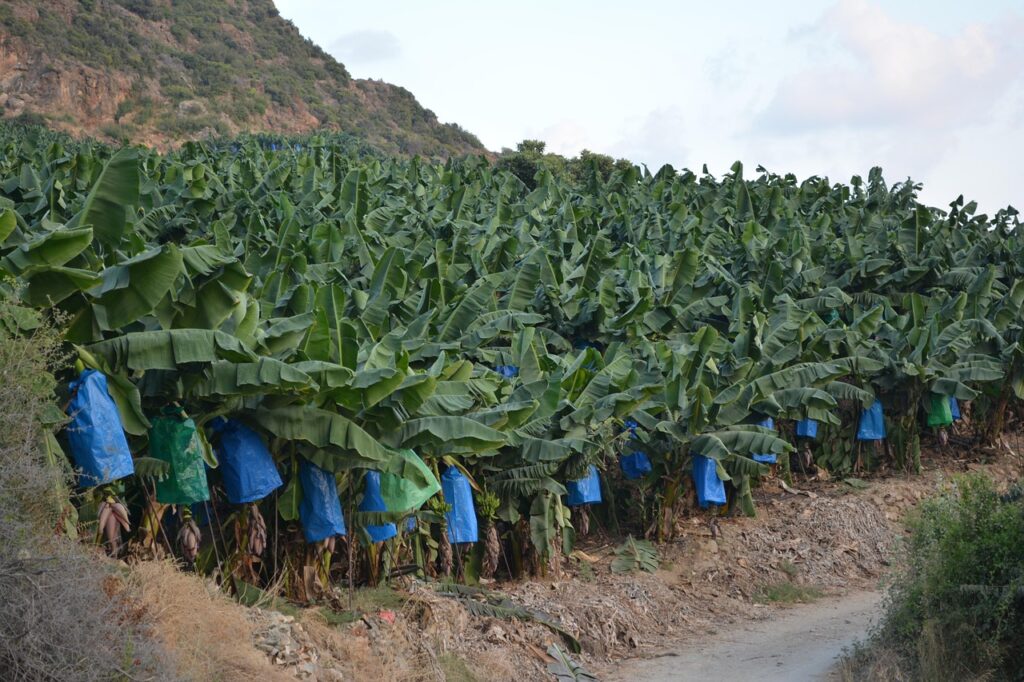
Fruit bagging means covering an individual developing fruit with a protective bag or sleeve so insects, birds, and other pests have more difficulty reaching it.
For Malaysian home gardeners, bagging can be especially useful for crops that repeatedly suffer from:
fruit fly damage,
bird pecking,
insect feeding,
or physical scarring.
Instead of treating the whole plant with repeated sprays, you create a physical barrier around the fruit itself.
But the bag has to be used properly.
If it is too tight, poorly ventilated, installed on damaged fruit, or left soaking wet in Malaysia’s humid conditions, the protected fruit may still develop problems.
Fruit Bagging Works by Excluding Pests
A fruit bag does not kill pests.
It simply prevents many of them from reaching the fruit.
This makes bagging a useful part of integrated pest management, where physical barriers, monitoring, sanitation, biological activity, and carefully chosen treatments are combined instead of relying entirely on pesticides.
For a small home garden, protecting individual fruits can sometimes be much easier than repeatedly treating an entire plant.
Which Fruits Can Be Bagged?
Bagging can be used on many home-grown crops, depending on their size and growth habit.
Examples may include:
guava,
mango,
star fruit,
some citrus,
brinjal,
certain gourds,
and other fruits that are practical to enclose individually.
Larger fruits may need purpose-made bags.
Small clustered fruits can be harder to protect individually.
The method is most useful when each fruit is large enough to bag separately and valuable enough to justify the extra effort.
Fruit Flies Are One of the Main Reasons to Bag
Fruit flies can be a major problem in tropical gardens.
Adult females may lay eggs into suitable developing fruit.
Once the larvae are inside, external sprays usually cannot simply reverse the damage.
Bagging works best by preventing the adult fly from reaching the fruit in the first place.
This means timing matters.
If the pest has already laid eggs before the fruit is bagged, covering it afterwards will not remove the infestation.
Inspect Before You Bag
Never automatically bag every fruit without checking it.
Look for:
small puncture marks,
soft patches,
rot,
insect damage,
disease symptoms,
cracks,
or unusual discoloration.
Only bag healthy developing fruit.
If a fruit already appears badly damaged, removing it may be more useful than covering it.
Bagging a damaged fruit can hide the problem until it becomes much worse.
Bag After Successful Fruit Set
The fruit should normally be established enough that you know it has successfully set and started growing.
Bagging extremely early may interfere with flowers or pollination.
For flowering crops, wait until pollination has occurred and the fruit has begun developing.
The exact timing depends on the species.
A young guava, for example, may be bagged at a different stage from a brinjal or gourd.
The general principle is:
pollinate first, protect the developing fruit next.
Do Not Bag Open Flowers That Still Need Pollination
This is particularly important for cucumbers, pumpkins, and gourds.
If the flower still needs pollen transfer, enclosing it too soon may prevent insects from reaching it.
Let pollination happen first.
Once the fruit clearly begins enlarging, you can consider protection if the crop is suitable for bagging.
Choose Breathable Material
In Malaysia’s hot, humid climate, airflow is extremely important.
A fruit bag should protect the fruit while still allowing some movement of air.
Common options may include:
fine mesh bags,
purpose-made fruit protection bags,
breathable fabric,
or suitable perforated bags designed for horticultural use.
The material should not create a sealed humid chamber around the fruit.
Avoid Sealed Plastic Bags
Ordinary airtight plastic bags are usually a poor choice.
They can trap:
heat,
humidity,
condensation,
and rainwater.
This creates conditions that may encourage rot and disease.
A clear plastic bag can also become surprisingly hot when exposed to direct sun.
If a protective material does not breathe or drain, think carefully before placing it around developing fruit.
Fine Mesh Can Work Well
Fine mesh bags are popular because they allow:
airflow,
light,
and drainage
while creating a physical barrier.
But mesh size matters.
If the openings are too large, small insects may still enter.
If the mesh is extremely fine and becomes pressed tightly against the fruit, certain insects may still reach through or moisture may remain against the surface.
Choose a bag large enough that the material does not cling tightly to the developing fruit.
The Bag Must Be Bigger Than the Mature Fruit
Fruit grows.
A bag that fits perfectly today may become restrictive later.
Leave enough space for the fruit to reach its expected mature size.
The bag should hang around the fruit rather than squeeze it.
For larger fruits, check during development and replace the bag if necessary.
Secure the Opening Properly
The top of the bag needs to close around the fruit stem or branch closely enough that pests cannot simply crawl inside.
Depending on the bag design, you may use:
a drawstring,
soft tie,
clip,
or built-in closure.
Do not tighten it aggressively around a soft fruit stem.
The fruit still needs an intact connection to the plant.
Do Not Strangle the Fruit Stem
A tight tie can damage expanding stems or fruit stalks.
Leave a little room.
You want the pest barrier closed without compressing living tissue.
If the stem thickens as the fruit grows, check the closure and loosen it if necessary.
Make Sure Rainwater Can Escape
During Malaysian thunderstorms, bags can become wet.
A good fruit bag should drain quickly.
Water should not collect inside the bottom.
If the bag acts like a small bucket around the fruit, redesign the setup.
Persistent moisture against fruit skin can encourage rot and fungal problems.
Check the Bag After Heavy Rain
Do not assume that once a fruit is bagged, you can forget about it.
After periods of heavy rain, inspect the bags.
Check whether:
water has accumulated,
the material is staying soaked,
the fruit has developed spots,
the closure has loosened,
or the bag has torn.
A quick inspection can prevent a small issue from turning into a lost fruit.
Humidity Inside the Bag Matters
Even breathable material can become problematic if the bag is packed tightly around the fruit.
Leave some air space.
This is particularly important when growing in already humid areas with poor airflow.
If the plant itself is extremely crowded, fruit bagging can make that microclimate even more humid.
Good plant spacing and pruning where appropriate still matter.
Bagging Can Help Against Birds
Birds may peck ripening fruits.
A suitable physical barrier can reduce access.
However, flimsy bags may be torn.
For larger fruits or persistent bird pressure, stronger mesh or another appropriate barrier may be needed.
Bagging individual fruits can be much more practical than covering an entire tree in a small home garden.
Squirrels and Larger Animals Are Harder
A thin fabric bag is not guaranteed protection against squirrels, rats, monkeys, or other larger animals.
These animals may:
tear bags,
bite through mesh,
or remove the fruit entirely.
Fruit bagging is most effective against insects and light bird pressure.
Larger-animal problems may require stronger exclusion methods or broader garden management.
Bagging Can Reduce Cosmetic Damage
Fruit bags can also protect against:
scratching,
insect scarring,
and some wind-related rubbing.
This can result in cleaner-looking harvests.
But do not confuse appearance with food quality.
A slightly scarred home-grown fruit may still be perfectly usable.
Bagging should solve a genuine problem, not create unnecessary work simply to produce supermarket-perfect fruit.
Bagging Does Not Protect the Whole Plant
A covered fruit may be safe while the rest of the plant still has:
aphids,
mites,
thrips,
caterpillars,
or disease.
Continue inspecting leaves, stems, and flowers.
Fruit bagging is one layer of protection, not a complete pest-management programme.
Keep the Garden Clean
If fruit flies are a problem, sanitation is extremely important.
Remove:
fallen fruit,
rotting fruit,
badly infested fruit,
and overripe produce.
Do not leave damaged fruits underneath the tree or vine where pests can continue developing.
Physical barriers work much better when pest breeding sites are also reduced.
Dispose of Infested Fruit Carefully
If a fruit contains larvae, simply dropping it into an open compost pile or garden corner may allow the pest life cycle to continue.
Handle infested fruit in a way that prevents pests from emerging and returning to the garden, according to appropriate local waste-management practices.
Do not assume ordinary home composting will automatically eliminate every pest stage.
Do Not Spray Inside the Bag Without a Reason
Once fruit is enclosed, do not routinely spray pesticide or homemade mixtures inside the bag.
The enclosed environment can increase contact between residues and the fruit.
If a pesticide is genuinely necessary, use only a product appropriate for the crop and pest and follow the label, including:
application instructions,
pre-harvest intervals,
and safety requirements.
Physical protection is often used specifically to reduce the need for direct treatment of fruit.
“Natural” Sprays Are Not Automatically Safer
Homemade chilli sprays, dishwashing liquid mixtures, essential oils, and similar remedies are often promoted online.
These are not automatically harmless to plants, fruit, beneficial insects, or people.
Some mixtures can damage foliage or leave unwanted residues.
Bagging is valuable partly because it provides a physical approach that may reduce the need for improvised treatments.
Keep Supporting Heavy Fruit
Some fruits become much heavier as they develop.
The bag should not become the support structure unless it is specifically designed for that purpose.
If a pumpkin, gourd, or other heavy fruit is growing vertically, it may need a separate sling.
The bag protects against pests.
The sling carries the weight.
These are different jobs.
Label Bagged Fruit if Useful
If you are comparing varieties or treatments, attach a small label nearby.
You might record:
date bagged,
fruit variety,
or whether it was hand-pollinated.
For example:
Guava A — bagged 20 October
This allows you to estimate development time and compare bagged fruit with unbagged fruit.
Check the Fruit Regularly
Do not leave it completely hidden until harvest.
Inspect occasionally for:
rot,
condensation,
pest entry,
stem damage,
or bag restriction.
With mesh bags, inspection may be easy without removal.
With less transparent materials, open carefully when necessary and reseal afterwards.
When Should You Remove the Bag?
This depends on the crop and reason for bagging.
For some fruits, protection can remain until close to harvest.
For others, the bag may be removed as the fruit approaches maturity.
If birds or fruit flies remain a serious risk, removing protection too early may defeat the purpose.
Learn the harvest stage of the specific crop you are growing.
Bagging Can Affect Fruit Colour
Opaque bags reduce direct light reaching the fruit.
For some crops, this may influence skin colour or appearance.
Commercial growers sometimes deliberately use different bag types for specific fruit-quality effects.
For an ordinary home garden, pest exclusion is usually the priority.
If colour development matters for your crop, choose the bag material accordingly.
Do Not Bag Every Fruit If You Are Unsure
A simple home-garden experiment can be useful.
Bag:
five fruits,
and leave five comparable fruits unbagged.
Then compare:
pest damage,
fruit quality,
rot,
and harvest success.
This tells you whether bagging is actually useful in your garden.
If almost no pest damage occurs on uncovered fruit, you may not need to spend time bagging everything.
Fruit Bagging Is Most Valuable When You Know the Enemy
Before using bags, ask what you are protecting against.
If the problem is:
fruit flies,
birds,
surface-feeding insects,
or physical damage,
bagging may help.
If the problem is:
root disease,
poor pollination,
nutrient deficiency,
or water stress,
a bag will do nothing.
Correct diagnosis prevents wasted effort.
A Simple Fruit-Bagging Routine
For home gardeners:
1. Wait until the fruit has successfully set.
2. Inspect it for existing pest or disease damage.
3. Choose a clean, breathable bag large enough for mature fruit.
4. Place it gently around the fruit.
5. Secure the opening without damaging the stem.
6. Make sure air and rainwater can move through the material.
7. Check the bag after storms and as the fruit enlarges.
8. Remove damaged fruits promptly.
9. Keep fallen and infested fruit out of the garden.
10. Harvest at the correct stage for the crop.
This simple process can significantly reduce losses when bagging is suited to the pest.
Bagging Works Best as Part of a Bigger System
The strongest approach combines:
healthy plants,
good garden sanitation,
regular pest inspection,
pollinator-friendly practices,
physical barriers,
and responsible pesticide use only when needed.
Do not rely on one method for everything.
A fruit bag protects an individual fruit.
Good garden management protects the crop as a whole.
At the end of the day, fruit bagging can be one of the most practical ways for Malaysian home gardeners to protect valuable developing fruits without repeatedly treating the whole plant. The key is to bag healthy fruit after successful fruit set, use breathable material, leave room for growth, keep rainwater and humidity from becoming trapped, and continue inspecting the fruit until harvest. Used properly, a simple physical barrier can reduce damage from fruit flies, insects, birds, and other pests while keeping pest management more targeted.
Have you tried bagging guava, brinjal, gourds, mangoes, or another home-grown fruit? Tag @projectharvest.my on Instagram and show us the bag material you used, when you covered the fruit, and how it looked at harvest. We would love to compare the practical fruit-protection methods Malaysian home gardeners are using — including the ones that worked brilliantly and the ones that taught you what to change next time.