
Sometimes, but not always.
Fruit thinning means deliberately removing some young developing fruits so the plant can direct more resources toward the fruits that remain.
It can be useful when a plant is carrying more fruit than it can reasonably support, when branches are at risk of breaking, or when larger, better-quality individual fruits are more important than maximum fruit count.
But many home-grown vegetables do not need routine thinning.
Removing healthy chillies, okra pods, cucumbers, or brinjals simply because a plant is carrying several fruits can reduce your total harvest without providing much benefit.
The decision should depend on the crop, plant condition, fruit load, and your goal.
Why Would Anyone Remove Healthy Fruit?
At first, fruit thinning sounds wasteful.
After all, you spent weeks trying to get flowers pollinated and fruits developing.
Why remove them now?
Because every developing fruit competes for resources.
A plant has a limited amount of:
water,
carbohydrates,
nutrients,
and leaf area.
When many fruits develop at once, those resources are divided among them.
For some crops, reducing the number of fruits can allow the remaining ones to grow larger or more evenly.
It can also reduce structural strain on branches.
Fruit Thinning Is More Important in Some Crops Than Others
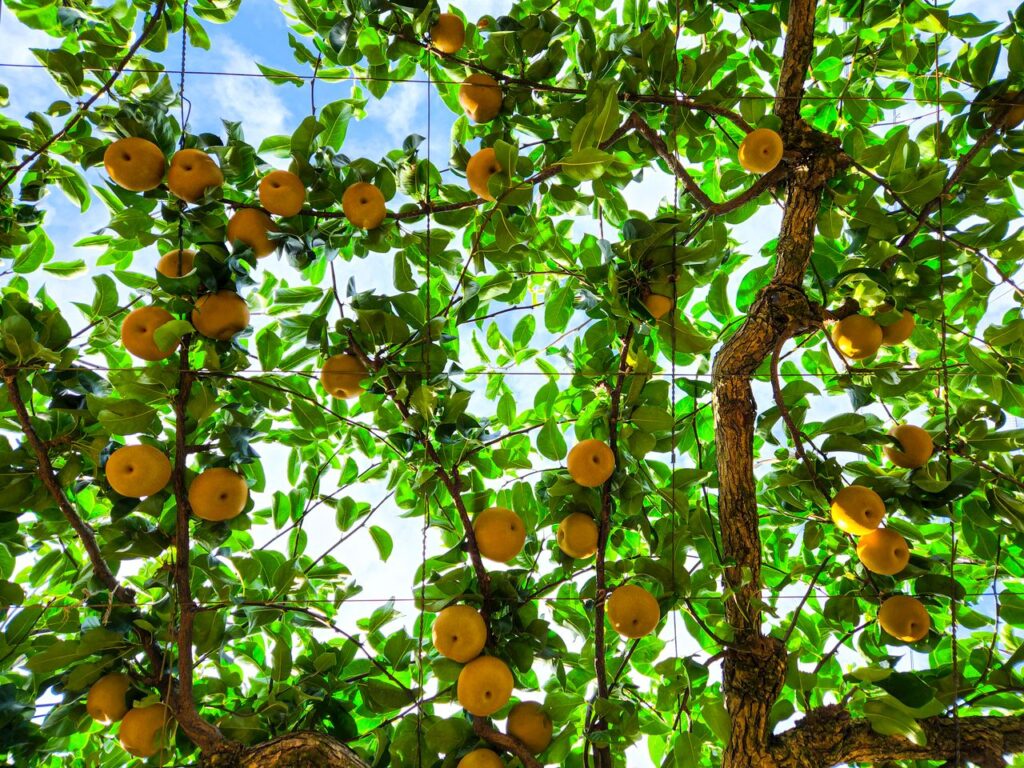
Fruit thinning is widely used with certain fruit trees because those trees may naturally set far more fruit than they can carry to good size.
For example, some:
apples,
peaches,
pears,
citrus,
and other fruit trees
may benefit from selective thinning under appropriate conditions.
In a Malaysian home garden, the situation is different depending on what you grow.
Tropical fruit trees, container fruit trees, and vegetable crops each need to be considered separately.
There is no universal rule that every fruiting plant should be thinned.
Most Chilli Plants Do Not Need Routine Fruit Thinning
Chillies can often carry many fruits naturally.
If the plant is:
healthy,
well watered,
well lit,
properly fertilised,
and supported,
there is usually no reason to remove healthy chillies just to increase fruit size.
Fruit size is strongly influenced by variety and genetics.
If you are growing a naturally small-fruited chilli, thinning half the crop will not transform it into a large chilli variety.
Improve the growing conditions first.
Brinjal Usually Does Not Need Routine Thinning Either
Brinjal plants can carry multiple developing fruits.
A healthy mature plant generally manages its fruit load reasonably well.
However, there are exceptions.
If one branch is carrying several very large fruits and beginning to bend dangerously, removing one fruit may reduce mechanical stress.
But support may be a better first step.
Use stakes or branch supports before assuming fruit removal is necessary.
Tomatoes Depend on Variety and Growing System
Tomato management is more complicated.
Small-fruited cherry tomatoes usually do not need fruit thinning.
The plant naturally carries clusters of many fruits.
Large-fruited tomato varieties may sometimes benefit from selective fruit thinning if the grower is aiming for particularly large, uniform fruit.
Home gardeners, however, usually do not need to remove tomatoes routinely.
If your priority is total harvest rather than competition-sized individual tomatoes, keeping healthy fruits is often perfectly reasonable.
Cucumbers Usually Regulate Their Own Load
Healthy cucumber vines generally do not require gardeners to remove developing cucumbers routinely.
The plant may naturally abort fruits that it cannot support.
If you see young cucumbers turning yellow and falling, do not automatically assume there are too many fruits.
Poor pollination, heat, water stress, or root problems may be responsible.
Removing healthy cucumbers will not fix those problems.
Pumpkins and Large Gourds Are Different
Large-fruited cucurbits may sometimes benefit from selective fruit management.
A pumpkin vine carrying several developing fruits must divide its resources among them.
If your goal is a few larger pumpkins, limiting fruit number can sometimes help.
If your goal is simply a reasonable household harvest, you may prefer to let the vine carry what it can naturally sustain.
The appropriate number depends on:
variety,
vine size,
root health,
sunlight,
water,
and growing space.
Avoid following rigid advice such as “one pumpkin per vine” without considering the actual variety and plant.
Fruit Trees Are Where Thinning Matters More
Fruit trees can sometimes set extremely heavy crops.
When too many fruits remain on a branch, several problems can occur:
fruit stays small,
branches bend or break,
fruit quality becomes inconsistent,
and the tree may use enormous resources supporting one crop.
Some species may also show more irregular production in later seasons after an exceptionally heavy crop.
Selective thinning can help balance that load.
However, recommendations vary greatly by fruit species.
A mango, citrus, guava, mulberry, and temperate fruit tree should not all be managed using the same rule.
Young Fruit Trees May Need Special Treatment
A newly planted or recently established fruit tree may flower and set fruit before its root system and canopy are fully developed.
It can be tempting to keep the first fruit.
Sometimes that is fine.
But on a very young or weak tree, carrying a heavy crop may slow vegetative establishment.
Removing some or even all early fruit can sometimes allow the tree to focus on roots and structure.
This is crop- and situation-dependent.
Do not automatically strip fruit from every young tree.
Consider its health, size, and species.
Thinning Can Help Prevent Branch Breakage
One of the clearest reasons to remove fruit is structural safety.
If a branch is carrying so much fruit that it is:
bending sharply,
splitting,
or pulling away from the main stem,
you have two options:
support the branch,
or reduce the fruit load.
Often, using a stake, sling, or branch support is enough.
If the branch remains dangerously overloaded, selective thinning may be justified.
Losing one fruit is better than losing an entire branch.
Remove Damaged Fruit First
If thinning is necessary, start with fruit that is already unlikely to become a good harvest.
Remove fruits that are:
badly deformed,
severely pest-damaged,
diseased,
cracked beyond recovery,
or physically injured.
This allows the plant to direct resources toward healthier fruits.
Do not remove the healthiest fruit while leaving a badly damaged one simply because the damaged fruit appeared first.
Small or Poorly Positioned Fruits Can Be Next
If further thinning is still required, consider fruit that is:
unusually small,
crowded tightly against another fruit,
trapped between branches,
or positioned where it is likely to cause damage as it enlarges.
Spacing developing fruits can improve airflow and reduce physical rubbing in some crops.
Again, this matters more in certain fruit trees and large-fruited crops than in small vegetables.
Do Not Thin Immediately After Every Flower Sets
Young fruit naturally drops on many plants.
A fruit tree may set many flowers but shed part of the crop naturally during early development.
If you thin too aggressively before seeing what the plant retains, you may end up with far fewer fruits than necessary.
Observe first.
Let the plant complete some of its natural fruit drop before making major decisions where appropriate.
The Plant May Already Be Thinning for You
Natural fruit abortion is normal.
Plants may shed young fruit because:
pollination was incomplete,
conditions were stressful,
resources were limited,
or the plant simply cannot support everything that initially set.
This is not always a problem that needs fixing.
If a plant is already shedding excess fruit naturally, additional manual thinning may be unnecessary.
Fruit Size Is Not the Same as Total Yield
This distinction matters.
Suppose one plant produces:
20 fruits weighing 100 grams each.
Another management method gives:
12 fruits weighing 140 grams each.
The second fruits are larger, but total harvest may actually be lower.
That is why “bigger fruit” does not automatically mean “better yield.”
For a home gardener feeding a household, total usable harvest may matter more than individual fruit size.
Decide What You Actually Want
Before thinning, ask:
Do I want the largest possible fruit?
Do I want the highest total harvest?
Am I protecting weak branches?
Am I growing for household use?
Am I trying to improve fruit quality?
Is the plant young and struggling?
The answer changes what you should do.
Fruit thinning should have a specific purpose.
Heavy Fruit Load Can Slow Vegetative Growth
A plant directing large amounts of energy toward fruit may produce less new vegetative growth.
That is not necessarily bad.
Fruit production is the reason you are growing many of these crops.
But if a young perennial plant is heavily fruiting before it has developed enough structure, reducing the crop load can sometimes help long-term growth.
This principle is more relevant to young fruit trees than short-lived annual vegetables.
Do Not Use Fruit Thinning to Compensate for Poor Growing Conditions
If your fruits are small because the plant has:
poor sunlight,
root restriction,
irregular watering,
or severe nutrient problems,
removing half the fruit may not solve the underlying issue.
Correct the growing environment first.
Fruit thinning should not become a shortcut for fixing poor plant care.
Fertiliser Is Not a Substitute for Thinning Either
The opposite mistake is trying to support an overloaded plant by adding excessive fertiliser.
A plant can only use nutrients effectively when other conditions are suitable.
Too much fertiliser can lead to:
salt buildup,
root stress,
or excessive leafy growth.
Do not keep feeding heavily just because the plant has many fruits.
Use an appropriate fertiliser programme.
Malaysian Weather Adds Extra Stress
Heavy fruit loads become more dangerous during Malaysian thunderstorms.
Branches carrying fruit may also be carrying:
wet leaves,
rainwater,
and wind load.
A branch that looks fine on a dry afternoon may snap during a storm.
Inspect heavily loaded plants before periods of strong rain and wind.
Support branches early.
If a branch is still dangerously overloaded despite support, selective fruit removal may be sensible.
Container Plants Need More Careful Observation
A fruiting plant in a pot has less root volume than the same plant growing in open ground.
Water and nutrients can fluctuate more quickly.
A container fruit tree carrying a very heavy crop may therefore need closer monitoring.
Watch for:
rapid drying,
severe wilting,
weak growth,
or declining fruit quality.
Do not automatically thin, but recognise that the plant has a more limited root environment.
How Should You Thin Fruit?
If thinning is justified, use clean hands or clean pruning tools depending on the crop.
Remove the fruit without tearing the branch.
For fruit clusters, avoid damaging nearby stems or healthy fruits.
Do not twist aggressively if the attachment is strong.
The exact technique depends on the species.
For larger fruits, support the fruit with one hand while cutting the stem safely with the other.
Do Not Leave Damaged Fruit Around the Garden
Removed diseased or pest-infested fruit should not simply be dropped beneath the plant.
It may continue supporting pests or pathogens.
Dispose of problematic fruit appropriately.
Healthy immature fruit that was removed for load management may sometimes be usable depending on the crop and stage, but never assume an unripe fruit is edible without knowing the species.
Keep Records if You Experiment
Fruit thinning is an excellent subject for a home-garden experiment.
For example:
Plant A: no thinning
Plant B: light thinning
Then compare:
number of fruits,
average fruit size,
total harvest weight,
branch damage,
and overall plant health.
This gives you useful information for your own variety and conditions.
The result may surprise you.
A Simple Fruit-Thinning Decision Checklist
Before removing healthy fruit, ask:
Is the plant genuinely overloaded?
Are branches at risk of breaking?
Is this a crop that normally benefits from thinning?
Is individual fruit size more important than total yield?
Is the plant young or weak?
Are some fruits already damaged or poorly positioned?
Could staking or support solve the problem instead?
Have I corrected sunlight, watering, root-space, or nutrition issues first?
If you cannot identify a clear benefit, leave the healthy fruit on the plant.
When You Probably Should Not Thin
Fruit thinning is usually unnecessary when:
the plant is healthy,
branches are well supported,
fruit size is normal for the variety,
the crop naturally carries many small fruits,
and your priority is total household harvest.
This applies to many healthy chilli, okra, cucumber, and small-fruited tomato plants.
Do not create extra work where none is needed.
When Thinning Makes More Sense
Consider selective thinning when:
a young fruit tree is carrying an excessive crop,
branches are dangerously overloaded,
large fruits are packed tightly together,
damaged fruits are consuming plant resources,
or you intentionally want fewer, larger fruits from a crop known to respond well to thinning.
In those situations, removing some fruit can be a management tool rather than a loss.
At the end of the day, fruit thinning is not something every home gardener needs to do. Many vegetable plants are perfectly capable of carrying their normal crop without help, and removing healthy fruits can simply reduce total yield. Thinning becomes useful when the plant is clearly overloaded, branches are at risk, damaged fruit should be removed, a young perennial needs to focus on establishment, or your goal is fewer but larger fruits. In a Malaysian home garden, start with healthy roots, good sunlight, consistent water, balanced nutrition, and proper structural support — then thin only when there is a clear reason.
Have you ever removed young fruit because a plant was overloaded, or have you compared a thinned plant with one left alone? Tag @projectharvest.my on Instagram and share your photos, harvest weights, fruit sizes, or results. We would love to see how Malaysian home gardeners decide when every developing fruit deserves to stay — and when removing a few actually helps the plant produce a better harvest.