
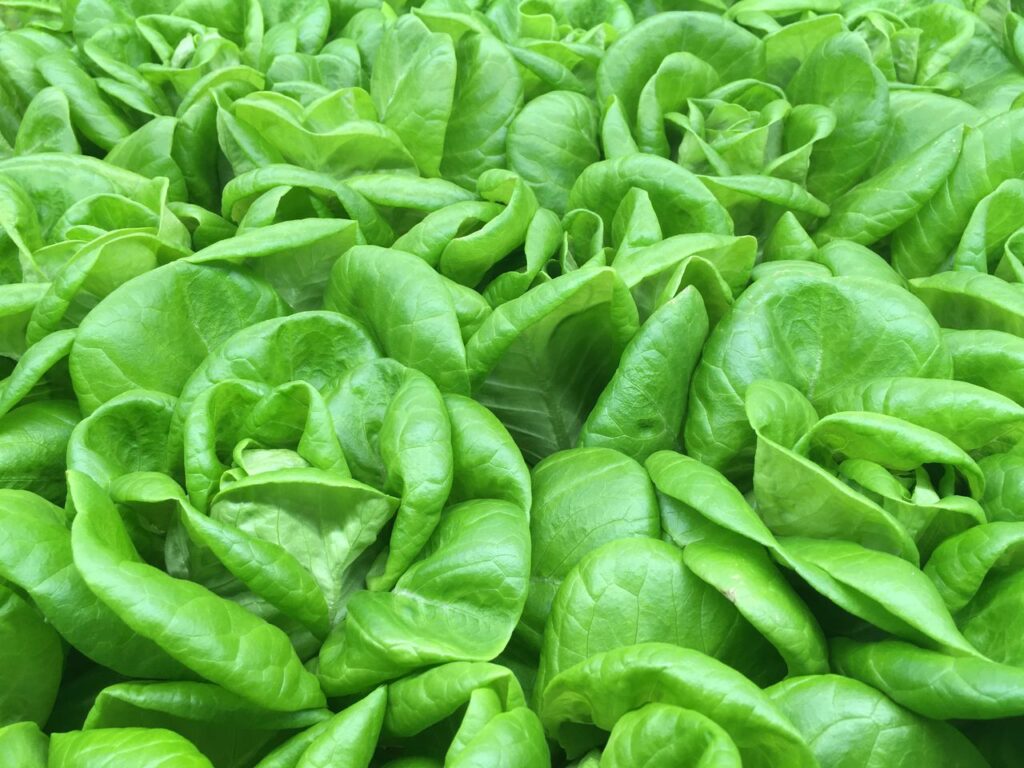
Leafy vegetables need enough nitrogen to produce good foliage, but more nitrogen does not automatically mean better leaves.
If you feed too heavily — especially when the plant has poor light, crowded spacing, excessive moisture, or unhealthy roots — you can end up with growth that is:
very soft,
thin,
stretched,
or overly lush.
The goal when feeding leafy vegetables such as bayam, sawi, kailan and lettuce is steady, balanced growth, not the fastest possible leaf production.
Give the plant enough nutrition to maintain healthy green foliage, then let sunlight, roots, water and good growing conditions do the rest.
Why Nitrogen Matters So Much for Leafy Vegetables
Nitrogen is especially important for leafy crops because the part we harvest is mainly foliage.
Plants use nitrogen to produce:
chlorophyll,
proteins,
enzymes,
and new vegetative growth.
When nitrogen is genuinely deficient, leafy vegetables may become:
pale,
small,
slow-growing,
and less productive.
Correcting that deficiency can make a dramatic difference.
But once nitrogen supply is adequate, simply adding more does not necessarily improve the crop.
What Does “Weak Growth” Actually Mean?
Weak growth can appear in several ways.
You may see:
very thin stems,
large but soft leaves,
long spaces between leaves,
plants leaning or falling over,
pale stretched growth,
or foliage that damages easily.
Some plants may look impressively lush but lack strong structure.
That does not always mean excessive fertiliser is responsible.
Weak growth can also result from:
insufficient light,
overcrowding,
high temperatures,
overwatering,
or poor root development.
Feeding should therefore be considered alongside the entire growing environment.
Too Much Nitrogen Can Produce Excessively Soft Growth
High nitrogen availability can encourage rapid vegetative growth.
When everything else is favourable, that may be useful.
But when the plant grows faster than its structure can support, leaves and stems can become overly soft.
Very lush foliage can also create a denser canopy.
In Malaysia’s humid conditions, that may reduce airflow around leaves and create a more favourable environment for certain diseases.
Soft, nutrient-rich growth can also be attractive to some sap-feeding pests.
The solution is not to starve the plant.
It is to avoid pushing growth beyond what the rest of the plant can support.
Light Is Just as Important as Fertiliser
A leafy vegetable cannot turn fertiliser into sturdy growth without enough light.
If a sawi plant receives lots of nitrogen but only weak sunlight, it may stretch toward the available light.
This produces leggy growth — long, weak stems with wider spacing between leaves.
Adding more fertiliser will not fix that.
In fact, it may make the stretching worse.
Before increasing feeding, ask whether the plant receives enough suitable light for the crop.
Malaysian Heat Can Change Leafy Vegetable Growth
Some leafy vegetables tolerate Malaysian conditions better than others.
Bayam, kangkung and several tropical greens can perform strongly in warm weather.
Cooler-loving vegetables such as some lettuce varieties may struggle during hot periods.
Heat stress can cause:
poor growth,
wilting,
bitterness,
or early bolting.
Bolting means the plant begins producing a flower stalk instead of continuing to make tender harvestable leaves.
Extra fertiliser will not reverse a temperature problem.
Choose crops and varieties that suit your growing conditions.
Use a Balanced Fertiliser Programme
Because leafy vegetables need nitrogen, gardeners sometimes assume they should use a fertiliser containing almost nothing else.
That is not ideal.
Plants still require:
phosphorus,
potassium,
calcium,
magnesium,
sulphur,
and micronutrients.
Nitrogen may be especially important for leaf production, but healthy foliage depends on complete nutrition.
A suitable vegetable fertiliser or balanced feeding programme is usually more sensible than repeatedly applying nitrogen alone.
Read the NPK Label
If your fertiliser says:
15-15-15
it contains equal declared proportions of nitrogen, phosphorus and potassium.
Another fertiliser may contain proportionally more nitrogen.
Neither is automatically better.
Look at:
the crop recommendation,
application rate,
release type,
and other nutrients included.
Then follow the labelled rate.
Do not select a fertiliser simply because it has the highest nitrogen number you can find.
Start Gently with Young Seedlings
Young seedlings have small root systems.
They do not need the same fertiliser quantity as a mature crop approaching harvest.
If your seed-starting or potting medium already contains nutrients, additional feeding may initially be unnecessary.
Wait until seedlings establish and begin active growth.
Then introduce fertiliser according to the product instructions.
Strong feeding too early can damage roots instead of accelerating establishment.
Split Feeding Is Often Better Than One Heavy Dose
Leafy vegetables generally respond better to steady nutrient availability than dramatic nutrient spikes.
Instead of giving one very heavy application, follow a schedule that provides appropriate amounts over the growing period.
Depending on the product, this may mean:
regular diluted liquid feeding,
measured granular applications,
or controlled-release fertiliser.
The important part is consistency and correct dosage.
Liquid Fertiliser Gives You More Control
Liquid fertiliser can work particularly well for short-cycle leafy crops because you can adjust feeding easily.
If growth is strong and colour is healthy, continue at the appropriate rate.
If several days of heavy rain or stress slow the plants, you can delay the next application.
Do not increase concentration because you want faster harvests.
A stronger solution increases salt concentration around roots and can cause fertiliser burn.
Slow-Release Fertiliser Can Work Too
Slow- or controlled-release fertiliser can provide steady background nutrition.
This can be convenient when growing many containers.
But remember that the fertiliser is still supplying nutrients even when you cannot see it working.
Do not add full-strength liquid fertiliser on top of an existing slow-release programme unless the combined feeding has been deliberately planned.
Heavy Malaysian Rain Can Wash Nutrients Away
Leafy vegetables growing in pots, grow bags and raised beds may lose soluble nutrients during prolonged rain.
This can be particularly noticeable with nitrogen.
A previously green crop may begin looking pale after extended wet weather.
But do not automatically fertilise after every thunderstorm.
Check:
how long the rain lasted,
what fertiliser is already present,
whether the soil is waterlogged,
and whether the plant is actively growing.
If the roots are saturated, drainage comes before feeding.
Frequent Watering Can Also Leach Nutrients
During hot weather, small containers may need frequent watering.
Every time large volumes of water drain through the pot, some soluble nutrients may leave with them.
This is one reason container-grown leafy vegetables often benefit from regular feeding.
But it does not mean adding fertiliser every time you water.
Follow an appropriate programme and watch plant response.
Do Not Feed Waterlogged Roots
Leafy vegetables often appreciate moisture, but roots still require oxygen.
If soil stays saturated, roots cannot function properly.
A waterlogged plant may become:
yellow,
weak,
and stunted
even when the soil contains plenty of nutrients.
Adding more nitrogen will not fix oxygen-starved roots.
Improve drainage first.
Give Plants Enough Space
Overcrowding is another major cause of weak leafy growth.
Plants competing closely for light may stretch upward.
Dense foliage also traps humidity.
Even perfectly fertilised vegetables can become thin and weak if spacing is too tight.
Follow appropriate spacing for the crop and harvest style.
If growing baby leaves, closer planting may be intentional.
For full-sized plants, give them room to develop.
Do Not Chase the Darkest Possible Green
Very dark green leaves are sometimes treated as proof of perfect nutrition.
They are not.
Colour varies by:
species,
variety,
leaf age,
and growing conditions.
Extremely lush, dark foliage may sometimes indicate very high nitrogen availability.
Aim for normal healthy colour and steady growth rather than the darkest leaves possible.
Can Compost Feed Leafy Vegetables?
Mature compost can contribute:
nutrients,
organic matter,
and improved soil structure.
It is useful in many vegetable beds.
But compost nutrient levels vary.
It should not be assumed to provide exactly the nitrogen required by a fast-growing leafy crop.
Depending on your soil and crop, additional fertiliser may still be necessary.
Think of compost primarily as a soil-building material with nutritional value, rather than a precisely measured NPK product.
Be Careful with Homemade Nitrogen “Boosters”
Online gardening advice often recommends:
coffee grounds,
kitchen scraps,
grass clippings,
or homemade liquid feeds
as quick nitrogen sources.
Their nutrient concentration and availability can be unpredictable.
Fresh organic material may also:
attract pests,
affect soil moisture,
or temporarily change nutrient availability while decomposing.
Use properly composted materials where appropriate, and use formulated fertilisers when you need predictable nutrition.
Harvesting Changes Nutrient Demand
With leafy vegetables, every harvest removes nutrients from the system.
If you harvest only outer leaves from a crop that continues growing, the plant may need continued nutrition.
Examples may include:
kailan,
some sawi,
bayam,
and various perennial or cut-and-come-again greens.
For crops harvested completely at once, there is less reason to continue fertilising shortly before removal if the crop is already healthy and mature.
Feeding After Harvest Can Support Regrowth
For crops that regenerate after cutting, moderate feeding after harvest can help support new foliage.
But assess how much of the plant remains.
A severely cut-back plant with a small root system does not necessarily need a huge fertiliser dose.
Let healthy regrowth begin and maintain balanced nutrition.
Know When to Stop Pushing the Crop
Eventually, leafy vegetables may:
bolt,
become tough,
develop pest problems,
or lose harvest quality.
Increasing fertiliser will not turn an ageing crop back into a young one.
At that point, replacing it with a new planting may produce a better harvest than continuing to feed the old plant heavily.
A Practical Leafy-Vegetable Feeding Checklist
Before adding fertiliser, ask:
1. Is the plant actively growing?
2. Are the leaves genuinely pale from nitrogen deficiency?
3. Does the plant receive enough light?
4. Is spacing adequate?
5. Are roots healthy and well drained?
6. Has fertiliser already been applied recently?
7. Is slow-release fertiliser already in the soil?
8. Has heavy rain caused likely nutrient leaching?
9. Is the crop weak because of heat rather than nutrition?
10. Is the current growth sturdy, or am I pushing the plant too hard?
If the crop is already green, compact and productive, increasing fertiliser may provide little benefit.
Feed for Quality as Well as Speed
The best leafy vegetables are not simply the ones that grow fastest.
You want plants that produce:
healthy leaves,
good structure,
manageable growth,
and consistent harvests.
That comes from balancing:
nutrition,
light,
water,
spacing,
and temperature.
Fertiliser is only one part of the system.
At the end of the day, feeding leafy vegetables successfully means providing enough nitrogen for healthy foliage without trying to force maximum growth with excessive fertiliser. Malaysian gardeners should combine measured feeding with adequate light, good spacing, healthy roots, consistent watering and adjustments for our heavy rain and tropical heat. If the plant is already green and growing strongly, another dose of nitrogen may not improve it. Aim for sturdy, steady growth — because a slightly slower plant with strong leaves is often a better crop than one pushed into soft, weak foliage.
Growing bayam, sawi, kailan, lettuce or another leafy vegetable at home? Share your fertiliser routine, growing setup and photos of the leaves by tagging @projectharvest.my on Instagram. We would especially love to see how Malaysian gardeners balance fast leaf production with sturdy growth through our hot, humid and rainy conditions.