
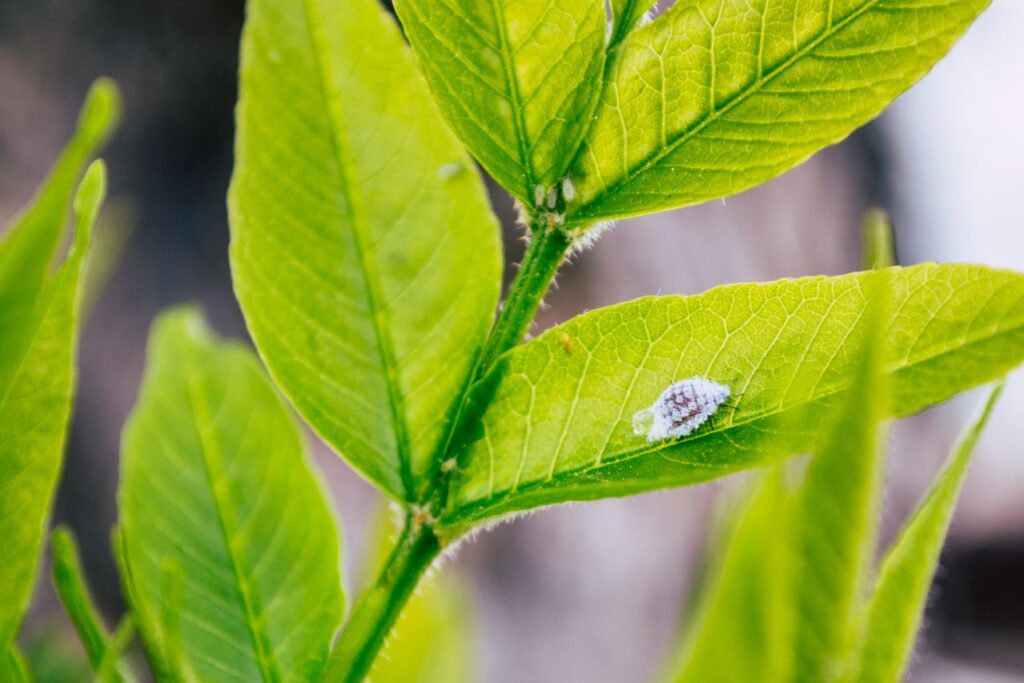
Mealybugs are small sap-sucking pests covered in a white, waxy coating that makes them look like tiny pieces of cotton. They often hide around leaf joints, stems, new shoots, roots, and the undersides of leaves. A small infestation may seem harmless at first, but mealybugs can multiply quickly and weaken the plant by feeding on its sap.
The first step is to separate the affected plant from nearby plants, especially when it is growing in a movable pot. Mealybugs can spread between plants through touching leaves, gardening tools, ants, or newly introduced plants. Check the surrounding plants carefully because early infestations may be hidden in tight spaces.
For a small infestation, remove the pests manually. Use a cotton bud, soft cloth, or gentle stream of water to wipe or wash mealybugs from the stems and leaves. Pay close attention to leaf joints and curled new growth. Repeat the inspection every few days because eggs and hidden insects may remain after the first cleaning.
You can also use a mild soap spray. Mix a small amount of plain, gentle liquid soap with clean water, following a trusted product or horticultural-soap direction whenever available. Test the mixture on one or two leaves first and wait at least a day. If the plant shows no burning or spotting, spray the affected areas lightly, including beneath the leaves. Avoid strong detergents, antibacterial soaps, degreasers, and heavily fragranced products.
Apply treatments during the cooler morning or late afternoon rather than under harsh midday sun. Do not soak the soil unnecessarily or spray open flowers. Rinse edible leaves with clean water before harvesting and eating them.
Ants are often found around mealybug infestations because they feed on the sticky honeydew the pests produce. Reducing ant access can help natural predators reach the mealybugs. Keep the garden clean, remove badly damaged growth, improve airflow, and avoid overcrowding.
Severe infestations may require several rounds of treatment. If one plant remains heavily affected and continues spreading pests, removing it may protect the rest of the garden.
At the end of the day, natural mealybug control depends on patience and repetition. Isolate the plant, remove visible pests, use mild targeted treatments, check hidden areas, and continue monitoring until no new mealybugs appear.
If you are dealing with mealybugs in your home garden, we would love to follow your plant’s recovery. Tag @projectharvest.my on Instagram and share your pest-control method, progress, and gardening journey with us — your experience might help another Malaysian beginner manage mealybugs naturally too.