
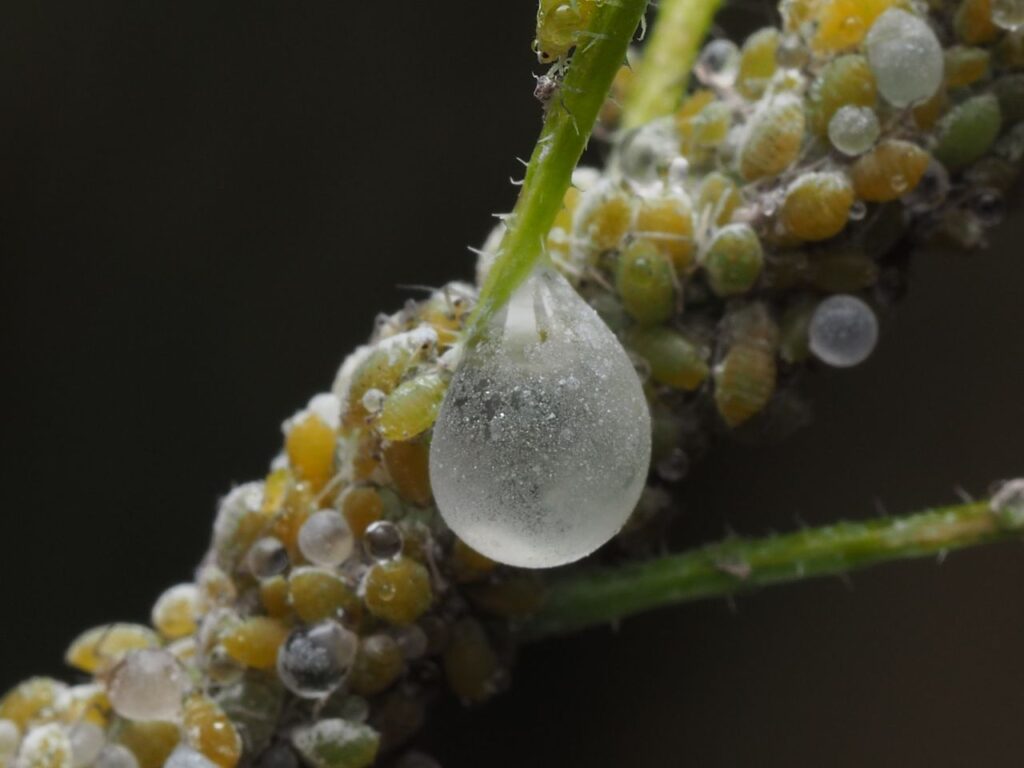
Aphids are tiny sap-sucking insects that often gather on soft new shoots, flower buds, stems, and the undersides of leaves. They may be green, black, brown, yellow, grey, or pink depending on the species. Because they are small and often hide beneath foliage, many gardeners notice the damage before they notice the insects themselves.
One of the most common signs of aphid activity is curled or distorted new growth. Young leaves may twist, wrinkle, cup inward, or fail to open normally. New shoots may also look weak or crowded. Aphids prefer tender growth because it is easier to feed on, so always inspect the newest parts of the plant first.
Another clear sign is a sticky substance on the leaves or stems. This is called honeydew, a sugary waste produced by aphids while they feed. Leaves may feel shiny or sticky, and nearby surfaces can become coated too. Over time, dark sooty mould may grow on the honeydew, making the leaves look dirty or black. The mould itself does not feed directly on the plant, but a heavy coating may reduce the light reaching the leaf surface.
Ant activity can also provide an important clue. Ants are attracted to honeydew and may regularly move up and down an infested plant. Some ants even protect aphids from natural predators. Seeing many ants around soft new growth does not prove aphids are present, but it is a good reason to inspect the plant more closely.
Look beneath leaves and around stem joints for clusters of tiny insects. You may also notice pale white flakes. These are often the shed skins left behind as aphids grow. A badly affected plant may show yellowing, slow growth, dropped buds, fewer flowers, or reduced fruit production.
Not every curled or yellow leaf is caused by aphids. Heat stress, watering problems, nutrient issues, and other pests can create similar symptoms. The best confirmation is finding the insects, sticky honeydew, or shed skins on the affected growth.
At the end of the day, identifying aphid damage means looking for a combination of signs: distorted new leaves, sticky residue, ants, sooty mould, and insect clusters beneath the foliage. Catching the problem early makes it much easier to manage before the aphids spread.
If you find aphids or aphid damage in your home garden, we would love to see what you discover. Tag @projectharvest.my on Instagram and share your plant symptoms, pest-control progress, and gardening journey with us — your experience might help another Malaysian beginner identify the problem earlier too.