
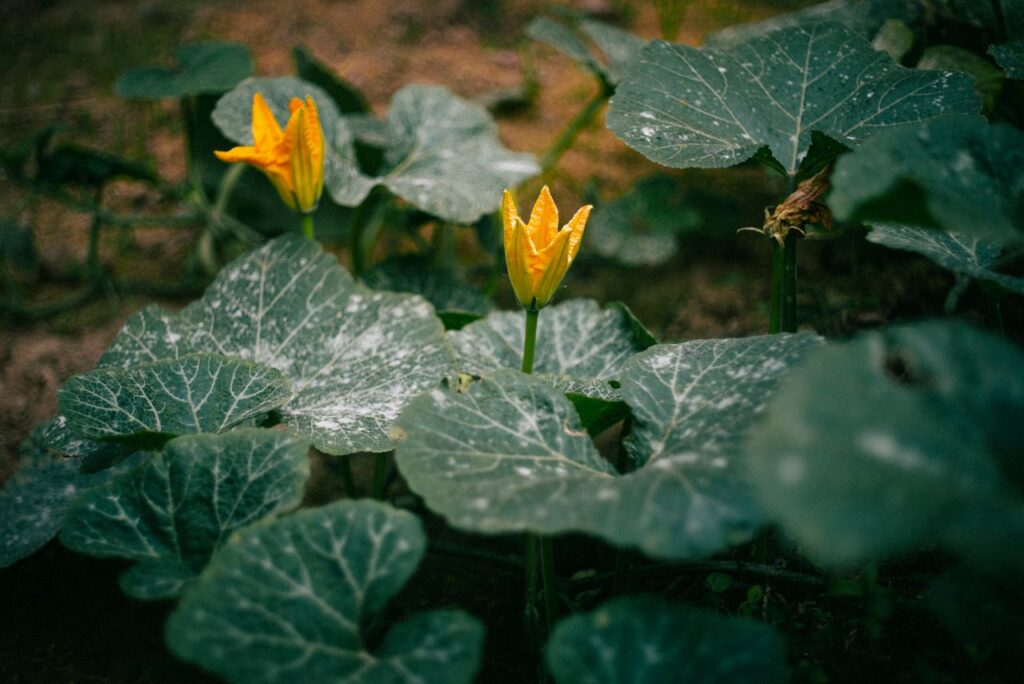
If your pumpkin vine is flowering but every bloom seems to be male, there is usually no reason to panic.
Pumpkin plants commonly produce male flowers before significant numbers of female flowers appear.
This allows the vine to continue building leaves, roots, and stems before investing heavily in fruit production.
As the plant matures, female flowers usually begin appearing later — provided the vine is healthy and growing under suitable conditions.
So if your young pumpkin has plenty of male flowers but no pumpkins yet, patience may be the correct treatment.
How Do You Know the Flowers Are Male?
Look behind the petals.
A male pumpkin flower normally sits on a relatively long, thin stalk.
There is no swollen structure directly behind the flower.
A female flower looks different.
Immediately behind its petals is a round swollen ovary that resembles a miniature pumpkin.
If pollination succeeds, this ovary can continue growing into the pumpkin you eventually harvest.
Once you know to look for the tiny pumpkin behind the flower, telling the two apart becomes easy.
Why Does the Plant Start with Male Flowers?
Producing a pumpkin requires much more energy than producing a flower.
A young vine first needs to establish enough:
leaf area,
root growth,
stem growth,
and overall vigour
to support developing fruit.
Male flowers require fewer resources because they do not carry fruit.
By producing males early, the plant can begin its reproductive stage while continuing to build the structure it will later need to support pumpkins.
This is a normal developmental pattern in many cucurbit crops.
Male Flowers Have an Important Job
Male flowers are not wasted flowers.
They produce pollen.
Once female flowers begin opening, pollen from the male flowers needs to reach the female stigma for normal fruit development in varieties that require pollination.
Bees and other pollinating insects normally move this pollen.
Without male flowers, female flowers may open but fail to set fruit.
So those first male flowers are part of the plant’s reproductive system, even though they will never become pumpkins themselves.
Male Flowers Naturally Fall Off
A male flower usually opens for a relatively short period.
After it has released pollen, it wilts and eventually drops.
This is completely normal.
The fallen flower is not a failed pumpkin.
It was never going to become fruit.
If your vine is healthy and producing new flowers, fallen males are usually nothing to worry about.
When Should Female Flowers Start Appearing?
There is no exact number of days that applies to every pumpkin plant.
Timing depends on:
variety,
plant maturity,
temperature,
sunlight,
nutrition,
watering,
and overall growing conditions.
Some vines begin producing female flowers fairly soon after male flowering starts.
Others take longer.
The useful thing to watch is whether the vine itself is continuing to grow strongly.
If the plant is still young and expanding, female flowers may simply be coming later.
Plant Size Matters
A tiny vine is not well equipped to support a full pumpkin.
The fruit eventually demands large amounts of:
water,
carbohydrates,
and nutrients.
A stronger vine with more healthy leaves can support that demand much better.
This is why early male flowering often makes sense biologically.
The plant is essentially reproductive enough to produce pollen but may not yet be ready to carry fruit successfully.
Malaysia’s Heat Can Affect Flowering
Pumpkins generally appreciate warm conditions, but extreme heat can still affect flower development.
A vine growing beside:
a heat-reflecting wall,
large concrete surfaces,
metal fencing,
or a very hot balcony
may experience more heat stress than expected.
Environmental conditions can influence the balance and timing of male and female flowers.
If the vine remains healthy but female flowers are slow to appear during a particularly hot spell, continue monitoring rather than immediately assuming a nutrient problem.
Water Stress Can Delay Good Fruit Production
Pumpkins are vigorous plants with large leaves.
Once established, they can use substantial amounts of water.
If the plant repeatedly becomes severely dry, growth and reproductive development may suffer.
Keep root-zone moisture reasonably consistent.
This is especially important in containers or raised beds that dry quickly.
However, do not keep the roots permanently saturated.
Pumpkins still require good drainage.
Heavy Rain Can Create the Opposite Problem
Malaysia’s wetter periods can bring repeated heavy rain.
Waterlogged soil stresses roots and can slow plant development.
Prolonged cloudy weather may also reduce the energy available for vigorous growth.
If the vine is growing slowly in constantly wet soil, female flowering may also be delayed.
Check drainage before adding more fertiliser.
Does Too Much Nitrogen Cause Only Male Flowers?
This idea is often oversimplified.
High nitrogen availability can encourage vigorous leafy growth, and heavily fertilised vines may sometimes produce lots of vegetation with disappointing fruit production.
But flower sex in pumpkins is influenced by a combination of:
genetics,
plant hormones,
plant maturity,
temperature,
and growing conditions.
It is not accurate to say that nitrogen alone simply “turns flowers male.”
The practical lesson is to fertilise appropriately rather than trying to force fruit with excessive feeding.
Do Not Add More Fertiliser Just Because Females Are Missing
This is one of the most common reactions.
A gardener sees twenty male flowers and thinks:
“The plant needs fertiliser.”
Then more fertiliser is added.
If the vine was already receiving enough nutrients, extra feeding may simply produce even more foliage.
Look at the whole plant first.
If the leaves are healthy, growth is vigorous, and the vine is still young, patience may be more useful than another fertiliser application.
Sunlight Is Important
Pumpkins need strong light to support vigorous vines and fruit development.
A plant growing in too much shade may survive and flower but struggle to become highly productive.
For Malaysian homes, consider:
shade from neighbouring houses,
walls,
trees,
roof overhangs,
and other vines.
If the plant receives only limited direct sun, that may contribute to weak growth and poor fruit set later.
The Vine May Need More Space
Pumpkin is not a small crop.
A vigorous plant can produce long vines and a large canopy.
If it is confined to a very small pot or heavily crowded by other plants, root and leaf competition may limit development.
When growing pumpkin in a Malaysian home garden, plan for the mature vine rather than the small seedling.
Vertical training can save some ground space for certain varieties and setups, but the plant still needs substantial root volume and good support.
Female Flowers Are Easy to Miss
Once the vine becomes large, female flowers may be hidden beneath leaves.
Check along the growing vines.
Look particularly for the small round swelling behind the flower bud.
A developing female flower can often be identified before it opens because the tiny pumpkin is already visible.
Do not only inspect the tips of the vines from a distance.
What Happens When the First Female Flower Opens?
Once you finally see a female flower, make sure male flowers are also open and producing pollen.
If bees are active, they may handle pollination naturally.
If pollinator activity seems low, you can hand-pollinate.
Take pollen from a freshly opened male flower and transfer it gently to the stigma inside the female flower.
Morning is often a practical time because pumpkin flowers are commonly freshly open then.
What If the Female Flower Has a Tiny Pumpkin but It Falls Off?
The small swelling behind a female flower is the ovary.
It exists before successful pollination.
If pollination fails, that ovary may:
stop growing,
yellow,
shrivel,
and fall.
This does not necessarily mean the plant is sick.
It may simply mean the female flower did not receive enough viable pollen.
Heavy Rain Can Reduce Pollination
This is particularly relevant in Malaysian gardens.
A female pumpkin flower may only be receptive for a limited period.
If heavy rain occurs during that window, bees may be less active.
Pollen may also become wet.
If several female flowers fail during a period of persistent rain, hand-pollination can help when suitable male and female flowers open together.
One Failed Female Flower Does Not Mean the Crop Is Finished
Pumpkin vines usually continue producing flowers.
If the first female flower fails, another may appear later.
Avoid treating every unsuccessful fruit as an emergency.
Continue supporting healthy vine growth and monitor future flowers.
Many gardeners lose the first few female flowers and still get a good pumpkin harvest later.
Do Not Remove All the Male Flowers
Because the males do not become pumpkins, gardeners sometimes remove them.
That can create a new problem.
You need male flowers as pollen sources.
Leave them on the plant unless you are picking one specifically for hand-pollination or another legitimate use.
A vine with female flowers but no available pollen may struggle to set fruit.
Should You Remove Early Female Flowers?
Usually, there is no need to automatically remove them.
If the plant is extremely young or badly stressed, fruit may abort naturally.
Otherwise, allow the plant to manage its own fruit set.
Once it successfully carries a pumpkin, continue providing consistent water, healthy foliage, and appropriate nutrition.
Check the Whole Plant Before Worrying
If you are only seeing male flowers, ask:
Is the vine still young?
Is it growing strongly?
Does it receive enough sunlight?
Is the soil consistently moist but well drained?
Has the weather been extremely hot or wet?
Is the plant overcrowded or root-restricted?
Are you fertilising excessively?
If the plant is otherwise healthy, waiting for later flowers is often the best choice.
When Should You Be More Concerned?
If the vine has been mature for a long time, continues producing only male flowers, and shows other signs of poor performance, investigate further.
Possible contributing factors may include:
excessive vegetative growth,
poor sunlight,
root restriction,
persistent water stress,
extreme temperatures,
or overall poor plant health.
Variety also matters.
Some plants simply produce female flowers earlier or later than others.
Keep Flowering Records
A simple garden note can teach you a lot.
Record:
when the first male flower opened,
when the first female appeared,
when pollination occurred,
and whether the fruit continued growing.
For example:
Week 5 — first male flowers
Week 7 — first female flower
Week 7 — hand-pollinated
Week 8 — fruit enlarging
After several growing cycles, you will have a much clearer idea of how pumpkin behaves in your own garden.
At the end of the day, a pumpkin vine producing male flowers first is usually behaving exactly as a young cucurbit should. Male flowers allow the plant to begin producing pollen while the vine continues building enough roots, leaves, and energy to support fruit later. Keep the plant healthy, avoid forcing it with excessive fertiliser, learn to recognise the first female flowers, and make sure good pollination happens once they arrive. In many Malaysian gardens, patience during the first flush of male flowers is all that stands between worrying about the vine and eventually watching that first tiny pumpkin begin to grow.
Is your pumpkin vine currently covered in male flowers while you wait for the first female bloom? Tag @projectharvest.my on Instagram and show us your vine, male flowers, first tiny pumpkin-shaped ovary, or the fruit that finally begins growing after pollination. We would love to follow the journey from the first “nothing but male flowers” stage all the way to a Malaysian home-grown pumpkin harvest.