
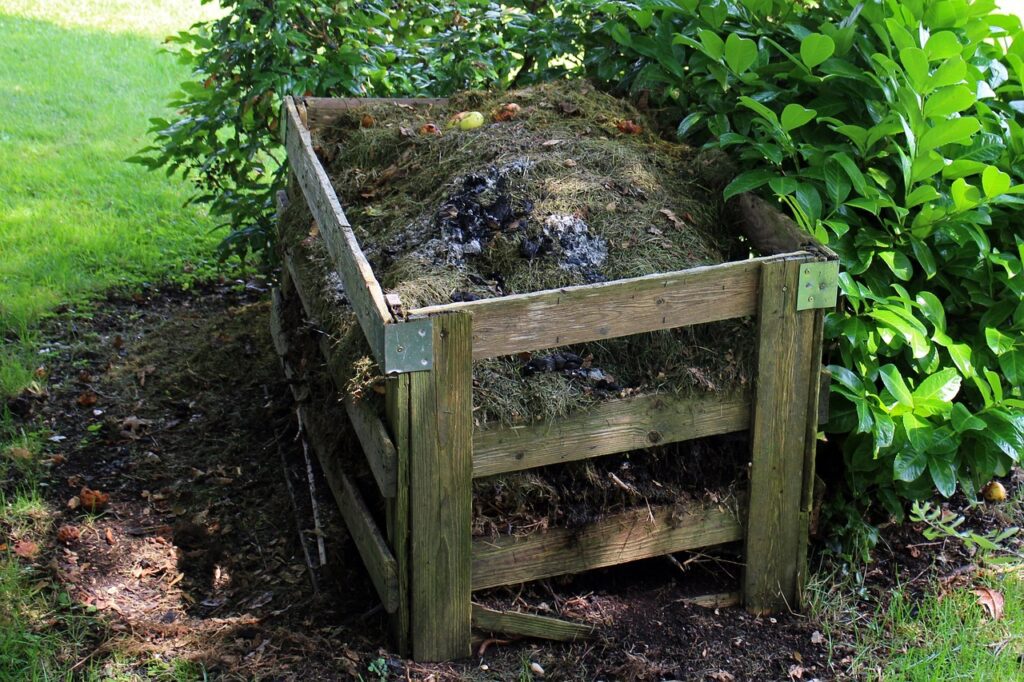
You have been adding leaves, vegetable scraps, cardboard, and garden waste to your compost for months. The pile has shrunk, much of the original material has disappeared, and what remains looks darker than before.
So, is it ready to use?
Finished compost is not determined by an exact number of days. A hot compost pile may progress much faster than a slowly managed cold pile, while Malaysia’s warm climate can encourage decomposition throughout the year. The materials you use, moisture, airflow, pile size, and how actively you manage it all affect how quickly compost matures.
Instead of relying on the calendar, look for several signs that tell you the decomposition process is largely complete.
It Should Look Dark and Crumbly
One of the easiest signs is appearance.
Finished compost normally becomes dark brown to almost black and develops a relatively loose, crumbly texture.
Most of the original ingredients should no longer be obvious.
You should not open the pile and immediately recognise yesterday’s cucumber peel, a pile of fresh grass, or whole pieces of kitchen waste.
However, do not expect every single ingredient to disappear completely.
Small twigs, woody stems, coconut fibres, nutshells, or pieces of tougher leaves may remain because they naturally take much longer to decompose.
You can simply remove or screen out these larger pieces and return them to the next compost pile.
It Should Smell Earthy
Your nose is one of the best compost-testing tools you have.
Mature compost should smell earthy, somewhat like healthy forest soil.
It should not smell strongly rotten, sour, like ammonia, or like fresh food waste.
A bad smell generally suggests that decomposition is still happening under unsuitable conditions or that part of the pile has become too wet and oxygen-starved.
If the compost still has an unpleasant odour, turn it, check its moisture, and give it more time before using it heavily around plants.
Finished compost should smell like soil, not like the rubbish you originally put into it.
The Pile Should No Longer Be Heating Up
Hot composting produces noticeable heat while microorganisms rapidly break down organic material.
Eventually, that activity slows and the pile cools.
If you turn the pile thoroughly and it heats strongly again over the following days, there is still plenty of active decomposition happening.
Compost that is approaching maturity should remain relatively close to the surrounding temperature even after being mixed.
In Malaysia, this can be slightly harder to judge because the outside temperature itself may already be warm.
Do not simply touch the surface under afternoon sun.
Check deeper inside the pile or use a compost thermometer if you have one.
The important comparison is whether the centre is substantially hotter than the surrounding environment.
The Volume Will Have Shrunk
Organic material loses a significant amount of volume as it decomposes.
A compost bin that was once filled to the top may eventually settle to half its original height or even less.
That shrinkage is normal.
Water is lost, carbon is released through microbial activity, soft materials collapse, and larger ingredients break into smaller particles.
Volume reduction alone does not prove that compost is finished, but when it appears together with dark colour, earthy smell, and little remaining heat, it is another good sign.
The Original Materials Should Be Difficult to Recognise
Try grabbing a handful.
Can you still identify most of what went into the pile?
If you can see plenty of fresh-looking leaves, vegetable pieces, grass clumps, and paper, the compost probably needs more time.
In mature compost, the original ingredients have largely merged into one relatively uniform material.
Some exceptions are perfectly normal.
A piece of eggshell may remain.
A woody twig may still be visible.
A small section of dry leaf might survive.
Composting does not need to produce perfectly uniform commercial potting mix.
The question is whether most of the pile has finished decomposing.
Finished and Mature Are Not Always Exactly the Same Thing
This is an important distinction.
A compost pile may look mostly decomposed but still benefit from a curing period.
Curing means allowing compost to sit after the most active decomposition has finished.
During this period, biological activity continues at a slower pace and the material becomes more stable.
This is particularly useful before mixing large quantities into seedling mixes or planting directly into compost-amended soil.
Fresh, immature compost can continue consuming oxygen or temporarily affect nutrient availability as decomposition continues.
Giving apparently finished compost a little extra time is rarely a bad decision.
Try the Bag Test If You Are Unsure
If your compost looks finished but you are still uncertain, you can perform a simple smell test.
Place a small amount of slightly moist compost inside a sealable plastic bag or container.
Close it and leave it somewhere shaded for a few days.
Then open it and smell the material.
If it still smells pleasantly earthy, that is a positive sign.
If opening the bag produces a strong sour, rotten, or unpleasant smell, the compost may still contain unstable material that needs more aeration and curing.
This is not a laboratory test, but it can be a useful home-gardening check.
Be More Careful When Using Compost for Seedlings
Young seedlings are more sensitive than established garden plants.
If you are planning to use homemade compost as part of a seed-starting or young-transplant mixture, make sure it is genuinely mature.
Even finished compost should generally be one ingredient in a balanced seedling medium rather than filling the entire tray with pure compost.
If you have doubts about the maturity of a batch, use it around established plants or allow it to cure longer instead of experimenting on delicate seedlings.
What If Parts of the Pile Are Finished but Others Are Not?
This is very common.
The centre of a compost pile may be dark and crumbly while material around the edges remains relatively intact.
You have two options.
You can turn everything together and allow the entire pile to continue decomposing.
Or you can screen out the mature compost and return the larger unfinished material to a new pile.
There is no rule saying every twig has to disappear before you are allowed to use the finished portion.
Stop Adding Fresh Waste If You Want a Finished Batch
One reason gardeners struggle to identify finished compost is that they continuously add fresh waste to the same bin.
If you added banana skins yesterday, the bin obviously cannot contain only mature compost today.
A two-bin system makes this easier.
Once the first bin is reasonably full, stop adding new material and allow it to finish.
Begin filling the second bin instead.
By the time the second bin is filling up, the first can continue decomposing without constantly receiving fresh ingredients.
This creates a much clearer cycle of fill, finish, harvest, and restart.
Can You Use Compost That Is Not Quite Finished?
Partially decomposed compost can sometimes be used as a surface mulch around established plants, where it can continue breaking down gradually.
However, avoid mixing large quantities of clearly unfinished material directly into the root zone.
Fresh decomposition can temporarily compete for nitrogen, affect oxygen levels, and create an unstable growing environment.
If the material is still obviously active, the easiest solution is usually patience.
Your plants do not gain anything from receiving compost two weeks earlier if the compost is not ready.
Malaysia’s Climate Means Finished Compost Still Needs Care
Once your compost is ready, do not leave it exposed indefinitely to intense rain and sun.
Repeated heavy rainfall can leach soluble nutrients, while strong sun can dry the material significantly.
Store finished compost somewhere shaded and protected from excessive rain until you are ready to use it.
If you have a garden bed ready, incorporating or top-dressing with the compost relatively soon after it matures makes good use of the material you worked to create.
Use Several Signs, Not Just One
The easiest way to remember whether compost is finished is to check five things:
Colour: Is it dark brown and soil-like?
Texture: Is it mostly crumbly?
Smell: Does it smell earthy rather than rotten?
Temperature: Has it stopped heating significantly?
Ingredients: Are most of the original materials difficult to recognise?
If the answer is yes to all five, your compost is probably ready or very close to it.
If you want extra confidence, let it cure a little longer.
Compost rarely suffers because a gardener gave it another few weeks to mature.
At the end of the day, knowing when compost is finished is less about marking a date on the calendar and more about learning to read the material itself. Dark colour, crumbly texture, an earthy smell, stable temperature, and mostly unrecognisable ingredients are your strongest clues. When several of those signs appear together, you can be far more confident that your pile has transformed from kitchen and garden waste into something your soil can actually use.
Think your compost is finally ready for harvest? Grab a handful, check the colour, smell, texture, and temperature, then show us what you have created. Tag @projectharvest.my on Instagram and share your finished compost, screening process, compost pile transformation, or the plants that receive your first batch. Your pile of dark, crumbly compost might inspire another Malaysian gardener to keep going through those messy early stages.