
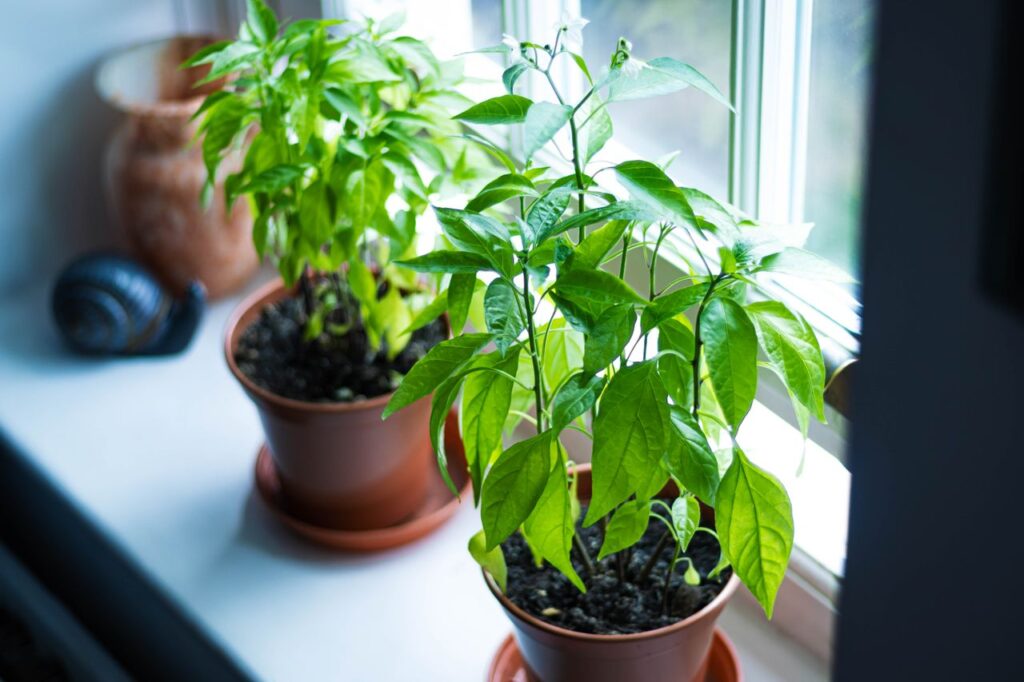
The best way to manage thrips is to combine monitoring, sanitation, physical control, plant care, and carefully chosen treatments rather than depending on one spray.
Thrips are difficult pests because they are:
tiny,
fast,
often hidden inside flowers,
and capable of completing several life stages around the plant and growing area.
On chillies, brinjal, beans, cucumbers, and other vegetables, a small infestation can quickly become a recurring problem if only the visible adults are killed.
The goal is not necessarily to eliminate every thrips from the garden.
It is to keep the population low enough that plants can grow and produce normally.
Start by Confirming That Thrips Are Actually Present
Before treating, make sure thrips are the likely problem.
Look for:
silvery or bronze feeding scars,
distorted young leaves,
damaged flowers,
tiny black specks,
and slender insects moving inside flowers or across leaves.
A simple test is to tap flowers or growing tips over white paper.
Thrips may appear as tiny moving lines.
If you have not yet confirmed the pest, read How to Identify Thrips Damage Before It Gets Serious first.
Inspect the Newest Growth
Thrips often concentrate around:
young leaves,
flower buds,
open flowers,
and tender shoots.
These are the areas you should inspect most closely.
On chilli plants, check several flowers every few days when an infestation is active.
Do not inspect only the large mature leaves.
By the time old foliage looks badly damaged, the pest population may already be established throughout the plant.
Remove Heavily Infested Material
If only a few leaves, flowers, or growing tips are severely infested, removing them can reduce part of the population.
This is especially useful early in an outbreak.
Remove:
badly distorted young leaves,
severely damaged flowers,
and heavily infested plant material.
But do not strip the plant bare.
Healthy foliage is still necessary for photosynthesis.
Dispose of infested material away from the growing area rather than leaving it underneath the plant.
Keep the Area Clean
Thrips may survive on weeds, ornamentals, crop residues, and nearby host plants.
Keep the immediate growing area reasonably clean.
Remove:
dead leaves,
old flowers,
abandoned crop residue,
and unnecessary weeds around vegetable pots.
This does not mean creating a sterile garden.
It simply reduces obvious places where pest populations can persist unnoticed.
Check Nearby Plants
Thrips do not stay politely on one chilli plant.
If one plant is infested, inspect nearby:
chillies,
brinjal,
beans,
cucumbers,
herbs,
and flowering ornamentals.
Some nearby plants may carry thrips without showing dramatic symptoms.
Treating one plant while ignoring a heavily infested neighbour can lead to rapid reinfestation.
Isolate New Nursery Plants
One of the easiest ways thrips enter a home garden is on new plants.
Before placing a newly purchased plant beside your established vegetables, inspect:
new leaves,
flowers,
buds,
and leaf undersides.
If practical, keep new plants slightly separated while you observe them.
A short inspection period is much easier than trying to control thrips across an entire collection later.
Use Sticky Traps for Monitoring
Blue sticky traps are often used for thrips monitoring.
Yellow traps may also capture them.
Place traps near the crop canopy where adults are active.
Sticky traps help you answer questions such as:
Are adult thrips still present?
Is the population increasing?
Did numbers fall after treatment?
They are useful monitoring tools, but they usually do not control an established infestation by themselves.
Do Not Depend on Sticky Traps Alone
Many thrips remain hidden inside:
flowers,
folded leaves,
and growing tips.
Other life stages may also be present in or around the plant.
A few traps catching adults does not mean the entire population has been removed.
Use traps as one part of a broader management plan.
Water Stress Can Make Damage Worse
A plant already suffering from:
drought,
root restriction,
or heat stress
may tolerate thrips damage poorly.
Keep the plant growing steadily.
For Malaysian container gardens, this means avoiding repeated cycles of:
severe drying,
followed by heavy watering.
Healthy plants are not immune to thrips, but they usually recover from moderate damage more effectively.
Avoid Excessive Nitrogen
Very soft, lush growth can be attractive to several sap-feeding pests.
Do not repeatedly push chilli and vegetable plants with excessive nitrogen fertiliser.
Use a balanced feeding programme.
The goal is:
healthy new growth,
not constantly producing the softest possible shoots.
Improve Airflow and Spacing
Crowded plants are harder to inspect and treat.
They also create dense sheltered areas where pests can remain unnoticed.
Give plants enough space to allow:
inspection,
airflow,
and reasonable spray coverage if treatment becomes necessary.
For chilli plants, selective pruning of badly crowded or damaged growth may sometimes help, but avoid severe pruning solely because thrips are present.
Can Water Sprays Help?
A firm but plant-safe stream of water can physically dislodge some small pests from foliage.
This may help reduce light infestations on suitable plants.
However, thrips hiding deep inside flowers and tight growing tips may not be reached.
Repeatedly soaking flowers and foliage in Malaysia’s humid conditions may also increase disease pressure.
Use water as a supporting physical control rather than expecting it to eliminate the infestation.
Insecticidal Soap Can Be Useful
Products specifically labelled as insecticidal soap can help control exposed soft-bodied pests, including some thrips.
They work primarily through direct contact.
That means coverage is important.
The spray must actually reach the insects.
Follow the product label carefully for:
dilution,
crop suitability,
application frequency,
and harvest guidance.
Do not substitute ordinary household dishwashing liquid.
Dish detergents are not formulated as horticultural pesticides and may damage plant tissue.
What About Neem Oil?
Neem-based horticultural products can sometimes be useful as part of thrips management, particularly when infestations are still manageable.
Their effectiveness depends on:
product formulation,
coverage,
timing,
and pest stage.
Neem should not be treated as an instant pest killer or a guaranteed solution.
Use a product intended for plant pest control and follow the label.
Avoid applying stronger concentrations because you think a severe infestation needs a stronger spray.
More concentrated oil can damage leaves.
Avoid Spraying During Hot Afternoon Sun
Malaysia’s intense midday and afternoon heat can increase the risk of leaf injury from soaps, oils, and other foliar products.
Where the label allows it, cooler periods such as early morning are often more suitable.
Also consider rainfall.
A treatment washed off almost immediately by a tropical storm may provide little benefit.
Be Careful Around Flowers and Pollinators
Chillies and vegetables may be flowering while thrips are present.
Some pest-control products can also affect beneficial insects.
Avoid spraying open flowers unnecessarily, particularly when pollinators are actively visiting.
Read the pesticide label for instructions regarding:
bees,
pollinators,
flowering crops,
and application timing.
Use the most targeted treatment possible.
Why One Spray Rarely Solves Thrips
Thrips have multiple life stages.
Depending on the species, eggs may be inserted into plant tissue, immature stages feed on the plant, and later developmental stages may occur in protected areas or growing media.
A spray that kills exposed insects today may not affect:
eggs,
hidden individuals,
or later-emerging stages.
This is why populations can appear to “come back” a few days after treatment.
They may not have returned from elsewhere.
Some may simply have survived or emerged after the original spray.
Repeat Treatments Only According to the Label
Some products require repeated applications because of pest life cycles.
But that does not mean spraying every day.
Follow the permitted interval on the product label.
Overuse can:
damage plants,
harm beneficial organisms,
increase residues,
and encourage pesticide resistance.
Timing should be deliberate.
Rotate Modes of Action When Appropriate
Repeatedly using the same insecticide can select for resistant thrips populations.
This is particularly important because thrips are well known for developing resistance to insecticides in many production systems.
If chemical treatment becomes necessary, use products legally labelled for the crop and pest and follow resistance-management guidance on the label.
Rotating brand names is not enough if both products contain the same active ingredient or work in the same way.
Home gardeners do not need to become pesticide chemists, but they should avoid endlessly repeating one failing product.
Do Not Mix Several Pesticides Randomly
A stronger cocktail is not automatically a better treatment.
Mixing:
soap,
neem,
synthetic insecticide,
fungicide,
and fertiliser
without confirmed compatibility can:
damage leaves,
reduce effectiveness,
or create unnecessary exposure.
Only combine products when the label permits it.
Otherwise, keep treatments separate.
Edible Crops Need Extra Care
For chillies and vegetables, any pesticide product should be labelled for use on the crop you are treating.
Follow:
application rate,
maximum application frequency,
protective instructions,
and pre-harvest interval where specified.
The pre-harvest interval is the required time between pesticide application and harvesting.
Do not assume washing a vegetable removes every concern from an incorrectly used pesticide.
Label compliance matters.
Do Not Assume “Organic” Means Harmless
Neem, soaps, oils, and other lower-impact products can still damage:
plants,
beneficial insects,
or people
if misused.
Use them at appropriate concentrations.
More product does not mean more control.
Likewise, homemade mixtures are not automatically safer because their ingredients come from the kitchen.
Severe Infestations May Require Plant Removal
Sometimes one plant becomes a major pest reservoir.
If a badly infested chilli is:
severely distorted,
barely productive,
chronically reinfested,
and spreading thrips to healthier plants,
removing it may be the most practical option.
This is particularly true if the plant is already old or near the end of its productive life.
Do not spend months protecting one declining plant at the expense of the entire garden.
Watch for Possible Virus Symptoms
Some thrips can transmit plant viruses.
If a plant shows persistent:
mottling,
rings,
severe distortion,
stunting,
or unusual colour patterns
that continue even after thrips numbers are reduced, consider the possibility of disease.
A viral plant generally cannot be cured with insecticide or fertiliser.
If a serious virus is suspected, separating or removing the plant may help protect the rest of the garden.
Beneficial Insects Can Help
Predatory insects and mites can contribute to thrips control in some garden systems.
This is one reason broad-spectrum pesticide use should be minimised.
Repeatedly killing every insect in the garden can remove natural enemies alongside pests.
For ordinary home gardeners, the goal should be a functioning garden ecosystem with pests maintained below damaging levels — not a garden containing no insects at all.
Build an Integrated Pest Management Routine
Integrated Pest Management, or IPM, means combining several strategies rather than relying entirely on pesticides.
For thrips, this can include:
regular inspection,
sticky-trap monitoring,
removing heavily infested tissue,
cleaning crop residue,
checking nursery plants,
maintaining healthy growth,
using physical controls,
and applying targeted treatments when pest pressure justifies them.
Pesticides become one tool within the system, not the entire system.
A Practical Thrips Management Routine
When you first confirm thrips:
1. Inspect the whole plant.
Check flowers, young shoots, and leaf undersides.
2. Check neighbouring plants.
Find out how far the infestation has spread.
3. Remove heavily infested tissue where practical.
Do not over-prune.
4. Add monitoring traps.
Use them to track adult activity.
5. Improve plant care.
Correct water stress and avoid excessive nitrogen.
6. Use an appropriate labelled treatment if pest pressure warrants it.
Prioritise targeted products and correct coverage.
7. Reinspect regularly.
Do not assume the problem is solved after one treatment.
How Do You Know Management Is Working?
Look for:
fewer thrips during flower inspections,
lower trap catches,
less new silvering,
healthier emerging leaves,
less distortion,
and normal flower and fruit development.
Old damaged leaves will remain damaged.
Judge success by what happens after management begins.
Do Not Chase Cosmetic Perfection
A chilli plant may retain:
scarred leaves,
damaged flowers,
or marked fruit
even after thrips are under control.
That does not mean treatment failed.
If new growth is healthy and pest numbers remain low, the plant may recover perfectly well.
Avoid unnecessary spraying simply because old damage is still visible.
Keep Monitoring After the Population Drops
Thrips control should not end the moment the plant looks better.
Continue checking:
flowers,
young leaves,
and sticky traps
for several weeks.
A small surviving population can rebuild.
Regular monitoring allows you to act before another outbreak becomes serious.
The Goal Is Control, Not Panic
Thrips can be frustrating, especially on chillies.
But finding a few does not mean the garden is lost.
The biggest advantage a home gardener has is the ability to inspect plants closely.
A commercial grower may manage thousands of plants.
You may have five chillies.
Use that advantage.
Look closely.
Act early.
Keep records.
And avoid turning a manageable infestation into a chemical arms race.
At the end of the day, successful thrips management on chillies and vegetables comes from breaking the pest cycle rather than simply killing the insects you can see today. Malaysian home gardeners should inspect flowers and young growth regularly, remove heavily infested material, monitor adults with sticky traps, maintain healthy plants, and use labelled soaps, oils, or other appropriate controls only when necessary. Repeated indiscriminate spraying can damage plants, beneficial insects, and eventually make thrips harder to control. Build a simple IPM system, watch the new growth, and aim to keep the population below damaging levels rather than expecting one spray to make every thrips disappear.
Battling thrips on your chillies, brinjal, beans, or other vegetables? Share photos of the damaged growth, what control methods you have tried, and how the plant responds over the following weeks by tagging @projectharvest.my on Instagram. Real Malaysian garden cases — including the treatments that worked and the ones that did not — can help everyone become better at managing thrips before a few tiny insects turn into a recurring infestation.